


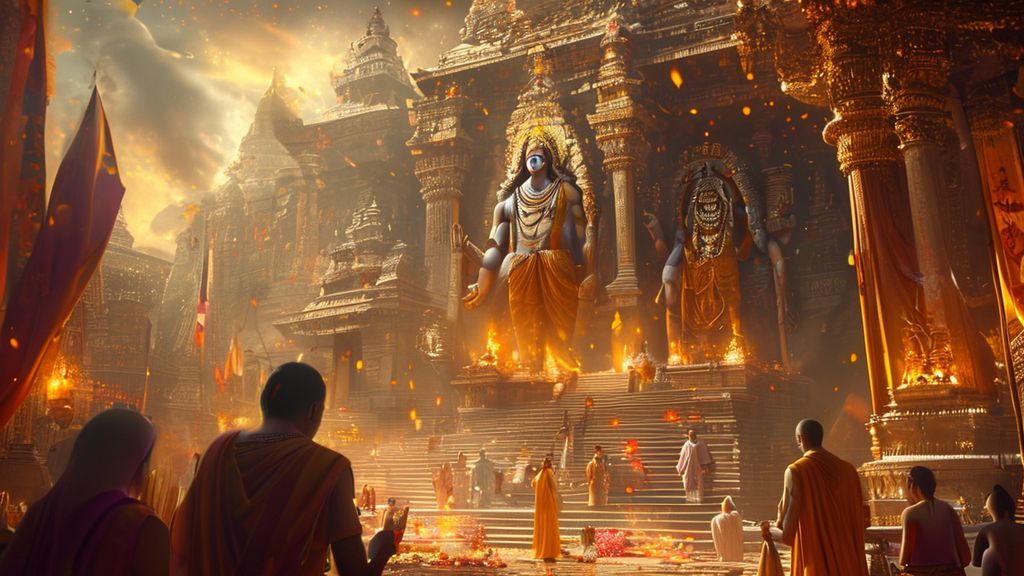
Seeing Lord Shiva in a dream is profoundly auspicious, symbolizing spiritual awakening, the destruction of ignorance, and an imminent period of transformation. These divine visions serve as a direct communication from Mahadeva, guiding the devotee towards liberation, purification, and deeper adherence to Sanatana Dharma, often signifying an urgent call to introspection and virtuous action.
| Attribute | Details |
|---|---|
| Deity | Lord Shiva (महेश, Mahēśa; महादेव, Mahādeva) |
| Dream Symbolism (General) | Transformation, destruction of ego, spiritual growth, asceticism, wisdom, new beginnings, overcoming obstacles, divine protection. |
| Scriptural Basis for Dreams | Upanishads (Mandukya, Brihadaranyaka), Puranas (Agni Purana, Markandeya Purana, Shiva Purana), Ayurveda (Charaka Samhita). |
| Key Interpretation | A direct divine message, prompting introspection, adherence to Dharma, and intensified spiritual practice (Sadhana). |
The Divine Glimpse: Unveiling the Significance of Shiva Darshan in Dreams
In the vast ocean of Sanatana Dharma, dreams are not mere random firings of the subconscious mind but often profound conduits of divine communication. To witness Lord Shiva, the Mahadeva, the supreme ascetic, and the destroyer of illusion, in one’s dream is an experience imbued with immense spiritual significance. It is a sacred vision, a Darshan (दर्शन), that transcends the ordinary, signaling a profound shift in one’s spiritual journey. Such a dream is not to be dismissed lightly but understood as a personal invitation to delve deeper into the mysteries of existence, to purify one’s being, and to align more closely with the cosmic rhythm governed by Shiva Himself. These visions are a call to awareness, urging the devotee to recognize the ephemeral nature of the material world and to focus on the eternal truth, reflecting the profound wisdom preserved on Hindutva.online.
Puranic Understanding of Dreams and Shiva’s Manifestations
The ancient scriptures of Sanatana Dharma, particularly the Puranas and the Upanishads, offer detailed expositions on the nature of dreams (स्वप्न, Swapna) and their prophetic qualities. The Markandeya Purana and the Agni Purana, for instance, dedicate sections to dream interpretation, categorizing dreams based on their origin and potential outcomes. Dreams induced by divine grace (देवसृष्टि स्वप्न, Devasrushti Swapna) are considered the most potent and indicative of future events or spiritual guidance.
Lord Shiva, in His myriad forms, is often described in the Puranas as appearing to His devotees in moments of crisis, to grant boons, or to impart wisdom. The Shiva Purana is replete with narratives where Shiva manifests in extraordinary ways to guide sages and kings. For instance, the legend of Markandeya, saved from the clutches of Yama by Shiva, underscores the Lord’s protective aspect. When Shiva appears in a dream, it is often a reflection of His compassionate nature, a direct intervention to steer the devotee towards righteousness (धर्म, Dharma) and away from the ephemeral bonds of karma.
Different forms of Shiva in a dream carry specific implications:
- Shiva Lingam: Symbolizes the cosmic creative and destructive energy, often indicating spiritual fertility, liberation, and overcoming duality. It is a sign of ultimate reality.
- Nataraja: Shiva as the cosmic dancer signifies the eternal cycle of creation and destruction, reminding the dreamer of the impermanence of existence and the need to find rhythm amidst chaos.
- Ardhanarishvara: The half-male, half-female form represents the union of Purusha and Prakriti, consciousness and energy, suggesting the dreamer needs to balance masculine and feminine energies within themselves.
- Rudra (Angry Shiva): Often interpreted not as wrath, but as the destruction of inner negativities, ego, and attachments. It is a forceful cleansing, a call to shed undesirable traits.
- Meditating Shiva (Dakshinamurthy): Signifies a period of profound spiritual learning, enlightenment, and the dawn of supreme knowledge from a Guru (teacher).
The Science of Dreams in Sanatana Dharma and Shiva’s Symbolism
Sanatana Dharma approaches the realm of dreams with a profound depth that predates modern psychology. The Upanishads, particularly the Mandukya Upanishad, delineate three states of consciousness: Jagrat (waking), Swapna (dreaming), and Sushupti (deep sleep), and a fourth state, Turiya, which is pure consciousness, beyond all duality. Dreams are seen as manifestations of the mind (मनस्, Manas), influenced by past actions (वासना, Vasana) and subtle impressions (संस्कार, Sanskara).
Ayurveda, in texts like the Charaka Samhita, also classifies dreams, associating them with the dominance of certain Doshas (वात, पित्त, कफ – Vata, Pitta, Kapha) and their impact on mental states. However, dreams of deities like Shiva fall into a special category of Adhi-Daivika (divine origin) dreams, which are not merely psychological but spiritual revelations.
When Lord Shiva appears, it touches upon the core principles of transformation and transcendence:
- Dissolution of Illusion (Maya): Shiva is the master of Maya. His appearance often signals a period where illusions are shattered, and reality is revealed.
- Asceticism and Detachment: As the ultimate Yogi, Shiva’s presence encourages detachment from worldly desires and a focus on inner discipline (तपस्या, Tapasya).
- Third Eye Awakening: Shiva’s third eye (त्रिनेत्र, Trinetra) symbolizes inner wisdom and intuition. Such a dream may indicate an awakening of deeper perception.
- Conquest of Death (Mrityunjaya): Shiva is Mrityunjaya, the conqueror of death. His vision can symbolize overcoming fears, illnesses, or achieving spiritual immortality.
These symbols are not mere folklore; they are psychological and spiritual archetypes that resonate deeply within the human psyche, guiding the individual towards higher states of being, as taught by the venerable acharyas and explored on Hindutva.online.
Rituals & Puja Vidhi Post-Dream Experience
Upon experiencing such a divine dream, specific actions can enhance its positive impact and help assimilate its message:
- Introspection & Reflection: Immediately after waking, try to recall as many details of the dream as possible. Meditate on the symbols, feelings, and messages conveyed.
- Purification: Take a purifying bath (स्नान, Snāna) and wear clean clothes.
- Offering Prayers (Puja): Perform a simple Shiva Puja. Offer water, milk, Bilva leaves (बिल्व पत्र, Bilva Patra), flowers, and incense to a Shiva Lingam or image.
- Charitable Acts (Dāna): Donate food or clothing to the needy, or offer service (सेवा, Seva) to a temple. This amplifies the positive energy.
- Sankalpa (Intention): Make a firm spiritual resolve or intention (संकल्प, Sankalpa) based on the dream’s message, such as intensifying meditation, practicing truthfulness, or cultivating detachment.
- Consultation: If the dream is particularly vivid or puzzling, seek guidance from a revered Guru or a knowledgeable Vedic scholar who can provide deeper insights.
Mantras & Chants for Shiva’s Grace
Chanting Shiva’s powerful mantras after such a dream helps solidify the divine connection and invoke His blessings:
- Om Namah Shivaya (ॐ नमः शिवाय): The Panchakshari Mantra, simple yet profound, invoking Shiva’s presence in all five elements. Chanting it purifies the mind and soul.
- Maha Mrityunjaya Mantra (महामृत्युञ्जय मन्त्र):
ॐ त्र्यम्बकं यजामहे सुगन्धिं पुष्टिवर्धनम्।
उर्वारुकमिव बन्धनान् मृत्योर्मुक्षीय माऽमृतात्॥
Om Tryambakam Yajamahe Sugandhim Pushtivardhanam |
Urvarukamiva Bandhanan Mrityormukshiya Ma’mritat ||
This powerful mantra invokes Shiva for protection, health, and liberation from the cycle of birth and death.
- Shiva Gayatri Mantra (शिव गायत्री मन्त्र):
ॐ तत्पुरुषाय विद्महे महादेवाय धीमहि तन्नो रुद्रः प्रचोदयात्॥
Om Tatpurushaya Vidmahe Mahadevaya Dhimahi Tanno Rudrah Prachodayat ||
A meditative chant to invoke Shiva’s wisdom and enlightenment.
Dos and Don’ts After Seeing Lord Shiva in a Dream
Dos:
- Do Reflect Deeply: Ponder the specific imagery, feelings, and context of the dream.
- Do Practice Purity: Maintain physical and mental purity through bathing, meditation, and ethical conduct.
- Do Intensify Sadhana: Dedicate more time to spiritual practices like Puja, Japa (chanting), and Dhyana (meditation).
- Do Seek Guidance: If confused, consult a spiritual elder or Guru.
- Do Cultivate Detachment: Understand that the dream is a reminder of the transient nature of the material world.
Don’ts:
- Don’t Ignore It: Dismissing a divine dream can mean missing crucial spiritual guidance.
- Don’t Boast: Do not speak about the dream to everyone. Keep it sacred and personal, sharing only with trusted spiritual confidantes or a Guru.
- Don’t Fear: Even if Shiva appears in a fierce form (Rudra), understand it as a call for inner cleansing, not a threat.
- Don’t Alter Your Dharma Negatively: Such a dream should inspire positive change, not lead to reckless or irresponsible actions.
Frequently Asked Questions
Is seeing Shiva in a dream always auspicious?
Yes, seeing Lord Shiva in any form in a dream is considered supremely auspicious (अतिशुभ, Atishubha). It is a divine message indicating a significant spiritual turning point, a cleansing of past karma, and a direct blessing from the Mahadeva, guiding you towards higher consciousness and virtuous living.
What if Shiva appears angry or fierce in my dream?
An angry or fierce manifestation of Shiva (Rudra form) is not a sign of His wrath towards you, but rather symbolizes the imminent destruction of your inner negativities, ego, ignorance, and obstacles on your spiritual path. It is a powerful call for introspection and purification, signifying a potent transformation.
Does a dream of Shiva mean I should become a renunciate?
Not necessarily. While Shiva is the ultimate ascetic, His appearance in a dream signifies a call towards inner detachment and spiritual discipline, regardless of one’s external life stage. It encourages a renunciate mindset while living within the world, focusing on Dharma and ethical conduct.
How can I better understand my spiritual dreams?
To better understand spiritual dreams, maintain a dream journal, meditate regularly, live a dharmic life, and purify your mind. Seek guidance from spiritual texts and wise mentors. Over time, your intuition will sharpen, allowing you to discern the subtle messages.
Dharmic Significance: Why This Matters for Every Hindu
The vision of Lord Shiva in a dream is more than just a fleeting image; it is a profound affirmation of the living, breathing reality of Sanatana Dharma. It underscores the direct, personal relationship a devotee can have with the Divine. Such experiences reinforce faith (श्रद्धा, Shraddha), inspire devotion (भक्ति, Bhakti), and provide clarity on the spiritual path. These divine communications are a testament to the fact that the spiritual realm is ever-present and responsive to the sincere seeker. They remind us that Mahadeva, the ultimate reality, is not distant but intimately connected with our consciousness, perpetually guiding us towards Moksha (मोक्ष), the ultimate liberation. Embracing the wisdom of such dreams is paramount to preserving and experiencing the timeless truths of our glorious tradition.