


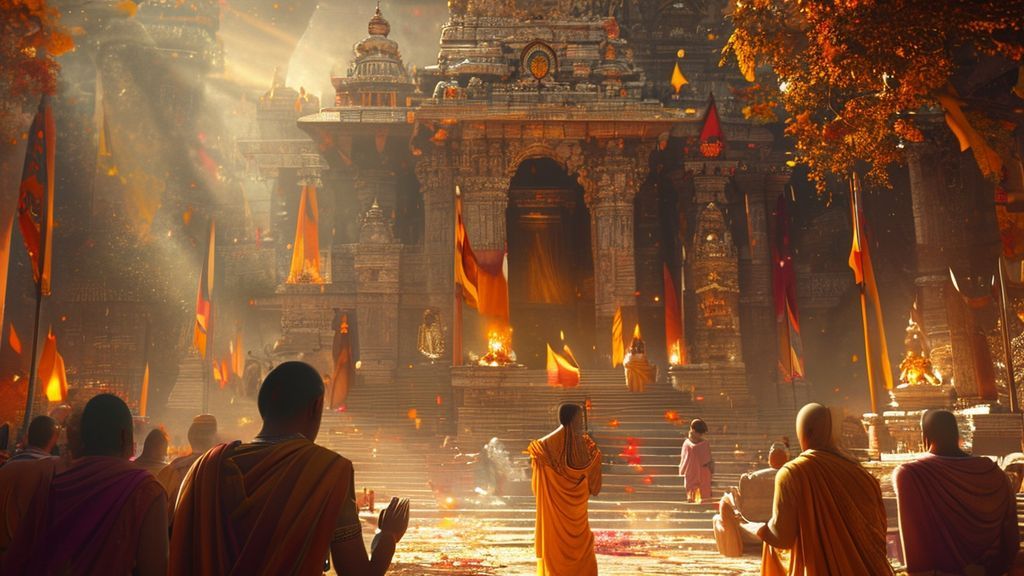
Self-esteem in Hinduism, fundamentally rooted in Atman recognition, is the profound realization of one’s true divine identity as the eternal, unchanging Self, or Atman. This intrinsic self-worth transcends egoic constructs, stemming from the understanding that Atman is Brahman, the absolute reality, making every being inherently perfect, complete, and limitless.
| Attribute | Details |
|---|---|
| Concept | Atman Recognition (Ātma-Jñāna – आत्मज्ञानम्) |
| Philosophical Basis | Advaita Vedanta, Upanishads, Yoga Darshana |
| Key Scripture References | Brihadaranyaka Upanishad, Chandogya Upanishad, Katha Upanishad, Bhagavad Gita, Brahma Sutras |
| Core Principles (Mahavakyas) | Tat Tvam Asi (तत् त्वम् असि – “Thou Art That”), Aham Brahmasmi (अहम् ब्रह्मास्मि – “I Am Brahman”), Prajnanam Brahma (प्रज्ञानम् ब्रह्म – “Consciousness is Brahman”), Ayam Atma Brahma (अयम् आत्मा ब्रह्म – “This Atman is Brahman”) |
Introduction: The Divine Foundation of Self-Esteem
In the sacred tapestry of Sanatan Dharma, the concept of “self-esteem” transcends the superficial notions of ego, external validation, or material success prevalent in modern discourse. For a sincere seeker, true self-esteem is not built upon fleeting achievements but upon the unshakeable bedrock of Atman recognition (Ātma-Jñāna). This profound spiritual insight is the understanding that the individual Self (Atman) is inherently identical with the Universal Self (Brahman). This realization liberates one from the chains of inadequacy, fear, and desire, revealing an inner reservoir of infinite strength, purity, and bliss. It is the cornerstone of a life lived in accordance with Dharma, fostering compassion, courage, and genuine contentment. Our ancient Rishis, through rigorous tapas and introspection, bequeathed this eternal wisdom, guiding humanity towards its true, divine heritage.
The Unfolding of Atman: From Shruti to Smriti
The foundational understanding of Atman recognition is primarily unveiled in the Upanishads, the philosophical core of the Vedas. These Shruti texts are not merely intellectual treatises but records of profound intuitive experiences. The Brihadaranyaka Upanishad, for instance, in its famous discourse between Yajnavalkya and Maitreyi, declares that the Atman is dearer than anything else and is the very basis of all existence and love. The Chandogya Upanishad repeatedly emphasizes “Tat Tvam Asi” (तत् त्वम् असि) – “Thou Art That,” a direct assertion of the non-duality between the individual soul and the cosmic reality. Furthermore, the Katha Upanishad vividly narrates the story of Nachiketa, who bravely sought the knowledge of Atman from Yama, the Lord of Death, elucidating the immortal, birthless, and deathless nature of the Self. Lord Krishna, in the Bhagavad Gita (Chapter 2, Verse 20), echoes this profound truth: “न जायते म्रियते वा कदाचिन्… न हन्यते हन्यमाने शरीरे” (Na jayate mriyate va kadacin… Na hanyate hanyamane sharire) – “The Self is never born nor dies; nor, having once existed, does it ever cease to be. It is unborn, eternal, everlasting, and primeval. It is not slain when the body is slain.” These timeless scriptures reveal that the journey to self-esteem is fundamentally a journey to the Self, a revelation of the divinity already resident within.
The Philosophical Architecture of Atman Realization
The intricate spiritual science of Sanatan Dharma provides a systematic framework for understanding and realizing the Atman, much like a grand temple is constructed with precise architectural principles. The Taittiriya Upanishad describes the five sheaths (Pancha Koshas) that envelop the Atman: the physical body (Annamaya Kosha), the vital energy (Pranamaya Kosha), the mind (Manomaya Kosha), the intellect (Vijnanamaya Kosha), and the bliss sheath (Anandamaya Kosha). The true Atman lies beyond all these, untouched and untainted. The path to Atman recognition involves transcending these layers through introspection and discrimination (Viveka), guided by the principle of “Neti Neti” (नेति नेति – “not this, not this”), as expounded in the Brihadaranyaka Upanishad. One systematically negates identification with the body, senses, mind, and intellect, until only the pure, unconditioned Consciousness remains. This is the Atman, the eternal witness. Furthermore, understanding the three states of consciousness – waking (Jagrat), dreaming (Swapna), and deep sleep (Sushupti) – and realizing the fourth, transcendental state (Turiya), which is pure consciousness, helps in grasping the unchangeable nature of the Atman, as delineated in the Mandukya Upanishad. This philosophical architecture provides a detailed blueprint for dismantling false identities and ascending to the truth of one’s being.
Rituals & Spiritual Practices for Atman Recognition
While Atman recognition is an inner realization, Sanatan Dharma offers a rich array of “rituals” and practices designed to purify the mind and prepare the seeker for this profound insight. These are not external ceremonies but internal disciplines. The classical path is often threefold: Sravana (श्रावण – attentive listening to the teachings of the Upanishads and Bhagavad Gita from a realized Guru), Manana (मनन – deep, critical reflection and contemplation on these truths, removing doubts), and Nididhyasana (निदिध्यासन – sustained meditation and assimilation of the truth, leading to direct experience). Yoga Darshana, as systematized by Patanjali, provides the Ashtanga Yoga path – Yama, Niyama, Asana, Pranayama, Pratyahara, Dharana, Dhyana, and Samadhi – all culminating in the realization of the Purusha, which is synonymous with Atman. Bhakti Yoga, through selfless devotion and surrender to the Divine, purifies the heart and stills the mind, making it receptive to higher truths. Karma Yoga, performing actions without attachment to results, cleanses karmic impressions. Regular practice of Dhyana (meditation) on the nature of the Self, alongside Swadhyaya (self-study of scriptures) and Satsang (association with spiritual teachers and sincere seekers), are indispensable steps on this sacred journey towards one’s true divine Self, which is the ultimate source of all genuine self-esteem. Explore more insights into these practices at Hindutva.online.
Mantras & Chants for Inner Realization
Mantras are potent sound vibrations, carefully selected by Rishis, that act as a direct channel to higher consciousness. Chanting them with devotion and understanding aids immensely in the process of Atman recognition.
- Om (ॐ): The primordial sound, the Pranava, representing Brahman itself. Constant chanting and meditation on Om are considered the highest form of spiritual practice, leading directly to the experience of Atman.
- Aham Brahmasmi (अहम् ब्रह्मास्मि): “I am Brahman.” This Mahavakya from the Brihadaranyaka Upanishad is a powerful affirmation of one’s true identity, not as the body-mind complex, but as the infinite, all-pervading reality.
- Tat Tvam Asi (तत् त्वम् असि): “Thou Art That.” From the Chandogya Upanishad, this mantra directs the mind to recognize the unity of the individual Self with the Universal Self. Meditating on this truth dissolves the illusion of separation.
- Soham (सोऽहम्): “I Am He/That.” This mantra is often used in breath awareness meditation, where “So” is mentally chanted with the incoming breath and “Ham” with the outgoing breath, subtly affirming one’s identity with the Divine.
- Prajnanam Brahma (प्रज्ञानम् ब्रह्म): “Consciousness is Brahman.” From the Aitareya Upanishad, this Mahavakya establishes that the ultimate reality is pure consciousness, and our individual consciousness is a reflection of that.
Regular, sincere chanting and meditation upon these sacred sounds awaken the dormant spiritual knowledge within, facilitating the recognition of the Atman.
Dos and Don’ts on the Path of Atman Recognition
To cultivate true Atman recognition and authentic self-esteem, a devotee must adhere to certain ethical and spiritual guidelines:
- Dos:
- Cultivate Viveka (Discrimination): Differentiate between the real (Atman) and the unreal (body, mind, world).
- Practice Vairagya (Dispassion): Detach from transient worldly pleasures and outcomes.
- Seek a Sadguru: A qualified spiritual teacher is crucial for guidance through complex philosophical concepts and practical meditation.
- Engage in Swadhyaya: Regularly study and reflect upon the Upanishads, Bhagavad Gita, and Brahma Sutras.
- Practice Dhyana: Meditate consistently to still the mind and turn attention inward.
- Live Dharmically: Uphold truth, non-violence, purity, and selfless service (Seva).
- Don’ts:
- Identify with the Ego: Do not mistake the changing, limited ego for the eternal Atman.
- Seek External Validation: True self-esteem comes from within, not from others’ opinions or achievements.
- Indulge in Sensual Pleasures Excessively: This distracts the mind and binds it to the material world.
- Harbor Negative Emotions: Anger, jealousy, hatred obscure the clarity of the Atman.
- Neglect Spiritual Discipline: Inconsistency on the path delays realization.
- Engage in needless intellectual debates: True wisdom is experiential, not just theoretical.
What is the difference between Atman and Ego?
The Atman is the eternal, unchanging, pure consciousness, the true Self, beyond all attributes and limitations, identical with Brahman. It is the witness. The Ego (Ahamkara – अहंकार) is the individual sense of “I” tied to the body, mind, and intellect. It is a product of Maya, impermanent, and the source of identification with desires, fears, and worldly experiences. The ego creates the illusion of separateness, while Atman is the principle of non-duality.
How does Atman recognition lead to self-esteem?
Atman recognition eradicates the root causes of low self-esteem: the feeling of inadequacy, dependence on external validation, and fear of failure or death. By realizing oneself as the immutable, infinite, and blissful Atman, one transcends all perceived limitations. This understanding reveals an intrinsic, unassailable worth that is not contingent on any external factor. It is the realization of perfect completeness within, fostering unshakeable confidence, serenity, and unconditional love.
Is Atman recognition an individual or collective experience?
Atman recognition is fundamentally an individual’s direct, personal experience. It is a realization that must occur within one’s own consciousness. However, the truth of Atman is universal, meaning that the Atman within each individual is ultimately the same as the Atman in all beings and the cosmic Brahman. So, while the experience of realization is individual, the truth discovered is a collective, universal unity, leading to compassion and a sense of interconnectedness with all existence.
Why This Matters for Every Hindu: Upholding Dharma and Moksha
The journey of Atman recognition is not an esoteric pursuit for a select few; it is the very essence of Sanatan Dharma and the ultimate goal of human birth. Without knowing one’s true Self, life remains bound by illusion (Maya), cycling through endless desires, attachments, and suffering. True liberation (Moksha) is synonymous with Atman realization. This profound self-knowledge is crucial for living a life of purpose, integrity, and genuine service to the world. It provides the strength to face life’s challenges with equanimity, to act with selfless intention, and to see the Divine in every being. For every Hindu, understanding and striving for Atman recognition is to consciously participate in the preservation and perpetuation of Dharma, ensuring that the eternal truths remain vibrant and accessible for generations to come. It is the ultimate testament to the profound wisdom embedded within our tradition, nurturing not merely individuals but the very fabric of cosmic order. Learn more about the profound truths of Hinduism on Hindutva.online.