


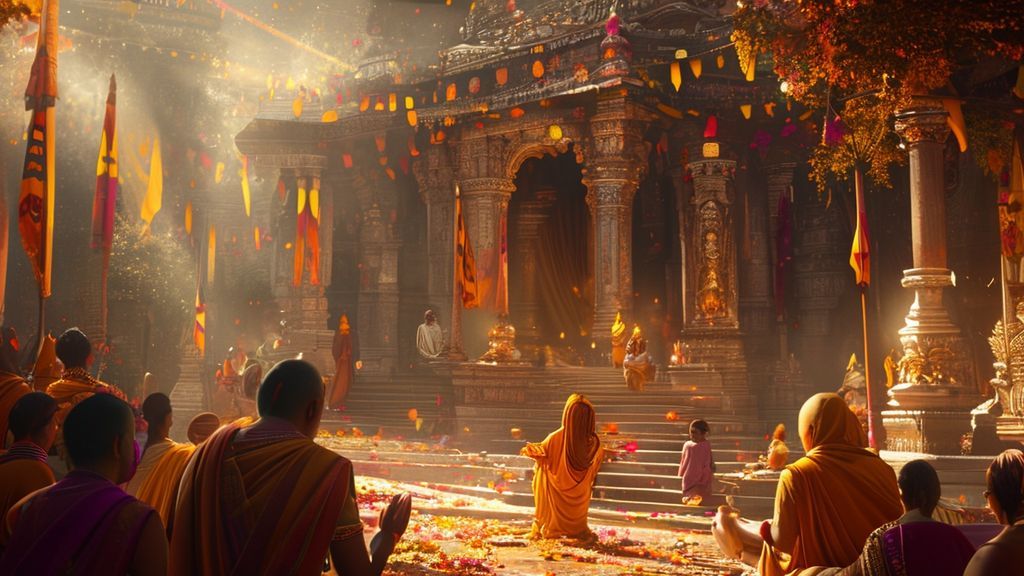
Shraddha Ceremony is a profound and essential Vedic ritual performed by descendants to honor and remember their deceased ancestors, ensuring their spiritual journey progresses towards liberation (`Moksha`). It is a sacred act of gratitude, offering peace to the departed souls and inviting blessings upon the living family, upholding the timeless principles of Sanatan Dharma.
| Attribute | Details |
|---|---|
| Ceremony Purpose | To ensure peace, liberation (`Moksha`), and spiritual sustenance for deceased ancestors, and to receive their blessings (`Pitru Kripa`). |
| Key Deities Invoked | Vishnu (as form of Pitru), Pitru-Devatas (ancestral deities), Agni (fire God), Soma (Moon God). |
| Primary Scripture References | Rig Veda (X.15.1-14), Yajur Veda, Manu Smriti (III.122-286), Garuda Purana (Pretakalpa), Matsya Purana, Markandeya Purana, Vishnu Purana. |
| Auspicious Period | Predominantly during Pitru Paksha (the dark fortnight of Ashwin month), also on anniversaries (`Tithi Shraddha`) and other specific occasions. |
| Core Rituals | Pindadaan (offering of rice balls), Tarpanam (water offerings), Brahmin Bhojan (feeding Brahmins), Homa (fire sacrifice). |
Introduction: The Eternal Bond of Reverence
In the vast tapestry of Sanatan Dharma, the Shraddha ceremony stands as a foundational pillar, embodying our profound reverence for those who have traversed beyond the mortal realm. It is not merely a ritual of remembrance but a vital spiritual act that acknowledges the continuity of existence and the unbreakable bond between the living and the departed. Through Shraddha, we fulfill our debt to the ancestors, known as Pitru Rina, a sacred obligation that ensures harmony, prosperity, and spiritual well-being for the entire lineage. This ancient rite, meticulously detailed in our sacred texts, serves as a bridge, conveying our devotion and offerings to the Pitru Loka, thereby facilitating the spiritual progression of our forebears and inviting their blessings.
Puranic History & Legend: The Roots of Ancestral Worship
The practice of honoring ancestors is deeply embedded in the very fabric of Vedic tradition, with its origins tracing back to the earliest hymns of the Rig Veda (Mandala X, Sukta 15), where invocations are made to the Pitrus, seeking their benevolence and presence. The Yajur Veda further elaborates on the offerings and rituals to be performed for the Pitru-Devatas.
However, it is in the Itihasas and Puranas where the Shraddha ceremony gains vivid narrative and systematic instruction. The Garuda Purana, particularly its Pretakalpa section, provides an exhaustive description of post-mortem rites, emphasizing the critical role of Shraddha in guiding the departed soul through its journey after death. It explains how offerings (`Pinda`) nourish the subtle body (`sukshma sharira`) of the deceased, aiding its transition to various realms.
A compelling legend from the Mahabharata (specifically the Karna Parva) recounts the story of Karna, who, upon reaching Svarga Loka, was offered gold and jewels instead of food. Distraught, he questioned Indra, who revealed that Karna had never offered food to his ancestors during Shraddha on Earth. Karna was then granted a period of fifteen days to return to Earth (the duration of Pitru Paksha) to perform Shraddha and offer food and water. This act alleviated his hunger in the celestial realms, underscoring the profound efficacy of the ritual. The Manu Smriti (Chapter III, verses 122-286) provides an extensive code of conduct for performing Shraddha, detailing the qualifications of Brahmins, the types of offerings, and the appropriate times, cementing its importance as a Dharmic duty.
The Cosmic & Philosophical Framework of Shraddha
Shraddha, at its core, is a sophisticated understanding of the cosmic order and the interconnectedness of all beings. It is not about appeasing angry spirits but about fulfilling a spiritual imperative rooted in Vedic cosmology. Our ancestors, upon shedding their physical bodies, transition to the Pitru Loka, a subtle realm. The offerings made during Shraddha—especially the Pindadaan (rice balls mixed with sesame seeds and ghee)—are believed to provide sustenance to their subtle bodies, facilitating their journey and elevating their consciousness. These offerings, consecrated by mantras and offered with devotion, transcend the material plane and reach the ancestors through the divine agencies of Agni and Soma.
The philosophical underpinnings also involve the concept of Rina-traya (three debts): Deva Rina (debt to gods), Rishi Rina (debt to sages), and Pitru Rina (debt to ancestors). Shraddha is the primary means to repay Pitru Rina, acknowledging the sacrifices and contributions of our forefathers in ensuring our existence and heritage. By performing Shraddha, we contribute to the balance of the cosmic ecosystem, ensuring the flow of blessings from the ancestral realm to the earthly one. It is a powerful affirmation of the eternal nature of the soul and the continuous cycle of cause and effect (`Karma`) that binds generations. This profound practice is integral to the spiritual guidance offered by Hindutva.online, upholding our Sanatan traditions.
Rituals & Puja Vidhi: A Step-by-Step Guide
The Shraddha ceremony is a meticulous ritual, often requiring the guidance of a qualified Vedic priest (Purohit). While specific practices may vary by regional tradition, the core elements remain consistent:
- Sankalpa (Solemn Resolve): The Karta (performer) takes a vow, stating the purpose, time, place, and names of the ancestors for whom the Shraddha is being performed.
- Avahana (Invocation): The ancestors are reverently invited to be present, often symbolized by placing blades of Kusha grass, representing the divine seat for the Pitrus.
- Pindadaan (Offering of Rice Balls): This is the central ritual. Balls of cooked rice mixed with black sesame seeds (`Til`), ghee, honey, and milk are prepared. Each Pinda is offered with specific mantras for the deceased parent, grandparent, and great-grandparent, representing the nourishment for their subtle bodies.
- Tarpanam (Water Offerings): Water mixed with black sesame seeds is offered with specific hand gestures (`mudras`), allowing the water to flow from the base of the thumb (the Pitru Teertha), symbolizing profound reverence.
- Homa (Fire Sacrifice): A small fire ritual is performed, with offerings made to Agni, who acts as the messenger carrying the oblations to the Pitru Loka. Mantras invoking Agni and Soma are chanted.
- Vastra-Daan (Offering of Clothes): New clothes, often white, are offered to the Brahmins representing the ancestors.
- Brahmin Bhojan (Feeding of Brahmins): Qualified Brahmins, representing the ancestors and Vishnu, are respectfully fed Sattvic (pure) food. Their contentment is believed to reflect the contentment of the ancestors.
- Dakshina (Donation): Monetary and material gifts are offered to the Brahmins after the meal, expressing gratitude for their service.
- Visarjan (Farewell): After the rituals, the Karta seeks forgiveness for any errors and bids farewell to the invoked ancestors and deities, praying for their continued blessings.
Mantras & Chants: Echoes of Eternity
The power of Shraddha is amplified by the potent Vedic mantras chanted during the ceremony. These sacred sound vibrations invoke divine energies and create a spiritual conduit for the offerings. Some key mantras include:
- General Pitru Mantra:
ॐ पितृ-देवताभ्यो नमः । स्वधा नित्यं नमो नमः ॥
Om Pitru-Devatābhyo Namaḥ | Svadhā Nityaṁ Namo Namaḥ ||
(Salutations to the Ancestral Deities. Salutations always to Svadhā (the offering to ancestors).)
- Mantra for Pindadaan: Specific mantras are chanted for each ancestor, often including their name and Gotra, for example:
अमुक गोत्रस्य अमुक शर्मणः प्रेतस्य अमुक पिण्डान्नेन तृप्यताम् इदं पिण्डं तेभ्यः स्वधा ।
Amuka Gotrasya Amuka Sharmaṇaḥ Pretasya Amuka Piṇḍānnena Tṛpyatām Idaṁ Piṇḍaṁ Tebhyaḥ Svadhā |
(May (ancestor’s name) of (ancestor’s Gotra) be satisfied with this Pinda of rice. This Pinda is for them, Svadhā.)
- Gayatri Mantra for Ancestors (Pitru Gayatri):
ॐ पितृगणाय विद्महे जगत् धारिणे धीमहि तन्नो पितरो प्रचोदयात् ॥
Om Pitrugaṇāya Vidmahe Jagat Dhāriṇe Dhīmahi Tanno Pitaro Prachodayāt ||
(We meditate on the multitude of ancestors, the bearers of the world. May those ancestors illuminate us.)
- Vishnu Mantra (as remover of obstacles):
ॐ नमो भगवते वासुदेवाय ॥
Om Namo Bhagavate Vāsudevāya ||
(Salutations to Lord Vasudeva.)
Dos and Don’ts: Upholding Purity and Tradition
Performing Shraddha with proper adherence to tradition ensures its efficacy and purity. Observing these guidelines is crucial:
- Dos:
- Perform Shraddha with utmost devotion, purity of mind, and sincerity.
- Wear clean, traditional clothes (preferably white or light-colored).
- Maintain physical and mental purity throughout the ceremony.
- Invite qualified and virtuous Brahmins to conduct the rituals and receive offerings.
- Offer fresh, Sattvic food cooked without onion, garlic, or strong spices.
- Ensure the space where Shraddha is performed is clean and consecrated.
- Offer food to a crow (`Kak`) or cow (`Gau`) after feeding the Brahmins, as they are considered messengers of Pitrus.
- Consider visiting sacred sites like Gaya, Varanasi, or Rameswaram for special Shraddha ceremonies.
- Don’ts:
- Do not use iron vessels for cooking or serving during Shraddha.
- Avoid consuming or offering non-vegetarian food, alcohol, or tobacco.
- Do not perform Shraddha in an impure or unclean state.
- Avoid wearing new clothes, shaving, or cutting hair (for the Karta) during Pitru Paksha.
- Refrain from engaging in any auspicious or celebratory activities during Pitru Paksha, as it is a period of remembrance and introspection.
- Do not perform Shraddha without proper guidance if unsure of the procedures.
Frequently Asked Questions About Shraddha
Who is eligible to perform Shraddha?
Traditionally, the eldest son is primarily responsible for performing Shraddha. However, in the absence of a son, other close male relatives such as the younger son, grandson, great-grandson, or husband (for his deceased wife) may perform it. In modern times, and depending on regional customs and scriptures like the Brahma Purana, daughters or even wives are allowed to perform the ceremony, especially if no male heir is available, reflecting a more inclusive understanding of Dharmic duties.
What if I don’t know my ancestors’ names or Gotra?
If specific names or Gotra are unknown, the ritual can still be performed with a general invocation, such as “Sarva Pitru-Devatabhyo Namah” (Salutations to all ancestral deities) or “Mama Pitrubhyah” (for my ancestors). The sincere intention and devotion (`Bhava`) behind the offerings are considered paramount, and the universal deities are invoked to ensure the offerings reach the deserving ancestors. Guidance from a knowledgeable priest is highly recommended in such cases.
What is the significance of Pitru Paksha for Shraddha?
Pitru Paksha, the fortnight dedicated to ancestors during the Ashwin month, is considered the most auspicious and potent period for performing Shraddha. It is believed that during this time, the Pitrus descend to Earth, making it easier for them to receive the offerings. Performing Shraddha during Pitru Paksha is considered equivalent to performing it at holy sites like Gaya, offering immense spiritual merit and ensuring comprehensive blessings for the entire family. For comprehensive resources on this period, visit Hindutva.online.
Is Shraddha a superstitious practice or does it have a scientific basis?
From a Vedic perspective, Shraddha is rooted in profound spiritual science, not superstition. It acknowledges the existence of subtle bodies and the energetic connection between generations. Modern scientific understanding might not yet fully grasp these subtle dimensions, but the principles of energy transfer, mental intention, and cosmic vibrations are central to Vedic thought. The offerings, consecrated with specific sound frequencies (mantras), are believed to create an energetic pathway that sustains and elevates the departed soul, while simultaneously fostering a sense of peace and continuity within the living family, impacting their psycho-spiritual well-being.
Dharmic Significance: Preserving the Eternal Legacy
The Shraddha ceremony is far more than a mere ritual; it is a profound expression of Sanatan Dharma’s emphasis on family, lineage, and cosmic interconnectedness. By meticulously performing Shraddha, we reaffirm our commitment to our ancestral heritage, ensuring that the chain of tradition remains unbroken. It cultivates gratitude, humility, and a deep understanding of our place in the continuum of existence. The blessings (`Pitru Kripa`) bestowed by contented ancestors are believed to bring prosperity, health, progeny, and spiritual upliftment to the living, removing obstacles and paving the way for spiritual progress.
This sacred duty is a testament to the timeless wisdom of our Rishis, who understood the intricate workings of the cosmos and the subtle energetic exchanges that govern life and death. By honoring our Pitrus, we not only secure their peace but also purify our own karma and pave the way for our own spiritual journey, thus preserving the eternal legacy of Sanatan Dharma for generations to come.