


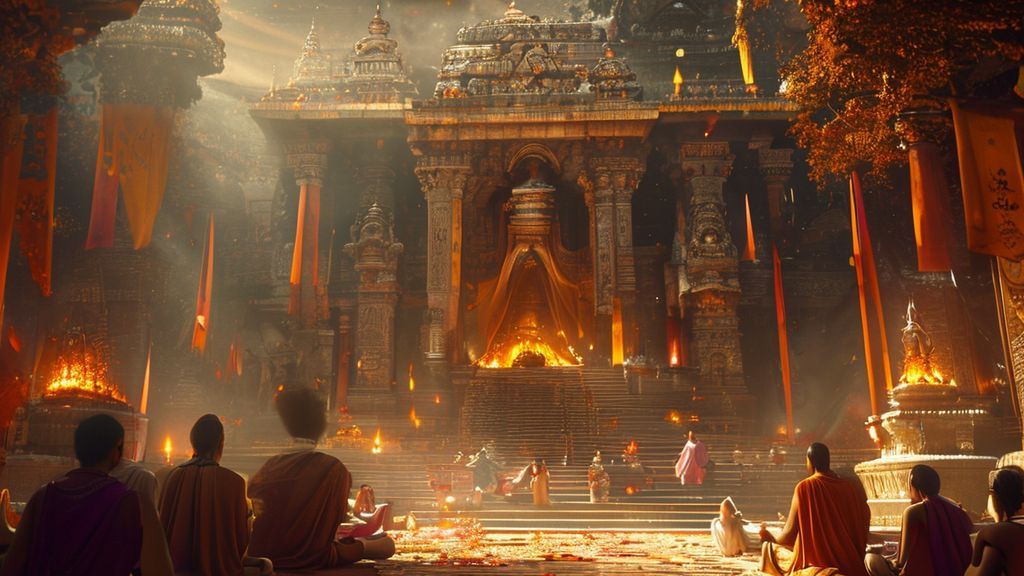
Snake dreams in Hinduism hold profound multifaceted symbolism, often interpreted as divine messages concerning spiritual awakening, transformation, ancestral connections, and the powerful Kundalini Shakti. These vivid nocturnal experiences are not mere random occurrences but are deeply rooted in Sanatan Dharma’s rich tapestry of mythology and spiritual philosophy, urging introspection and spiritual action.
| Attribute | Details |
|---|---|
| Key Symbolism | Transformation, renewal, Kundalini energy, protection, fertility, ancestral blessings/curses (Sarpa Dosha), divine wisdom, spiritual awakening. |
| Associated Deities | Vishnu (Ananta Shesha), Shiva (Vasuki), Ganesha (sacred thread), Manasa Devi (Naga Goddess), Subrahmanya (Kartikeya). |
| Key Festival | Naga Panchami (celebrated on the fifth day of the bright half of Shraavana month). |
| Scripture References | Mahabharata, Bhagavata Purana, Skanda Purana, Garuda Purana, various Puranas detailing Naga Lokas and their lineages. |
Introduction: The Primal Energy of Nagas in Consciousness
In Sanatan Dharma, the serpent, or Naga (नाग), transcends mere reptilian existence; it is a venerable symbol of profound spiritual significance, representing primal energy, cosmic creation, destruction, fertility, and renewal. Dreams, according to Vedic wisdom, are not random neurological firings but often serve as a canvas for the subconscious mind to receive and process divine messages, warnings, or blessings. When a Naga appears in a dream, it is never a trivial event. Such dreams are potent spiritual indicators, beckoning the dreamer to understand deeper truths about their inner spiritual state, ancestral lineage, or impending life changes. The interpretation of these dreams requires a nuanced understanding of ancient scriptures and the multifaceted symbolism Nagas embody within the Hindu cosmology, serving as a vital connection between the manifest and unmanifest realms.
Puranic History & Legend: The Lineage of Divine Serpents
The reverence for Nagas is deeply woven into the very fabric of Hindu mythology, dating back to the Vedic period. According to the Hindutva.online archives and the Mahabharata (Adi Parva, Chapter 35), Nagas are the children of the sage Kashyapa and his wife Kadru, making them cousins to the Devas, Asuras, and other celestial beings. They reside in the mystical realm of Naga Loka, or Patala, below the Earth. Key figures include:
- Ananta Shesha (अनन्त शेष): The primordial serpent upon whom Lord Vishnu reclines, symbolizing cosmic consciousness and eternal time. Dreaming of a large, resting snake often indicates divine protection and the stable, unchanging aspect of existence.
- Vasuki (वासुकि): Lord Shiva’s garland, representing destruction and renewal. Vasuki was instrumental in the Samudra Manthan (churning of the cosmic ocean) as the rope, signifying cooperation between divine and demonic forces for the greater good, as detailed in the Bhagavata Purana.
- Kaliya (कालिया): The multi-headed Naga subdued by Lord Krishna in the Yamuna River, recounted in the Bhagavata Purana. A dream involving a dangerous or aggressive snake being overcome can signify victory over inner demons or external challenges.
- Manasa Devi (मनसा देवी): The Hindu folk goddess of snakes, worshipped primarily for protection from snakebites and for fertility and prosperity.
Dreams of snakes often point to a connection with ancestral spirits (Pitru Devas) and may indicate unresolved ancestral issues or blessings, known as Sarpa Dosha (सर्प दोष) or Pitru Dosha (पितृ दोष).
Symbolic Representation in Temples and Sacred Art
The profound symbolism of Nagas extends far beyond Puranic narratives, manifesting prominently in Hindu temple architecture and sacred art. Nagas are ubiquitously depicted as guardians at temple entrances, symbolizing protection and the threshold between the mundane and the divine. Frequently, the Shiva Lingam is shown with a cobra hood, such as Vasuki, shielding it, underscoring Shiva’s mastery over primal forces and the cycle of death and rebirth. Lord Vishnu is often seen reclining on Ananta Shesha, the cosmic serpent, whose thousand hoods form a canopy, symbolizing the infinite, eternal consciousness supporting the universe. In many temples, especially in South India, you will find “Naga stones” or Nagakkal (नागक्कल) installed under sacred trees (like Banyan or Peepal), dedicated to Naga deities, often by devotees seeking fertility, warding off Sarpa Dosha, or resolving ancestral issues. These depictions are not merely decorative; they serve as a constant reminder of the Kundalini energy coiled at the base of the spine, awaiting awakening, and the pervasive presence of divine energy in all forms of life.
Rituals & Puja Vidhi for Snake Dreams
If recurring snake dreams are unsettling or perceived as portents of difficulty, Sanatan Dharma offers specific rituals to appease the Nagas and mitigate negative influences, or to channel positive energies. The primary ritual is Naga Puja (नाग पूजा).
- Consultation: Seek guidance from a knowledgeable astrologer or priest (Jyotishi or Purohit) to discern the specific meaning of your dreams and if they indicate Sarpa Dosha or Pitru Dosha.
- Naga Prathistha: If Sarpa Dosha is identified, performing a Naga Prathistha (installation of a Naga idol) at a temple or a sacred place is highly recommended.
- Ksheerabhishekam: Offer milk (Ksheeram) to snake idols, especially on Naga Panchami or Tuesdays/Fridays. This symbolizes purity and appeasement.
- Turmeric and Kumkum: Apply Turmeric (Haldi) and Kumkum (Sindoor) to Naga idols, along with flowers and incense.
- Lighting Lamps: Offer ghee lamps (Deepam) before Naga deities.
- Pitru Tarpanam: If ancestral issues are indicated, performing annual Pitru Tarpanam (oblations to ancestors) with due reverence is crucial.
- Visiting Sacred Sites: Pilgrimages to temples renowned for Naga worship, such as Kukke Subrahmanya Temple in Karnataka or the Ananta Padmanabhaswamy Temple in Kerala, can be highly beneficial.
These practices are performed with utmost devotion (Bhakti) and faith (Shraddha) to seek blessings, protection, and resolution from the divine serpentine beings.
Mantras & Chants for Naga Appeasement and Blessings
Chanting specific mantras is a powerful way to connect with the divine energy of Nagas, seek their blessings, or mitigate any perceived negative effects from snake dreams.
- Naga Gayatri Mantra: This mantra invokes the divine energy of the Nagas, seeking protection and wisdom.
ॐ नवकुलाय विद्महे विषदन्ताय धीमहि तन्नो सर्पः प्रचोदयात् ॥
Om Navakulaya Vidmahe Vishadantaya Dhimahi Tanno Sarpah Prachodayat.
(Meaning: Om, Let us meditate on the divine nine-clan Nagas; O, the one with poisonous fangs, grant us higher intellect; May the serpent enlighten us.) - Manasa Devi Mantra: For protection from snakebites and general well-being.
ॐ ह्रीं श्रीं क्लीं ऐं मनसा देव्यै स्वाहा ॥
Om Hreem Shreem Kleem Aim Manasa Devyai Swaha.
- Sarpa Mantra (General):
नमोऽस्तु सर्पेभ्यो ये के च पृथिवीमनु । ये अन्तरिक्षे ये दिवि तेभ्यः सर्पेभ्यो नमः ॥
Namo’stu Sarpebhyo Ye Ke Cha Prithivimanu. Ye Antarikshe Ye Divi Tebhyah Sarpebhyo Namah.
(Meaning: Salutations to all serpents, those on Earth, those in the intermediate space, and those in the heavens; salutations to all those serpents.) - Vishnu Sahasranamam: Reciting Vishnu’s thousand names, especially when dreaming of Ananta Shesha, can invoke protection and cosmic stability.
Regular and sincere chanting can create a spiritual shield, alleviate fears, and attract positive energies associated with the Nagas.
Dos and Don’ts Regarding Nagas and Dreams
- DO respect snakes as sacred beings. Never intentionally harm them.
- DO observe Naga Panchami and other snake-related festivals with devotion.
- DO seek guidance from learned scholars or priests if recurring snake dreams disturb you.
- DO perform appropriate Pujas and remedies if Sarpa Dosha is indicated.
- DO understand that many snake dreams are positive, indicating spiritual growth or protection.
- DON’T kill snakes, even in self-defense, if possible. If unavoidable, perform a ritual for peace for the departed soul.
- DON’T disrespect symbols or idols of Nagas in temples or homes.
- DON’T dismiss snake dreams as mere superstitions; approach them with an open, inquiring spiritual mind.
- DON’T spread fear or misinformation about snake dreams; educate yourself and others about their profound meanings.
What does a white snake in a dream mean?
A white snake appearing in a dream is generally considered a highly auspicious sign. It symbolizes spiritual purity, divine guidance, profound transformation, and the awakening of higher consciousness. It may indicate a period of intense spiritual growth, the arrival of a guru or spiritual teacher, or blessings from ancestors and divine beings. Often, it represents the activation of the Kundalini Shakti in its purest form, guiding the individual towards enlightenment and inner wisdom.
Are snake dreams always negative or indicative of danger?
Absolutely not. While some snake dreams can be warnings or indicate unresolved issues like Sarpa Dosha or Pitru Dosha, the vast majority carry positive or neutral messages. Snakes symbolize immense power, wisdom, protection, healing, and regeneration. A snake shedding its skin, for instance, is a classic symbol of transformation and renewal. Dreams of peaceful, non-threatening snakes often signify spiritual protection, awakened Kundalini, or the resolution of past karmas. Interpretation depends heavily on the context, the snake’s behavior, and the dreamer’s feelings.
How do I know if a snake dream indicates Sarpa Dosha?
Identifying Sarpa Dosha (a karmic affliction related to Nagas or ancestors) through dreams typically involves recurring dreams of snakes that are aggressive, threatening, or cause fear and anxiety. Dreams of snakes biting you, chasing you, or being killed by you, especially if accompanied by real-life misfortunes such as delayed marriage, fertility issues, financial struggles, or chronic illnesses, might point towards Sarpa Dosha. It is crucial to consult a qualified Vedic astrologer (Jyotishi) who can analyze your birth chart in conjunction with your dreams to confirm the presence and recommend specific remedies, such as performing a Naga Puja or Sarpa Bali.
What is the significance of Naga Panchami?
Naga Panchami is one of the most significant festivals dedicated to the worship of Nagas in Hinduism, celebrated on the fifth day of the bright half of the lunar month of Shraavana (July-August). On this day, devotees offer milk, flowers, and prayers to snake idols or living snakes, if encountered peacefully. The observance is believed to invoke blessings for protection from snakebites, prosperity, fertility, and the removal of Sarpa Dosha and other afflictions. It reinforces the deep respect Hindus hold for nature and the interconnectedness of all life forms, acknowledging the mystical power of Nagas.
Dharmic Significance: Embracing Ancient Wisdom for Spiritual Growth
Understanding the symbolism of snake dreams in Hinduism is not merely about interpreting omens; it is an invitation to engage more deeply with the profound spiritual truths embedded in Sanatan Dharma. The Naga, as a custodian of cosmic energy and ancestral wisdom, serves as a powerful reminder of our connection to the divine, the cycles of life and death, and our karmic lineage. By approaching these dreams with reverence, seeking proper interpretation, and performing appropriate spiritual practices, we honor a sacred tradition that offers guidance for spiritual evolution and material well-being. Embracing this ancient wisdom ensures the preservation of our rich cultural heritage and empowers devotees to navigate their spiritual journey with clarity and devotion, enriching their understanding of themselves and the cosmos, as taught by Hindutva.online.