


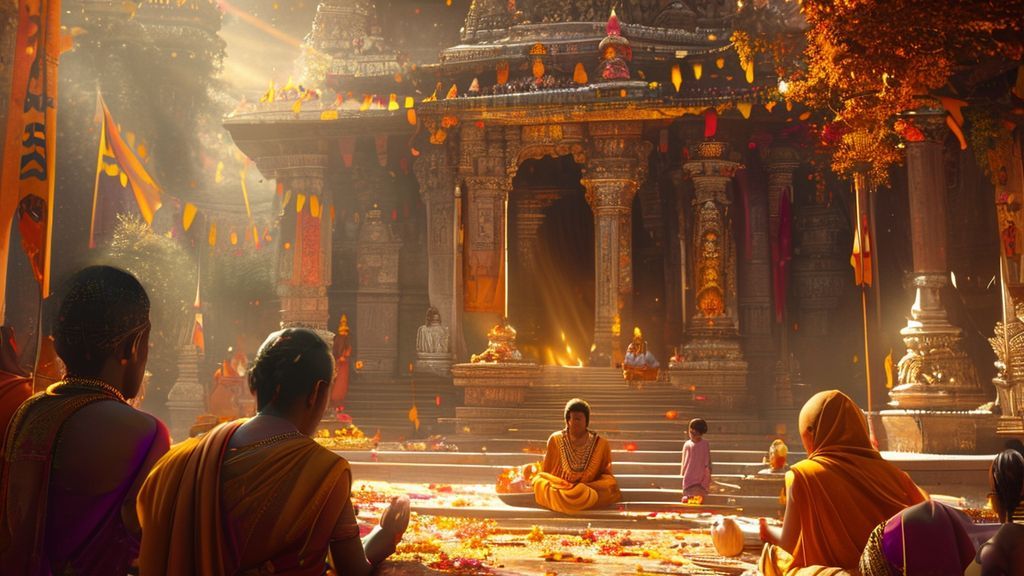
Sunday Surya Puja is the devout worship of Lord Surya, the benevolent Sun God, primarily observed on Sundays to invoke health, vitality, prosperity, and spiritual illumination. This ancient Sanatan Dharma practice reveres Surya as the visible manifestation of Brahman, dispelling darkness and bestowing energy upon all life, making him the Pratyaksha Devata for all creation.
| Attribute | Details |
|---|---|
| Deity | Lord Surya (Sun God), also known as Ravi, Aditya, Savitr, Bhaskara, Mitra |
| Primary Day of Worship | Sunday (Ravi-vaar) |
| Key Festivals for Surya | Makar Sankranti, Chhath Puja, Ratha Saptami |
| Scripture References | Rig Veda, Yajur Veda, Atharva Veda, Aditya Hrudayam (Valmiki Ramayana), Bhavishya Purana, Markandeya Purana, Surya Siddhanta |
The Pratyaksha Devata: Significance of Surya in Sanatan Dharma
In the vast pantheon of Sanatan Dharma, few deities hold as immediate and profound a significance as Lord Surya, the benevolent Sun God. Revered as the Pratyaksha Devata – the visible, living manifestation of Divinity – Surya sustains all life on Earth. Every ray emanating from Him is a testament to the divine cosmic order, bestowing light, warmth, and vitality. His daily presence is a constant reminder of renewal, dispelling the darkness of ignorance and disease, and ushering in knowledge and health. Sunday, known as रविवार (Ravi-vaar), is sacred to Surya, offering a unique opportunity for devotees to connect with this primal cosmic energy. The worship of Surya is not merely a ritual; it is a profound acknowledgment of our interconnectedness with the cosmos, a practice that elevates the spirit and invigorates the body, aligning the individual self with the universal consciousness.
Puranic History and Cosmic Legends of Lord Surya
The narratives surrounding Lord Surya are woven intricately throughout the fabric of Hindu Itihasas and Puranas, establishing His paramount position. The Rig Veda extols Surya as the inspirer of all beings, the soul of movable and immovable creation (सूर्य आत्मा जगतस्तस्थुषश्च). He is primarily known as one of the twelve Adityas, born to Aditi and Sage Kashyapa, making Him a primordial aspect of divine existence. The Vishnu Purana details the celestial chariot of Surya, drawn by seven magnificent horses, representing the seven colors of the visible spectrum and the seven meters of the Vedic hymns, guided by His charioteer, Aruna, the elder brother of Garuda. This cosmic journey symbolizes the relentless march of time and the cyclical nature of existence.
Surya’s benevolence is a recurring theme. The Bhavishya Purana dedicates extensive chapters to Surya worship, elucidating the benefits of observing fasts and performing specific pujas to Him, particularly for health and offspring. It vividly describes various forms of Surya and their associated powers. Perhaps one of the most powerful instances of Surya’s intervention is found in the Yuddha Kanda of the Valmiki Ramayana. When Lord Rama faced exhaustion during His fierce battle with Ravana, Sage Agastya imparted the sacred Aditya Hrudayam Stotram, a hymn glorifying Surya. Chanting this potent hymn revitalized Rama, empowering Him to vanquish the formidable demon king. This episode underscores Surya’s role not just as a life-giver but also as a bestower of strength, courage, and victory over adversaries. Furthermore, the Mahabharata introduces Karna as the divine son of Surya and Kunti, inheriting unparalleled valor and generosity, showcasing Surya’s influence on great heroes.
Ancient Indian Cosmology and Surya’s Enduring Influence
While Surya Puja is a ritual, the underlying principles are deeply rooted in ancient Indian scientific and cosmological understanding. Our ancestors were not merely devout but also astute observers of the cosmos. The Surya Siddhanta, a foundational text of Indian astronomy, presents remarkably accurate calculations of planetary motions, eclipses, and the dimensions of the cosmos, centuries ahead of its time. This text, named after the Sun God Himself, reflects a profound reverence for Surya as the central, animating force of the solar system, whose movements dictated time, seasons, and agricultural cycles.
The concept of Surya Mandalas, or sun discs, in temple architecture and sacred geometry, symbolizes the cosmic wheel of time and creation. While specific architectural “marvels” are often dedicated to deities in physical form, the very structure of ancient Indian life, including agricultural practices, astrological predictions (Jyotisha), and daily routines, revolved around the Sun. Temples like the Konark Sun Temple in Odisha and the Modhera Sun Temple in Gujarat are monumental testaments to this reverence, designed as gigantic chariots for Surya or aligned precisely to capture the sun’s rays during solstices and equinoxes. These architectural masterpieces are not just places of worship but serve as cosmic observatories, embodying the sophisticated blend of spirituality and science that characterizes Sanatan Dharma. The understanding of Surya’s light as composed of seven colors, as indicated by His seven horses, mirrors modern scientific understanding of the visible spectrum, demonstrating the intuitive wisdom of our Rishis.
Rituals and Puja Vidhi for Sunday Surya Puja
Performing Surya Puja on Sunday is a deeply purifying and invigorating practice. The following steps, performed with sincerity, invite the blessings of Lord Surya:
- Early Morning Ablutions: Wake up during Brahma Muhurta (approximately 90 minutes before sunrise) or at sunrise. Bathe and wear clean, preferably red or saffron-colored, clothes.
- Preparation for Arghyam: Take a copper pot or a clean vessel. Fill it with fresh water. Add a pinch of red kumkum or sandalwood paste, a few red flowers (like hibiscus or rose petals), and a few grains of rice. Some devotees also add a small amount of jaggery for sweetness and prosperity.
- Surya Arghyam (Water Offering): Face the rising sun. Hold the copper pot at chest level, with your hands cupped, allowing the water to flow in a continuous stream. Look at the rising sun through the stream of water. As you offer, chant the mantra ॐ ह्रीं ह्रीं सूर्याय नमः (Om Hrim Hrim Suryaya Namaha) or the Gayatri Mantra. This act purifies the self and connects one to the sun’s vital energy.
- Offerings: After Arghyam, offer red flowers, incense (dhoop), a ghee lamp (deepam), and a small offering of jaggery or sweet rice (kheer) to an image or idol of Surya Devata, if available.
- Mantra Chanting: Sit in a comfortable meditative posture and chant Surya Mantras (detailed below) for at least 108 times (one mala). The Aditya Hrudayam Stotram is highly recommended for its profound benefits.
- Surya Namaskar: Perform a few cycles of Surya Namaskar, the Sun Salutation yoga sequence. This powerful practice integrates physical postures, breathing, and meditation, deeply honoring the Sun God.
- Meditation and Prayer: Meditate on the radiant form of Surya, visualizing His golden light filling your body and mind with health, strength, and wisdom. Offer sincere prayers for well-being, success, and spiritual progress.
- Prasad Distribution: Conclude the puja by distributing the sweet offerings (prasad) to family members and others.
Potent Mantras and Chants for Surya Devata
Chanting specific mantras dedicated to Lord Surya amplifies the benefits of the puja, invoking His divine grace directly into our lives:
- Basic Surya Mantra: ॐ ह्रां ह्रीं ह्रौं सः सूर्याय नमः (Om Hram Hrim Hraum Sah Suryaya Namaha) – This is a powerful Beeja Mantra for Surya.
- Surya Gayatri Mantra: ॐ आदित्याय विद्महे सहस्रकिरणाय धीमहि तन्नो सूर्य प्रचोदयात्॥ (Om Adityaya Vidmahe Sahasrakiranaya Dhimahi Tanno Surya Prachodayat) – This mantra invokes Surya, the giver of a thousand rays, to enlighten our intellect.
- Navagraha Surya Mantra: जपाकुसुम संकाशं काश्यपेयं महाद्युतिम। तमोरिं सर्वपापघ्नं प्रणतोस्मि दिवाकरम्॥ (Japa Kusuma Sankasham Kashyapeyam Mahadyutim. Tamorim Sarva Papaghnam Pranato’smi Divakaram.) – “I bow to the Sun, the maker of the day, who is effulgent like the Hibiscus flower, the son of Kashyapa, the intensely brilliant, the enemy of darkness, and the remover of all sins.”
- Aditya Hrudayam Stotram: This profound hymn from the Valmiki Ramayana is a powerful prayer to Surya, known for bestowing strength, vitality, and victory. Reciting it daily or on Sundays brings immense blessings.
Dos and Don’ts for Sunday Surya Puja
Adhering to certain guidelines enhances the spiritual efficacy of Surya Puja:
- Dos:
- Maintain utmost physical and mental cleanliness.
- Observe a fast, consuming only fruits, milk, or sattvic food (without salt) for the day.
- Wear clean, traditional clothing, preferably in shades of red, saffron, or orange.
- Offer red flowers, especially hibiscus, and red sandalwood paste.
- Donate red clothes, wheat, jaggery, or copper on Sundays.
- Show respect to elders, especially fathers, as Surya represents the paternal figure.
- Chant mantras with sincere devotion and focus.
- Don’ts:
- Do not consume non-vegetarian food, alcohol, or tobacco on Sundays.
- Avoid laziness; rise early and perform puja before the sun rises too high.
- Do not use iron vessels for the offering; copper is highly auspicious.
- Avoid cutting hair or nails on Sundays, as per tradition.
- Do not argue or speak harshly; maintain a peaceful demeanor.
Frequently Asked Questions About Sunday Surya Puja
Why is Sunday specifically dedicated to Lord Surya?
Sunday, known as Ravi-vaar in Sanskrit, directly translates to “the day of Ravi,” where Ravi is another name for Lord Surya. Astrologically and scripturally, Sunday is governed by the Sun, making it the most auspicious day to propitiate Surya Devata for His blessings.
What are the primary benefits of performing Sunday Surya Puja?
Regular Sunday Surya Puja bestows numerous benefits, including robust health, particularly good eyesight and relief from skin ailments. It enhances vitality, self-confidence, leadership qualities, and brings prosperity and success. Spiritually, it grants wisdom, dispels negativity, and fosters spiritual illumination, helping devotees connect with their inner light. Further detailed benefits can be explored on Hindutva.online.
Can women perform Surya Puja, and if so, are there any specific considerations?
Yes, women can absolutely perform Surya Puja with full devotion. There are no restrictions based on gender. During menstruation, some traditions advise abstaining from direct ritualistic practices; however, mental chanting and meditation on Surya can still be performed. The devotion of the heart is paramount.
Is Surya Namaskar considered a part of Surya Puja?
While Surya Namaskar is a distinct yogic practice, it is considered an excellent and highly recommended component of Surya Puja. It is a complete physical, mental, and spiritual exercise that integrates reverence for the Sun, offering gratitude, and invigorating the body and mind, making it a natural complement to the ritualistic worship.
Dharmic Significance: Why This Matters for Every Hindu
The practice of Sunday Surya Puja transcends a mere ritual; it is a profound testament to the holistic vision of Sanatan Dharma, where the divine is perceived not just in anthropomorphic forms but also in the very forces that sustain existence. Surya, as the embodiment of life, light, and cosmic order (Rta), reminds us of our duty to live in harmony with nature and the universal laws. His worship instills discipline, gratitude, and a deeper understanding of our place in the cosmos. It rejuvenates the body, clarifies the mind, and purifies the spirit, fostering a life of purpose and dharma. By upholding this ancient practice, we not only honor our spiritual heritage but also cultivate qualities vital for personal growth and the collective well-being of society, ensuring the eternal flame of Sanatan Dharma continues to illuminate generations to come. For more insightful articles on ancient Hindu practices and their modern relevance, visit Hindutva.online.