


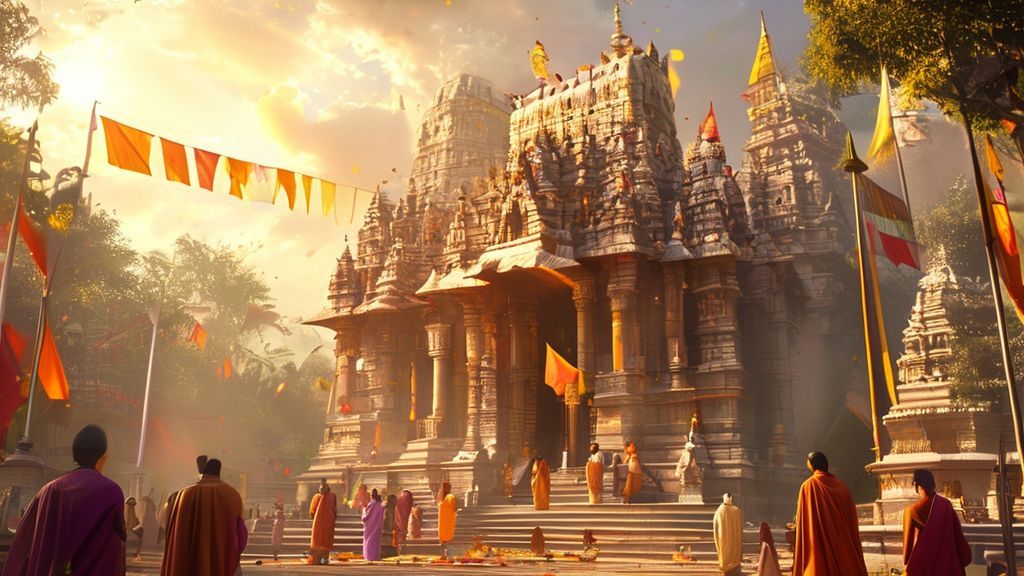
Tamil Nadu Temple Architecture’s Gopuram style refers to the monumental, ornate towers that mark the entrance to Dravidian Hindu temples, primarily in South India. These towering gateways, adorned with intricate sculptures of deities, mythical beasts, and divine narratives, serve as a spiritual threshold, inviting devotees into the sacred precincts of the Lord’s abode, embodying the cosmic mountain Meru.
| Attribute | Details |
|---|---|
| Defining Feature | Monumental, multi-storied entrance tower to a temple complex. |
| Primary Location | Tamil Nadu, Kerala, Andhra Pradesh, Karnataka (South India). |
| Key Dynasties | Pallava (early forms), Chola, Pandya, Vijayanagara (most elaborate). |
| Scripture References | Agama Shastras, Silpa Shastras (e.g., Manasara, Mayamata) for temple architecture principles. |
| Symbolic Role | Cosmic Gateway, representation of Mount Meru, spiritual transition point. |
Introduction to the Sacred Gateways: The Gopuram’s Grandeur
In the vast tapestry of Sanatan Dharma, the temple stands as the earthly abode of the Divine, a sacred space where the mortal meets the immortal. Among the myriad architectural wonders of Hindu temples, none capture the imagination quite like the Gopuram. These towering gateways, characteristic of Dravidian temple architecture, are not mere entrances; they are vibrant repositories of spiritual narrative, artistic expression, and profound theological principles. Each Gopuram is a testament to the unwavering devotion of generations, meticulously crafted to elevate the devotee’s spirit even before they behold the sanctum sanctorum.
The evolution of the Gopuram mirrors the flourishing of Indic civilization in the South, signifying a shift in architectural emphasis from the central shrine (Vimana) to the periphery, making the temple complex a micro-cosmos visible from afar. They act as formidable yet welcoming guardians, their intricate sculptures depicting a pantheon of deities, mythical beings, and episodes from our glorious Itihasas and Puranas, serving as a visual catechism for the devout. To pass through a Gopuram is to embark on a sacred journey, leaving the mundane world behind and stepping into the realm of the Divine.
Puranic History and the Evolution of the Gopuram
While the Puranas do not specifically narrate the origin of the Gopuram as an architectural form, they extensively extol the merits of constructing temples (Deva Alaya Nirmana) and their various components. The Skanda Purana, particularly the Kashi Khanda and Avantya Khanda, and the Agni Purana provide detailed guidelines and immense rewards for those who build and consecrate temples, including gateways. The concept of creating an imposing entrance, or Dwara, finds its roots in these scriptural injunctions to build a fitting residence for the Lord, ensuring its sanctity and grandeur.
Historically, the earliest temples, like those of the Pallavas in Mahabalipuram (7th-8th century CE), featured modest gateways. The true emergence of the colossal Gopuram style is often credited to the Pandyas (13th-14th century CE), who began constructing gateways taller than the central shrine. This trend was further monumentalized by the Vijayanagara Empire (14th-17th century CE), whose patronage led to the construction of some of the largest and most intricately sculpted Gopurams, such as those at the Sri Ranganathaswamy Temple in Srirangam, which boasts the tallest Gopuram in Asia, the Rajagopuram, completed in the 20th century but conceived in ancient times.
The rationale behind the escalating size and ornamentation of Gopurams was multi-faceted. It reflected the increasing prosperity and spiritual fervour of the kingdoms, serving as powerful symbols of their devotion and authority. Furthermore, the practice allowed for a visual narrative of the Puranic stories to be presented to the masses, enhancing their understanding and connection to Dharma. Each sculpture on the Gopuram is a frozen moment from our sacred texts, a constant reminder of divine leelas and moral principles, embodying the spirit of Hindutva.online‘s mission to preserve and propagate Sanatan Dharma.
Architectural & Scientific Marvels of the Gopuram
The Gopuram is a triumph of ancient Indian engineering and artistic genius. Structurally, it is a pyramid-like tower, rising in a series of diminishing tiers (talas) from a rectangular base, culminating in a barrel-vaulted roof (sala-shikhara) adorned with numerous finials (kalasams). Unlike the Vimana (the pyramidal tower directly above the sanctum sanctorum), which is typically solid stone and has a single finial, Gopurams are generally hollow internally, allowing for multiple stories and access for maintenance.
The primary materials used are granite for the foundational structure, ensuring immense stability, and brick and stucco (sudai) for the upper tiers and the intricate sculptural work. This combination allowed artisans to craft delicate figures with remarkable detail, often painted in vibrant colours, although much of the original colour has faded over centuries. The architectural elements include:
- Adhishthana (Base): A sturdy foundation supporting the entire weight.
- Dwarapalakas: Colossal guardian figures carved into the lowest tier, flanking the entrance, protecting the sacred space.
- Talas (Tiers): Multi-storied levels, each receding as it rises, adorned with miniature shrines (kutas, salas, panjaras).
- Vahana (Mounts): Sculptures of the various divine mounts, like Nandi for Shiva temples or Garuda for Vishnu temples.
- Shikharam (Crowning Element): The barrel-vaulted roof, often likened to an elephant’s back (gajaprishta).
- Kalasams: Decorative pot-like finials, typically made of brass or copper, capping the Shikharam, symbolizing prosperity and divinity.
The engineering marvel lies in their sheer scale and stability. Builders employed advanced techniques to distribute weight, resist seismic activity, and manage the enormous forces involved in stacking such massive structures. The directional alignment of Gopurams, typically on the cardinal points, also reflects Vastu Shastra principles, guiding cosmic energies into the temple complex.
Rituals & Puja Vidhi Associated with the Gopuram
While no specific Puja Vidhi is performed *on* the Gopuram itself, the act of passing through it is deeply ritualistic and significant. Devotees often pause at the entrance, offering a brief prayer or folded hands (Namaskaram) to the guardian deities (Dwarapalakas) and the overarching spiritual presence. This act signifies a conscious transition from the external, material world to the internal, spiritual realm of the temple.
- Sankalpa (Intention): Before entering, devotees silently make a Sankalpa, an intention to seek the blessings of the Lord within.
- Dwarapalaka Darshanam: Offer reverence to the colossal guardian deities on either side of the entrance, seeking their permission and protection to enter the sacred space. This is often done by bowing slightly or joining palms.
- Crossing the Threshold: Step over the threshold (dhwara-bandham) with reverence, typically right foot first, symbolizing auspicious entry. Do not step on the threshold.
- Pradakshina (Circumambulation): In many temples, upon entering the outer prakaram (courtyard), devotees first circumambulate the temple complex, often clockwise, before proceeding to the inner shrines.
- Silent Prayer: As one passes through, it is customary to offer a silent prayer for purity of thought, word, and deed, preparing the mind for the upcoming Darshan of the Moola Vigraha (main deity).
The very act of approaching a temple and beholding the towering Gopuram inspires devotion, acting as a preparatory spiritual purification before meeting the Supreme Lord.
Mantras & Chants for Entering the Sacred Space
Upon entering the sacred precincts through the Gopuram, devotees can offer general prayers or specific mantras to invoke auspiciousness and divine blessings. While there isn’t one universal “Gopuram Mantra,” the following are appropriate for this sacred transition:
General Temple Entry Mantra:
“
ॐ नमः शिवाय
” (For Shiva Temples)
“Om Namah Shivaya“
“
ॐ नमो नारायणाय
” (For Vishnu Temples)
“Om Namo Narayanaya“
Or a more generic invocation:
“
अज्ञानतिमिरान्धस्य ज्ञानाञ्जनशलाकया। चक्षुरुन्मीलितं येन तस्मै श्रीगुरवे नमः॥
“
“Ajnana Timirandhasya Jnananjana Shalakaya | Chakshurunmilitam Yena Tasmai Shri Gurave Namah ||“
(Salutations to that glorious Guru who opens the eyes of one blind with the darkness of ignorance with the salve of knowledge.) While a Guru Mantra, it sets the tone for seeking knowledge and wisdom within the temple.
Many devotees simply chant the name of the presiding deity or offer a silent prayer, recognizing the sanctity of the space they are entering. The vibrations generated by these chants purify the environment and the mind, making one receptive to divine grace.
Dos and Don’ts for Temple Visit (Gopuram Etiquette)
Adhering to certain cultural and spiritual etiquette enhances the sanctity of your temple visit:
- Do: Remove footwear before entering the temple complex, typically outside the Gopuram.
- Do: Wash your hands and feet if possible, before entering the main areas.
- Do: Dress modestly and respectfully, covering shoulders and knees.
- Do: Maintain silence or speak in hushed tones to preserve the sanctity and peace.
- Do: Offer a Namaskaram (folded hands) to the Gopuram and the deities as you enter.
- Don’t: Step on the threshold of the Gopuram or any temple entrance.
- Don’t: Carry leather items (belts, bags) into the inner sanctums if explicitly prohibited.
- Don’t: Point your feet towards the deities or the Gopuram.
- Don’t: Engage in loud conversations or disruptive behaviour.
- Don’t: Take photographs in areas where it is prohibited.
What is the primary difference between a Gopuram and a Vimana?
The primary difference lies in their location and function. A Gopuram is a monumental entrance tower, always located at the gateway of the temple complex, guiding devotees into the sacred space. It is typically a hollow, multi-storied structure often larger and more elaborately sculpted than the central shrine. A Vimana, on the other hand, is the tower directly above the central sanctum (Garbhagriha) where the main deity resides. It is the spiritual core of the temple, usually solid stone, and typically smaller than the largest Gopurams in later Dravidian architecture.
Which dynasties were most famous for building magnificent Gopurams?
Several South Indian dynasties contributed significantly to the evolution and grandeur of Gopurams. The Pallavas initiated early forms of temple gateways. The Cholas began the trend of larger gateways, exemplified by the Brihadeeswarar Temple in Thanjavur. However, it was primarily the Pandyas (13th-14th century CE) and later the powerful Vijayanagara Empire (14th-17th century CE) that were renowned for constructing the truly colossal and highly ornate Gopurams that define Tamil Nadu temple architecture today. Their patronage resulted in architectural wonders that still awe millions.
What materials are typically used in the construction of a Gopuram?
Gopurams traditionally utilize a combination of durable and workable materials. The massive base and lower tiers are typically constructed from large blocks of granite, providing immense structural stability and longevity. The upper, more intricate tiers, and especially the countless sculptures, are crafted from brick and stucco (sudai). This lighter, more pliable material allowed artisans to achieve the astonishing levels of detail and dramatic sculptural narratives that characterize these majestic towers. The finials (kalasams) are often made of metal like copper or brass.
Dharmic Significance: The Gopuram as a Preserver of Sanatan Dharma
The Gopuram is more than an architectural spectacle; it is a profound symbol and an active participant in the preservation of Sanatan Dharma. Each sculpted panel is a lesson, each towering tier a reminder of the celestial hierarchy, and each kalasam a beacon of divine presence. By visually narrating the Puranas, it educates the masses, fostering devotion and an understanding of our rich spiritual heritage. These gateways stand as eternal sentinels, guiding generations of devotees to the abode of the Lord, ensuring that the ancient traditions, rituals, and philosophical tenets of Hinduism continue to thrive. They are the welcoming arms of Dharma, inviting all seekers to partake in the eternal wisdom enshrined within the temple walls, a cornerstone of our cultural identity and spiritual journey as highlighted by Hindutva.online.