


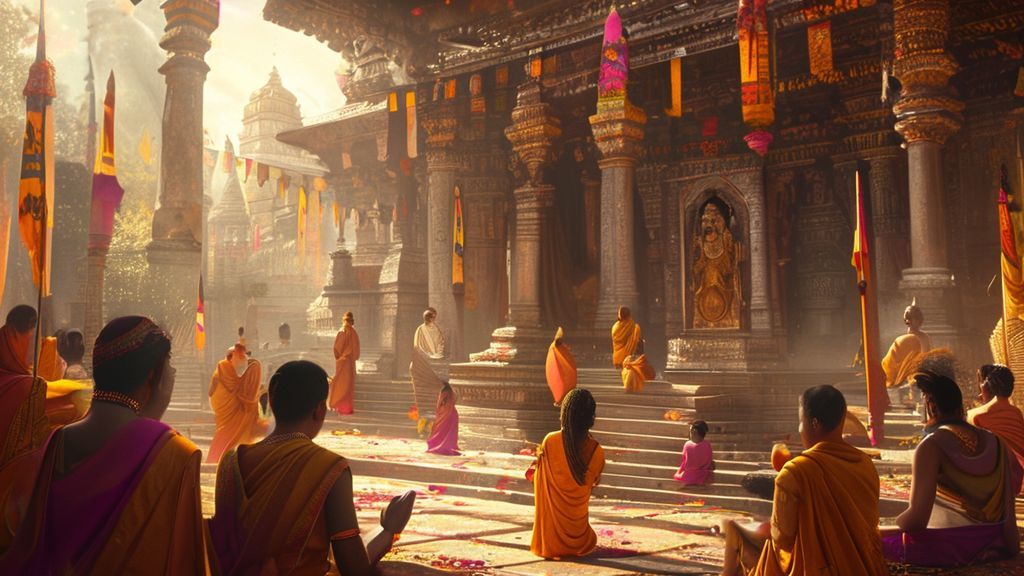
Teaching kids about Hinduism involves age-appropriate methods that nurture spiritual growth, cultural identity, and ethical values through storytelling, simple rituals, and practical application of Dharma. It emphasizes gradual introduction of concepts like Karma, Seva, and devotion, fostering a deep connection to Sanatan Dharma from an early age, making complex philosophies accessible and relatable to young minds.
| Attribute | Details |
|---|---|
| Core Concept | Dharma Shikshana (धर्म शिक्षण) – Transmission of righteous living and spiritual wisdom. |
| Primary Goal | Samskara (संस्कार) and Dharma Palana (धर्म पालन) – Inculcating virtues and living by righteous principles. |
| Foundational Texts | Vedas (Shruti), Itihasas (Ramayana, Mahabharata), Puranas, Bhagavad Gita. |
| Key Age Groups | Balya Avastha (Childhood: 0-10), Kaumarya (Adolescence: 11-18). |
| Primary Methods | Storytelling, Bhajans, Simple Puja Participation, Seva (Selfless Service), Observational Learning. |
Nurturing Dharma: The Sacred Art of Educating Young Minds in Sanatan Values
The transmission of Sanatan Dharma from one generation to the next is not merely an educational endeavor; it is a sacred duty, a profound act of preserving cosmic order and individual spiritual evolution. In a world increasingly disconnected from its roots, providing our children with a robust foundation in Hindu principles is paramount. This guide illuminates the age-appropriate methodologies rooted in our ancient traditions, ensuring that the profound wisdom of Hinduism blossoms gracefully within their young hearts and minds. Our aim is to foster not just knowledge, but a lived experience of Dharma, instilling values, cultural pride, and a deep, unwavering connection to the divine.
The Enduring Legacy of Gurukula and Traditional Pedagogy
The tradition of imparting spiritual and ethical wisdom has been central to Sanatan Dharma since time immemorial, evidenced by the Hindutva.online rich narratives of the Guru-Shishya Parampara (गुरु-शिष्य परम्परा). The Vedas themselves, particularly the Rig Veda (Mandala 10, Sukta 71), speak of the importance of knowledge transmission and the reverence for the teacher. Children in ancient India were initiated into formal learning through the Upanayana Samskara, often at the age of eight, marking their entry into Brahmacharya Ashram. While modern life differs, the underlying principles of structured learning, moral instruction, and spiritual discipline remain vital.
The Itihasas are replete with examples of exemplary childhood education. The young Prahlad, despite his demonic lineage, absorbed divine wisdom through devotion and unwavering faith, as recounted in the Bhagavata Purana. Similarly, the education of Sri Rama and Lakshmana by Vishwamitra Rishi, detailed in the Valmiki Ramayana, illustrates the blend of martial arts, scriptural knowledge, and ethical conduct. Lord Krishna’s own studies at the ashram of Sage Sandipani, described in the Skanda Purana and Bhagavata Purana, underscore the holistic approach to learning encompassing not just scriptures but also practical skills and spiritual discipline. These instances affirm that spiritual instruction is not an abstract concept but a deeply integrated part of a child’s developmental journey.
Pedagogical Insights: Aligning Sanatan Principles with Child Development
Effective teaching of Hindu principles must align with the cognitive and emotional development of children. Our ancient seers, through the Gurukula system, inherently understood these stages, albeit without modern psychological terminology. We can categorize age-appropriate methods into three broad phases:
Phase 1: Early Childhood (0-6 Years) – The Age of Wonder and Sensory Engagement
- Sensory Immersion: At this stage, learning is primarily observational and sensory. Introduce simple, colorful deities (murtis) and pictures. Let them touch the puja items, smell the incense (agarbatti), and hear the soothing sounds of bhajans and aarti.
- Storytelling (Katha): Narrate short, engaging stories from the Panchatantra, Jataka Tales, or simple Puranic narratives (e.g., Baby Krishna’s mischief, Ganesha’s wisdom, Hanuman’s strength). Focus on moral lessons rather than complex theology. The Panchatantra itself is a masterclass in teaching moral values through animal fables.
- Bhajans and Kirtans: Engage them with simple devotional songs. Children naturally pick up melodies. Encourage them to clap along or repeat simple lines. This fosters a joyful connection with the divine.
- Observational Puja: Allow them to sit and observe family pujas. Give them small, safe tasks like ringing the bell (ghanta) or offering a flower (pushpa).
Phase 2: Middle Childhood (7-12 Years) – The Age of Inquiry and Understanding
- Detailed Storytelling: Progress to more intricate stories from the Ramayana and Mahabharata, explaining characters, dilemmas, and their resolutions. Discuss the concepts of Dharma and Adharma through these narratives.
- Basic Mantra Chanting: Introduce simple, powerful mantras like “Om” (ॐ), “Om Namah Shivaya” (ॐ नमः शिवाय), or a short segment of the Gayatri Mantra (ॐ भूर्भुवः स्वः). Explain their meaning in simple terms. The Upanishads emphasize the power of sound (nada brahma).
- Understanding Festivals: Explain the significance and legends behind major Hindu festivals (Diwali, Holi, Janmashtami, Navaratri). Involve them in preparations and celebrations, connecting them to cultural heritage.
- Seva (Selfless Service): Encourage participation in family chores, helping elders, or community service. This teaches the principle of Karma Yoga, as expounded in the Bhagavad Gita, where action without attachment to results purifies the heart.
- Temple Visits: Take them to temples, explain the symbolism of different deities, and the layout of the temple as a spiritual ecosystem. This fosters a sense of belonging to the larger Sanatan family.
Phase 3: Adolescence (13-18 Years) – The Age of Reflection and Application
- Philosophical Discussions: Introduce fundamental concepts of the Bhagavad Gita in an accessible manner – Karma, Dharma, Rebirth, Yoga, the nature of Self (Atman), and Brahman. Encourage open discussion and questioning.
- Ethical Dilemmas: Discuss real-life ethical situations and how Hindu values (Ahimsa, Satya, Asteya, Brahmacharya, Aparigraha from Patanjali’s Yoga Sutras) can guide decisions.
- Study of Sacred Texts: Encourage reading simplified versions of Upanishads or commentaries on the Bhagavad Gita. This deepens their understanding and appreciation for the intellectual depth of Sanatan Dharma.
- Community Engagement: Encourage participation in larger Hindu community activities, youth groups, and volunteering at temples or ashrams. This strengthens their identity and provides a support system.
- Personal Sadhana: Guide them in developing a personal practice, be it meditation, regular chanting, or reflective journaling, emphasizing consistency and self-discipline.
Mantras & Chants for Young Devotees
Introducing children to simple mantras helps them connect with the divine vibrations and instill peace. Start with the most fundamental sounds:
- Om (ॐ): The primordial sound, the essence of all creation. Teach them to chant it slowly and mindfully.
- Gayatri Mantra (Partial):
ॐ भूर्भुवः स्वः
Om Bhur Bhuvah Svah
Meaning: “O Divine Mother, who sustains the physical, astral, and celestial realms…” (simplified for kids). Teach them the first line as a simple invocation.
- Mahamrityunjaya Mantra (Partial):
ॐ त्र्यम्बकं यजामहे
Om Tryambakam Yajamahe
Meaning: “We worship the three-eyed One…” This can be introduced as a prayer for well-being and protection.
- Hare Rama Hare Krishna Mahamantra:
हरे राम हरे राम, राम राम हरे हरे ।
हरे कृष्ण हरे कृष्ण, कृष्ण कृष्ण हरे हरे ॥
Hare Rama Hare Rama, Rama Rama Hare Hare |
Hare Krishna Hare Krishna, Krishna Krishna Hare Hare ||
A joyous chant that fosters devotion and a sense of unity.
- Tvameva Mata Cha Pita Tvameva:
त्वमेव माता च पिता त्वमेव ।
त्वमेव बन्धुश्च सखा त्वमेव ।
त्वमेव विद्या द्रविणं त्वमेव ।
त्वमेव सर्वं मम देव देव ॥
Tvameva Mata Cha Pita Tvameva |
Tvameva Bandhuscha Sakha Tvameva |
Tvameva Vidya Dravinam Tvameva |
Tvameva Sarvam Mama Deva Deva ||
A beautiful prayer expressing complete surrender and love for the Divine as everything in one’s life.
Dos and Don’ts in Dharmic Education
To ensure a positive and effective learning environment for children, consider these guidelines:
- Do:
- Be a role model: Children learn most by observing their elders. Live your Dharma authentically.
- Make it fun and engaging: Use creativity, games, art, and music.
- Be patient and answer questions honestly: If you don’t know, find the answer together.
- Connect principles to daily life: Show how values like truthfulness (Satya) or non-violence (Ahimsa) apply in their interactions.
- Encourage curiosity and critical thinking, within the framework of reverence.
- Celebrate their efforts and progress, no matter how small.
- Don’t:
- Force beliefs or impose rigid practices without explanation.
- Use fear or guilt as a teaching tool.
- Overwhelm them with complex philosophical debates prematurely.
- Dismiss their questions or doubts, however challenging.
- Criticize other traditions or faiths; focus on the beauty of your own.
Frequently Asked Questions on Teaching Hinduism to Children
How young is too young to start teaching about Hinduism?
It is never too early to introduce children to the spiritual vibrations and cultural richness of Hinduism. From infancy, exposure to bhajans, simple stories, and observing family pujas provides a foundational, sensory experience. Formal explanations can begin around 3-4 years, adapting to their attention span and comprehension.
How can I make learning Hinduism engaging for my child in a modern context?
Utilize modern tools: animated stories of epics, interactive apps, educational games, and online resources from platforms like Hindutva.online. Organize family activities like visiting a temple, celebrating festivals with cultural context, or performing simple acts of Seva. Most importantly, make it a natural, joyful part of family life, not a chore.
What if my child asks difficult questions about complex concepts like Karma or Reincarnation?
Answer truthfully but age-appropriately. For younger children, simplify: “Good actions bring good results, and bad actions cause trouble.” For older children, delve deeper, explaining the cycle of birth and death as an opportunity for learning and spiritual growth, emphasizing the soul’s journey (Atman) and the law of cause and effect. It’s perfectly fine to say, “These are profound truths that even adults contemplate, and we can explore them together as you grow.”
Preserving Sanatan Dharma: The Foremost Duty of Every Generation
The continuity of Sanatan Dharma rests upon the shoulders of each generation. By thoughtfully and devotionally educating our children, we ensure that the eternal wisdom of the Vedas, the inspiring narratives of the Itihasas, and the profound ethical principles embedded in our culture continue to thrive. We are not just transmitting rituals; we are cultivating character, fostering spiritual resilience, and equipping them with a timeless framework for a meaningful and righteous life. This sacred endeavor ensures that the lamp of Dharma remains lit, guiding humanity towards truth, peace, and universal harmony for ages to come.