


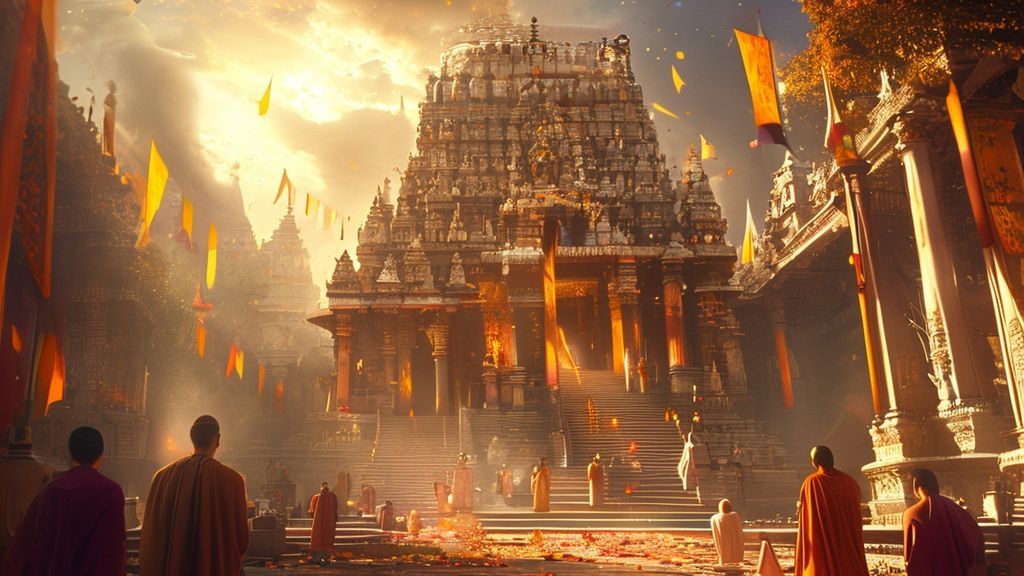
A temple in a dream is not merely a fleeting image but a profound spiritual message, a sacred communication from the divine or the subconscious. It signifies inner purity, a call to devotion, the commencement of a spiritual quest, or a divine blessing, urging introspection and a strengthening of one’s Dharmic path.
| Attribute | Details |
|---|---|
| Dream Type | Generally considered highly auspicious and spiritually significant. |
| Primary Spiritual Meaning | Divine connection, spiritual awakening, inner sanctum, quest for higher truth, blessing, or a call to deeper devotion. |
| Scriptural Basis (General) | Concepts from *Svapna Shastra* (dream interpretation), *Upanishads* on states of consciousness (Mandukya Upanishad), and the *Manas Mandir* (temple of the mind/heart) from Vedantic thought. |
| Recommended Action | Introspection, meditation (*dhyana*), chanting (*japa*), increased *sadhana*, or pilgrimage to a physical temple. |
The Sacred Portal of Dreams: Unveiling Temple Visions
In Sanatan Dharma, dreams are not mere random firings of the brain but profound windows into our subconscious, our karma, and often, direct communications from the divine. The ancient Rishis meticulously studied these ephemeral realms, discerning patterns and meanings. To witness a temple in a dream is considered an especially potent vision, transcending the mundane and touching upon the sacred. It is a moment of profound spiritual significance, a sacred *darshan* received not with the physical eye, but with the inner vision of the soul. This experience calls us to pause, reflect, and understand the deeper message it conveys about our spiritual journey and connection to the cosmos. It is a moment when the veil between the material and the divine thins, offering guidance and reassurance to the sincere seeker.
Puranic Wisdom: Temples as Manifestations of the Divine in Consciousness
While the Puranas extensively glorify the sanctity of physical temples and pilgrimages—as seen in the *Kashi Khanda* of the Skanda Purana detailing the glory of Varanasi, or the *Padma Purana* extolling the virtues of visiting sacred sites—they also implicitly acknowledge the internal, experiential dimension of divine encounter. The concept of the “temple in a dream” resonates deeply with the Vedantic idea of the *Manas Mandir* or *Hridaya Guha*—the temple of the mind or the cave of the heart, where the Supreme Self (Brahman) resides. As mentioned in the *Mundaka Upanishad* (2.2.9), “The intelligent, shining being that is in the heart…” is the essence of our being, a spiritual sanctum. Yogis and enlightened sages often received divine instructions, visions, and blessings during states of deep meditation or in profound dreams, where the physical temple is replaced by an inner spiritual edifice. This suggests that the dream temple is not just a symbol, but a direct manifestation of the divine presence within the consciousness, beckoning the devotee towards inner purity and truth. It is a call to recognize the divinity inherent within and to nurture that inner sacred space.
Symbolism in Sacred Architecture: Decoding the Dream Temple
The intricate architecture of Hindu temples, guided by the Agama Shastras and Vastushastra, is not merely aesthetic but deeply symbolic, representing the cosmos, the human body, and the journey of the soul. When these elements appear in a dream, they carry profound messages:
- The Garbhagriha (Sanctum Sanctorum): To dream of the *Garbhagriha*, the womb-chamber where the main deity resides, signifies reaching the core of your spiritual self. It represents ultimate truth, inner peace, and direct communion with the divine. It suggests a profound inner realization or a nearing of one’s spiritual goal.
- The Gopuram (Gateway Tower): A majestic *Gopuram* in a dream symbolizes the gateway to spiritual understanding and overcoming obstacles. It indicates protection, an auspicious beginning, or the initiation into a new phase of spiritual life. Its towering presence signifies reaching for the heavens.
- The Dhwajasthambha (Flagstaff): The tall flagstaff in front of a temple, often crowned with a deity’s vahana (vehicle), represents victory of Dharma, the ascent of consciousness, and an unwavering commitment to truth. Dreaming of it can signify success in spiritual endeavors, divine blessings, and protection from negative influences.
- The Pradakshina Patha (Circumambulatory Path): Walking the *Pradakshina Patha* in a dream symbolizes the journey of life, spiritual progress, and adherence to Dharmic principles. It suggests that you are on the right path, meticulously following the teachings, and accumulating spiritual merit.
- The Vimana (Spire above Garbhagriha): The *Vimana*, often pyramidal or curvilinear, represents the cosmic mountain Meru and the ascent of consciousness. Dreaming of it symbolizes elevation, spiritual enlightenment, and a deep connection to higher realms of existence.
Each architectural detail in a dream temple is a cipher, guiding the devotee toward deeper self-understanding and divine connection. The state of the temple also matters: a grand, vibrant temple suggests spiritual well-being, while a dilapidated one might signal neglect of one’s spiritual practice.
Rituals and Practices Post-Dream: Honoring the Divine Message
Upon receiving such a sacred dream, a devotee is encouraged to respond with reverence and intention. The following steps can help integrate the spiritual message:
- Introspection (Manana): Immediately upon waking, reflect deeply on the dream’s details: the deity, the temple’s condition, your feelings. What was the dominant emotion? What specific elements stood out? This internal contemplation is crucial for discerning the dream’s unique message for you.
- Japa and Dhyana: Engage in chanting specific mantras (e.g., *Om Namah Shivaya*, *Om Namo Narayanaya*, *Gayatri Mantra*) or sit in quiet meditation. This helps in calming the mind and opening it further to divine guidance, allowing the dream’s energy to be absorbed and understood.
- Satsang and Guidance: If possible, share your dream with a trusted Guru, spiritual mentor, or an elder well-versed in Dharmic traditions. Their wisdom can provide clarity and deeper insights into the dream’s symbolism and implications for your path.
- Seva: Perform an act of selfless service (*Seva*) or make an offering at a physical temple. This gesture of humility and devotion helps to acknowledge the divine message and reinforces your commitment to Dharma.
- Sankalpa: Make a firm spiritual resolve (*Sankalpa*) based on the dream’s message. If the dream felt like a call to devotion, resolve to perform *puja* daily. If it signaled a need for inner peace, resolve to meditate more.
Mantras and Chants for Spiritual Awakening
Reciting specific mantras can enhance understanding and absorption of the divine message received in a dream:
- Gayatri Mantra:
ॐ भूर्भुवः स्वः तत्सवितुर्वरेण्यं भर्गो देवस्य धीमहि धियो यो नः प्रचोदयात्॥
“Om Bhur Bhuvah Svah, Tat Savitur Varenyam, Bhargo Devasya Dhimahi, Dhiyo Yo Nah Prachodayat.”
This universal mantra invokes divine light and wisdom, perfect for seeking clarity on dream messages.
- Om Namo Bhagavate Vasudevaya:
ॐ नमो भगवते वासुदेवाय॥
“Om Namo Bhagavate Vasudevaya.”
A powerful mantra for Lord Vishnu, invoking protection, spiritual prosperity, and liberation.
- Om Namah Shivaya:
ॐ नमः शिवाय॥
“Om Namah Shivaya.”
This ancient mantra dedicated to Lord Shiva purifies the mind, dissolves negative karma, and fosters inner peace, aiding in spiritual discernment.
Dos and Don’ts After a Temple Dream
To ensure proper reverence and benefit from such a sacred experience:
- DO:
- Reflect quietly and deeply on the dream’s imagery and your feelings.
- Perform your daily *puja* or *sadhana* with increased devotion.
- Visit a physical temple soon after to offer prayers and gratitude.
- Consult with a knowledgeable elder or spiritual guide for interpretation.
- Maintain a clean and pure lifestyle, aligning with the sanctity of the dream.
- DON’T:
- Disregard the dream as mere fantasy; treat it as a significant message.
- Fear the dream, even if it has unsettling elements; seek its underlying wisdom.
- Obsess over literal interpretations; focus on the spiritual essence.
- Seek quick-fix solutions or superstitious remedies; rely on Dharmic principles.
- Narrate your dream to just anyone; be discerning about who you share such sacred experiences with.
What if the temple in my dream is dilapidated or abandoned?
A dilapidated or abandoned temple in a dream is not necessarily a negative omen but a potent message. It often signifies a neglect of one’s own spiritual practice, a feeling of disconnection from the divine, or a need to rekindle one’s faith and devotion. It could be a call to renovate your inner spiritual life, to resume forgotten rituals, or to address areas where your faith has weakened. The divine is urging you to return to your spiritual roots and restore the sanctity of your inner temple.
Does the specific deity in the dream matter?
Absolutely. The specific deity seen in a temple dream provides crucial additional insight. Dreaming of Shiva may indicate a call for introspection, transformation, or detachment. Vishnu could signify protection, dharma, and sustenance. Devi (the Mother Goddess) might represent divine energy, creative power, or unconditional love. Ganesha often points to the removal of obstacles. Pay attention to the form and attributes of the deity, as they will align with the specific guidance being offered to you.
Is dreaming of a temple always a positive sign?
While generally highly auspicious, the spiritual message is nuanced. It is always a call to spiritual attention, but the specific details and your feelings within the dream determine the precise nature of that message. A radiant, vibrant temple filled with light is unequivocally positive, signifying blessings and spiritual progress. A temple in shadow, or one that evokes fear, might indicate areas needing spiritual purification, unresolved karma, or a warning to course-correct on your Dharmic path. The key is to interpret it as a communication, always for your spiritual growth.
The Dharmic Significance: Preserving Inner Sanctity
The vision of a temple in a dream is a profound reaffirmation of Sanatan Dharma’s timeless truths: that the divine is both transcendent and immanent, residing in the grandest temples and the deepest recesses of our hearts. Such dreams are potent reminders to uphold our spiritual duties, nurture our inner sanctity, and walk the path of Dharma with unwavering faith. By understanding and responding to these sacred messages, we not only deepen our personal connection with the divine but also contribute to the preservation and revitalization of Sanatan Dharma for future generations. It is a testament to the living, breathing spiritual wisdom that continues to guide humanity.