


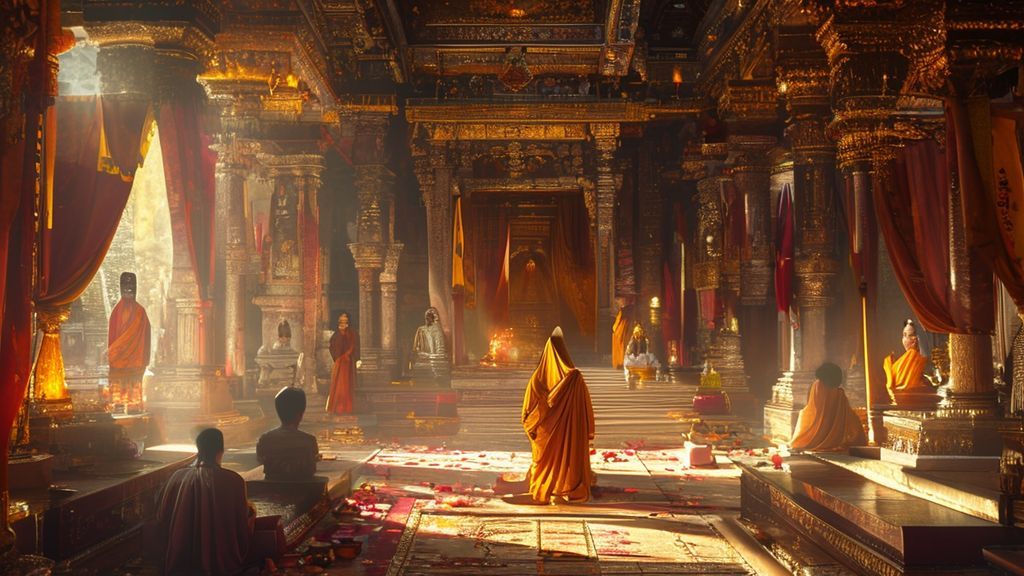
The Northeast direction, known as Ishanya Kona in Vastu Shastra, is considered the most auspicious for a temple room due to its profound connection with divine energies, the rising sun’s beneficial vibrations, and its association with Lord Shiva as Ishana. This sacred alignment ensures spiritual growth, peace, and prosperity for the inhabitants, channeling cosmic blessings into the home.
| Attribute | Details |
|---|---|
| Concept Name | Ishanya Kona (ईशान्या कोण), The Divine Corner |
| Primary Deity Association | Lord Shiva (Ishana Rudra), Gurus, Jupiter (Brihaspati) |
| Astrological Significance | Governed by Jupiter, signifying wisdom, spirituality, knowledge, and expansion. |
| Vastu Principle | Accumulation of positive cosmic energy (Prana), ideal for meditation, prayer, and sacred spaces. |
| Scriptural Basis | Vastu Shastra texts (e.g., Mayamatam, Manasara), Agamas, Puranas mentioning directional deities. |
The Sacred Nexus: Understanding Ishanya Kona
In the timeless wisdom of Sanatan Dharma, every aspect of existence, from the microcosm of the human body to the macrocosm of the universe, is imbued with divine energy and governed by immutable laws. Among these profound principles, Vastu Shastra stands as a guiding light for creating harmonious living spaces that resonate with cosmic frequencies. The Northeast direction, revered as Ishanya Kona, holds unparalleled spiritual and cultural significance, making it the preeminent choice for a sacred temple room within any Hindu home or edifice. It is not merely a directional preference but a profound understanding of energy flow, divine presence, and spiritual elevation, crucial for every sincere seeker and devotee.
This corner is considered the abode of the divine, a portal through which celestial blessings cascade. Its sanctity is derived from a deep spiritual understanding that intertwines astronomical alignments, elemental forces, and the subtle energies of the universe. By aligning our sacred spaces with Ishanya Kona, we invite peace, prosperity, spiritual clarity, and robust health into our lives, fostering an environment conducive to devotion and self-realization.
The Cosmic Tapestry: Puranic Roots and Vastu Legends
The profound reverence for the Northeast direction, Ishanya Kona, is deeply woven into the fabric of Vedic cosmology and ancient texts. While not a single Puranic legend solely details its auspiciousness, its sanctity is established through the presiding deity and elemental associations found across various scriptures and Vastu granthas.
The term Ishanya (ईशान्या) itself is derived from Ishana (ईशान), an epithet of Lord Shiva, particularly in His form as the Lord of the Northeast direction. In the Skanda Purana and certain Tantric traditions, Ishana Rudra is depicted as one of the five faces of Shiva, representing control over the elements and the source of all knowledge and liberation. This association firmly establishes the Northeast as a zone of unparalleled spiritual potency, directly linked to the Supreme Ascetic and Destroyer of Ignorance.
Furthermore, Vastu Shastra, as codified in ancient texts like the Mayamatam, Manasara, and Samaranganasutradhara, systematically explains the energetic properties of each direction. The Northeast is regarded as the purest and most potent quadrant because it is where the beneficial energies of the rising sun (predominantly ultraviolet rays in the early morning) first enter a structure. These life-giving rays are not just physical light but carry specific prana-shakti (life force energy) that purifies and invigorates. The Brahma Muhurta, the auspicious hour before sunrise, is intrinsically linked to the spiritual potency of this direction, making it ideal for meditation and prayer.
The traditional narrative holds that the “Vastu Purusha Mandala,” the cosmic blueprint upon which Vastu Shastra is based, places the head of the Vastu Purusha in the Northeast. This symbolizes intelligence, wisdom, and spiritual awakening. Therefore, positioning a temple room here is akin to placing one’s spiritual pursuits directly under the cosmic intellect, promising clarity and divine guidance. This ancient wisdom, preserved and expounded on platforms like Hindutva.online, guides millions in aligning their homes with dharma.
Architectural & Scientific Marvels of Ishanya Kona Placement
The wisdom embedded in Vastu Shastra is not merely esoteric but also possesses a profound scientific basis, meticulously observed and codified by our Rishis. The designation of the Northeast as the most auspicious direction for a temple room is a prime example of this.
- Cosmic Energy Influx: The Earth’s rotation from West to East causes the magnetic field lines to enter the structure primarily from the Northeast and exit through the Southwest. The Northeast is thus the point of maximum cosmic energy influx, acting as a natural magnet for positive vibrations. A temple room here effectively “charges” the entire home with this benevolent energy.
- Solar Energy Advantage: The Sun’s rays, particularly in the early morning, are rich in beneficial spectrums, including ultraviolet rays known for their purifying properties. As the Sun rises in the East and moves towards the Northeast, this corner receives these gentle, health-enhancing rays, which are spiritually purifying and conducive to a serene environment.
- Gravitational and Magnetic Fields: The intersection of the Earth’s magnetic poles creates a subtle energy flow. The Northeast corner is considered the confluence of positive gravitational and magnetic forces, making it ideal for meditation and prayer, where one seeks to connect with higher frequencies.
- Element of Water: The Northeast is also associated with the element of Jala (water) and is ruled by the water deity. This is why water sources like borewells, underground tanks, and small water features are often recommended here. For a temple room, this translates to maintaining purity, using water for ritual cleansing (Achamanam), and placing water pots or Ganges water (Gangajal) to enhance the purifying energies.
- Light and Ventilation: Traditionally, temple rooms are designed to be well-lit and airy. The Northeast orientation naturally allows for ample indirect sunlight throughout the morning, promoting hygiene and a bright, uplifting atmosphere without harsh glare.
Sacred Praxis: Rituals & Puja Vidhi in the Northeast Temple
To truly harness the spiritual potency of the Northeast temple room, specific rituals and practices are recommended. The intention and purity of heart are paramount, but adhering to the prescribed vidhi enhances the efficacy of the worship.
- Purification (Shuddhikaran): Before commencing puja, ensure the temple room is spotlessly clean. Mop the floor with water mixed with a pinch of turmeric, rock salt, or cow dung paste (Gomay), as these are purifying agents.
- Bathing and Attire: Perform your morning ablutions and wear clean, traditional attire.
- Preparation of Altar: Arrange the deities, sacred images, or Yantras facing either East or West within the Northeast room. The worshipper should ideally face East or North while performing puja. Place fresh flowers, incense, a ghee lamp (deepak), water pot (kalash), and offerings (Naivedyam).
- Sankalpa (Intention): Begin with a clear intention or Sankalpa, stating the purpose of your puja.
- Deep Prajwalan (Lighting Lamp): Light the ghee lamp, symbolizing the dispelling of darkness and the invocation of divine light.
- Avahanam (Invocation): Invoke the presence of the chosen deity with sincere prayers and relevant mantras.
- Shodashopachara Puja (16-Step Worship): Perform the traditional 16 steps of worship, or a simplified version, which includes: Asanam (offering a seat), Padya (washing feet), Arghya (offering water), Achamanam (sipping water), Snanam (bathing deity), Vastram (offering clothes), Yagnopaveetam (sacred thread), Gandham (sandalwood paste), Pushpam (flowers), Dhupam (incense), Deepam (lamp), Naivedyam (food offering), Pradakshina (circumambulation), Namaskaram (prostration), Mantra Pushpam (flower offering with mantras), and Arti (waving lamp).
- Japa and Dhyana: After the puja, sit in meditation (Dhyana) and chant mantras (Japa) in this sacred space, allowing the Northeast energies to amplify your spiritual practices.
- Prasada Distribution: Distribute the offered Naivedyam as Prasada to all family members.
Mantras & Chants for Ishanya Kona Blessings
Chanting specific mantras in the Northeast temple room amplifies its auspicious vibrations and connects the devotee directly with the presiding energies. These sacred sounds purify the atmosphere and invoke divine grace:
- Ishana Mantra:
ॐ नमः शिवाय ईशानया नमः।
Om Namah Shivaya Ishanaya Namah.
(Salutations to Lord Shiva, the Lord of the Northeast.)
- Gayatri Mantra: Reverberating the universal Gayatri Mantra in this corner brings profound spiritual wisdom and illumination.
ॐ भूर्भुवः स्वः तत्सवितुर्वरेण्यं भर्गो देवस्य धीमहि धियो यो नः प्रचोदयात्॥
Om Bhur Bhuvah Svah, Tat Savitur Varenyam, Bhargo Devasya Dhimahi, Dhiyo Yo Nah Prachodayat.
- Vishnu Sahasranama or Shiva Sahasranama: Chanting these powerful litanies of a thousand names of Vishnu or Shiva in the Northeast enhances spiritual vibrations and invokes abundant blessings.
- Vastu Mantra for Harmony:
ॐ वास्तु पुरुषाय नमः।
Om Vastu Purushaya Namah.
(Salutations to the Vastu Purusha, the deity of architecture and space.)
Dos and Don’ts for the Sacred Temple Room
Maintaining the sanctity and energetic purity of the temple room, especially when situated in the auspicious Northeast, requires adherence to certain guidelines:
- DO keep the area immaculately clean and clutter-free.
- DO ensure good ventilation and allow natural light to enter.
- DO place lightweight idols or pictures, ideally facing East or West.
- DO offer fresh flowers, water, and pure sattvic food as Naivedyam.
- DO meditate and chant regularly in this space to energize it further.
- DO use a small water feature or keep a pot of fresh water in the Northeast corner of the temple room itself.
- DON’T use the temple room for storage of non-religious items, especially heavy ones.
- DON’T place a toilet or staircase directly above or below the temple room.
- DON’T store trash or keep brooms in the temple room.
- DON’T consume non-vegetarian food or intoxicants in or near this sacred space.
- DON’T let the temple remain dark or unkempt.
Frequently Asked Questions About the Northeast Temple Room
Why is Ishanya Kona sometimes associated with water?
While Ishanya Kona is primarily associated with Lord Shiva (Ishana), it is also strongly linked to the water element (Jala Tattva) in Vastu Shastra. This corner is considered ideal for borewells, underground water tanks, and small water features because the gentle morning sun rays from the Northeast purify and energize this water. This duality signifies the cleansing and life-giving properties essential for spiritual growth.
What if my home layout doesn’t allow a temple in the Northeast?
While the Northeast is ideal, Vastu Shastra offers pragmatic solutions. If a dedicated room is not possible, a small altar can be set up in the Northeast zone of your living room or any other clean, quiet space. Failing that, the East direction is the next most preferred, as it also receives the benevolent rays of the rising sun. The key is sincere devotion and maintaining the purity of the chosen space.
Can images of ancestors be placed in the temple room?
Generally, it is advised not to place images of ancestors (pitrus) directly within the main temple altar where deities reside. Ancestors are revered, but their place is typically in the Southwest (Nairutya Kona) of the home, which is traditionally associated with them. The temple room is exclusively for the worship of divine forms to avoid mixing energies.
Dharmic Significance: Preserving Sanatan Dharma Through Vastu
The meticulous placement of a temple room in the Northeast direction is far more than a mere architectural guideline; it is a profound act of preserving and manifesting the principles of Sanatan Dharma within our daily lives. By consciously designing our homes according to Vastu, especially our sacred spaces, we create microcosms of cosmic order. The Ishanya Kona, as the conduit for divine wisdom and positive energy, transforms a mere dwelling into a true home (Gruha) – a sanctuary where spiritual growth is fostered, family bonds are strengthened, and an unwavering connection to the divine is maintained.
This practice ensures that the ancient Vedic wisdom regarding subtle energies and their impact on human well-being continues to thrive. It teaches us reverence for nature’s forces, the importance of harmony, and the intrinsic link between our physical environment and spiritual progress. For every Hindu, understanding and applying these principles, as detailed on platforms like Hindutva.online, is a step towards aligning with the cosmic rhythm and experiencing a life imbued with peace, prosperity, and profound spiritual purpose.