Hindutva

Tilak on Forehead Different Types and Their Meanings

The practice of applying tilak Tilak on Forehead – sacred mark on forehead from Sanskrit [translate:तिलक] derived from [translate:तिल] (til/sesame seed) – represents one of Hinduism’s most visible, ancient, and spiritually significant customs where devotees mark their foreheads with various substances creating distinctive patterns that simultaneously serve as spiritual identifiers declaring sectarian affiliation ([translate:sampradaya]), devotional declarations honoring specific deities, activation points stimulating [translate:ajna chakra] (third eye energy center) enhancing intuition and consciousness, and symbolic reminders maintaining mindfulness about divine presence throughout daily activities transforming ordinary existence into continuous worship.

Tilak on Forehead

Unlike mere decorative cosmetics or arbitrary cultural tradition, tilak encodes sophisticated understanding about consciousness, energy centers, devotional identity, and sacred geometry where forehead’s center between eyebrows recognized across yogic and tantric traditions as crucial energy point ([translate:bhrumadhya]) connecting physical body with subtle spiritual realms making tilak’s placement precisely targeted rather than randomly chosen, while specific patterns from vertical U-shaped Vaishnava [translate:Urdhva Pundra] through horizontal three-lined Shaiva [translate:Tripundra] to simple circular dot communicate immediate visual information about wearer’s spiritual path, preferred deity, and philosophical orientation creating instant recognition within Hindu communities.

The complete tilak tradition encompasses understanding major types including Vaishnava markings (worshippers of Vishnu/Krishna wearing distinctive U or V shapes made from sandalwood paste, turmeric, kumkum representing Vishnu’s feet or divine form), Shaiva markings (Shiva devotees applying three horizontal lines using sacred ash/vibhuti representing past-present-future, creation-preservation-destruction, or Shiva’s trident), Shakta markings (Goddess worshippers typically wearing red kumkum dot between eyebrows honoring divine feminine energy), materials employed from cooling sandalwood paste ([translate:chandan]) providing physical cooling alongside spiritual calming.

through turmeric ([translate:haldi]) offering auspiciousness and health to sacred ash ([translate:vibhuti]) representing mortality and renunciation, colors’ symbolism where red signifies Shakti/power/auspiciousness, white represents Vishnu/purity/peace, yellow indicates Krishna/prosperity/wisdom, and black occasionally used for protection against evil eye, plus regional and sampradaya variations creating rich diversity within overarching framework.

For practitioners in 2025 whether lifelong Hindus maintaining traditional tilak application as daily devotional practice, newcomers discovering significance behind familiar forehead marks seen in temples and Indian communities, interfaith families learning about spouse’s or partner’s religious customs, or cultural enthusiasts wanting to understand visual symbolism encountered in Hindu art and iconography, recognizing tilak as sophisticated spiritual identifier and consciousness tool rather than mere decoration or outdated superstition enables approaching

this practice with renewed appreciation whether choosing to wear specific tilak declaring personal devotional affiliation or simply understanding diverse markings’ meanings when observing others, transforming potentially confusing variety of forehead marks into comprehensible visual language communicating spiritual identity, philosophical orientation, and devotional dedication through simple yet profound practice of marking sacred spot where yogic tradition locates consciousness’s seat.

Understanding Tilak: Etymology and Core Significance

Before examining specific types, exploring fundamental meaning and purpose provides essential context.

The Etymology: From Sesame Seed to Sacred Mark

[translate:तिलक (Tilaka/Tilak)]

Derived from: [translate:तिल (Tila)] = Sesame seed

Why This Etymology?

Sesame seeds traditionally used:

Over time, meaning expanded to include any sacred forehead mark regardless of material.

Alternative Derivations:

Some scholars suggest connection to:

Core Meanings:

Beyond Physical Mark Tilak on Forehead:

1. Spiritual Identifier:

2. Third Eye Activation:

3. Divine Protection:

4. Mindfulness Reminder:

The Sacred Location: Ajna Chakra (Third Eye)

Why Forehead Center?

Yogic tradition recognizes bhrumadhya (between eyebrows) as crucial energy point.

Ajna Chakra (आज्ञा चक्र):

Sixth primary chakra:

Governs:

Applying tilak here:

Physical Benefits:

Pressure Point:

Scientific Interest:

Modern research explores whether:

Tilak vs. Bindi: Important Distinction

Common Confusion Clarified:

Tilak (तिलक):

Bindi (बिंदी):

Overlap:

Some women wear religious tilak (following their sampradaya) rather than decorative bindi, blurring distinction.

Modern Practice:

Key Difference: Intent and pattern – tilak declares sectarian affiliation through specific shapes; bindi often primarily aesthetic (though can hold meaning).

Major Types of Tilak: Sectarian Distinctions

Hindu tradition features several primary tilak styles corresponding to different devotional paths.

1. Urdhva Pundra: The Vaishnava Tilak

Who Wears: Vaishnavas (devotees of Vishnu, Krishna, Rama, Narayana)

Shape: Vertical lines forming U or V shape

Appearance:

The Classic Pattern:

text    |   |
    |   |
     \ /
      V

Materials:

Symbolism:

The U-shape represents:

Most Common Interpretation:

Alternative Interpretations:

The Center Line (when present):

Variations by Sub-Sect:

Different Vaishnava Sampradayas (traditions) have subtle variations:

ISKCON (Gaudiya Vaishnava):

Sri Vaishnava:

Madhva Sampradaya:

Regional Variations:

2. Tripundra: The Shaiva Tilak

Who Wears: Shaivas (devotees of Shiva)

Shape: Three horizontal lines across forehead

Appearance:

The Classic Pattern:

text___________
___________
___________
     •

Materials:

Symbolism:

The Three Lines Represent:

Multiple Interpretations (all valid):

1. Shiva’s Triple Nature:

2. Time Dimensions:

3. Gunas (Qualities):

4. States of Consciousness:

5. Shiva’s Trident (Trishula):

The Sacred Ash (Vibhuti):

Deep Symbolism:

Represents:

Application Mantra:

[translate:त्र्यायुषं जमदग्नेः कश्यपस्य त्र्यायुषम्।
यद्देवानां त्र्यायुषं तन्मेऽस्तु त्र्यायुषम्॥]

“The threefold life span of Jamadagni, the threefold life span of Kashyapa, the threefold life span of the gods – may that threefold life span be mine.”

3. Shakta Tilak: Red Kumkum Dot

Who Wears: Shaktas (Goddess/Devi devotees)

Shape: Circular dot or small vertical line

Appearance:

Materials:

Symbolism:

Red Color Significance:

The Dot Represents:

Association with Specific Goddesses:

Different Goddess devotees may prefer:

4. Simple Chandan/Sandalwood Tilak

Who Wears: General Hindu population, across sects

Shape: Small dot or vertical line

Appearance:

Materials:

Symbolism:

Universally Auspicious:

Practical Benefits:

When Used:

Rice Grain Addition:

5. Specialized and Regional Variations

Smartha Tradition:

Followers of Adi Shankaracharya’s philosophy:

Regional Styles:

South India:

North India:

Bengal:

Maharashtra:

Colors, Materials and Their Meanings

Understanding color and substance symbolism deepens appreciation.

Color Symbolism

ColorDeity AssociationSymbolismCommon Use
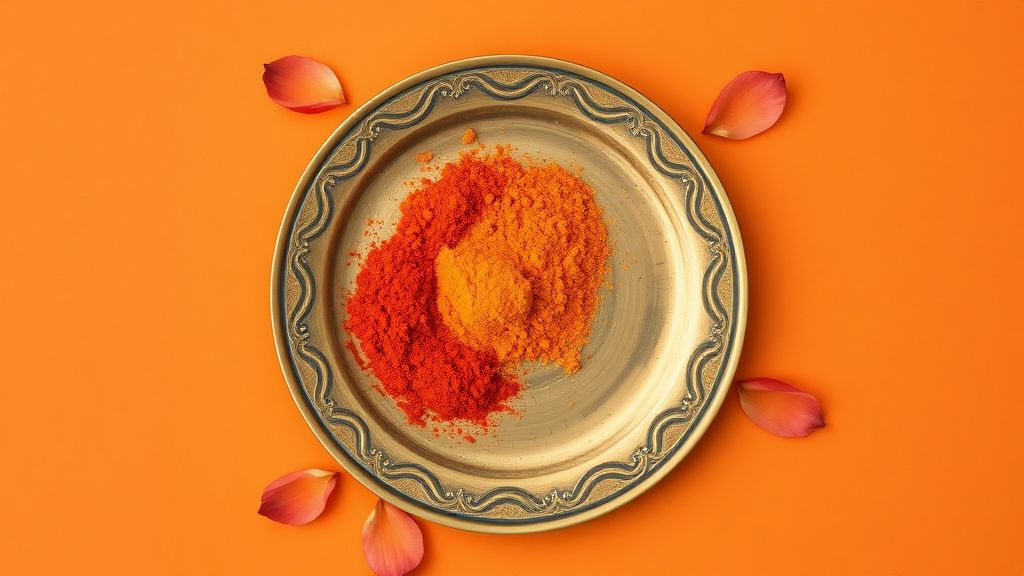
RedShakti, Lakshmi, HanumanPower, auspiciousness, prosperity, courageWomen (married status), Shakta worship, Hanuman devotees
WhiteVishnu, Shiva (ash)Purity, peace, spirituality, renunciationVaishnava (sandalwood), Shaiva (vibhuti)
YellowKrishna, GaneshaProsperity, wisdom, auspiciousness, knowledgeKrishna worship, general auspicious occasions
BlackKali, ShaniProtection from evil eye, Saturn propitiationKali worship, Shani remedies (rare)
Orange/SaffronGeneral auspiciousnessSanctity, spirituality, monasticismSadhus, ascetics, general worship

Material Significance

Sandalwood (Chandan – चंदन):

Properties:

Types:

Sacred Ash (Vibhuti – विभूति):

Origin:

Symbolism:

Kumkum/Vermillion (कुमकुम/सिंदूर):

Composition:

Associations:

Turmeric (Haldi – हल्दी):

Properties:

Uses:

Gopichandan (गोपीचंदन):

Special Sacred Clay:

Origin:

Use:

How to Apply Tilak Properly

Mastering correct application technique ensures both aesthetic appeal and spiritual efficacy.

General Preparation

Clean Forehead:

Materials Ready:

Application Methods by Type

Urdhva Pundra (Vaishnava U-Shape):

Step 1: Prepare white paste (gopichandan, chandan, or clay)

Step 2: Using ring finger or small stick:

Step 3 (Optional): Add center line:

Tripundra (Shaiva Three Lines):

Step 1: Prepare vibhuti paste or use dry ash

Step 2: Three methods:

Step 3: Ensure lines are:

Step 4 (Optional): Add red dot in center (Shiva-Shakti combination)

Shakta/Simple Dot:

Step 1: Prepare red kumkum paste or other material

Step 2: Using ring finger:

Step 3: Can add decorative elements if desired

Traditional Finger Usage

Ring Finger (Anamika) Preferred:

Why This Finger?

Alternatives:

Mantra While Applying

General Tilak Mantra:

[translate:ॐ त्र्यम्बकं यजामहे सुगन्धिं पुष्टिवर्धनम्।
उर्वारुकमिव बन्धनान्मृत्योर्मुक्षीय माऽमृतात्॥]

“Om, we worship the three-eyed one (Shiva), who is fragrant and nourishes all beings. May he liberate us from death for the sake of immortality, just as the ripe cucumber is severed from its bondage.”

Simplified:

[translate:ॐ नमः शिवाय] (Om Namah Shivaya) – for Shaiva tilak

[translate:ॐ नमो नारायणाय] (Om Namo Narayanaya) – for Vaishnava tilak

[translate:ॐ ऐं ह्रीं क्लीं चामुण्डायै विच्चे] – for Shakta tilak

Or simply: [translate:ॐ] (Om) while applying

Frequently Asked Questions

Can women wear sectarian tilak or only decorative bindi?

Women can absolutely wear sectarian tilak! While decorative bindi more common in modern contexts, traditionally religious women wore proper tilak corresponding to their family’s sampradaya (tradition). Modern practice: Many devout women apply Vaishnava Urdhva Pundra, Shaiva Tripundra, or Shakta kumkum as spiritual practice, not mere decoration. No religious prohibition exists against women wearing full sectarian tilak. Cultural variation: Some conservative communities prefer simpler marks for women, but increasing number maintain authentic tilak practice regardless of gender. Key: Intention matters – decorative bindi for fashion acceptable, spiritual tilak for devotion equally valid choice for women.

Must tilak be applied daily or only during temple visits/puja?

No strict rule – personal choice and tradition vary: Daily practice: Devout practitioners (especially initiated devotees, priests, serious spiritual seekers) apply tilak every morning after bathing, maintaining it throughout day. Occasional: Others apply only for temple visits, pujas, festivals, special occasions. Benefits of daily: Constant reminder of spiritual commitment, maintains consciousness, activates third eye regularly, visible declaration of faith. Practical considerations: Work environments may discourage visible religious marks (though this can be challenged), simple wash-off before professional settings. Quality over quantity: Sincere occasional application better than mechanical daily habit lacking devotion.

What if someone’s sampradaya unknown – which tilak should they wear?

Simple solutions exist: Option 1: Simple sandalwood dot – universally acceptable, non-sectarian, appropriate for any Hindu. Option 2: Choose based on preferred deity: Vishnu/Krishna devotee → Urdhva Pundra, Shiva devotee → Tripundra, Goddess devotee → Red kumkum. Option 3: Follow family tradition – ask elders what your lineage practiced. Option 4: Seek spiritual teacher – guru can guide toward appropriate sampradaya and corresponding tilak. No pressure: Can worship without tilak until clarity emerges. Modern flexibility: Some wear different tilaks on different occasions (Vaishnava for Krishna temples, Shaiva for Shiva temples) though traditionalists prefer consistency.

Can non-Hindus wear tilak respectfully or is it appropriation?

Context and intention matter: Respectful participation acceptable: Non-Hindu visiting temple, receiving tilak as prasad, participating in ceremony – generally welcomed. Learning and practicing: Someone genuinely studying and practicing Hinduism under guidance – appropriate. Spiritual adoption: Interfaith families, serious practitioners regardless of birth – honored. Cultural appropriation concerns: Casual fashion statement without understanding, costume/party wear trivializing sacred mark – disrespectful. Best practice: If genuinely interested, learn significance, receive from Hindu teacher/priest, approach with reverence. Many temples welcome all to receive tilak blessing regardless of religious background when done respectfully.

Does tilak material need to be natural or can synthetic be used?

Strongly prefer natural traditional materials: Traditional: Sandalwood paste, sacred ash, turmeric, kumkum made from natural ingredients. Why natural matters: 1) Spiritual efficacy – believed to carry specific energies, 2) Skin safety – natural materials less likely to cause reactions, 3) Respect for tradition – maintaining authentic practice, 4) Cooling/medicinal properties – sandalwood, turmeric have real benefits. Modern synthetic alternatives: Ready-made kumkum may contain chemicals, artificial colors. Not ideal but: If natural unavailable, using synthetic with proper consciousness acceptable temporarily. Easy solution: Natural materials readily available online, Indian stores – small investment provides months of use.

How long should tilak remain on forehead – all day or wash off?

Traditionally maintained throughout day: Ideal: Apply after morning bath, keep until next bath (next morning). Practical reality: Tilak naturally fades, smudges, partially washes off during day – this acceptable. Work considerations: Some remove before professional settings if necessary (though shouldn’t have to). Reapplication: Can be reapplied if washed off accidentally or intentionally. Before bed: Some traditions wash off before sleep, others maintain overnight. Quality over duration: Better several-hour sincere wearing than all-day mechanical presence lacking consciousness. Respect: If removing, wipe respectfully (not carelessly), wash hand/forehead properly.

Are there any times when tilak should NOT be applied?

Generally encouraged always, but some restrictions exist: After someone’s death: Immediate family may abstain during mourning period (varies by community – 10-13 days typical). During menstruation: Very orthodox traditions restrict (controversial, many reject this), most modern Hindus disregard. Inauspicious occasions: Some avoid during certain planetary periods (Rahu Kaal, etc.) though opinions vary. Casual situations: While no religious prohibition, respect suggests not wearing to parties, bars, or contexts that dishonor sacred mark. Personal choice: Ultimately individual or family tradition determines. No absolute rule: Unlike some religions’ strict guidelines, Hinduism allows flexibility based on conscience and tradition.

What’s significance of adding rice grain to tilak?

Common auspicious addition: Akshata (अक्षत) – unbroken rice grains – pressed into wet tilak paste. Symbolism: Prosperity and abundance – rice represents sustenance, wealth, fertility. Completeness – “akshata” means “unbroken/intact” symbolizing wholeness, perfection. Blessing retention – believed to hold blessings in place. When used: Temple visits (priests often add rice grain to tilak given as prasad), special occasions, festivals, auspicious ceremonies. Not mandatory: Can wear tilak without rice grain – personal/regional preference. Practical: Rice grain may fall off during day – this acceptable, blessing already received.

Conclusion

The sacred practice of applying tilak represents beautiful intersection of spiritual identity, devotional declaration, consciousness activation, and cultural tradition – transforming simple forehead mark into sophisticated visual language communicating sectarian affiliation, preferred deity, philosophical orientation, and spiritual commitment while simultaneously stimulating ajna chakra energy center enhancing intuition and awareness through precise placement between eyebrows where yogic tradition locates consciousness’s seat making tilak both symbolic declaration and functional spiritual technology.

Understanding complete framework – that major types from vertical U-shaped Vaishnava Urdhva Pundra representing Vishnu’s lotus feet and devotee’s surrender through horizontal three-lined Shaiva Tripundra symbolizing time dimensions, gunas, and cosmic functions to simple circular Shakta kumkum dot embodying concentrated divine feminine power each encode distinct theological positions and devotional orientations creating instant visual recognition within Hindu communities, that materials from cooling sandalwood paste through mortality-reminding sacred ash to auspicious red kumkum carry specific properties both spiritual and practical affecting consciousness and even skin health while colors communicate deity associations.

where red indicates Shakti/Lakshmi, white represents Vishnu/Shiva, yellow signifies Krishna/Ganesha, that proper application techniques from three-finger Tripundra method to careful Urdhva Pundra vertical lines to centered dot placement ensure both aesthetic appeal and spiritual efficacy, and that underlying significance transcends mere sectarian identification toward continuous mindfulness reminder where physical mark’s constant presence maintains devotional consciousness throughout ordinary activities transforming secular existence into continuous worship – enables approaching tilak practice with renewed appreciation whether maintaining lifelong tradition inherited from family, adopting specific tilak after spiritual initiation, understanding diverse markings encountered in Hindu communities, or simply appreciating sophisticated visual system encoding profound spiritual truths in accessible physical form.

As you engage with tilak practice in 2025, whether applying daily after morning bath establishing devotional routine structuring day around spiritual commitment, wearing specific sampradaya tilak declaring chosen path and preferred deity, teaching children significance ensuring tradition continues authentically to next generation, or simply observing and understanding diverse forehead marks recognizing visual communication system operating within Hindu traditions, remember that this ancient practice’s ultimate purpose transcends social identification or cultural performance toward cultivating constant God-consciousness

where simple physical mark serves as perpetual reminder that life’s true purpose lies not in secular achievements or material accumulations but in spiritual realization and devotional service, each glance in mirror revealing tilak reinforcing commitment to eternal truth beyond temporal concerns, each person noticing your tilak creating opportunity for spiritual conversation or silent recognition of shared path, until eventually the external mark becomes internalized consciousness where need for physical tilak diminishes since divine presence permanently established in consciousness yet practice continues out of love for tradition and respect for wisdom encoded in millennia-old custom.

that simultaneously honors past, serves present, and preserves future through simple yet profound act of marking sacred spot where matter meets spirit, individual consciousness touches cosmic consciousness, and devotional declaration becomes visible testament to invisible grace sustaining all existence through eternal dance of divine love manifest in countless forms yet recognized most immediately in sacred marks adorning foreheads of millions proclaiming ancient truth: all paths lead home when traveled with sincere devotion, proper knowledge, and humble surrender symbolized beautifully in tilak’s simple sacred mark.

[translate:॥ यथा शिखा मयूराणां नागानां मणयो यथा।
तद्वद्वेदांगशास्त्राणां गणितं मूर्धनि स्थितम्॥]

(As the crest on a peacock’s head, as the gem on a cobra’s hood, so does mathematics stand at the head of all sciences. – Similarly, tilak crowns spiritual practice with visible declaration.)


About the Author

Anjali Deshmukh – Home-Based Rituals, Practical Puja Procedures, and Accessible Traditional Practices Expert

Anjali Deshmukh is a dedicated educator and practitioner specializing in making traditional Hindu worship practices accessible, sustainable, and meaningful for modern households while maintaining authentic connection to ancient wisdom. Drawing from personal experience growing up in joint family where different family members wore different tilaks creating visual diversity reflecting India’s rich spiritual traditions – father’s simple sandalwood dot, uncle’s elaborate Vaishnava Urdhva Pundra, grandmother’s red kumkum, demonstrating

how single household can honor multiple valid paths – combined with systematic study of sampradaya traditions, ritual symbolism, and practical application techniques, her work focuses on demystifying seemingly complex religious customs like tilak application by providing clear explanations of different types, their meanings, proper techniques, and significance accessible to practitioners at all levels from lifelong Hindus deepening understanding to newcomers discovering traditions to interfaith families navigating diverse customs.

Anjali has extensively researched various aspects of Hindu daily practices including tilak traditions across different sampradayas, regional variations, material preparations, application methods, and integration into contemporary life demonstrating how simple physical practices like forehead marking encode sophisticated spiritual principles about consciousness, energy, devotion, and identity while simultaneously providing practical benefits from meditation enhancement through third eye activation to community recognition through sectarian identification.

She regularly teaches workshops for families, temple communities, and interfaith groups about maintaining authentic traditional practices including proper tilak application, emphasizing that these aren’t arbitrary superstitions or outdated customs but time-tested spiritual technologies preserving profound wisdom in accessible physical forms, that understanding significance transforms mechanical ritual into conscious spiritual practice enhancing both individual devotion and community connection, and that respectful adaptation to modern contexts possible while maintaining essential authenticity since tradition welcomes sincere engagement over rigid mechanical performance making practices like tilak available to contemporary practitioners seeking genuine spiritual connection through embodied devotional expression.

Exit mobile version
