


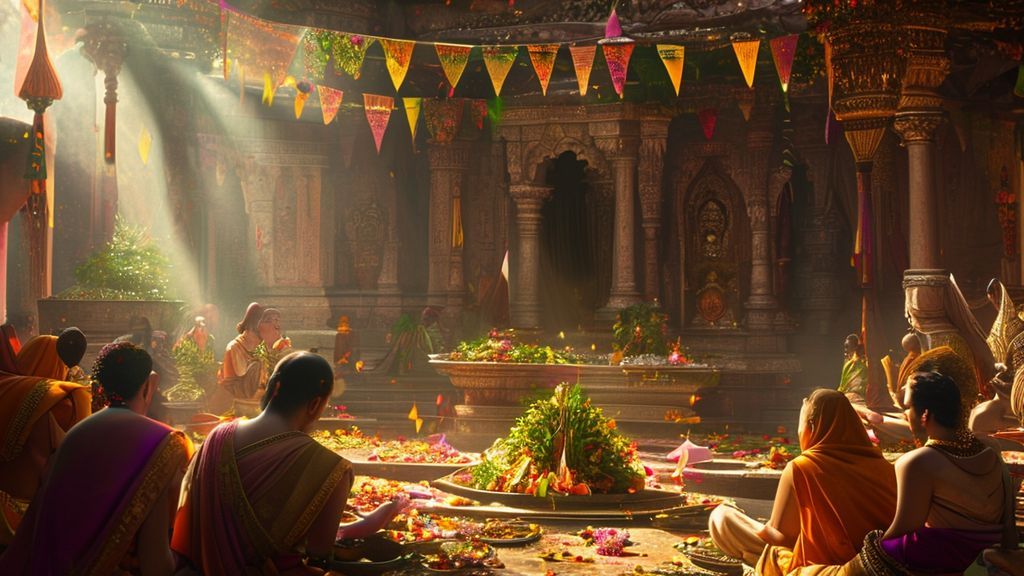
Tulsi Puja is the sacred Hindu ritual of worshipping the holy basil plant (Ocimum tenuiflorum), revered as a living manifestation of Goddess Lakshmi, consort of Lord Vishnu. This devotion invokes prosperity, spiritual purity, and protection, making it an indispensable daily practice in countless Hindu homes and temples, especially during the auspicious Kartika month.
| Attribute | Details |
|---|---|
| Deity Represented | Goddess Lakshmi, consort of Lord Vishnu; a form of Vrinda Devi |
| Origin/Identity | Emerged during the Samudra Manthan; incarnated as Vrinda, a devotee blessed by Vishnu |
| Key Festival | Tulsi Vivah (Shukla Paksha Dwadashi of Kartika month) |
| Scripture Reference | Padma Purana, Devi Bhagavata Purana, Skanda Purana, Brahma Vaivarta Purana |
The Soul of Every Hindu Home: An Introduction to Tulsi Devi
In the expansive tapestry of Sanatan Dharma, few elements hold the profound reverence and ubiquitous presence of the Tulsi plant. Known by myriad names such as Vrindavani, Vishnu-Priya, and Haripriya, the holy basil is not merely a botanical species; it is a living deity, a conduit for divine grace, and a symbol of unwavering devotion. Its presence in a Hindu home is believed to purify the environment, invite auspiciousness, and protect against all negative influences. The daily worship of Tulsi Devi is a profound act of acknowledging the sacredness of creation and fostering an intimate connection with the Supreme Being, Lord Vishnu, and His divine consort, Goddess Lakshmi. Through Tulsi Puja, devotees seek not only material well-being but also spiritual liberation and unwavering devotion.
The Divine Saga: Puranic History & Legend of Tulsi
The sanctity of Tulsi is deeply etched in our Itihasas and Puranas, narrating her divine origins and profound significance. The most celebrated legend, found extensively in the Devi Bhagavata Purana and Padma Purana, revolves around Vrinda. Vrinda was the devout wife of the powerful demon king Jalandhara, whose immense strength was derived from her unparalleled chastity. Even Lord Shiva struggled to defeat Jalandhara. To protect the cosmos, Lord Vishnu, at the behest of the Devas, had to deceptively violate Vrinda’s chastity, thereby weakening Jalandhara, who was subsequently slain by Shiva. Overwhelmed by grief and betrayal, Vrinda cursed Vishnu to be turned into a stone (Shaligrama) and then immolated herself. From her ashes, a divine plant emerged, which Lord Vishnu blessed, declaring that she would forever be known as Tulsi and would be dearer to Him than Lakshmi herself. He proclaimed, “You will always reside by My side in Vaikuntha, and no worship of Mine will be complete without your leaves.”
Another account from the Brahma Vaivarta Purana describes Tulsi as the daughter of Dharmadhvaja and Madhavi, who was blessed by Brahma and Vishnu to become a sacred plant. The Skanda Purana further elaborates on her connection to the Samudra Manthan, where she is said to have emerged as a divine elixir, symbolizing purity and immortality.
This sacred history imbues every leaf of Tulsi with the essence of unwavering devotion, sacrifice, and divine blessings, making her worship a direct act of communion with the Supreme Lord.
The Cosmic & Botanical Significance of Tulsi Devi
While Tulsi Devi does not manifest as a temple architecture, her sacredness inspires the construction of dedicated spaces known as Tulsi Mandapams or Vrindavans in Hindu homes and temple courtyards. These structures are often intricately carved, sometimes with a miniature temple dome or an elevated platform, symbolizing the reverence accorded to her. The design aims to protect the plant while elevating its status as a household deity.
From a spiritual and botanical perspective, Tulsi is a marvel. Known in Ayurveda as the “Queen of Herbs,” its leaves, flowers, and stems possess potent medicinal properties, capable of purifying the blood, boosting immunity, and alleviating stress. This scientific understanding aligns perfectly with the Dharmic belief that her presence purifies the atmosphere, dispelling negative energies and attracting positive vibrations. The plant’s unique ability to release ozone and oxygen contributes to a healthy environment, a fact our Rishis understood intuitively. The deep green leaves represent the sattvic (pure) quality, while the purple variety (Krishna Tulsi) is particularly revered for its higher spiritual potency and intense devotion. Worshipping Tulsi is thus an act of harmonizing oneself with the cosmos, benefiting both physically and spiritually. Further insights into such ancient wisdom can be found at Hindutva.online.
Rituals & Puja Vidhi: A Step-by-Step Guide to Tulsi Worship
Performing Tulsi Puja is a simple yet profound act of devotion. Here is a guide for daily worship, culminating in the significant Tulsi Vivah:
- Purification: Begin by purifying yourself with a bath and wearing clean clothes. Cleanse the area around the Tulsi plant, ensuring it is free from debris.
- Lighting the Lamp: Light a ghee lamp (diya) and an incense stick (agarbatti) near the Tulsi plant. The flame symbolizes dispelling ignorance, and incense purifies the air.
- Offering Water: Offer a small pot of fresh water to the roots of the Tulsi plant, circumambulating her three or seven times while pouring the water. This act symbolizes nourishment and reverence.
- Adornment: Apply Kumkum (red vermillion) and Haldi (turmeric powder) to the base of the plant or a leaf. Adorn her with a small garland of fresh flowers, if available.
- Naivedyam: Offer a small amount of fruit or sweets as Naivedyam (food offering).
- Mantra Recitation: Chant relevant mantras while performing the puja.
- Aarti: Conclude the daily puja with an Aarti, waving the lamp gently in a clockwise direction before Tulsi Devi.
- Pranam: Offer your prostrations (Pranam) with folded hands, expressing gratitude and devotion.
Tulsi Vivah: Celebrated on the 12th lunar day (Dwadashi) of the Kartika month (usually October-November), Tulsi Vivah is the ceremonial marriage of Tulsi Devi to Lord Shaligrama (a manifestation of Vishnu). This elaborate ritual mirrors a traditional Hindu wedding, complete with garlands, sacred threads, and festive offerings, signifying the awakening of the gods after Chaturmas and marking the beginning of the wedding season. It is believed that performing Tulsi Vivah bestows immense blessings, granting prosperity, happiness, and even progeny.
Sacred Mantras & Chants for Tulsi Devi
Chanting specific mantras amplifies the spiritual vibrations during Tulsi Puja, connecting the devotee with the divine essence of Tulsi Devi and Lord Vishnu.
Tulsi Pranam Mantra (Mantra for Salutation):
ॐ वृन्दाई तुलसी देव्यै प्रियायै केशवसय च।
विष्णु भक्तिप्रदे देवी सत्यवत्यै नमो नमः॥
Om Vrindaayi Tulasi Devyai Priyaayai Keshavasya cha.
Vishnu Bhaktiprade Devi Satyavatyai Namo Namah.
(Salutations to Vrinda, to Tulsi Devi, who is dear to Keshava (Vishnu). O Devi, bestower of devotion to Vishnu, O Satyavati, I bow to you.)
Tulsi Gayatri Mantra:
ॐ तुलस्यै विद्महे, विष्णुप्रियायै धीमहि, तन्नो वृन्दा प्रचोदयात्॥
Om Tulsyai Vidmahe, Vishnu Priyaaye Dhimahi, Tanno Vrinda Prachodayat.
(May we know the Tulsi, may we meditate on Vishnu’s beloved, may Vrinda inspire us.)
Devotees also frequently chant the Mahamantra, “Hare Krishna Hare Krishna, Krishna Krishna Hare Hare, Hare Rama Hare Rama, Rama Rama Hare Hare” or the simple “Om Namo Bhagavate Vasudevaya” while performing circumambulation or offering water to Tulsi, recognizing her deep connection to Lord Vishnu.
Dos and Don’ts of Tulsi Worship
Observing certain traditional guidelines ensures the sanctity of Tulsi and maximizes the benefits of her worship:
- Do offer fresh water to the Tulsi plant daily, except on specific prohibited days.
- Do keep the area around Tulsi clean and tidy, free from clutter.
- Do circumambulate the plant clockwise, ideally three or seven times.
- Do offer Tulsi leaves to Lord Vishnu, as no worship of Him is considered complete without them.
- Do replant if the existing Tulsi plant dries out, ensuring a living plant is always present.
- Don’t pluck Tulsi leaves after sunset.
- Don’t pluck Tulsi leaves on Ekadashi, Amavasya (new moon), Purnima (full moon), Dwadashi (the twelfth lunar day), or Sundays.
- Don’t touch the Tulsi plant with unclean hands or after consuming non-vegetarian food.
- Don’t use Tulsi leaves that have fallen on the ground; instead, use them for specific purification rituals.
- Don’t keep a dry or withered Tulsi plant; it is considered inauspicious.
Frequently Asked Questions About Tulsi Puja
Why is Tulsi considered so holy in Hinduism?
Tulsi is revered as a living manifestation of Goddess Lakshmi, the divine consort of Lord Vishnu. According to Puranic legends, she is the incarnation of Vrinda, a devout devotee blessed by Vishnu, signifying ultimate purity, devotion, and auspiciousness. Her presence purifies the surroundings and attracts divine blessings.
What is the significance of Tulsi Vivah?
Tulsi Vivah is the ceremonial marriage of the Tulsi plant with Lord Shaligrama (a form of Vishnu) or an idol of Krishna. It symbolizes the spiritual union of the individual soul with the Supreme Lord, marking the end of Chaturmas (the four-month period when deities are believed to be asleep) and ushering in auspicious times for weddings and other ceremonies.
Can anyone perform Tulsi Puja, and are there specific requirements?
Yes, anyone can perform Tulsi Puja with a pure heart and devotion. While specific rituals exist, the essence lies in sincere reverence. Basic requirements include a clean environment, an offering of water, a lamp, and sincere prayer. Observing the “Dos and Don’ts” enhances the puja’s efficacy.
What are the spiritual benefits of having a Tulsi plant at home?
Beyond its significant medicinal benefits, a Tulsi plant at home is believed to purify the atmosphere, dispel negative energies, and invite peace, prosperity, and spiritual harmony. It fosters a devotional environment, reminds inhabitants of dharma, and ensures continuous blessings from Lord Vishnu and Lakshmi. It is a constant reminder of the divine presence within the household.
Dharmic Significance: Why This Matters for Every Hindu
The worship of Tulsi Devi transcends mere ritual; it is a profound expression of Sanatan Dharma’s reverence for all creation and a potent means to cultivate spiritual discipline. By honoring Tulsi, we acknowledge the divine essence inherent in nature, recognizing that even a simple plant can be a direct pathway to the Supreme. She is a constant reminder of sacrifice, unwavering devotion, and the purifying power of faith. Every Hindu home with a thriving Tulsi plant becomes a miniature Vrindavan, a sacred space pulsating with divine energy, fostering peace, prosperity, and spiritual growth. The preservation and practice of Tulsi Puja ensure that the timeless wisdom and spiritual heritage of our ancestors continue to flourish, binding generations in a sacred tradition that nourishes both body and soul. For more authentic insights into our rich traditions, visit Hindutva.online.