


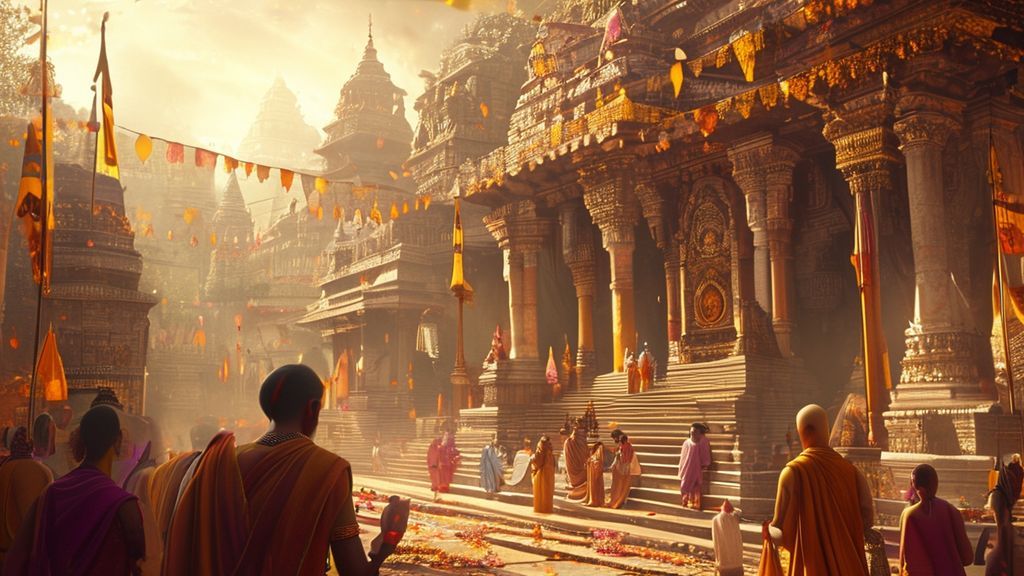
Vrindavan and Ayodhya traditions are the very heartbeats of Uttar Pradesh’s Hindu culture, serving as supreme pilgrimage sites that vividly manifest the divine pastimes of Bhagavan Krishna and Bhagavan Rama. These sacred cities offer profound spiritual experiences, embodying millennia of devotion, scriptural wisdom, and architectural marvels that define Sanatan Dharma for sincere seekers.
| Attribute | Details |
|---|---|
| Primary Deities | Shri Krishna & Radha (Vrindavan), Shri Rama, Sita, Lakshmana, Hanuman (Ayodhya) |
| Location/Origin | Braj Bhoomi (Vrindavan, Uttar Pradesh), Ayodhya (Uttar Pradesh, ancient Kosala Kingdom) |
| Key Festivals | Janmashtami, Radhashtami, Holi (Vrindavan); Ram Navami, Diwali, Vijayadashami (Ayodhya) |
| Primary Scripture Reference | Bhagavata Purana, Garga Samhita (Vrindavan); Valmiki Ramayana, Adhyatma Ramayana (Ayodhya) |
Introduction: The Sacred Heartlands of Uttar Pradesh
Uttar Pradesh, the ancient Madhyadesha, serves as the spiritual epicenter for millions of Hindus worldwide, primarily due to the unparalleled sanctity of Vrindavan and Ayodhya. These two cities are not merely geographical locations but living manifestations of divine presence and eternal Dharma. Vrindavan, nestled in the Braj region, pulsates with the enchanting leelas of Bhagavan Shri Krishna and Shri Radha, drawing devotees into the rapturous embrace of Bhakti Marga. Ayodhya, the revered birthplace of Maryada Purushottam Shri Rama, stands as the eternal beacon of Dharma, sacrifice, and righteous governance.
The traditions flourishing in these holy lands are deeply embedded in the very fabric of Sanatan Dharma. They offer a unique spiritual immersion, guiding pilgrims through sacred groves, ancient temples, and along hallowed riverbanks where deities once walked. To understand Vrindavan and Ayodhya is to comprehend the dual essence of Hindu spirituality: the ecstatic love for the Divine and the unwavering commitment to righteousness, both profoundly shaping Hindutva.online‘s understanding of our rich heritage.
Puranic History & Legend: Divine Narratives Unveiled
Vrindavan: The Eternal Playground of Krishna
The very name Vrindavan (वृन्दावन) signifies the forest of Vrinda (Tulasi), a favorite of Shri Krishna. Its history is not merely ancient but eternal, chronicled primarily in the Bhagavata Purana (Srimad Bhagavatam) and the Garga Samhita. Here, Bhagavan Krishna, in His childhood and youth, performed innumerable enchanting pastimes—lifting Govardhan Hill to protect the Vrajvasis, dancing with the gopis in the Rasa Lila, and enchanting all with His flute. Vrindavan is where Radha-Krishna Prem (divine love) reached its zenith, an esoteric truth revealed in texts like the Brahma Vaivarta Purana. Every dust particle here is imbued with the touch of the Divine Cowherd. The Skanda Purana, specifically the Mathura Mahatmya section, also elaborates on the glories of Vrindavan and the entire Braj Mandal.
Ayodhya: The Indestructible Abode of Rama
Ayodhya (अयोध्या), meaning “unconquerable” or “that which cannot be fought,” is the sacred Janmabhoomi (birthplace) of Bhagavan Shri Rama. Its legendary origins trace back to Vaivasvata Manu, the progenitor of mankind, as mentioned in the Valmiki Ramayana, the foundational epic of Rama’s life. Ayodhya was the capital of the illustrious Ikshvaku Dynasty, where solar kings like Harishchandra, Raghu, and Dasharatha reigned, upholding Dharma. The Ayodhya Kanda of the Valmiki Ramayana provides a vivid description of the city’s prosperity and spiritual prowess. The Skanda Purana’s Vaishnava Khanda and the Adhyatma Ramayana further extol Ayodhya’s glory, describing it as an eternal city, a spiritual center whose sanctity is unparalleled.
Architectural & Scientific Marvels: Temples as Testaments
Vrindavan’s Eclectic Temple Architecture
Vrindavan boasts an incredible array of temples, each a masterpiece reflecting different historical periods and devotional traditions. The Govind Dev Ji Temple, though largely destroyed by Aurangzeb, reveals the grandeur of early North Indian architecture, with its replica standing as a testament. The Banke Bihari Temple, established by Swami Haridas, showcases a unique blend of Rajasthani and local Braj styles, famous for its curtain-pulling darshan to control the intense spiritual energy of the deity. The Radha Raman Temple houses a self-manifested deity (svayambhu murti) from a Shaligram Shila, known for its intricate carvings and historical preservation. The scientific placement of these temples often aligns with specific Vastu Shastra principles, enhancing spiritual vibrations.
Ayodhya’s Resurgent Nagara Style
The newly consecrated Ram Janmabhoomi Temple in Ayodhya stands as a monumental revival of the traditional Nagara style of temple architecture, distinct from the Southern Dravidian style. Crafted from pink sandstone, it features multiple mandapas, grand shikhara, and intricate carvings depicting scenes from the Ramayana. The design, adhering strictly to ancient Hindu architectural canons like the Shilpa Shastras, emphasizes symmetry, sacred geometry, and durability. Engineers and architects have meticulously ensured its longevity and structural integrity, using traditional techniques combined with modern understanding to withstand earthquakes for centuries. The planning of ancient Ayodhya itself, as described in the Valmiki Ramayana, reflects sophisticated urban design principles, with wide roads, beautiful gardens, and strategically located public structures.
Rituals & Puja Vidhi: Engaging with the Divine
Vrindavan: The Path of Ecstatic Devotion
Worship in Vrindavan is characterized by its fervor and spontaneity.
- Darshan (दर्शन):Aartis (आरती) throughout the day, each with unique significance (Mangala, Shringar, Rajbhog, Sandhya, Shayan).
- Kirtan & Bhajan (कीर्तन, भजन):Hare Krishna Mahamantra (हरे कृष्ण हरे कृष्ण कृष्ण कृष्ण हरे हरे, हरे राम हरे राम राम राम हरे हरे) is central to Vrindavan’s spiritual practice.
- Parikrama (परिक्रमा):Vrindavan Parikrama Marg or the Govardhan Parikrama is a deeply cherished ritual, symbolizing humility and devotion to the holy land.
- Seva (सेवा):
Offerings typically include sweets like pedas, flowers, and Tulasi leaves.
Ayodhya: The Path of Righteousness and Remembrance
Ayodhya’s traditions emphasize purity, discipline, and the remembrance of Rama’s ideals.
- Sarayu Snan (सरयू स्नान):
- Darshan of Ram Lalla (राम लल्ला दर्शन):
- Rama Nama Japa (राम नाम जप):Rama Taraka Mantra (श्री राम जय राम जय जय राम) is particularly potent.
- Sankalpa & Dana (संकल्प, दान):
Hindutva.online encourages understanding the deep philosophical roots of these practices.
Mantras & Chants: Echoes of Eternity
Mantras for Vrindavan Devotion
The very air of Vrindavan resonates with divine sounds.
- Om Namo Bhagavate Vasudevaya (ॐ नमो भगवते वासुदेवाय): A principal mantra for Lord Krishna, invoking His all-pervading form.
- Hare Krishna Maha-Mantra (हरे कृष्ण हरे कृष्ण कृष्ण कृष्ण हरे हरे, हरे राम हरे राम राम राम हरे हरे): The most widely chanted mantra in Vrindavan, fostering direct connection with Radha and Krishna.
- Radhe Radhe (राधे राधे): A simple, yet powerful salutation to Shri Radha, the eternal consort of Krishna.
Mantras for Ayodhya Devotion
In Ayodhya, chants invoke the principles of Dharma and the strength of Rama.
- Om Shri Ramaya Namah (ॐ श्री रामाय नमः): A potent mantra to seek blessings from Lord Rama.
- Jai Shri Ram (जय श्री राम): A ubiquitous salutation, expressing victory and glory to Lord Rama.
- Shri Ram Jai Ram Jai Jai Ram (श्री राम जय राम जय जय राम): A powerful chant for mental peace and to connect with Rama’s divine qualities.
Dos and Don’ts: Upholding Sacred Etiquette
- DO: Maintain purity (physical and mental), dress modestly, participate in Kirtan/Bhajan, respectfully greet Sadhus and local residents, offer selfless service, and drink water from local wells or shops to avoid dehydration.
- DON’T: Engage in public intoxication or consumption of meat, litter or defile the sacred land, cause disturbance with loud noise, engage in disrespectful photography (especially inside temples), or bargain aggressively with vendors.
Frequently Asked Questions
What is the significance of Vrindavan Parikrama?
Vrindavan Parikrama is a sacred circumambulation of the holy town, spanning approximately 26 kilometers. It symbolizes walking in the footsteps of Krishna and Radha, experiencing the energy of their pastimes. Devotees perform it barefoot, often chanting, as an act of humility and intense devotion, believing that every step purifies the soul and brings one closer to the Divine.
How does Ayodhya embody Dharma?
Ayodhya embodies Dharma through the life and reign of Bhagavan Shri Rama, who perfectly exemplified righteousness, sacrifice, duty, and truth. The city itself, its ancient laws, and the conduct of its inhabitants under Rama’s rule set an ideal for virtuous living. Visiting Ayodhya inspires devotees to uphold these timeless values in their own lives.
Can non-Hindus visit these sacred sites?
Yes, non-Hindus are generally welcome to visit most temples and sites in Vrindavan and Ayodhya. However, it is crucial to observe local customs, dress modestly, respect religious sentiments, and follow specific temple rules, such as restrictions on photography or entry into inner sanctums.
What is the best time to visit Vrindavan and Ayodhya?
The ideal time to visit both Vrindavan and Ayodhya is during the cooler months, from October to March, when the weather is pleasant for exploring and participating in outdoor rituals like Parikrama. Major festivals like Janmashtami, Holi, Radhashtami in Vrindavan, and Ram Navami, Diwali in Ayodhya, offer vibrant experiences but also attract huge crowds.
Dharmic Significance: Preserving Sanatan Dharma’s Essence
Vrindavan and Ayodhya are more than just pilgrimage destinations; they are living repositories of Sanatan Dharma’s profound spiritual heritage. Vrindavan nurtures the Bhakti Marga, the path of ecstatic love, teaching devotees the intimacy and sweetness of a personal relationship with God. Ayodhya, on the other hand, illuminates the Dharma Marga, demonstrating the unwavering principles of truth, righteousness, and ideal conduct through the divine example of Shri Rama. Together, they represent the complete spectrum of Hindu spiritual endeavor.
These traditions, meticulously preserved and vibrantly practiced, ensure the continuity of our ancient faith. They provide tangible connections to our deities, scriptures, and cultural values, inspiring generations to live a life rooted in devotion and Dharma. Visiting and understanding these sacred lands is an act of spiritual self-discovery and a profound step towards preserving the timeless wisdom that makes Sanatan Dharma eternal.