


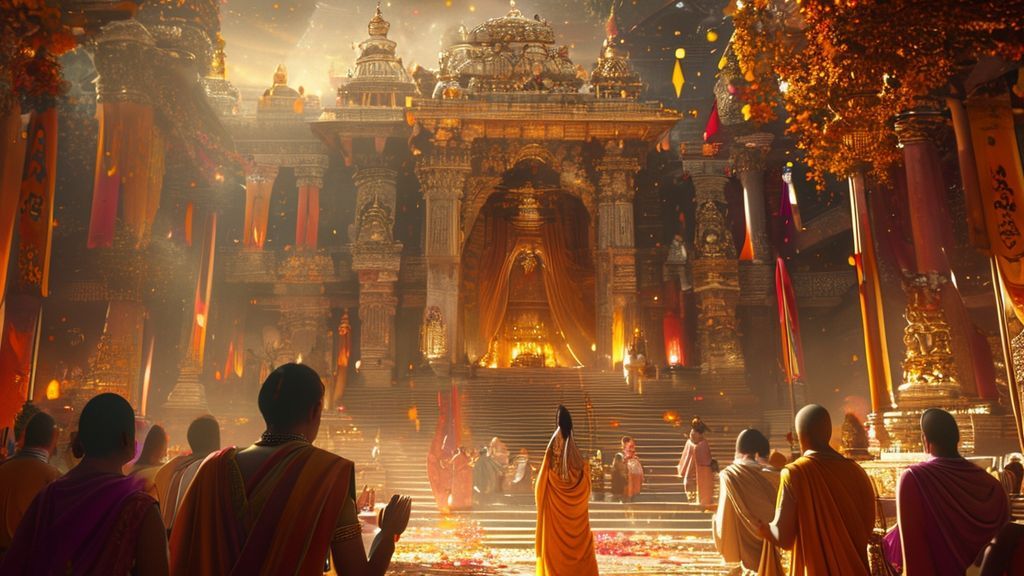
Venus Mahadasha, known as Shukra Mahadasha, is a significant 20-year planetary period in Vedic Astrology, marking the longest of all Dashas. It primarily influences a native’s life with themes of luxury, wealth, relationships, artistic pursuits, comfort, and material pleasures, driven by the planetary lord Shukra (Venus).
| Attribute | Details |
|---|---|
| Governing Deity | Shukracharya (Guru of Asuras), Goddess Lakshmi, Goddess Parvati |
| Associated Gemstone | Diamond (हीरा – Hīrā) |
| Associated Day | Friday (शुक्रवार – Shukravar) |
| Associated Color | White, Cream, Silver |
| Scripture Reference | Brihat Parashara Hora Shastra, Saravali, Jataka Parijata |
The Grand Tapestry of Shukra Mahadasha
In the vast and intricate science of Vedic Astrology, Jyotish, the Mahadasha system stands as a paramount tool for understanding the karmic trajectory of an individual’s life. Each Mahadasha, a major planetary period, ushers in a distinct set of experiences, challenges, and opportunities, dictated by the inherent nature of its ruling planet and its placement in the birth chart. Among these, the Venus Mahadasha, presided over by the resplendent planet Shukra, holds a unique and significant position, spanning a remarkable two decades. This period is a profound testament to the interplay between our accumulated karma and the divine forces that shape our worldly existence.
Shukra, or Venus, is revered as the planet of beauty, love, luxury, arts, creativity, sensual pleasures, marriage, and all forms of material abundance. His Mahadasha thus becomes a potent period where these aspects of life come to the forefront. It is a time often associated with significant shifts in relationships, financial status, aesthetic appreciation, and the pursuit of comfort. For the sincere seeker, understanding the nuances of this Dasha is not merely about predicting events, but about aligning with the cosmic flow, making conscious choices, and ultimately, evolving spiritually. Hindutva.online offers deeper insights into the intricate connections between celestial influences and Dharmic living.
The Celestial Guru: Puranic History & Legend of Shukracharya
To truly grasp the essence of Shukra Mahadasha, one must first delve into the Puranic accounts of Shukracharya, the divine preceptor of the Asuras. Shukra is not just a planet; he is a celestial being of immense wisdom, penance, and power, often depicted as a Brahmin sage with profound knowledge of all scriptures and esoteric arts.
The Puranas, particularly the Devi Bhagavata Purana and the Mahabharata (Adi Parva), narrate the magnificent tale of Shukracharya. Born as the son of Maharishi Bhrigu, Shukra undertook severe austerities (तपस्या – tapasyā) dedicated to Lord Shiva. His penance was so rigorous that he stood inverted, head down, for a thousand celestial years, subsisting only on smoke. Pleased with his devotion, Lord Shiva granted him the coveted Mrita Sanjeevani Vidya (मृत संजीविनी विद्या) – the secret knowledge of reviving the dead. This boon made Shukra invincible, enabling him to bring fallen Asuras back to life, thus becoming their formidable preceptor and protector against the Devas.
Despite his association with the Asuras and his role in their worldly pursuits, Shukracharya himself is a paragon of Vedic wisdom and spiritual discipline. He embodies the principle that true knowledge can be wielded for various purposes, and even those focused on material gains can still possess profound spiritual depth. His stories teach us about dedication, the power of penance, and the often complex interplay between spiritual wisdom and worldly power. This dual nature of Shukra – as a provider of material comforts and a repository of deep wisdom – is precisely what manifests during his Mahadasha.
The Astrological Science of Shukra Mahadasha: Cosmic Influences
The study of planets and their effects, known as Jyotish Shastra, is one of the six Vedangas, the auxiliary disciplines of the Vedas. The Mahadasha system, particularly the Vimshottari Dasha, which assigns 20 years to Shukra, is meticulously detailed in foundational texts like the Brihat Parashara Hora Shastra. This system calculates planetary periods based on the constellation (Nakshatra) of the Moon at the time of birth.
During Shukra Mahadasha, the energies of Venus become dominant in a native’s life. Shukra’s Karakatvas (significations) include:
- Relationships & Marriage: The period profoundly impacts romantic relationships, marital harmony, and partnerships. A well-placed Venus can bring love, happiness, and a fulfilling marriage, while an afflicted Venus might lead to discord or separation.
- Wealth & Luxury: There is a strong propensity for financial gain, acquisition of luxurious items like vehicles, opulent homes, and comfortable living. Material desires often increase during this period.
- Arts & Creativity: Individuals may find themselves drawn to creative pursuits such as music, dance, painting, fashion, or interior design. This is a fertile period for artistic expression and recognition.
- Sensual Pleasures: Enjoyment of fine food, exquisite clothing, perfumes, and other sensory experiences becomes prominent. It’s crucial to exercise moderation and maintain a Dharmic outlook.
- Health: Venus governs the reproductive system, kidneys, and skin. Health issues related to these areas can arise if Venus is afflicted in the birth chart.
The specific effects are highly dependent on the strength, dignity, and house placement of Venus in the natal chart, as well as its aspects and conjunctions. A benefic, strong Venus generally bestows abundant blessings, while an afflicted Venus can bring challenges in the areas it signifies. The 20-year period is further subdivided into Bhuktis (sub-periods) of other planets, each bringing its own flavor to the overall Mahadasha.
Propitiating Shukra: Rituals & Puja Vidhi
To harmonize with the energies of Shukra and mitigate any potential adversities during its Mahadasha, Vedic tradition prescribes specific rituals and practices. These acts of devotion and discipline are aimed at pleasing Shukra and invoking his benevolent blessings.
Simple Shukra Puja Vidhi:
- Arambha (Beginning): Choose a Friday (Shukravar) for the puja. Cleanse yourself by taking a bath.
- Sankalpa (Intention): With folded hands, declare your intention to perform the puja for the auspiciousness of Shukra Mahadasha.
- Deep Prajvalana (Lighting the Lamp): Light a Ghee lamp (दीपक – dipaka).
- Invocation: Place an idol or image of Goddess Lakshmi or Shukracharya. Offer white flowers (especially lotus), white sandalwood paste (चंदन – chandan), and rice grains (अक्षत – akshata).
- Offerings: Offer white sweets, milk, curd, sugar, or ghee. These items are dear to Venus.
- Mantra Chanting: Chant the Shukra Beeja Mantra or Gayatri Mantra (details below) a minimum of 108 times using a crystal rosary (स्फटिक माला – sphatik mālā).
- Dhyana (Meditation): Meditate on the benevolent form of Shukra or Goddess Lakshmi, visualizing peace, prosperity, and harmony.
- Aarti (Concluding Ritual): Perform a simple Aarti with camphor or a ghee lamp.
- Pranama (Prostration): Offer humble prostrations and seek blessings.
Additionally, observing a fast on Fridays, donating white items like milk, sugar, rice, or white clothes to Brahmins or the needy, and respecting women are considered highly auspicious during this period. For those with a challenging Venus, wearing a high-quality diamond or white sapphire, under the guidance of a knowledgeable Jyotishi, can be beneficial for harmonizing its energies. Further guidance on such practices can be found at Hindutva.online.
Sacred Vibrations: Mantras & Chants for Shukra
Mantras are powerful sound vibrations that connect us to divine energies. Chanting specific mantras for Shukra can help amplify its positive effects and alleviate negative influences during its Mahadasha.
- Shukra Beeja Mantra:
ॐ द्रां द्रीं द्रौं सः शुक्राय नमः॥
Om Drām Drīm Draum Sah Shukrāya Namah॥
This mantra is excellent for daily chanting to strengthen Venus.
- Shukra Gayatri Mantra:
ॐ अश्वध्वजाय विद्महे धनुर्हस्ताय धीमहि तन्नो शुक्रः प्रचोदयात्॥
Om Ashwadhvajāya Vidmahe Dhanurhastāya Dhīmahi Tanno Shukrah Prachodayāt॥
This Gayatri Mantra invokes the blessings of Shukra for wisdom and beneficence.
- Goddess Lakshmi Mantras:
ॐ श्रीं ह्रीं क्लीं श्रीं सिद्ध लक्ष्म्यै नमः॥
Om Shrīm Hrīm Klīm Shrīm Siddha Lakshmyai Namah॥
Since Lakshmi is the Goddess of wealth and prosperity, her mantras are highly effective in attracting Venusian blessings.
Dos and Don’ts During Shukra Mahadasha
Navigating the Venus Mahadasha effectively requires conscious awareness and adherence to certain Dharmic principles.
- Do’s:
- Cultivate harmony and respect in all relationships, especially with your spouse and women.
- Engage in creative and artistic pursuits; develop your talents.
- Maintain personal hygiene and cleanliness in your surroundings.
- Practice generosity and charity, particularly by donating white items.
- Seek beauty and aesthetics in a balanced and pure manner.
- Perform Shukra pujas and chant relevant mantras regularly.
- Be mindful of your diet, favoring fresh, pure foods.
- Don’ts:
- Avoid excessive indulgence in sensual pleasures, which can lead to imbalance and karmic repercussions.
- Refrain from infidelity or unethical behavior in relationships.
- Do not disrespect women or disregard marital vows.
- Avoid excessive luxury or showing off wealth, which can attract envy and negativity.
- Do not neglect spiritual practices in pursuit of material gains.
Frequently Asked Questions About Venus Mahadasha
How long does Venus Mahadasha last?
The Venus Mahadasha, or Shukra Mahadasha, has a duration of 20 years, making it the longest planetary period in the Vimshottari Dasha system of Vedic Astrology.
What are the general effects of Venus Mahadasha?
Generally, Venus Mahadasha brings a strong focus on relationships, marriage, luxury, material comforts, wealth, artistic endeavors, and sensual pleasures. The specific outcomes depend heavily on Venus’s strength and placement in the individual’s birth chart.
Are there remedies for a challenging Venus Mahadasha?
Yes, remedies include chanting Shukra Beeja and Gayatri Mantras, observing fasts on Fridays, donating white items, worshipping Goddess Lakshmi or Parvati, respecting women, and if advised by a competent astrologer, wearing a diamond or white sapphire.
Why This Matters for Every Hindu
Understanding the Venus Mahadasha transcends mere astrological prediction; it is a profound journey into self-awareness and Dharmic living. Our Vedic tradition teaches us that life’s experiences are not random but are intricately woven with our past karmas. The Mahadasha system provides a roadmap, guiding us on how to navigate these karmic unfoldings with wisdom and grace.
Shukra Mahadasha, with its emphasis on material well-being, relationships, and pleasure, presents both opportunities for joy and pitfalls of attachment. For a Hindu, this period is a reminder to embrace life’s gifts with gratitude, but always within the bounds of Dharma. It encourages us to cultivate beauty and harmony not just externally, but also within our hearts and minds. By performing prescribed remedies, maintaining ethical conduct, and fostering devotion, one can transmute the energies of Shukra, turning a period of potential material indulgence into an epoch of spiritual growth, balanced enjoyment, and a deeper connection to the divine, thereby preserving the timeless wisdom of Sanatan Dharma for generations to come.