


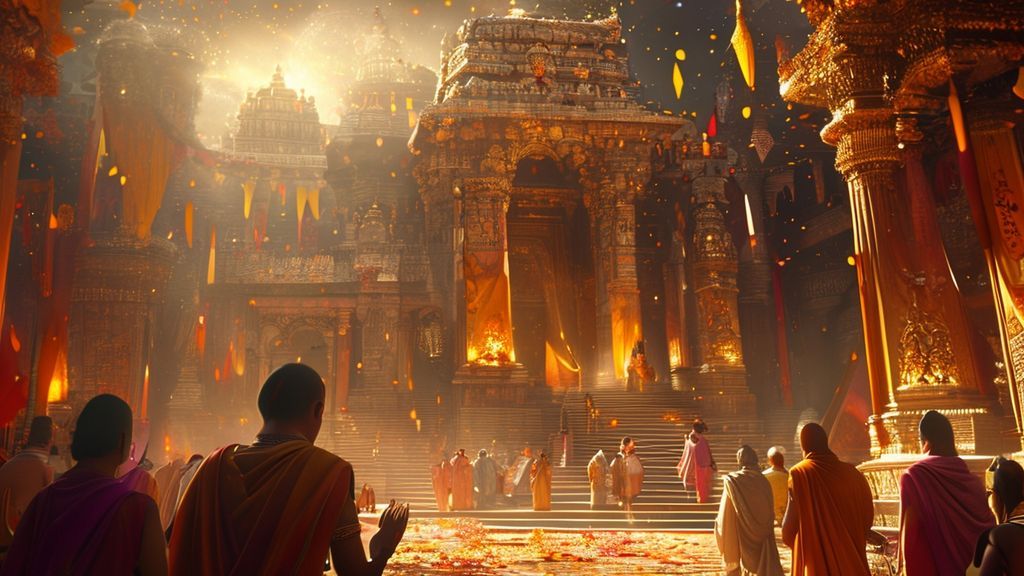
Vishakha Nakshatra, the sixteenth lunar mansion in Vedic astrology, is symbolized by a decorated archway (Torana) or a potter’s wheel, embodying the ambitious, goal-oriented, and determined nature of individuals born under its influence. Ruled by Brihaspati (Jupiter) and presided over by the potent deities Indra and Agni, it grants immense focus and drive towards achieving success and fulfilling one’s dharma.
| Attribute | Details |
|---|---|
| Deities | Indra (King of Devas, God of Storms) & Agni (God of Fire, Transformation) |
| Ruling Planet | Brihaspati (Jupiter) |
| Symbol | Decorated Archway (Torana), Potter’s Wheel, Branching Fork |
| Rashi Span | 20°00′ Tula (Libra) – 3°20′ Vrischika (Scorpio) |
| Gana (Nature) | Rakshasa (Demonic/Intense) |
| Yoni (Animal) | Vyaghra (Tiger) |
| Varna (Caste) | Kshatriya (Warrior) |
| Element | Agni (Fire) |
| Scripture Reference | Atharva Veda, Taittiriya Brahmana, Jyotisha Shastra Texts |
Introduction: The Guiding Light of Purpose
In the vast tapestry of Sanatan Dharma, the Vedic science of Jyotisha, or astrology, offers profound insights into the cosmic influences shaping human destiny. Central to this wisdom are the Nakshatras, the lunar mansions, each a unique cosmic station imbued with distinct energies and divine patrons. Among these, Vishakha Nakshatra shines forth as a beacon of unwavering purpose and relentless ambition. Its name itself, derived from “Vi-Shakha,” meaning “without branches” or “forked,” hints at its dual nature: a single-minded focus towards objectives, or a crossroads of choices leading to grand achievements. For sincere seekers and devotees, understanding Vishakha is to grasp the divine impetus for growth, transformation, and the relentless pursuit of Dharma.
This Nakshatra is not merely a celestial marker; it is a profound energetic signature that molds personalities, influences events, and guides spiritual journeys. It embodies the essence of the warrior spirit – the Kshatriya – ever striving, ever conquering, yet ideally always aligned with righteousness. As we delve deeper, we shall uncover the layers of its meaning, from ancient lore to practical worship, illuminating its indelible mark on the spiritual landscape of Bharat.
Puranic History & Legend: The Might of Indragni
The essence of Vishakha Nakshatra is inextricably linked to its powerful presiding deities: Indra and Agni, often invoked together as “Indragni.” This dual divine patronage is a cornerstone of its energy profile, drawing from the most ancient Vedic hymns and elaborated upon in the Puranas.
Indra, the King of the Devas, is renowned for his immense strength, leadership, and his relentless pursuit of sovereignty. He is the vanquisher of Vritra, the serpent demon who withheld the cosmic waters, symbolizing the breaking of obstacles and the release of life-giving energy. Indra’s narratives, prominently featured in the Rig Veda and later in various Puranas such as the Bhagavata Purana and Skanda Purana, speak of his ambition, his conquests, and his occasional human-like frailties, all of which underscore the powerful drive for authority and achievement inherent in Vishakha.
Agni, the divine fire, is the universal purifier, the messenger between gods and humans, and the witness to all sacred vows. As described in the Yajur Veda and numerous Upanishads, Agni symbolizes transformation, consumption, and creation. His flames represent the inner fire of ambition, the burning desire to achieve, and the spiritual heat (Tapas) required for self-realization. The combination of Indra’s formidable will and Agni’s transformative power bestows upon Vishakha natives an unparalleled capacity for intense focus and the ability to overcome any challenge.
The symbolism of the decorated archway (Torana) as a Vishakha emblem points to triumphal entries, successful conclusions, and significant milestones achieved through dedicated effort. The potter’s wheel, another symbol, speaks to the capacity for shaping one’s destiny, molding circumstances, and creating new forms from raw material – a testament to the Nakshatra’s creative and transformative power. These ancient symbols are not mere decorative elements but profound spiritual metaphors for the journey of a soul under Vishakha’s influence.
Astronomical & Astrological Significance: Navigating Cosmic Crosscurrents
Unlike fixed architectural structures, Vishakha Nakshatra is a dynamic celestial expanse, spanning across two distinct zodiac signs, or Rashis: the latter part of Tula (Libra) and the initial portion of Vrischika (Scorpio). This unique astronomical placement imbues Vishakha with a complex blend of energies. Its primary stars are typically identified with Alpha (Zubenelgenubi) and Beta (Zubeneschamali) Librae in the constellation of Libra, marking its celestial position.
The influence of its ruling planet, Brihaspati (Jupiter), the Guru of the Devas, provides a profound undercurrent of wisdom, expansion, and adherence to Dharma. Jupiter’s benevolent gaze ensures that while Vishakha natives are intensely ambitious, their pursuits can be guided by righteous principles and a search for higher truth, preventing ambition from devolving into mere self-serving desire.
The duality of its Rashi span is crucial. The Libra portion (first three padas) lends Vishakha a degree of balance, diplomacy, and a desire for justice, reflecting Libra’s inherent quest for harmony. However, the influence shifts dramatically as it moves into Scorpio (the last pada), introducing the transformative, intense, and often secretive energies ruled by Mangal (Mars). This makes Vishakha a powerful Nakshatra of transition and deep introspection, where individuals can move from external achievements to profound inner change. This blending of Jupiterian wisdom with Martian drive and Venusian balance creates a personality that is both strategic and passionate, seeking deep meaning behind their relentless efforts.
Understanding these cosmic crosscurrents is vital for anyone seeking to harmonize with Vishakha’s energy, allowing one to channel its intense drive towards spiritual growth and the upliftment of society, a core tenet found on Hindutva.online.
Rituals & Puja Vidhi: Honoring the Drive for Dharma
To align with the potent energies of Vishakha Nakshatra and invoke the blessings of Indra and Agni, specific rituals and practices are recommended. These aid in channeling its ambitious drive towards positive, Dharmic ends, ensuring success and preventing potential pitfalls of unchecked desire.
- Observation of Vishakha Day: Identify the specific day when the Moon transits Vishakha Nakshatra. This is considered auspicious for commencing new ventures, especially those requiring strong resolve and leadership.
- Indragni Puja: Perform a dedicated puja to Indra and Agni. Offerings of ghee (clarified butter) to a sacred fire (homa) are highly potent for Agni, symbolizing purification and nourishment. For Indra, offer items associated with royalty and abundance, such as sweet preparations, rich fruits, and flowers like red or yellow hibiscus.
- Deepa Prajvalana: Lighting a lamp (deepam) with ghee or sesame oil in front of the deity or a picture of Indra-Agni, particularly during Vishakha’s transit, helps to invoke the light of purpose and overcome obstacles.
- Donation and Charity (Danam): Giving generously on Vishakha Nakshatra days is highly beneficial. Donate to Gurus, scholars (representing Jupiter), or institutions that promote knowledge and welfare. Offering food to those in need, especially fire-related elements like cooked grains, is also meritorious.
- Sankalpa (Intention Setting): Before any ritual, clearly articulate your intentions. Vishakha thrives on clear goals, so a well-defined Sankalpa ensures the energies are directed effectively towards spiritual or material endeavors aligned with Dharma.
These practices, performed with devotion and sincerity, can transform an individual’s journey, making their ambitions fruitful and their path illuminated.
Mantras & Chants: Invoking Cosmic Fire and Leadership
Chanting sacred mantras is a powerful way to connect with the divine energies of Vishakha Nakshatra and its presiding deities. These vibrations purify the mind, strengthen resolve, and invoke blessings for achieving one’s goals righteously.
- Vishakha Nakshatra Moola Mantra:
ॐ विशाखाभ्यो नमः ॥ Om Vishākābhyo Namaḥ ॥
This mantra directly invokes the energy of the Nakshatra itself. Chanting it 108 times daily or on Vishakha days helps to harmonize with its qualities.
- Indra-Agni Moola Mantra:
ॐ इन्द्राग्निभ्यां नमः ॥ Om Indrāgnibhyāṁ Namaḥ ॥
This powerful mantra venerates the dual deities, Indra and Agni, calling upon their combined strength, leadership, and transformative power.
- Indra Gayatri Mantra:
ॐ सहस्रनेत्राय विद्महे वज्रहस्ताय धीमहि तन्नो इन्द्रः प्रचोदयात् ॥
Om Sahasranetraya Vidmahe Vajrahastaya Dhimahi Tanno Indraḥ Prachodayat ॥
Meaning: “Om, May we know the one with a thousand eyes, may we meditate upon the one who holds the thunderbolt, may Indra enlighten us.” This mantra invokes Indra’s vision, power, and ability to guide.
- Agni Gayatri Mantra:
ॐ महाज्वालाय विद्महे अग्निदेवाय धीमहि तन्नो अग्निः प्रचोदयात् ॥
Om Mahajwalaya Vidmahe Agnidevaya Dhimahi Tanno Agnih Prachodayat ॥
Meaning: “Om, May we know the one with great flames, may we meditate upon the God of Fire, may Agni enlighten us.” This mantra invokes Agni’s purifying and transformative energies.
Regular chanting of these mantras, particularly during the lunar transit of Vishakha, can significantly enhance one’s focus, resolve, and ability to manifest righteous ambitions.
Dos and Don’ts for Vishakha Nakshatra
Understanding the inherent nature of Vishakha Nakshatra allows one to act in harmony with its energies, maximizing positive outcomes and mitigating potential challenges.
Dos:
- Start New Ventures: It is an excellent time to initiate projects, especially those requiring strong leadership, determination, and ambitious goals.
- Engage in Debates & Discussions: Vishakha’s intellectual curiosity and drive make it suitable for scholarly pursuits, debates, and critical analysis.
- Perform Auspicious Ceremonies: Especially those related to leadership roles, public speaking, or establishing authority.
- Seek Spiritual Knowledge: The Jupiterian influence supports the pursuit of higher wisdom and philosophical understanding.
- Practice Charity: Offerings and donations, particularly to Gurus or those in need, align with the benevolent aspect of Jupiter.
- Undertake Transformative Practices: Any activity aimed at personal growth or breaking old patterns finds support from Agni’s transformative power.
Don’ts:
- Avoid Impulsive Decisions: While ambitious, the Rakshasa Gana can sometimes lead to impulsiveness. Exercise caution and deliberation.
- Steer Clear of Unnecessary Arguments: The intense energy can sometimes manifest as aggression. Avoid confrontations unless absolutely necessary for justice.
- Refrain from Activities Requiring Extreme Gentleness: Tasks demanding excessive patience or delicate handling might not align well with Vishakha’s forceful energy.
- Be Wary of Unchecked Ambition: Ensure that goals are aligned with Dharma, lest the pursuit of power become destructive.
What are the primary characteristics of Vishakha Nakshatra natives?
Individuals born under Vishakha Nakshatra are typically characterized by their strong ambition, goal-oriented nature, and unwavering determination. They possess a fierce drive to achieve success, often demonstrating remarkable leadership qualities and strategic thinking. With the combined influence of Indra’s sovereignty and Agni’s transformative fire, they are natural born achievers, capable of overcoming significant obstacles. However, their intensity can sometimes lead to impatience or a struggle with balancing personal desires with collective good, making Dharmic alignment crucial.
Who are the ruling deities of Vishakha Nakshatra?
The primary ruling deities of Vishakha Nakshatra are the powerful Vedic pair, Indra and Agni. Indra, the King of Devas, embodies authority, protection, and the vanquishing of obstacles, symbolizing the ambitious drive for leadership and success. Agni, the sacred fire god, represents purification, transformation, and the fervent desire (tapas) required for achievement. Their combined influence bestows natives with immense power, drive, and the capacity for profound change, propelling them towards their aspirations with unyielding focus.
What is the symbolic meaning of Vishakha Nakshatra’s symbols?
Vishakha Nakshatra is primarily symbolized by a decorated archway (Torana) and a potter’s wheel. The Torana signifies triumph, a gateway to success, and the completion of significant endeavors, reflecting the Nakshatra’s ambition and achievement-oriented nature. It indicates passing a threshold into a new, more glorious phase. The potter’s wheel represents creation, transformation, and the ability to shape one’s destiny from raw elements, highlighting the native’s capacity to mold circumstances and bring forth new realities through persistent effort. These symbols collectively underscore the themes of purpose, achievement, and evolution.
Dharmic Significance: Channeling Ambition for Sanatan Dharma
The profound relevance of Vishakha Nakshatra for every Hindu lies in its powerful message: ambition, when consecrated to Dharma, becomes a potent force for good. In a world often plagued by aimless wandering and fleeting desires, Vishakha offers a blueprint for purposeful living. Individuals influenced by this Nakshatra are uniquely positioned to be torchbearers of Sanatan Dharma, using their intense focus and leadership skills not for selfish gain, but for the preservation and propagation of eternal truth.
The pursuit of greatness, be it in spiritual knowledge (Gyana Marga), selfless action (Karma Marga), or unwavering devotion (Bhakti Marga), requires the very qualities Vishakha embodies: determination, discipline, and an unshakeable will. By honoring Indra’s leadership and Agni’s transformative power, devotees learn to refine their desires, burn away impurities, and rise to their highest potential. This Nakshatra teaches us that our endeavors, when rooted in righteousness and guided by Jupiterian wisdom, can lead to not only personal liberation but also contribute significantly to the collective spiritual progress of humanity. It is a call to action, to engage with the world with purpose, and to shape one’s destiny in alignment with the divine plan, ultimately enriching the timeless traditions documented on Hindutva.online.