


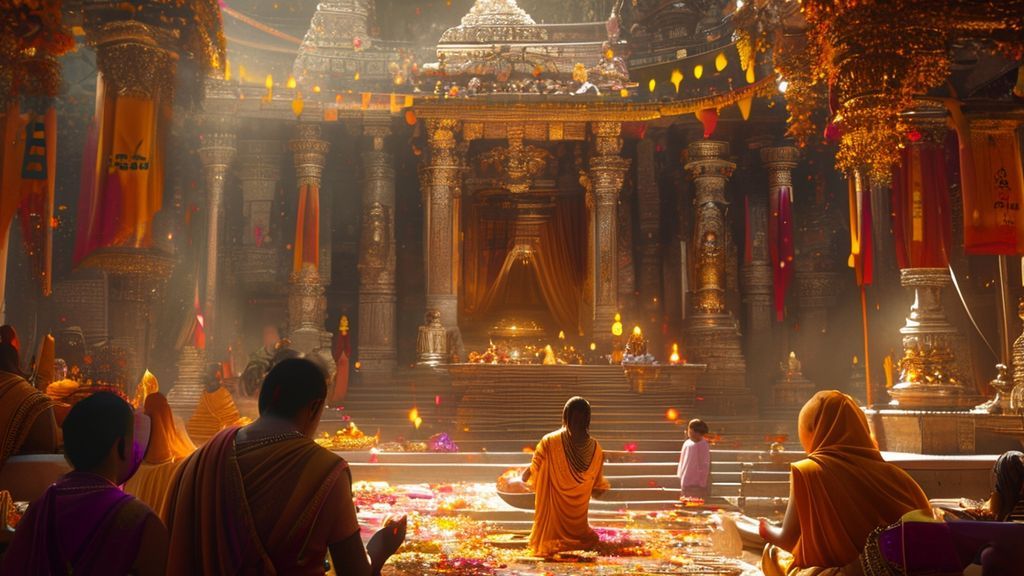
Wednesday Mercury Puja is a profound Sanatan Dharma ritual dedicated to Bhagavan Budha (the planet Mercury), observed on Wednesdays to invoke divine grace for enhanced intellect, effective communication, and significant success in business ventures and academic pursuits. This sacred observance aligns one with the celestial energies governing trade, logic, and eloquent expression, fostering prosperity and clarity in life.
| Attribute | Details |
|---|---|
| Deity | Bhagavan Budha (Mercury), Son of Chandra and Tara |
| Governs | Intellect, Logic, Speech, Business, Trade, Education, Communication |
| Associated Day | Wednesday (Budhavar) |
| Key Gemstone | Emerald (Panna) |
| Associated Colour | Green |
| Scripture Reference | Brihat Parashara Hora Shastra, Vishnu Purana, Bhagavata Purana, Matsya Purana |
The Auspicious Significance of Budhavar Puja
In the profound tapestry of Sanatan Dharma, every day of the week is consecrated to specific planetary deities (Grahas), whose celestial energies influence our earthly existence. Wednesday, known as Budhavar, is sacred to Bhagavan Budha, the benevolent planetary deity representing Mercury. Budha is not merely a celestial body; he is a potent manifestation of divine intelligence and communication, intrinsically linked to the sharpness of the mind, the clarity of speech, and the acumen required for successful commerce. Devotion to Budha on this auspicious day is a time-honoured practice, believed to harmonise our inner and outer worlds, bestowing clarity, prosperity, and eloquent expression upon the sincere devotee.
For those engaged in business, academia, or any field requiring intellectual prowess and effective communication, the Wednesday Mercury Puja becomes a cornerstone of their spiritual practice. It is an acknowledgment that true success is not merely material but also stems from spiritual alignment and the blessing of divine intelligence. This puja mitigates the malefic effects of a weak or ill-placed Budha in one’s astrological chart, transforming challenges into opportunities and fostering an environment conducive to growth and learning. It is a testament to the holistic vision of Vedic tradition, where celestial influences are meticulously understood and integrated into daily worship for human well-being.
The Puranic History and Divine Legend of Bhagavan Budha
The genesis of Bhagavan Budha is a captivating narrative found within our revered Puranas, primarily detailed in the Vishnu Purana (Book IV, Chapter 6) and the Bhagavata Purana (Skandha 9, Chapter 14). Budha is depicted as the illustrious son of Chandra (the Moon God) and Tara, the wife of Brihaspati (Jupiter), the preceptor of the Devas. This unique parentage places Budha at a significant juncture within the celestial lineage.
The story unfolds with Chandra’s enchanting abduction of Tara, leading to a cosmic war known as the ‘Taraka-maya’ or ‘Devasura-sangrama’, fought between the Devas and Asuras. After the divine intervention of Brahma and Shiva, Tara was returned to Brihaspati. However, she was pregnant, and from this union of Chandra and Tara, a brilliant child was born. When asked about the child’s father, Tara remained silent until Brahma intervened, confirming Chandra’s paternity. Due to his exceptional intellect and discerning wisdom, the child was named Budha, meaning ‘the intelligent one’ or ‘awakened’.
From his very birth, Budha was endowed with extraordinary intelligence, analytical capabilities, and mastery over words. He later married Ila, the daughter of Vaivasvata Manu, and their union gave rise to the Lunar Dynasty (Chandra Vamsha), from which many illustrious kings and sages descended. Thus, Bhagavan Budha is not just a planetary deity; he is a pivotal ancestor of a significant lineage, embodying the very essence of wisdom, discernment, and articulate speech, guiding humanity towards knowledge and prosperity, as illuminated in the sacred texts of Hindutva.online.
The Scientific Architecture of Planetary Influence and Ritual Efficacy
While we might not speak of temple architecture for a planetary puja, the concept of “architectural and scientific marvels” in this context pertains to the precise, profound science of Jyotisha, Vedic Astrology, and the structured efficacy of the puja ritual itself. Jyotisha is a limb of the Vedas, a profound system that maps the intricate dance of celestial bodies and their direct influence on terrestrial life. Bhagavan Budha, as one of the Navagrahas (nine planetary deities), holds a crucial position, governing the nervous system, intellect (buddhi), speech (vaani), analytical skills, and business acumen.
The “architecture” of the Wednesday Mercury Puja lies in its meticulous design to harness specific planetary frequencies. The colour green, associated with Budha, is not arbitrary; it represents growth, healing, and harmony, resonating with Mercury’s vibrant energy. Offerings like green moong dal, green fruits, and green clothing are scientific choices, chosen for their vibrational resonance with Budha’s energy signature. The use of specific herbs, wood (Apamarga), and mantras creates a powerful energetic vortex, allowing the devotee to absorb and align with the beneficial influences of Budha.
The science behind Graha Shanti (planetary appeasement) is the understanding that planetary positions in our birth chart create certain energetic imbalances or strengths. A well-performed Budha Puja acts as a cosmic recalibration, mitigating the ill effects (doshas) and enhancing the positive attributes (yogakaraka aspects) of Mercury. This is not superstition, but a profound spiritual engineering rooted in the Vedic understanding of energy, vibration, and consciousness, where the microcosm (human being) is intimately connected to the macrocosm (universe). The ritual creates a focused intention, channelled through specific dravyas (substances), mudras (hand gestures), and mantras, to invoke a precise cosmic response.
Rituals & Puja Vidhi for Wednesday Mercury Puja
Performing the Wednesday Mercury Puja with devotion and sincerity can bring immense blessings. Follow this step-by-step guide:
- Purification (Shuddhi): Wake up before sunrise (Brahma Muhurta) on a Wednesday. Bathe and wear clean, preferably green-coloured, clothes. Cleanse the puja area.
- Altar Setup (Vedi Sthapana): Place a picture or idol of Bhagavan Budha. If unavailable, a Budha Yantra or a simple betel nut (supari) representing Budha can be used. Place a fresh green cloth beneath. Arrange offerings for Lord Ganesha (Vighnaharta), as no puja is complete without His invocation.
- Invocation (Aachaman & Sankalpa): Perform Aachaman (sipping consecrated water) three times while chanting “Om Keshavaya Namah,” “Om Narayanaya Namah,” “Om Madhavaya Namah.” Then, make a Sankalpa (sacred vow), stating your name, gotra, the purpose of the puja (e.g., “for success in business and studies, clear communication, and removal of Budha Dosha”), and the day.
- Lord Ganesha Puja: Offer prayers to Lord Ganesha first. Light a lamp (Deepam) and incense (Dhoop). Offer flowers, fruits, and sweets.
- Budha Dev Invocation: Offer green flowers (like Durva grass, green leaves), green sweets (like Moong Dal Halwa, Modak), or green fruits. Offer water (Arghyam), fragrant paste (Chandanam), and unbroken rice grains (Akshatam) to Bhagavan Budha.
- Mantra Japa: Chant the Budha Beeja Mantra or other Budha Mantras (detailed below) for at least 108 times (one mala) using a rosary (mala) made of Rudraksha or Tulasi beads.
- Offerings (Naivedyam): Offer cooked green gram (moong dal), jaggery, or other green-coloured sweets and fruits. Place them before the deity.
- Aarti: Perform Aarti (waving a lamp) to Bhagavan Budha, singing devotional hymns.
- Circumambulation (Pradakshina): Perform 3 or 7 circumambulations around the altar, symbolising respect and energy absorption.
- Seeking Forgiveness (Kshama Prarthana): Conclude by asking for forgiveness for any unintentional errors during the puja.
- Charity (Dana): Donate green items, moong dal, or money to Brahmins or the needy. This amplifies the benefits of the puja.
Potent Mantras & Chants for Bhagavan Budha
Chanting Budha Mantras with devotion helps to align with the planetary energies and invoke divine blessings. Consistency and sincerity are key.
Budha Beeja Mantra
This is the most powerful and fundamental mantra for Budha. Chanting it 108 times daily or during the puja is highly recommended.
ॐ ब्रां ब्रीं ब्रौं सः बुधाय नमः॥
Om Bram Brim Braum Sah Budhaya Namah॥
Budha Gayatri Mantra
A Gayatri Mantra invokes the illuminating power of the deity.
ॐ सौम्यरूपाय विद्महे वाणेशाय धीमहि तन्नो बुधः प्रचोदयात्॥
Om Saumyarupaya Vidmahe Vanesaya Dhimahi Tanno Budhah Prachodayat॥
(Meaning: “Om, Let us meditate on the one who has a gentle form, Oh, Lord of intelligence, give us higher intellect, and let Budha illuminate our mind.”)
Navagraha Stotram (Budha Part)
From the revered Navagraha Stotram, the verse dedicated to Budha:
प्रियंगुकलिकाश्यामं रूपेणाप्रतिमं बुधम् ।
सौम्यं सौम्यगुणोपेतं तं बुधं प्रणमाम्यहम् ॥
Priyangu-kalika-shyamam rupenaa-pratimam Budham ।
Saumyam saumya-gunopetam tam Budham pranamamyaham ॥
(Meaning: “I bow down to Budha, who is dark like the bud of Priyangu flower, whose form is unparalleled, who is gentle and endowed with gentle qualities.”)
Regular chanting of these mantras fosters mental clarity, improves communication, sharpens intellect, and paves the way for success in business and education.
Dos and Don’ts for Wednesday Mercury Puja
Observing certain guidelines enhances the efficacy of your devotion.
- Dos:
- Observe a fast (partial or full) on Wednesday.
- Wear green coloured clothes during the puja.
- Recite Budha Mantras diligently.
- Offer green moong dal, green leafy vegetables, or green fruits as Naivedyam.
- Practice charity, especially donating green items, to those in need.
- Speak truthfully and avoid harsh language.
- Show respect to elders, teachers, and siblings.
- Keep your environment clean and organised.
- Don’ts:
- Avoid consuming meat, alcohol, or other tamasic foods on this day.
- Refrain from engaging in arguments or deceitful communication.
- Do not disrespect women or elders.
- Avoid wearing red or black coloured clothes if possible.
- Do not gamble or engage in speculative activities.
- Postpone important financial transactions that are not well thought out.
Why is Wednesday dedicated to Budha?
Wednesday, or Budhavar, is intrinsically linked to Bhagavan Budha due to a long-standing tradition in Vedic astrology and Puranic narratives. As the son of Chandra (Moon), Budha’s day naturally follows Somavar (Monday, ruled by Moon). Historically, celestial bodies were named after deities, and the day was assigned to its ruling planet. Budha’s association with intelligence and communication makes his designated day ideal for mental pursuits and business dealings.
What are the primary benefits of performing Budha Puja?
Regular and sincere Budha Puja bestows numerous benefits. It enhances intellectual capabilities, sharpens memory, and improves learning ability, making it highly beneficial for students. It strengthens communication skills, leading to clarity in speech and effective expression, crucial for professionals. For those in business, it brings acumen, foresight, and success in commercial ventures, mitigating losses and attracting prosperity. It also helps to alleviate speech impediments and nervous system disorders.
Can anyone perform Wednesday Mercury Puja?
Yes, absolutely. The Wednesday Mercury Puja is open to all sincere devotees regardless of gender, age, or background. Devotion and faith are the only prerequisites. While a Brahmin priest can perform an elaborate puja, a householder can perform a simpler, yet equally potent, ritual at home with full devotion. The benefits are reaped by anyone who approaches Bhagavan Budha with a pure heart and earnest intention, seeking His blessings for growth and success.
Upholding Dharma: The Enduring Significance of Planetary Worship
The Wednesday Mercury Puja is more than just a ritual for business success; it is a profound affirmation of Sanatan Dharma’s holistic approach to life. It teaches us that our material and spiritual well-being are intrinsically linked to the cosmic order and the energies of the divine Grahas. By honouring Bhagavan Budha, we acknowledge the importance of intelligence, truth, and righteous communication in our lives, essential pillars of Dharma.
This practice encourages self-discipline, fosters a devotional mindset, and promotes mindful living. It is a reminder that prosperity gained through wisdom and ethical means is lasting and contributes to universal harmony. In a world increasingly driven by fleeting material pursuits, these ancient practices, preserved and explained on platforms like Hindutva.online, offer a timeless path to aligning ourselves with cosmic principles, ensuring not only individual success but also the collective flourishing of society, thereby preserving the eternal values of Sanatan Dharma for generations to come.