

What Is Abhishekam (अभिषेक) is a sacred bathing ritual performed on Hindu temple deities where sanctified substances like milk, honey, water, ghee, yogurt, sandalwood paste, and panchamrit (five sacred nectars) are ceremonially poured over the deity’s idol while chanting specific mantras, serving as one of the principal forms of deity worship described in ancient scriptures like the Srimad Bhagavatam (11.27.32). The Sanskrit word ‘Abhishek’ means “anointing” or “bathing with reverence,” representing an act of devotion where the physical act of bathing the deity symbolizes the cleansing of karmic impurities and the invocation of divine grace into the devotee’s life through participated worship.

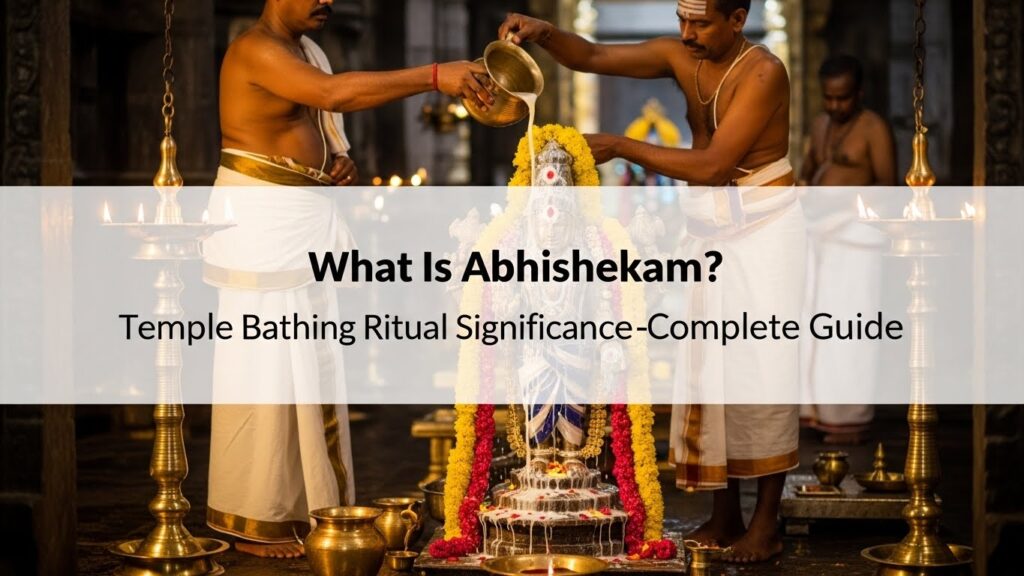
This time-honored Vedic ritual performed for millennia serves multiple spiritual purposes: purification of the devotee’s consciousness, creation of positive energy through specific mantras and materials, expression of devotion and surrender to the divine, honoring and refreshing the sacred murti (deity image), and facilitating the flow of divine blessings to worshippers.
The Abhideyaka Abhishekam at Tirupati Balaji Temple exemplifies the ritual’s profound spiritual symbolism, where each substance used in the ceremonial bath represents different aspects of divine purification and cosmic balance—panchamritam (five sacred nectars of milk, yogurt, honey, ghee, and sugar), sacred waters from holy rivers like the Ganges, aromatic substances like sandalwood and rose water, and specific offerings that create a multi-sensory spiritual experience. Rudrabhishekam (bathing of the Shiva Lingam) follows specific procedures:
first bathing the lingam with water mixed with Gangajal and rose water, then offering unboiled cow’s milk, sugarcane juice, panchamrit, and sandalwood paste, all while continuously chanting “Om Namah Shivaya,” with each substance conferring specific blessings such as fulfillment of desires (water), longevity (milk), prosperity (honey), and spiritual knowledge (ghee). This comprehensive guide explores the deep spiritual meaning and Vedic origins of Abhishekam, detailed ritual procedures for different deities, the symbolism and benefits of each bathing material, the composition and health properties of panchamrit, scientific and Ayurvedic dimensions, participating as a devotee, and what this sacred bathing ceremony reveals about Hindu philosophy‘s understanding of purification, devotion, and divine grace.
Meaning and Spiritual Significance
Etymology and Definition
Understanding Abhishekam begins with its linguistic roots:
- “Abhishek (अभिषेक) means ‘anointing’ or ‘bathing with reverence'”
- Derived from “abhi” (toward) + “sek” (to sprinkle/pour)
- Literally: The act of pouring sacred substances toward/over something holy
- Snana: General bathing or washing
- Abhisheka: Another transliteration of the same Sanskrit word
- Both terms refer to the ceremonial purification through sacred bathing
- “An act of devotion where sacred liquids are gently poured over a deity’s idol while chanting mantras”
- Combines physical action (pouring), verbal component (mantras), and mental focus (devotion)
- More than mere cleaning—a complete spiritual offering
Scriptural Foundation
Ancient texts prescribe Abhishekam as essential worship:
- Verse 11.27.32 describes Abhishekam “as one of the principal forms of deity worship”
- Establishes scriptural authority for the practice
- Confirms ancient Vedic origins
- “Traces its origins to ancient Agama scriptures that prescribe specific procedures for deity worship”
- Makes it “one of the most authentic Vedic ceremonies performed in modern times”
- Provides detailed instructions for materials, mantras, and methodology
Continuity Through Millennia:
- “Deeply rooted in Vedic traditions and practiced for millennia”
- Demonstrates unbroken tradition from ancient times to present
- Represents living connection to Vedic heritage
Multi-Dimensional Purpose
Abhishekam serves multiple spiritual functions:
- “Spiritual purification of the devotee’s consciousness”
- Not just the deity that gets bathed—the devotee’s mind and heart are cleansed
- Washing away sins and karmic impurities
- “Creation of positive energy through specific mantras and materials”
- Each substance and mantra generates distinct spiritual vibrations
- Transforms temple atmosphere into spiritually charged environment
- “Expression of devotion and surrender to the divine”
- Physical demonstration of love, reverence, and dedication
- Offering one’s best materials to the deity
- “Ritual aimed at purifying and honoring sacred images”
- Refreshing and caring for the divine presence
- Treating the deity as an honored guest or beloved monarch
- “Invocation of divine grace into one’s life through devoted participation”
- Opening channels for divine blessings to flow
- “Reflects the devotee’s wish to purify the mind, heart, and karma”
- “Way to balance karmic energy”
- Neutralizing negative karma through sacred service
- Accelerating spiritual progress
Symbolic Dimensions
The ritual operates on multiple symbolic levels:
Microcosm and Macrocosm:
- The deity represents cosmic divine principle
- Bathing the deity symbolizes purifying the universe
- The devotee’s participation connects individual to cosmic purification
Inner and Outer Purification:
- External bathing of idol mirrors internal cleansing of devotee
- Physical substances represent subtle spiritual qualities
- Material action produces metaphysical transformation
Giving and Receiving:
- Devotee offers precious substances (milk, honey, ghee)
- In return, receives divine blessings and grace
- Establishes reciprocal relationship with the divine
Surrender and Service:
- The act of bathing deity demonstrates humility and service
- Recognizing the divine as supreme worthy of reverence
- Personal ego dissolves in devotional action
Ritual Procedure: How Abhishekam is Performed
Preparation Phase
Before the ceremonial bathing begins:
- “The devotee first purifies themselves through a cleansing ritual”
- Bathing and wearing clean, traditional clothing
- Mental preparation through meditation or prayer
- Fasting or dietary restrictions (depending on specific tradition)
- “Offers prayers and invokes the deity’s presence”
- Establishing sacred atmosphere through mantras
- Requesting the deity’s permission to perform the ritual
- Inviting divine consciousness to fully inhabit the idol
- Materials Required:
Setting Sacred Space:
- Cleaning the puja area thoroughly
- Arranging materials in proper sequence
- Lighting lamps and incense
- Creating devotional ambiance
The Sequential Bathing
The Abhishekam proceeds in specific order:
- “The devotee initially pours water over the deity”
- Often “water mixed with Gangajal and Gulab Jal (Rose water)”
- Cleanses the deity and prepares for subsequent offerings
- Symbolizes basic purification and cooling
- “Unboiled milk” (ideally fresh cow’s milk)
- Poured gently over the deity while chanting specific mantras
- “Performing Rudrabhishek with Milk (Dudh) is for blessings of the longevity of devotee”
- Represents purity, nourishment, and life-giving essence
- Yogurt poured over the deity
- Symbolizes cooling, soothing, and calming energies
- Represents prosperity and abundance
- Clarified butter (ghee) offered
- Represents knowledge, victory, and spiritual illumination
- Symbolizes healthy relationships and divine wisdom
- Pure honey poured ceremonially
- Represents sweetness, spiritual bliss, and divine love
- Symbolizes removing bitterness from life
- “Panchamrit which is mix of Cow’s milk (unboiled), Curd (Yoghurt), Honey (Shahad), Sugar and Ghee (clarified butter)”
- The five sacred nectars combined
- Represents complete offering and cosmic balance
- Sugarcane juice/Fruit juices
- Sandalwood paste (chandan)
- Sacred ash (vibhuti) for Shiva
- Turmeric paste (kumkum) for Devi
8. Final Water Cleansing:
- Pure water poured to rinse away residual substances
- Reveals the purified, refreshed deity
- Symbolizes completion and clarity
Post-Abhishekam Rituals
- “Wipe the Shivling/Shiva Lingam with a clean cloth and place it on Pedestal”
- Adorning the deity with fresh flowers, garlands, and ornaments
- Applying sandalwood paste, vermillion, and other decorations
Alankara (Decoration):
- Dressing the deity in beautiful garments (silk, brocade)
- Offering jewelry, crowns, and sacred ornaments
- Presenting the deity in magnificent, royal splendor
Naivedyam (Food Offering):
- Offering specially prepared food items
- Bhoga (feast) presented to the deity
- Later distributed as prasadam to devotees
Arati (Lamp Ceremony):
- Waving lamps before the freshly bathed deity
- Singing devotional songs (bhajans/kirtans)
- Final prayers and prostrations
Distribution of Prasadam:
- The substances used in Abhishekam often distributed as prasadam
- Particularly the panchamrit and flowers
- Devotees receive divine blessings through consuming/touching these materials
Rudrabhishekam: Bathing Lord Shiva
Significance for Shiva Worship
Rudrabhishekam is the most elaborate Abhishekam ritual:
- “Rudra Abhishek meaning is the holy bath of the Shivling”
- Named after Rudra, a fierce form of Lord Shiva
- Considered especially powerful and auspicious
Popularity:
- One of the most frequently performed Hindu rituals
- Conducted daily in Shiva temples
- Special occasions: Mondays, Shivaratri, Shravan month
Spiritual Benefits:
- Washing away sins and negative karma
- Fulfilling desires and wishes
- Removing obstacles and difficulties
- Attaining spiritual liberation (moksha)
Specific Ingredients for Rudrabhishekam
The ritual uses distinctive materials:
- Water mixed with Gangajal and Gulab Jal (Rose water)
- Unboiled Cow’s Milk
- Sugarcane juice/Fruit juices
- Panchamrit (five-nectar mixture)
- Honey (Shahad)
- Curd (Yogurt)
- Belpatra or Bilva Patra (Wood Apple tree leaves) – sacred to Shiva
- Aromatic Oils
- Dhatura flowers (sacred to Shiva, though toxic)
- Akand/Rui flowers
- Sacred ash (Vibhuti/Bhasma)
- “Bath the shivling with water and then offer abhishek by pouring below liquids one by one”
- “Keep chanting Om namah shivay throughout”
- Water mixed with gangajal and gulabjal
- Milk (unboiled)
- Fruit juice or sugar cane juice
- Panchamrit
- “Om Namah Shivaya” chanted continuously
- Specific Rudrabhishekam mantras like Sadyojaat mantra
- Rudra Suktam or other Vedic hymns
Specific Benefits of Different Substances
Each material confers distinct blessings:
- “Performing Rudrabhishek with Water (jal), especially with the holy water of River Ganges i.e. Gangajal blesses with the fulfilment of desires”
- Purification and clarity
- Cooling Shiva’s fiery energy
- “Performing Rudrabhishek with Milk (Dudh), ideally fresh Cow’s Milk, which has not been boiled or heated is for blessings of the longevity of devotee”
- Long life and health
- Purity and nourishment
Honey Abhishek:
- Removing bitterness and obstacles
- Sweetening life with divine grace
- Prosperity and abundance
Ghee Abhishek:
- Knowledge and wisdom
- Victory in endeavors
- Spiritual illumination
Special Occasions:
- Mahashivaratri: Most elaborate Rudrabhishekam
- Shravan Mondays: Especially auspicious for Shiva worship
- Solar/Lunar eclipses: Powerful times for spiritual practices
Panchamrit: The Five Sacred Nectars
Composition and Preparation
Panchamrit is a sacred mixture of five ingredients:
- “Also known as Panchamrut or Charna Amrit”
- “Pancha” = five, “Amrit” = nectar/elixir
- Considered the nectar of immortality
- “Usually prepared during Hindu religious rituals or poojas”
- Mixed in specific proportions
- Prepared with devotion and purity
- Consumed as prasadam after offering to deity
Symbolic Significance of Each Ingredient
Each component carries deep symbolism:
Milk
Nutritional and Spiritual Value:
- Foundation ingredient representing purity
- Source of nourishment and strength
- Symbol of maternal care and compassion
- Contains calcium for strong bones
Curd (Yogurt)
Transformation and Cooling:
- Represents transformation (milk transformed into curd)
- Cooling and calming properties
- Aids digestion and gut health
- Symbolizes spiritual evolution
Honey
- “Rich source of antioxidants, minerals, and vitamins and is also well-known for boosting immunity”
- Represents sweetness of divine love
- Natural preservative and healing agent
- Symbol of spiritual bliss
Ghee
- “Symbolizes victory and knowledge, and it also stands for healthy relations”
- “Loaded with fat-solvent nutrients like Vitamin A, D, E, and K, which increase and boosts our immune function”
- Used for lighting sacred lamps
- Represents spiritual illumination and wisdom
Sugar
Energy and Sweetness:
- Provides instant energy
- Represents the sweetness of devotion
- Symbolizes removing life’s bitterness
- Balances the mixture’s taste
Health Benefits of Panchamrit
Modern science validates ancient wisdom:
Bone Health
- “Excellent for Bones: We believe that strength comes from bones – and the milk and ghee in Panchamrit assist us with building strong and healthy bones from within by boosting physical health”
- “Highly beneficial for women’s bone health after they enter menopause”
- “Ghee contains the fat-solvent vitamin K2, which helps in the assimilation of calcium and braces bones”
Immunity Boost
- “Honey is rich source of antioxidants, minerals, and vitamins and well-known for boosting immunity. Ghee is loaded with fat-solvent nutrients like Vitamin A, D, E, and K, which increase and boosts our immune function”
- “Combination of milk, curd, and honey… actually very effective” for immune system
- Protection against infections and diseases
Brain Function
- “Brain Function: Ghee present in Panchamrit helps in greasing our grey cells. It is said to vitalize our mind, improve our memory and also to grasp power, and enhances artistic and creative abilities”
- Cognitive enhancement
- Mental clarity and focus
Skin Health
- “Beneficial for skin health due to its nourishing and rejuvenating properties”
- “Milk and curd offer hydrating and soothing effects, reducing dryness and improving skin texture”
- “Honey’s antimicrobial and antioxidant properties help combat acne and protect the skin from damage”
- “Ghee, with its healthy fats and vitamins, nourishes and rejuvenates the skin, promoting a radiant glow”
Hair Care
- “Valuable addition to hair care routines due to its nourishing properties”
- “Milk and curd offer proteins and vitamins that strengthen hair and improve its texture”
- “Honey’s moisturizing and antimicrobial properties help keep the scalp healthy and reduce dandruff”
- “Ghee, with its rich fatty acids, deeply conditions the hair, adding shine and reducing dryness”
Digestive Health
- Probiotics from curd promoting gut health
- Honey’s antimicrobial properties
- Ghee aiding nutrient absorption
- Overall digestive balance
Deity-Specific Variations
Vishnu Abhishekam
Special considerations for Lord Vishnu:
- Tulsi leaves (for Vishnu)
- Sacred basil considered dear to Vishnu
- Often offered during and after Abhishekam
Materials:
- Similar to general Abhishekam (milk, honey, ghee, etc.)
- Sandalwood paste especially important
- Sacred conch water (shankha jala)
Mantras:
- Vishnu Sahasranama (thousand names of Vishnu)
- Specific Vishnu mantras and stotras
- Narayana mantra chanting
Devi Abhishekam
Goddess worship Abhishekam:
Special Materials:
- Turmeric paste (kumkum)
- Vermillion (sindoor)
- Sandalwood paste
- Rose water and flowers
Symbolism:
- Turmeric represents auspiciousness and purity
- Red vermillion symbolizes shakti (divine feminine power)
- Cooling substances balancing fierce goddess energy
Occasions:
- Navaratri: Nine nights of intensive goddess worship
- Fridays: Especially auspicious for Devi
- New moon and full moon days
Ganesha Abhishekam
Bathing the remover of obstacles:
Unique Offerings:
- Modak (sweet dumplings) paste
- Durva grass (sacred to Ganesha)
- Red flowers and red sandalwood
Materials:
- Same basic panchamrit and substances
- Extra emphasis on honey (Ganesha loves sweets)
- Coconut water sometimes used
Benefits:
- Removing obstacles in life
- Success in new ventures
- Wisdom and knowledge
- Prosperity and fortune
Participating in Temple Abhishekam
As a Temple Visitor
Witnessing Abhishekam in temples:
Timing:
- Early morning hours (often 5-7 AM)
- Special festival days with elaborate Abhishekams
- Auspicious occasions like Mondays (Shiva), Fridays (Devi)
Observing Respectfully:
- Maintain silence and reverence
- Follow temple protocols and instructions
- Dress modestly in traditional attire
- Remove footwear and follow cleanliness guidelines
Receiving Prasadam:
- Panchamrit distributed after Abhishekam
- Flowers and sacred ash given to devotees
- Consume with gratitude and reverence
- Believed to carry divine blessings
Sponsoring Abhishekam
Devotees can sponsor temple Abhishekams:
Online Booking:
- Many major temples offer online booking for special sevas
- Tirupati Abhishekam, Guruvayur, Madurai, etc.
- Select specific dates and types of Abhishekam
Types of Sponsored Abhishekam:
- Milk Abhishekam
- Panchamrit Abhishekam
- Elaborate festival Abhishekams with multiple substances
- Special occasion Abhishekams (birthdays, anniversaries, etc.)
Benefits:
- Direct participation in sacred ritual
- Earning spiritual merit (punya)
- Fulfilling vows and prayers
- Contributing to temple maintenance
Home Abhishekam
Performing Abhishekam at home altar:
Simpler Version:
- Can be performed on home deities (murtis)
- Scaled-down materials and procedures
- Same devotional spirit and mantras
Requirements:
- Small deity idol or picture
- Clean vessel for pouring
- Basic materials (water, milk, honey)
- Clean space and pure intentions
- Personal purification through bathing
- Setting up clean worship space
- Invoking deity through prayer
- Performing simplified bathing sequence
- Concluding with arati and prayers
Frequency:
- Daily (simple water Abhishekam)
- Weekly (more elaborate with panchamrit)
- Special occasions and festivals
Scientific and Ayurvedic Dimensions
Temperature Regulation
Abhishekam has scientific basis:
Cooling the Deity:
- Temple deities made of stone or metal
- Continuous lamp flames and incense create heat
- Regular bathing prevents heat accumulation
- Maintains optimal temperature for idol
Seasonal Adaptations:
- Summer: More cooling substances (sandalwood, rose water)
- Winter: Warming substances in different proportions
- Monsoon: Emphasizing purification and cleansing
Material Properties
Each substance has specific physical properties:
Milk:
- Calcium for mineral content
- Proteins for nourishment
- Fat content for smoothness
Honey:
- Natural antimicrobial properties
- Preservative qualities
- Antioxidant content
Ghee:
- High smoke point
- Fat-soluble vitamin carrier
- Natural moisturizer
Yogurt:
- Probiotic properties
- Lactic acid for gentle cleansing
- Cooling effect
Energetic Vibrations
Subtle energy perspective:
Mantra Vibrations:
- Specific sound frequencies during chanting
- Resonance with substances being offered
- Creating energetic charge in temple atmosphere
Material Vibrations:
- Each substance carries distinct energetic signature
- Combined effect creating powerful spiritual field
- Transforming ordinary materials into sacred offerings
Ayurvedic Balance
Tridosha considerations:
Vata Balance:
- Ghee and oil substances grounding and calming
- Warm milk pacifying Vata dosha
- Creating stability and nourishment
Pitta Balance:
- Cooling substances like sandalwood and rose water
- Milk and yogurt reducing excess heat
- Balancing fiery energies
Kapha Balance:
- Honey’s heating and purifying qualities
- Lightening heavy Kapha
- Promoting clarity and movement
Frequently Asked Questions
What is Abhishekam in Hinduism?
Abhishekam (अभिषेक) is a sacred bathing ritual where sanctified substances like milk, honey, water, ghee, yogurt, and sandalwood are ceremonially poured over a temple deity’s idol while chanting mantras. The Sanskrit word means “anointing” or “bathing with reverence,” representing devotional service where the physical act symbolizes cleansing karmic impurities and invoking divine grace. Described in ancient scriptures like Srimad Bhagavatam (11.27.32) as a principal form of deity worship, Abhishekam serves to purify devotees’ consciousness, create positive energy, honor the deity, and facilitate divine blessings.
What materials are used in Abhishekam?
Abhishekam uses sacred substances in specific sequence: pure water or Gangajal (Ganges water), unboiled cow’s milk, curd (yogurt), pure honey, ghee (clarified butter), sugar, and panchamrit (mixture of the five nectars). Additional materials include sandalwood paste (chandan), rose water (gulab jal), sugarcane or fruit juices, flowers, bilva leaves for Shiva, tulsi leaves for Vishnu, incense, and lamps. Each substance represents different spiritual qualities and confers specific blessings—water for purification and desire fulfillment, milk for longevity, honey for prosperity, and ghee for knowledge and victory.
What is Rudrabhishekam?
Rudrabhishekam is the sacred bathing ritual of the Shiva Lingam performed by offering holy mixtures of liquids including water mixed with Gangajal and rose water, unboiled cow’s milk, sugarcane juice, panchamrit, honey, curd, and sandalwood paste while continuously chanting “Om Namah Shivaya”. Named after Rudra (fierce form of Shiva), this ritual is considered especially powerful for washing away sins, fulfilling desires, and attaining spiritual liberation. Performing Rudrabhishek with Gangajal blesses with fulfillment of desires, while milk abhishekam grants longevity to the devotee.
What is Panchamrit and why is it used?
Panchamrit (also called Panchamrut or Charna Amrit) is a sacred mixture of five ingredients: unboiled cow’s milk, curd (yogurt), honey, sugar, and ghee (clarified butter) prepared during Hindu rituals and poojas. Each component carries symbolic significance—milk for purity, curd for transformation, honey for sweetness, ghee for knowledge and victory, and sugar for energy. Panchamrit offers remarkable health benefits including strong bones (milk and ghee with vitamin K2), boosted immunity (honey’s antioxidants and ghee’s vitamins A, D, E, K), enhanced brain function, improved skin and hair health, and digestive wellness.
How is Abhishekam performed step by step?
The ritual begins with personal purification, prayers, and invoking the deity’s presence. Then the ceremonial bathing proceeds in sequence: first pouring water over the deity, then milk, yogurt, ghee, honey, panchamrit, and additional substances like sandalwood paste or fruit juices, all while chanting specific mantras. For Rudrabhishekam, devotees bathe the Shivling with water, then offer liquids one by one while continuously chanting “Om Namah Shivaya”. After bathing, the deity is wiped with clean cloth, adorned with flowers and ornaments, offered food (naivedyam), and honored with lamp ceremony (arati) before distributing prasadam.
What are the benefits of participating in Abhishekam?
Abhishekam provides multiple spiritual and material benefits: purification of consciousness and washing away sins, balancing karmic energy and accelerating spiritual progress, fulfillment of desires and removal of obstacles, creation of positive energy and divine blessings, and deepening devotional connection with the deity. Specific Abhishekams grant particular blessings—water for desire fulfillment, milk for longevity, honey for prosperity, and ghee for knowledge. The ritual allows devotees to experience divine grace, purify mind and heart, and manifest positive transformations in their lives.
Can Abhishekam be performed at home?
Yes, simplified Abhishekam can be performed on home deity idols or pictures. The procedure involves personal purification through bathing, setting up a clean worship space, gathering basic materials (water, milk, honey, ghee), invoking the deity through prayer, performing the bathing sequence while chanting mantras, and concluding with arati and prayers. Materials required include pure water or Gangajal, milk, curd, honey, ghee, sugar (panchamrit), sandalwood paste, flowers, incense, lamp, and a clean vessel for pouring. While more elaborate than temple rituals, home Abhishekam maintains the same devotional spirit and spiritual efficacy.
What is the significance of each Abhishekam material?
Each substance carries specific spiritual symbolism and confers distinct blessings: Water (especially Gangajal) provides basic purification, cooling, and desire fulfillment. Milk represents purity, nourishment, life-giving essence, and grants longevity. Yogurt symbolizes transformation, cooling energies, and prosperity. Ghee represents knowledge, victory, spiritual illumination, and healthy relationships. Honey signifies sweetness, divine love, spiritual bliss, and removes bitterness. Sandalwood offers cooling fragrance and spiritual purification. Together these substances create a complete offering addressing all dimensions of human and divine existence.
Conclusion
Abhishekam stands as one of Hinduism’s most profound expressions of devotional love and sacred service—a ritual where the simple physical act of bathing a deity’s image becomes a multi-dimensional spiritual practice purifying the devotee’s consciousness, invoking divine grace, honoring the sacred presence, and creating powerful energetic transformations in temple atmosphere and individual hearts. The ancient Vedic wisdom encoded in this millennia-old practice demonstrates sophisticated understanding of material properties, energetic principles, and psychological-spiritual dimensions that modern science increasingly validates through research on panchamrit’s health benefits, ghee’s nutritional superiority, honey’s antimicrobial power, and the therapeutic effects of ritual participation and devotional consciousness.
The specific procedures of Rudrabhishekam bathing the Shiva Lingam with Gangajal for desire fulfillment, unboiled milk for longevity, honey for prosperity, and ghee for knowledge—all while continuously chanting “Om Namah Shivaya”—reveal how Hindu philosophy integrates material offerings with verbal mantras and mental devotion into a complete yoga (union) of body, speech, and mind directed toward the divine. The five sacred nectars of panchamrit symbolizing the perfect balance of purity (milk), transformation (curd), sweetness (honey), knowledge (ghee), and energy (sugar) offer both spiritual completeness and remarkable physical benefits for bones, immunity, brain function, skin, hair, and overall wellness—demonstrating that authentic spiritual practices naturally support material wellbeing.
Whether witnessed in the dawn hours at Tirupati Balaji with elaborate Abhideyaka Abhishekam, performed at neighborhood Shiva temples during Monday Rudrabhishekam, or offered in simple devotion at home altars, the bathing ritual maintains its essential character—a sacred encounter between human devotion and divine grace, a physical action generating metaphysical transformation, and a tangible expression of the profound truth that serving and honoring the divine purifies the server,
that offering one’s best to God returns multiplied blessings, and that in the gentle act of pouring milk over stone, chanting ancient mantras with focused attention, and surrendering ego in humble service, ordinary devotees access extraordinary spiritual dimensions where the material and sacred merge, karmic impurities wash away, and divine blessings flow abundantly into hearts opened through reverent participation in this timeless, sacred, deeply meaningful act of love called Abhishekam.
About the Author
Priya Sharma – Cultural Heritage & Temple Architecture Specialist
Priya Sharma is an accomplished writer and researcher specializing in Hindu festivals, temple architecture, and India’s rich cultural traditions. With a Master’s degree in Indian Art History from Maharaja Sayajirao University, she has extensively documented pilgrimage sites, temple iconography, and folk traditions across India. Her work focuses on making India’s spiritual heritage accessible to contemporary audiences while preserving authentic cultural narratives.