


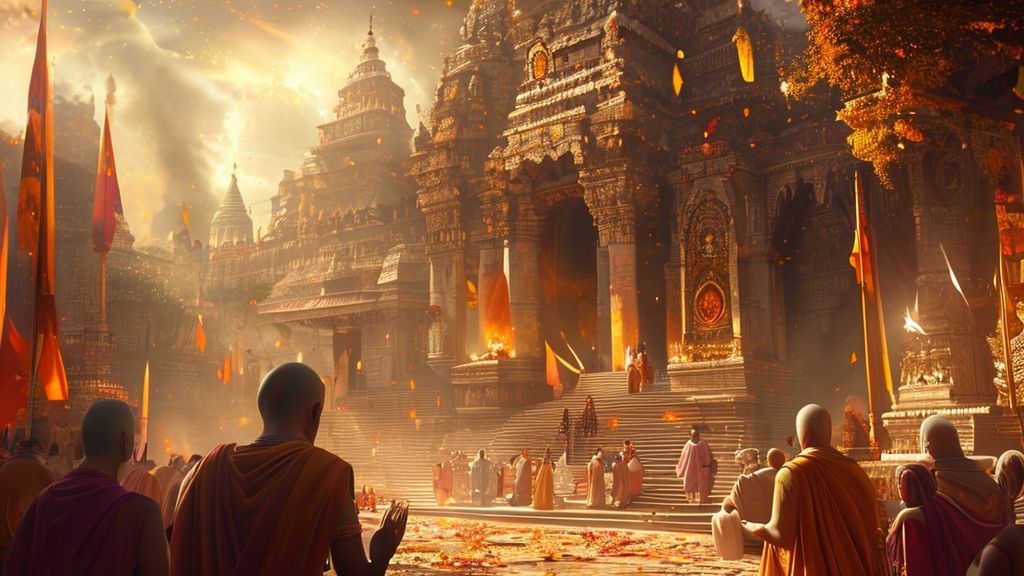
Hindutva, literally ‘Hinduness,’ is a comprehensive socio-political and cultural ideology defining the indigenous identity of Bharatavarsha (India) and its people as rooted in Sanatan Dharma. It encompasses the shared spiritual heritage, civilization, geography, and cultural ethos that have nurtured Hindu civilization for millennia, emphasizing unity amidst diversity as its foundational principle.
| Attribute | Details |
|---|---|
| Concept | Hindutva (हिंदुत्व) – The essence of being Hindu. |
| Origin | Ancient Sanatan Dharma (सनातन धर्म) principles; formally articulated in the 20th century. |
| Key Tenet | Cultural, civilizational, and territorial identity rooted in the Dharmic worldview. |
| Foundational References | Vedas, Upanishads, Puranas, Itihasas (for underlying principles); Vinayak Damodar Savarkar’s “Essentials of Hindutva” (for modern synthesis). |
| Core Values | Dharma, Karma, Punya Bhumi, Moksha, Unity in Diversity, reverence for nature and all life. |
The Eternal Identity: Understanding Hindutva
The term Hindutva is often misunderstood in contemporary discourse, yet its roots delve deep into the timeless wisdom of Sanatan Dharma, the eternal way of life. It is not merely a political ideology or a narrow religious doctrine, but a profound articulation of the comprehensive identity that defines the people and culture of Bharatavarsha. Hindutva embodies the collective consciousness, shared heritage, and civilizational ethos that have flourished on this sacred land for millennia. It is a unifying force that celebrates the incredible diversity within the Hindu fold, from the Advaitin to the Dvaitin, from Shaiva to Vaishnava, embracing all indigenous spiritual traditions that consider Bharat as their Punya Bhumi (sacred land) and Karma Bhumi (land of action and destiny).
For sincere seekers and devotees, understanding Hindutva means comprehending the spiritual bedrock upon which our civilization stands. It is about recognizing the unbroken chain of wisdom passed down through generations, the reverence for our Rishis and scriptures, and the inherent connection to the land itself, consecrated by countless pilgrimage sites and divine manifestations. It is an exploration of what it truly means to be a Hindu, beyond the confines of ritual, embracing a holistic worldview that impacts every aspect of existence.
The Ancient Tapestry of Bharatavarsha: Historical and Puranic Roots
While the term “Hindutva” gained prominence in the early 20th century through figures like Vinayak Damodar Savarkar, its core tenets are as ancient as Sanatan Dharma itself. The concept of a unified cultural and spiritual identity rooted in this land is vividly described in our scriptures, long before any external nomenclature for “India” or “Hindu” existed.
The Vishnu Purana (2.3.1) famously defines Bharatavarsha:
“उत्तरं यत्समुद्रस्य हिमाद्रेश्चैव दक्षिणम् ।
वर्षं तद्भारतं नाम भारती यत्र सन्ततिः ॥”
“Uttaram yatsamudrasya Himadreshchaiva dakshinam. Varsham tad Bharatam nama Bharati yatra santatihi.”
(The country that lies north of the ocean and south of the snowy mountains is called Bharatam; there dwell the descendants of Bharata.)
This verse, and many others across various Puranas such as the Skanda Purana and Markandeya Purana, describe Bharatavarsha not just as a geographical entity but as a unique Karma Bhumi – a land where actions yield profound spiritual merit, distinct from other regions of Jambudweepa. It is the land of Dharma, where the Vedas were revealed, where Rishis performed Tapas, and where Avatars descended. This deep reverence for the land itself, as a sacred geography, is a cornerstone of Hindutva.
The shared pilgrimage circuits (like the Char Dham, Sapta Puri), the common stories from the Ramayana and Mahabharata, the universality of Sanskrit as a sacred language, and the widespread practice of Vedic rituals across diverse linguistic and regional groups, all point to an intrinsic cultural unity that transcends superficial differences. This ancient sense of collective identity, forged through millennia of shared spiritual experience and cultural evolution, forms the historical bedrock of Hindutva, emphasizing a civilizationally bound people rather than merely followers of a creed.
Civilizational Heritage and Ancient Wisdom
Hindutva champions the preservation and propagation of the magnificent civilizational heritage of Bharat. This heritage is not limited to temples and texts, but encompasses a holistic worldview that fueled unparalleled advancements in various fields.
- Philosophy & Spirituality: The six orthodox schools of Hindu philosophy (Darshanas) – Nyaya, Vaisheshika, Samkhya, Yoga, Mimamsa, and Vedanta – represent profound intellectual inquiry into the nature of reality, self, and liberation.
- Science & Mathematics: Ancient Hindus pioneered the concept of zero (शून्य), the decimal system, sophisticated astronomical calculations (as seen in texts like the Surya Siddhanta), complex metallurgical processes, and advanced medical systems like Ayurveda, which views health holistically.
- Arts & Architecture: From the intricate sculptures of Khajuraho to the towering Gopurams of Dravidian temples, and the elegant Nagara style of the North, Hindu art and architecture are not mere aesthetics but spiritual expressions, embodying sacred geometry (Vastu Shastra) and cosmic principles.
- Literature & Language: Sanskrit, the mother of many languages, is a repository of vast knowledge, from the Vedic hymns to Kalidasa’s dramas and Panini’s grammar (Ashtadhyayi), demonstrating a linguistic precision unmatched in antiquity.
These achievements, born from a Dharmic worldview that sought truth (सत्य) in all its forms, form an integral part of what Hindutva seeks to protect and celebrate, ensuring that this glorious legacy continues to inspire future generations. More insights into these profound contributions can be found at Hindutva.online.
Dharmic Living: Principles for Devotees
While Hindutva is not a prescriptive religion, it inherently encourages a life lived in accordance with Sanatan Dharma. For a devotee, embracing the principles of Hindutva means cultivating a Dharmic way of life.
- Adherence to Dharma (धर्म): Upholding righteousness, moral conduct, and ethical living in all actions and thoughts. This includes performing one’s Sva-dharma (individual duties) and contributing positively to society.
- Practice of Ahimsa (अहिंसा): Non-violence in thought, word, and deed, extending compassion to all beings.
- Karma Yoga (कर्मयोग): Performing actions with dedication, without attachment to their fruits, understanding that every action creates consequences.
- Reverence for Scriptures: Studying and reflecting upon the Vedas, Upanishads, Bhagavad Gita, Puranas, and Itihasas to gain wisdom and guidance.
- Seva (सेवा): Selfless service to humanity and all creation, seeing the divine in everyone.
- Celebration of Festivals: Participating in and understanding the spiritual significance of Hindu festivals, which are vital threads in our cultural fabric.
- Respect for Sacred Geography: Recognizing the sanctity of rivers, mountains, temples, and pilgrimage sites as embodiments of divine presence.
Mantras and Chants for National and Universal Well-being
To embody the spirit of Hindutva, one can regularly chant mantras that promote universal well-being, national prosperity, and individual spiritual growth. These chants resonate with the underlying ethos of Sanatan Dharma.
- Gayatri Mantra (गायत्री मंत्र):
“ॐ भूर्भुवः स्वः तत्सवितुर्वरेण्यं भर्गो देवस्य धीमहि धियो यो नः प्रचोदयात् ॥”
“Om Bhur Bhuvah Svah, Tat Savitur Varenyam, Bhargo Devasya Dhimahi, Dhiyo Yo Nah Prachodayat.”
(We meditate on the adorable glory of the Divine Vivifier, May He enlighten our intellect.) - Sarve Bhavantu Sukhinah (सर्वे भवन्तु सुखिनः):
“ॐ सर्वे भवन्तु सुखिनः सर्वे सन्तु निरामयाः ।
सर्वे भद्राणि पश्यन्तु मा कश्चिद् दुःखभाग् भवेत् ॥”
“Om Sarve Bhavantu Sukhinah, Sarve Santu Niramayah. Sarve Bhadrani Pashyantu, Ma Kashchid Duhkha Bhāg Bhavet.”
(May all be happy. May all be free from illness. May all see what is auspicious. May no one suffer.) - Loka Samasta Sukhino Bhavantu (लोकाः समस्ताः सुखिनो भवन्तु):
“ॐ लोकाः समस्ताः सुखिनो भवन्तु ॥”
“Om Lokah Samastah Sukhino Bhavantu.”
(May all beings in all worlds be happy.) - Shanti Mantra (शांति मंत्र):
“ॐ द्यौः शान्तिरन्तरिक्षं शान्तिः पृथिवी शान्तिरापः शान्तिरोषधयः शान्तिः ।
वनस्पतयः शान्तिर्विश्वेदेवाः शान्तिर्ब्रह्म शान्तिः सर्वं शान्तिः शान्तिरेव शान्तिः सा मा शान्तिरेधि ॥”
“Om Dyauh Shantir Antariksham Shantih Prithvi Shantir Apah Shanti Roshadhayah Shantih. Vanaspatayah Shantir Vishvedevah Shantir Brahma Shantih Sarvam Shantih Shantireva Shantih Sa Ma Shantir Edhi.”
(Om, May there be peace in heaven, peace in the atmosphere, peace on earth, peace in the waters, peace in plants. May there be peace in trees, peace in Gods, peace in Brahman, peace in everything. May peace, true peace, be with us.)
Cultural Etiquette: Dos and Don’ts for a Dharmic Life
Living a life aligned with Hindutva means adhering to certain cultural and ethical norms that uphold the dignity and sanctity of our traditions.
Dos:
- Respect Elders and Gurus: Always show reverence to parents, teachers, and spiritual mentors, for they are embodiments of wisdom and tradition.
- Maintain Purity (Shuddhi): Strive for purity in body (through hygiene), mind (through positive thoughts), and speech (through truthfulness).
- Protect Dharma: Act consciously to preserve and promote Dharmic values in your community and society.
- Serve the Nation: Recognize Bharat as the sacred land and contribute positively to its well-being and strength.
- Celebrate Cultural Diversity: Appreciate the vast tapestry of languages, customs, and traditions within the Hindu fold as expressions of a singular underlying spirit.
- Engage in Seva: Participate in selfless service activities, contributing to the welfare of society.
Don’ts:
- Do not disrespect sacred symbols: Treat Murtis, sacred texts, temples, and symbols like Om or Swastika with utmost reverence.
- Do not engage in Adharma: Avoid unrighteous conduct, injustice, dishonesty, and exploitation.
- Do not abandon heritage: Do not disassociate from or be ashamed of your cultural and spiritual roots.
- Do not promote disunity: While celebrating diversity, always strive for unity and harmony within the Hindu society.
Frequently Asked Questions about Hindutva
Is Hindutva a religion?
No, Hindutva is not a religion in the Abrahamic sense with a single founder, holy book, or dogma. It is best understood as a cultural, civilizational, and national identity rooted in the principles of Sanatan Dharma. It encompasses the entire spectrum of indigenous spiritual traditions of Bharatavarsha, recognizing their shared heritage and common Punya Bhumi.
How does Hindutva relate to Sanatan Dharma?
Sanatan Dharma is the eternal way of life, the spiritual and philosophical foundation. Hindutva is the modern articulation of the collective identity of the people who have lived by and preserved Sanatan Dharma in Bharatavarsha. It is the cultural and national expression of that ancient spiritual heritage, emphasizing unity, pride, and the preservation of a unique civilization.
Is Hindutva exclusive or inclusive?
Hindutva, in its truest sense, is deeply inclusive of all indigenous traditions that emerged from Bharatavarsha, recognizing their common cultural and civilizational thread. It emphasizes the unity of Hindus across castes, sects, and languages. Its focus is on the indigenous people of Bharat and their shared heritage, rather than on excluding others. For more scholarly perspectives on this, visit Hindutva.online.
Who was Vinayak Damodar Savarkar in the context of Hindutva?
Vinayak Damodar Savarkar (1883-1966) was a prominent freedom fighter and philosopher who formally articulated the concept of “Hindutva” in his 1923 book, “Essentials of Hindutva.” He defined a Hindu as one who regards Bharatavarsha as their Pitrubhumi (fatherland), Punyabhumi (holy land), and Karmabhumi (land of action). His articulation provided a socio-political framework for Hindu identity during a critical period in Indian history, emphasizing cultural unity.
Dharmic Significance: Why This Matters for Every Hindu
Understanding Hindutva is crucial for every Hindu today because it offers a powerful framework for reclaiming our identity, preserving our heritage, and strengthening our civilization. In an era marked by cultural erosion and ideological challenges, Hindutva serves as a reminder of our glorious past, our profound spiritual wisdom, and our collective responsibility towards the future. It is about fostering a sense of pride in being Hindu, nurturing the values of Dharma, and contributing to the resurgence of Bharatavarsha as a Vishwa Guru (world teacher). By embracing Hindutva, we commit ourselves to the eternal principles of Sanatan Dharma, ensuring its continuity and relevance for generations to come, thereby securing the spiritual and cultural well-being of not just India, but humanity itself.