

The concept of prasad – from What Is Prasad Significance Sanskrit [translate:प्रसाद] meaning “grace,” “favor,” “clarity,” or “blessing” – represents one of Hinduism’s most tangible, universal, and profoundly meaningful practices where food lovingly prepared and reverently offered to deity during worship becomes sanctified through divine acceptance transforming from ordinary material substance into sacred blessed nourishment carrying deity’s grace ([translate:kripa]) that devotees receive and consume not merely for physical sustenance but primarily for spiritual purification, mental clarity, emotional peace, and tangible connection with divine presence manifest in edible form creating accessible intimate relationship between human and transcendent.

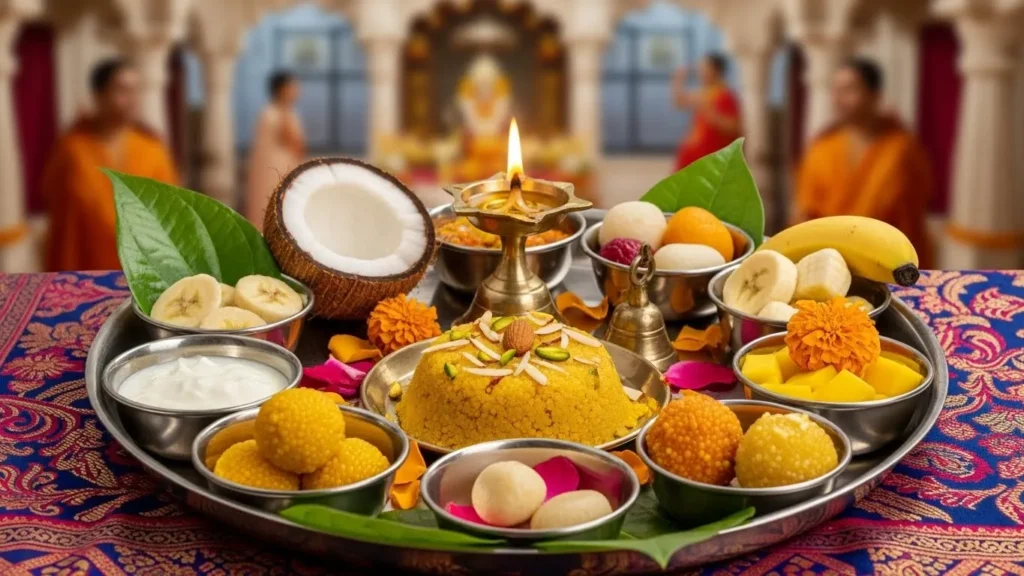
Unlike secular meal or ordinary snack, prasad embodies fundamental Hindu theological principle that divinity permeates material reality making everyday substances capable of serving as vehicles for sacred transmission when properly consecrated through devotional offering – teaching that spirituality isn’t separate from mundane existence but rather transforms ordinary into extraordinary through consciousness shift recognizing divine presence underlying all manifestation including simple foods like fruits, sweets, rice, or water which become portals for grace when offered with pure heart and received with reverent attitude.
The complete prasad practice involves three stages – first preparing food with utmost cleanliness using pure ingredients following dietary restrictions ([translate:sattvic] vegetarian avoiding onion, garlic, mushrooms maintaining energetic purity), second offering this [translate:naivedya] (food offering) to deity through formal procedure placing before murti or image while chanting specific mantras requesting divine acceptance effectively surrendering ego’s claim to ownership recognizing God as true provider and
we merely channels distributing divine bounty, and third receiving returned offering now transformed into [translate:prasad] (blessed food) imbued with deity’s grace which devotees consume reverently acknowledging they partake not common meal but sanctified substance purifying body-mind-spirit complex while simultaneously creating equality since all devotees regardless of caste, wealth, education, or status receive identical prasad demonstrating fundamental spiritual truth that before divine all souls equal.
For practitioners in 2025 whether regular temple visitors receiving daily prasad maintaining devotional routine, festival participants enjoying special preparations like Tirupati’s world-famous laddus or Jagannath’s mahaprasad experiencing centuries-old culinary-spiritual traditions, home altar devotees offering simple fruits or sweets during daily puja creating intimate personal worship, or curious newcomers wanting to understand ubiquitous practice noticed at every Hindu temple visit, recognizing prasad as sophisticated spiritual technology encoding profound wisdom about grace, surrender, equality, transformation, and divine immanence enables approaching.
this beloved custom with renewed appreciation transforming potentially mechanical acceptance of distributed sweets into conscious participation in sacred exchange where offering food to God and receiving it back as blessing enacts fundamental devotional rhythm of giving and receiving, surrendering and being filled, emptying ego and receiving grace that characterizes healthy spiritual life transcending transactional religion toward genuine loving relationship with divine beloved who feeds children not only physically through nature’s bounty but spiritually through specially consecrated prasad carrying concentrated blessings for those receptive enough to recognize ordinary sweets’ extraordinary spiritual potential.
Understanding Prasad: Definition and Etymology
Exploring precise meaning and distinctions clarifies this multifaceted concept.
The Sanskrit Root: Multiple Meanings
[translate:प्रसाद (Prasada/Prasad)]
Derived from: [translate:प्र (Pra)] = “forth, before” + [translate:सद (Sad)] = “to sit, to settle”
Core Meanings:
1. Grace/Favor ([translate:Kripa]):
- Divine blessing freely given
- Unearned benevolence
- God’s loving favor toward devotees
2. Clarity/Brightness:
- Mental clarity and peace
- Removal of confusion, doubts
- Illuminated consciousness
3. Serenity/Calmness:
- Peaceful, tranquil state
- Emotional equanimity
- Absence of agitation
4. Offering/Gift:
- Something offered and blessed
- Sacred gift from deity to devotee
- Tangible manifestation of divine love
All meanings interconnect What Is Prasad Significance:
Prasad IS divine grace (1st meaning) that brings mental clarity (2nd meaning) and emotional peace (3rd meaning) manifested as blessed offering (4th meaning).
As Applied to Food:
When food offered to deity and returned blessed, it becomes prasad – embodying all these dimensions simultaneously:
- Grace in edible form
- Clarity-bringing substance
- Peace-creating nourishment
- Divine gift to devotees
Three Related Terms: Important Distinctions
1. Naivedya (नैवेद्य):
Definition: Food BEFORE offering to deity – still ordinary, not yet sanctified
Etymology: From [translate:निवेदन] (Nivedana) = “to present, to offer, to declare”
Status: Prepared with purity but not yet blessed
Usage: “We prepare naivedya for the deity”
2. Bhog (भोग):
Definition: The ACT of offering food to deity; also food DURING offering
Etymology: From [translate:भोज] (Bhoj) = “to enjoy, to consume, to experience”
Status: Food being offered for deity’s “enjoyment”
Usage: “The bhog is being offered to deity” (ceremony in progress)
Regional Note: North India commonly uses “bhog”; South India prefers “naivedya”
3. Prasad (प्रसाद):
Definition: Food AFTER deity has “accepted” it – now blessed and sanctified
Etymology: As explained above – grace, favor, blessing
Status: Transformed through divine acceptance into sacred substance
Usage: “We receive prasad from the temple”
The Complete Cycle:
Stage 1: Ordinary food → Purified preparation → Naivedya (ready for offering)
Stage 2: Naivedya → Formal offering ritual → Bhog (offering process)
Stage 3: Bhog → Divine acceptance → Prasad (blessed return gift)
Simple Summary:
- Cook pure food = Preparing naivedya
- Offer to God = Performing bhog
- Receive back blessed = Accepting prasad
Mahaprasad: The Great Blessed Food
Special Category:
[translate:महाप्रसाद (Mahaprasad)] = “Great/Grand blessed food”
Two Meanings:
1. Large-Scale Distribution:
- Prasad prepared in massive quantities
- Distributed to thousands during festivals
- Temple’s regular large-scale offering
2. Especially Sacred Prasad:
- Particular temples’ famous offerings
- Jagannath Temple (Puri): All prasad called “mahaprasad” – considered supremely sacred
- Once offered to main deity (Lord Jagannath), nothing more sacred exists
- Even offered to other deities as prasad!
Unique Belief:
Jagannath’s mahaprasad so sacred that:
- Never spoils (devotees claim remains fresh for days)
- Purifies anyone who consumes regardless of background
- Removes sins – spiritually cleansing effect
- Equalizes all – highest brahmin and lowest social status eat together
Famous Example:
Jagannath Temple prepares 56 different dishes (Chappan Bhog – 56 offerings) daily, all becoming mahaprasad distributed to millions annually.
Other Regional Variations
Different Names, Same Concept:
- Prasadam (South Indian pronunciation)
- Charanamrit (चरणामृत) – Literally “nectar of feet” – sacred water/milk poured over deity’s feet, collected and distributed
- Panchamrit (पञ्चामृत) – Five-nectar mixture: milk, yogurt, ghee, honey, sugar – offered and distributed
- Tirth (तीर्थ) – Sacred water offered to deity
All represent same principle: ordinary substance consecrated through divine offering becomes blessed prasad.
The Spiritual Significance: Why Prasad Matters
Understanding profound spiritual dimensions reveals this as far more than ritual formality.
Divine Grace Made Tangible
The Core Theological Principle:
Prasad represents God’s grace in most accessible, tangible form.
Abstract to Concrete:
Grace (Kripa) – abstract concept difficult to grasp
Prasad – concrete manifestation you can touch, taste, experience directly
Teaching: Divine isn’t distant abstraction but intimate presence offering tangible blessings through simple sweet or fruit.
The Exchange:
We offer: Food we prepared (representing our love, effort, surrender)
God returns: Same food now blessed (representing divine grace accepting our offering)
This exchange teaches:
- Devotion is two-way relationship, not one-way obligation
- God receives what we offer with love
- God gives back infinitely more (blessing) than we gave
- Everything we “possess” is actually divine gift
Transformation: Ordinary Becomes Sacred
The Miracle:
Before offering: Regular banana, ordinary laddu, common rice
After offering: Blessed prasad imbued with divine energy
What changed? Not molecular structure, but spiritual charge – deity’s grace infused
This teaches profound truth:
Spirituality isn’t about abandoning material world for otherworldly transcendence.
Rather: Recognizing divine presence within material creation, transforming it through consciousness.
Same food, different consciousness:
- Eaten for selfish pleasure = Reinforces ego, creates bondage
- Offered to God and received as prasad = Purifies consciousness, creates liberation
Bhagavad Gita 3.13:
[translate:यज्ञशिष्टाशिनः सन्तो मुच्यन्ते सर्वकिल्बिषैः।
भुञ्जते ते त्वघं पापा ये पचन्त्यात्मकारणात्॥]
“The righteous who eat food that has been offered as sacrifice are freed from all sins. Those who cook for their own sake verily eat only sin.”
Prasad = Yajña-shishta (sacrifice’s remainder) – spiritually purifying.
Purification of Body, Mind, and Spirit
Triple Benefit:
Physical (Deha Shuddhi):
- Prasad prepared with utmost cleanliness
- Pure sattvic ingredients (vegetarian, fresh, wholesome)
- No prohibited substances (alcohol, meat, stale food)
- Energetically cleansing
Mental (Manas Shuddhi):
- Consuming with reverence calms mind
- Gratitude attitude reduces stress
- Faith in divine blessing brings peace
- Breaks automatic eating patterns (mindfulness)
Spiritual (Atma Shuddhi):
- Connects individual to divine
- Reduces ego (“I am receiver of grace”)
- Cultivates surrender
- Subtle energy purification
Symbolic Consumption:
[translate:अन्नं ब्रह्म] “Annam Brahma” – Food is Brahman (ultimate reality)
Consuming prasad = absorbing divine essence into physical body, literally integrating sacred into mundane.
Equality Before Divine: Breaking Social Barriers
Revolutionary Aspect:
In traditional Hindu society with caste distinctions, prasad distribution creates radical equality.
The Rule:
Everyone receives SAME prasad:
- Rich landowner and poor laborer
- High-caste brahmin and low-caste worker
- Scholar and illiterate
- Temple priest and common devotee
No discrimination based on:
- Birth/caste
- Wealth/poverty
- Gender
- Education
- Social status
Powerful Teaching:
Before God, all souls equal. Material distinctions meaningless in spiritual realm.
Historical Importance:
Many bhakti movement saints (Kabir, Ravidas, Tukaram) emphasized prasad’s equalizing power, challenging caste orthodoxy.
Temples became spaces where social hierarchy temporarily suspended during prasad distribution.
Modern Relevance:
Even today, prasad distribution maintains this principle:
- All sit together (pangat/bhandara)
- Same food, same serving
- Democratic spiritual practice
Building Community and Unity
Shared Experience:
Prasad creates communal bond:
- Everyone eats same blessed food
- Shared spiritual experience
- Common gratitude toward deity
- Sense of belonging to devotee community
After temple worship:
Prasad distribution becomes social gathering:
- Families sit together
- Strangers share food
- Conversation flows
- Community strengthened
Festivals:
During major celebrations (Diwali, Janmashtami, etc.):
- Massive prasad distribution (hundreds or thousands served)
- Creates festive communal atmosphere
- Reinforces cultural identity
- Bonds community through shared tradition
Interfaith Bridge:
Prasad often shared with:
- Neighbors of other faiths
- Non-Hindu friends
- Visitors and tourists
Creates goodwill, introduces Hindu practice accessibly.
Cultivating Gratitude and Surrender
Psychological-Spiritual Benefit:
Offering food to God before consuming trains consciousness:
Gratitude:
- Recognizing food came from divine source (sun, rain, soil – all divine gifts)
- Not taking sustenance for granted
- Appreciating blessings received
Surrender:
- “This food isn’t mine but God’s”
- Releasing possessive attitude
- Accepting divine will
- Humility (“I’m receiver, not owner”)
Antidote to Modern Materialism:
Contemporary culture promotes:
- Entitlement (“I deserve”)
- Ownership (“This is mine”)
- Self-sufficiency (“I earned this”)
Prasad practice counters with:
- Humility (“All is divine gift”)
- Stewardship (“I’m caretaker, not owner”)
- Interdependence (“I’m sustained by cosmic grace”)
This shift profoundly affects overall life approach, reducing ego and increasing contentment.
Famous Temple Prasads Across India
India’s temples known for distinctive prasad traditions – some centuries old.
1. Tirupati Laddu – Lord Venkateswara Temple (Andhra Pradesh)
The Most Famous:
Tirupati laddu holds Geographical Indication (GI) tag – legally protected unique product.
Details:
Preparation:
- Made with pure ghee, cashews, raisins, cardamom, sugar
- Besan (gram flour) base
- Prepared by trained temple cooks (potu staff)
- 2.8 lakh laddus (280,000!) made DAILY
- Weighs approximately 175-180 grams each
Significance:
- Offered to Lord Venkateswara (Balaji)
- Over 300-year-old tradition
- Devotees travel specifically for this prasad
- Considered supremely auspicious
- 14+ lakh laddus sold during major festivals (4 days!)
Experience:
Sweet, rich, melts in mouth – devotees claim unique taste nowhere else replicated.
2. Jagannath Mahaprasad – Puri Temple (Odisha)
The Most Sacred:
All food prepared in Puri temple considered Mahaprasad – nothing more sacred in Hindu tradition.
Unique Features:
Chappan Bhog (56 Offerings):
- 56 different dishes prepared daily
- Rice, dal, vegetables, sweets, desserts
- Traditional earthen pots over wood fires
- Ancient methods preserved for centuries
The Kitchen:
- World’s largest temple kitchen
- 400-700 cooks work simultaneously
- Feeds 10,000-100,000 people daily (festival days even more)
- Food never reported spoiled (devotees’ faith)
Supreme Status:
- Even other deities offered Jagannath’s mahaprasad
- Believed to purify anyone who consumes
- All eat together (abolishing caste distinctions)
3. Shirdi Sai Baba Temple Udi (Maharashtra)
Not Food But Ash:
Udi (उदी) – sacred ash distributed as prasad
Origin:
Sai Baba maintained sacred dhuni (fire) throughout life, distributing ashes to devotees.
Significance:
- Applied to forehead (tilak)
- Mixed with water and consumed for healing
- Kept in homes for protection
- Millions believe in miraculous healing properties
4. Golden Temple Langar (Punjab – Sikh)
Cross-Religious Mention:
While Sikh not Hindu, Golden Temple’s free kitchen embodies same prasad principles:
- 100,000+ meals daily served free
- All sit together (pangat) regardless of religion, caste, wealth
- Simple vegetarian food
- Embodies equality, service, community
5. Other Notable Temple Prasads:
| Temple | Location | Famous Prasad |
|---|---|---|
| Meenakshi Temple | Madurai, Tamil Nadu | Paanagam (sweet drink) |
| Guruvayoor Temple | Kerala | Appam, Aravana (sweet rice) |
| Vaishno Devi | Jammu | Poori-halwa |
| Somnath Temple | Gujarat | Pedas (milk sweet) |
| Siddhivinayak Temple | Mumbai | Modak (Ganesha’s favorite) |
| Kashi Vishwanath | Varanasi | Peda, panchamrit |
| Dwarkadhish Temple | Gujarat | Panchamrit, pedas |
| Banke Bihari Temple | Vrindavan | Makhan mishri (butter-sugar) |
Regional Diversity:
Prasad reflects local culinary traditions:
- South India: Rice-based, coconut sweets
- North India: Wheat-based, milk sweets
- East India: Rice puddings, sandesh
- West India: Pedas, mohanthal
Preserving culinary heritage – ancient recipes maintained through temple traditions.
How to Offer and Receive Prasad Properly
Understanding correct procedures ensures spiritual efficacy and respect.
Offering Prasad at Home: Complete Procedure
Preparation Phase:
Personal Purity:
- Bath/clean clothes before cooking (traditionally required)
- Clean kitchen thoroughly
- Pure mindset – calm, devotional consciousness
Ingredient Selection:
- Sattvic foods – vegetarian, fresh, wholesome
- Avoid: Meat, eggs, onion, garlic, mushrooms (tamasic/rajasic)
- Prefer: Fruits, sweets, rice, dairy, pure ingredients
Cooking:
- No tasting during preparation (strictly forbidden!)
- Food first for God, then for us
- Cook with devotion, cleanliness
- Use clean utensils kept separately for prasad (ideal)
Offering Procedure:
Step 1: Setup
- Clean plate or bowl
- Place prepared food
- Arrange beautifully before deity
Step 2: Invocation
- Ring bell
- Light lamp and incense
- Invoke deity’s presence
Step 3: Offering Mantra
Basic:
[translate:ॐ नैवेद्यं समर्पयामि नमः।]
“Om, I offer this food. Salutations.”
Elaborate:
[translate:नैवेद्यं ग्रहाण देव प्रसीद परमेश्वर।
भक्त्या परमया दत्तं गृहाण करुणानिधे॥]
“O God, please accept this food offering. O Supreme Lord, be pleased. Accept this given with supreme devotion, O ocean of compassion.”
Step 4: Wait
- Leave food before deity for at least few minutes
- Traditionally: 15-30 minutes allowing “divine enjoyment”
- Chant deity’s names or mantras during waiting
Step 5: Receiving Back as Prasad
Completion Mantra:
[translate:ॐ प्रसादं गृह्णामि।]
“Om, I receive the prasad.”
Step 6: Distribution
- Mix prasad back into main food (common home practice)
- Or distribute separately
- Everyone partakes before regular meal
Receiving Prasad at Temple: Proper Etiquette
Physical Posture:
How to Receive:
- Both hands cupped (anjali mudra – hands forming cup)
- Right hand alone acceptable (right = auspicious)
- Never left hand only (traditionally)
Head slightly bowed – humility and respect
Mental Attitude:
Consciousness While Receiving:
- Gratitude – “Thank you, God, for this blessing”
- Reverence – Recognizing divine gift
- Faith – Trusting in prasad’s purifying power
Consumption:
When to Eat:
- Immediately – most traditional (absorb grace while fresh)
- Later – if storing for sharing acceptable
- Never discard – if can’t consume, share with others or place in garden/nature respectfully
How to Eat:
- Mindfully – not carelessly or distractedly
- Completely – finish what you take (avoiding waste)
- Reverently – as sacred food, not common snack
Practical Modern Considerations:
Dietary Restrictions:
Q: “I’m diabetic/allergic – can I skip prasad?”
A: Accept respectfully, then:
- Take small symbolic amount
- Share with family/friends who can consume
- Offer to deity at home before discarding (respectfully)
Hygiene Concerns:
Some worry about mass-distributed prasad’s cleanliness:
- Major temples maintain strict standards
- Food prepared by trained temple cooks
- Most prasad safe (billions consume without issues)
- If genuinely concerned, accept and share with others
Vegetarian Non-Hindus:
Many temples welcome all to receive prasad:
- Interfaith visitors often offered
- Gesture of hospitality and inclusion
- Accept respectfully if comfortable
What NOT to Do:
❌ Never refuse prasad rudely – if must decline, do respectfully
❌ Don’t throw away – prasad is sacred; dispose respectfully if can’t consume
❌ Don’t step over – if prasad on ground, walk around
❌ Don’t be wasteful – take only what you’ll consume
❌ Don’t eat in toilet/bathroom – maintain sanctity
Frequently Asked Questions
Can non-Hindus accept and eat prasad?
Absolutely yes! Prasad offered as gesture of hospitality and divine blessing to ALL, regardless of religion. Many temples explicitly welcome everyone to partake. Respectful acceptance appreciated: Receive with both hands, consume mindfully or share with others. No religious conversion implied – simply accepting blessed food. Many non-Hindus report feeling peaceful, welcomed through prasad experience. Interfaith courtesy: If uncomfortable for religious reasons, politely decline with respect rather than refuse rudely. Most Hindus consider sharing prasad as spreading divine grace beyond religious boundaries.
What if prasad contains ingredients I avoid (sugar, dairy, nuts)?
Accept graciously, then handle according to dietary needs: Options: 1) Take small symbolic amount – shows respect even if can’t consume fully, 2) Share with family/friends who can eat it, 3) Offer to deity at home before respectfully disposing (in garden, to animals – not trash), 4) Explain to distributor – some temples provide alternative prasads (fruits for diabetics), 5) Appreciate gesture mentally even if can’t physically consume. Remember: Spirit of acceptance matters more than literal eating. Allergies/serious conditions: God understands genuine health limitations; sincere reverence sufficient.
Does prasad really have spiritual power or is it symbolic?
Both perspectives valid: Traditional belief: Prasad literally carries divine energy – deity’s grace infused through offering and acceptance, providing spiritual purification, blessing, protection. Millions testify to experiencing peace, healing, positive changes after consuming prasad with faith. Modern interpretation: Even if viewed symbolically, psychological-spiritual benefits real – mindful eating, gratitude cultivation, community bonding, ritual’s calming effect measurably reduce stress and enhance well-being. Science: Placebo effect plus actual benefits (pure ingredients, devotional preparation, communal sharing) create positive outcomes. Pragmatic approach: Whether literal divine power or symbolic-psychological benefit, sincere engagement produces genuine transformation – mechanism matters less than result.
How long does prasad stay “blessed” or should it be consumed immediately?
No fixed expiration on blessing but practical considerations: Traditional view: Grace remains indefinitely – prasad retains sanctity regardless of time. Famous example: Jagannath mahaprasad reportedly stays fresh for days without refrigeration (devotees’ belief). Practical reality: Like any food, eventually spoils physically. Best practice: Consume fresh when possible (maximum energy), Store properly if saving (refrigerate perishables), Share within reasonable time (days not months), Dispose respectfully if actually spoiled (return to nature, not trash). The blessing persists spiritually even if food ages physically – reverence matters more than temporal freshness.
Can we prepare prasad at home or must it come from temple?
Home prasad completely valid and encouraged! Daily practice: Millions prepare and offer food at home altars – equally sacred as temple prasad when done with proper consciousness: 1) Clean preparation (bath, pure ingredients), 2) Devotional offering (mantras, waiting period), 3) Reverent consumption (gratitude, mindfulness). Temple prasad advantages: Energy from larger deity idol, centuries of accumulated devotion, trained priests’ offerings – adds power. Home prasad advantages: Personal intimacy, daily practice sustainability, family participation. Both valuable: Temple for special occasions, home for daily routine. Quality over location: Sincere home offering superior to mechanical temple visit without devotion.
What’s the difference between prasad, tirth, and charanamrit?
All are blessed substances, different types: Prasad (प्रसाद): Food offerings (sweets, fruits, meals) offered to deity and returned blessed. Tirth (तीर्थ): Sacred water – literally “pilgrimage place” but also means water offered to deity, distributed in small spoon/cup. Devotees sprinkle on head or sip. Charanamrit (चरणामृत): Nectar of divine feet – water/milk poured over deity’s feet during abhishekam (ritual bathing), collected and distributed. Considered supremely sacred. Sometimes mixed with tulsi, sugar. Panchamrit (पञ्चामृत): Five nectars – mixture of milk, yogurt, ghee, honey, sugar offered to deity. All serve similar purpose: Carrying divine blessing to devotees in consumable form, each with specific use and sanctity level.
Is there etiquette for distributing prasad at home to guests?
Sharing prasad encouraged – spreads divine blessing! Proper procedure: 1) Offer to deity first – never distribute before deity receives, 2) Serve with clean hands/utensils – maintain purity, 3) Serve all equally – no discrimination or preferential portions, 4) Right hand for serving traditionally, 5) Announce it’s prasad – so recipients know to receive respectfully, 6) Encourage completion – avoid waste, 7) Share surplus with neighbors, animals, nature rather than discarding. Storage: Keep prasad covered, separate from regular food. Modern adaptation: If extensive guest list, prepare extra quantity ensuring sufficient prasad for all. Non-Hindu guests: Politely explain significance; most appreciate cultural education and blessed food gesture.
What if we accidentally drop prasad on floor?
No spiritual catastrophe but handle respectfully: Options: 1) Pick up immediately – if floor clean and food not ruined, some still consume (especially at sacred sites like Jagannath temple where mahaprasad picked from ground still considered pure), 2) Offer to animals – birds, cows – prasad sharing extends to all creatures, 3) Place in garden/plant – returning blessed food to nature, 4) Dispose with awareness – if truly unusable, don’t trash carelessly; return to earth respectfully. Avoid stepping on – whether yours or others’ prasad. Temples: Often have designated areas for prasad remnants returned to nature. Spiritual view: Prasad’s blessing not destroyed by accident; reverence shown in recovery/disposal matters.
Conclusion
The timeless practice of prasad represents Hinduism’s beautiful integration of profound theology with everyday accessibility – encoding sophisticated spiritual principles about grace, transformation, equality, surrender, and divine immanence in simple tangible form of blessed food that anyone regardless of education, wealth, caste, or even religious affiliation can receive and experience, demonstrating tradition’s genius for making abstract transcendent truths experientially available through embodied practices engaging physical senses
while simultaneously elevating consciousness toward spiritual realities. Understanding complete framework – that prasad journey from ordinary ingredients through devotional preparation as naivedya, formal offering ceremony as bhog, to blessed return gift carrying divine grace teaches fundamental devotional rhythm of giving and receiving where we offer our love symbolized through carefully prepared food and God returns infinite blessing in same material form now spiritually transformed.
that famous temple prasads from Tirupati’s world-renowned laddus through Jagannath’s supremely sacred mahaprasad to countless regional specialties preserve centuries-old culinary-spiritual traditions connecting contemporary practitioners with countless generations who tasted identical blessed sweets creating temporal continuity transcending individual lifespan, that proper offering procedures from personal purification through no-tasting rule to specific mantras and waiting periods ensure maximum spiritual efficacy whether elaborate temple ceremony or simple.
home altar practice, and that accepting prasad with reverent consciousness recognizing not common food but tangible divine blessing transforms potentially mechanical consumption into conscious spiritual communion – enables approaching this beloved practice with renewed appreciation whether regular temple visitor receiving daily prasad maintaining devotional routine, festival participant experiencing massive community distributions creating shared sacred experiences, home devotee offering simple fruits during personal puja establishing intimate relationship with chosen deity, or curious newcomer discovering Hindu traditions through accessible entry point of blessed sweets shared freely with all.
As you engage with prasad in 2025, whether accepting temple-distributed sweets after worship completing traditional visit sequence, preparing offerings at home altar creating daily spiritual rhythm, sharing blessed food with family and neighbors spreading divine grace beyond immediate household, or simply understanding ubiquitous practice encountered throughout Hindu life making foreign custom familiar through knowledge, remember that simple act of offering food to God and receiving it back as blessing enacts fundamental spiritual truth that everything ultimately divine gift.
the food we eat, breath we breathe, life we live all flow from cosmic grace sustaining our existence not through our clever earning or rightful deserving but through supreme benevolence freely given to all creation, making prasad’s physical-spiritual transaction beautiful reminder and regular reinforcement of this liberating recognition
that transforms grasping consumerist consciousness demanding “what’s mine by right” into grateful devotional awareness receiving “what’s given by grace” until eventually this shift from entitlement to gratitude, ownership to stewardship, ego-centered to God-centered existence revolutionizes not merely how we eat prasad but how we live entire life recognizing every moment, every breath, every blessing as divine prasad offered by cosmic beloved to souls who remember
simple truth our ancestors encoded in sweet tradition: approach divine with loving offering, receive back infinite grace, consume with reverent gratitude, and share generously with all recognizing that one who gives prasad and we who receive ultimately same consciousness playing eternal game of divine love expressed through sacred gift of blessed food transforming ordinary into extraordinary through simple shift in awareness.
[translate:॥ अन्नं ब्रह्म रसो विष्णुः भोक्ता देवो जनार्दनः।
एवं ध्यात्वा तथा ज्ञात्वा अन्नदोषो न लिप्यते॥]
(Food is Brahman, its essence is Vishnu, the eater is Lord Janardan. Meditating and knowing thus, one is not affected by any fault in food.)
About the Author
Sandeep Vohra – Hindu Temple Architecture, Religious Artifacts, and Sacred Science Expert
Sandeep Vohra is a distinguished researcher and educator specializing in Hindu temple architecture, religious artifacts, sacred traditions, and the scientific principles underlying ritual practices, with particular expertise in temple prasad systems encompassing both theological significance and practical logistics of massive-scale food preparation and distribution serving millions annually at major pilgrimage sites.
Holding advanced degrees in religious studies and South Asian cultural anthropology with fieldwork conducted at major temples including Tirupati, Jagannath Puri, Shirdi, and dozens of regional sites, his interdisciplinary work documents how prasad traditions preserve ancient wisdom about consciousness, grace, equality, and divine immanence while simultaneously maintaining centuries-old culinary heritage through temple kitchens that function as living repositories of traditional recipes and preparation methods often lost elsewhere.
Sandeep has extensively studied temple prasad operations from theological frameworks explaining transformation from ordinary food to blessed substance through detailed procedures of naivedya preparation, offering rituals, and prasad distribution protocols to practical logistics of managing kitchens serving 100,000+ daily meals maintaining purity standards, ingredient sourcing, traditional cooking methods, and equitable distribution systems that have operated continuously for centuries demonstrating remarkable organizational sophistication.
He regularly lectures on prasad’s multi-dimensional significance addressing spiritual, cultural, social, and even economic dimensions (major temples’ prasad operations employing thousands and contributing significantly to local economies), guides temple administrators on maintaining traditional authenticity while adapting to modern health and safety standards, and teaches practitioners about proper prasad offering and receiving etiquette ensuring this beloved practice continues meaningfully rather than mechanically.
His teaching emphasizes that prasad represents one of Hinduism’s most accessible yet profound practices encoding sophisticated theology in simple tangible form making abstract spiritual concepts experientially available to everyone regardless of education or status, that understanding complete significance from grace theology through equality symbolism to transformation principles deepens appreciation transforming routine acceptance into conscious spiritual participation, and that maintaining prasad traditions preserves not only religious customs but also culinary heritage, community bonding practices, and egalitarian values that challenge social hierarchies making temple spaces where spiritual equality manifests concretely through shared blessed food distributed identically to all.