

Who Are the Ashta Dikpalas In Hindu cosmology’s intricate tapestry, the Ashta Dikpalas (अष्ट दिक्पाल) stand as eight divine guardians protecting the cardinal and intercardinal directions of space, ensuring cosmic order (rta) prevails across the universe and shielding devotees from malevolent influences approaching from any quarter. The term combines three Sanskrit elements: “Ashta” (अष्ट) meaning eight, “Dik” (दिक्) meaning direction or quarter, and “Pala” (पाल) meaning protector or guardian—literally translating to “eight protectors of directions” who collectively maintain the cosmic balance and spatial harmony essential for existence itself.

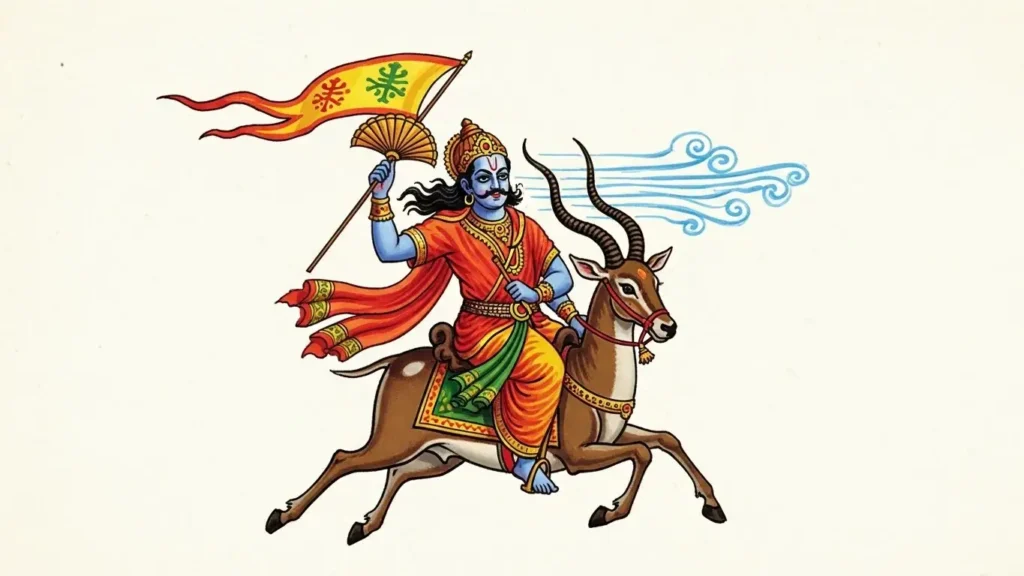
These divine regents—Indra (East), Agni (Southeast), Yama (South), Nirrti (Southwest), Varuna (West), Vayu (Northwest), Kubera (North), and Isana (Northeast)—each govern not just geographic orientation but also specific elemental forces, natural phenomena, human qualities, and astrological influences associated with their respective directions. Far from being obscure theological concepts, the Dikpalas profoundly influence Hindu temple architecture, Vastu Shastra principles, ritual worship, and daily spiritual practice, with their presence carved into temple ceilings, invoked during foundation ceremonies, consulted for auspicious building placement, and honored in elaborate homas (fire rituals) that seek protection from all directions.
Their origins trace back to Vedic literature where directional deities first appeared, evolving through Puranic texts that systematized their attributes, iconography, weapons, vehicles (vahanas), and consorts, transforming from abstract cosmic principles into fully developed deities with distinct personalities, mythological narratives, and ritual protocols. Understanding the Dikpalas reveals fundamental Hindu conceptions of sacred space—the belief that divinity pervades all directions rather than being confined to specific locations, that protective forces operate omnidirectionally rather than from a single source, and that human structures and activities must align with cosmic directional energies to prosper and avoid calamity.
This comprehensive exploration examines each Dikpala’s attributes, origins, iconography, their roles in temple architecture and Vastu Shastra, the evolution from Vedic to Puranic traditions, ritual worship practices, and contemporary relevance for spiritual seekers and architectural design.
The Eight Dikpalas: Attributes and Symbolism
Each of the eight directional guardians possesses distinct attributes, weapons, vehicles, and elemental associations that reflect their cosmic functions.
Indra: Guardian of the East (Purva)
Lord Indra, king of the gods and wielder of the thunderbolt, protects the eastern direction—associated with new beginnings, dawn, enlightenment, and spiritual awakening.
Attributes:
- Weapon: Vajra (thunderbolt) representing divine power and indestructible truth
- Vahana: Airavata, the white elephant with multiple tusks, symbolizing royal power and wisdom
- Consort: Shachi (also called Indrani), goddess of beauty and jealousy
- Element: Rain, thunder, celestial warfare
- Color: Gold or white
- Planet: Surya (Sun) in some traditions
Iconography: Indra is typically depicted as four-armed, three-eyed, seated on Airavata, holding the vajra prominently while other hands carry a lotus, goad (ankusha), or make blessing gestures (mudras). His consort Indrani often sits beside him holding a lotus.
Significance: The East represents sunrise, enlightenment beginning, and the awakening of consciousness. Indra as eastern guardian ensures that spiritual light penetrates ignorance, that righteous warriors receive divine support, and that rain nourishes crops—connecting celestial power with earthly prosperity.
Agni: Guardian of the Southeast (Agneya)
Agni, the god of fire, rules the southeast corner—the direction associated with heat, energy, transformation, and purification.
Attributes:
- Weapon: Shakti (spear) or flaming javelin
- Vahana: Ram (Mesha) representing sacrifice and determination
- Consort: Svaha, the goddess invoked during fire sacrifices
- Element: Fire in all its forms
- Color: Red or flame-colored
- Planet: Shukra (Venus) in some systems
Iconography: Agni appears with two or four arms, often pot-bellied, bearded, with flames emanating from his body. He carries a rosary (mala), trident (trishula), and sacred ladle for offerings (sruk). His beard and jatamakuta (matted hair) emphasize his ascetic and sacrificial aspects.
Significance: Southeast placement for kitchens in Vastu Shastra stems from Agni’s presence—aligning cooking activities with the fire god’s energy ensures household prosperity and digestive health. Agni transforms offerings into sustenance for gods, making him the mediator between human and divine realms.
Yama: Guardian of the South (Dakshin)
Yama, the god of death and dharma, presides over the southern direction—traditionally considered inauspicious in Hindu culture due to its association with death and ancestral spirits.
Attributes:
- Weapon: Danda (staff of justice) or noose (pasha) to capture souls
- Vahana: Buffalo (Mahisha), representing death’s relentless approach
- Consort: Dhumorna (goddess of smoke) or Yami (his sister)
- Element: Justice, death, dharmic judgment
- Color: Dark blue or black
- Planet: Mangala (Mars)
Iconography: Yama is depicted as dark-complexioned, often terrifying, with four arms carrying the staff, noose, sword, and shield. He rides his buffalo mount and wears royal ornaments befitting his position as Dharmaraja (king of righteousness).
Significance: The South represents ancestral worship (pitru loka), endings, and karmic consequences. Yama ensures that beings face the results of their actions after death, maintaining cosmic justice through dharmic judgment rather than arbitrary punishment.
Nirrti (Nairriti): Guardian of the Southwest (Nairutya)
Nirrti represents perhaps the most complex and feared Dikpala—associated with destruction, misfortune, calamity, and inauspicious energies.
Attributes:
- Weapon: Sword (khadga) and severed head
- Vahana: Man, lion, or donkey (sources vary)
- Consort: Sometimes depicted alone or with demon attendants
- Element: Destruction, decay, darkness, negative energies
- Color: Black or dark colors
- Planet: Rahu (ascending lunar node)
Gender Ambiguity: Nirrti appears as both goddess and male demon in different texts. Vedic literature presents Nirrti as a fearsome goddess of destruction and misfortune. Later Puranic texts sometimes transform her into a male demon-lord ruling demons and rakshasas.
Iconography: When depicted as female, Nirrti holds a sword and severed head, dressed in dark garments, emphasizing her destructive aspect. As male, Nirrti appears as a demon-king surrounded by servants and apsaras, riding various fearsome mounts.
Significance: The Southwest is considered the most inauspicious direction in Vastu Shastra—often reserved for heavy storage, bathrooms, or spaces requiring grounding. Nirrti’s presence reminds practitioners that destruction is necessary for renewal, that acknowledging shadow aspects prevents their malevolent manifestation, and that all directions require guardianship even if the energies are difficult.
Varuna: Guardian of the West (Paschima)
Varuna, the ancient god of waters, oceans, and cosmic law (rta), protects the western direction—associated with sunset, dissolution, and the transition from conscious to unconscious states.
Attributes:
- Weapon: Pasha (noose) or Nagapasha (serpent noose)
- Vahana: Makara (crocodile-like sea creature)
- Consort: Varuni or Gauri
- Element: Water, oceans, rivers, rain
- Color: White or aquamarine
- Planet: Shani (Saturn) in some traditions
Iconography: Varuna is depicted with four arms, slightly pot-bellied, dressed in white or aquamarine robes studded with jewels. In his hands he holds a lotus, noose (pasha), conch (shankha), and bowl containing gems (ratna-patra) or water vessel (kamandalu). He rides his makara mount which emerges from stylized waves. Pearl necklaces adorn his chest, and a crown or jeweled turban sits atop his head.
Significance: The West represents waters that give life, the setting sun that promises renewal, and the cosmic ocean from which creation emerged. Varuna as western guardian ensures rainfall for agriculture, maintains moral order through witnessing actions, and governs all bodies of water—connecting cosmic law with natural cycles.
Vayu: Guardian of the Northwest (Vayavya)
Vayu, the god of wind and breath, rules the northwest—the direction associated with movement, communication, and vital life force (prana).
Attributes:
- Weapon: Dhvaja (flag or banner) symbolizing wind’s presence
- Vahana: Deer (Mriga) or horse, representing swiftness
- Consort: Bharati or unnamed
- Element: Wind, air, breath, movement
- Color: Light blue or transparent
- Planet: Chandra (Moon) in some systems
Iconography: Vayu appears with two or four arms, holding a flag or banner that perpetually waves. He rides a deer or appears in a chariot drawn by horses. His form is typically slender and dynamic, suggesting constant motion and the invisible yet powerful presence of air.
Significance: Northwest placement favors guest rooms and windows in Vastu Shastra—aligning with Vayu’s energy of movement, welcoming, and fresh circulation. Vayu as life-breath (prana) connects all beings, making him essential for vitality and communication between realms.
Who Are the Ashta Dikpalas Kubera: Guardian of the North (Uttara)
Kubera, the god of wealth, treasures, and prosperity, presides over the northern direction—considered the most auspicious for accumulating wealth and achieving material success.
Attributes:
- Weapon: Gada (mace) or club
- Vahana: Man (Nara) in most traditions, though some mention goat or pushpaka vimana (flying chariot)
- Consort: Riddhi (prosperity) or Kauberi
- Element: Wealth, treasures, minerals, mountains
- Color: Golden yellow
- Planet: Budha (Mercury)
Iconography: Kubera is distinctively depicted as dwarfish, pot-bellied, with a large belly representing abundance. He has three legs (tribhanga) and eight teeth (ashtadanta), holding a money bag or pot of jewels (ratna-patra), mace, and pomegranate or other fruit. He rides a human mount or sits on a throne adorned with jewels.
Significance: North is the ideal direction for wealth corners, safes, and financial planning areas in Vastu-compliant homes and businesses. Kubera’s governance ensures prosperity flows toward those who honor dharma and maintain proper directional alignment with cosmic abundance principles.
Isana (Ishana): Guardian of the Northeast (Ishanya)
Isana represents a manifestation of Lord Shiva ruling the northeast—the most auspicious direction combining the benefits of north (wealth) and east (enlightenment).
Attributes:
- Weapon: Trishula (trident) or damaru (drum)
- Vahana: Vrishabha (bull/Nandi)
- Consort: Parvati or unnamed
- Element: Space (akasha), spiritual energy
- Color: White or crystal
- Planet: Guru (Jupiter)
Iconography: Isana appears similar to Shiva—third eye, crescent moon, matted locks (jatamakuta), ash-smeared body. He holds Shiva’s characteristic trident and damaru, rides Nandi the bull, and displays both fierce and benevolent aspects. Sometimes depicted with five faces representing the Pancha Brahma aspect of Shiva.
Significance: Northeast (Ishanya corner) is [the holiest direction in Vastu Shastra—ideal for prayer rooms, meditation spaces, and places of worship](https://sculptureped ia.com/hindu-deity/ishana-guardian-of-the-northeast-direction/). The physical element of space (akasha) manifests here, connecting material existence with spiritual transcendence. Isana’s governance ensures that spiritual practices receive maximum benefit and divine energies flow unobstructed.
Vedic Origins and Puranic Evolution
The concept of directional guardians evolved significantly from Vedic times through the Puranic period, reflecting changing cosmological understandings.
Early Vedic Conceptions
Vedic literature initially mentions five Lokapalas (world protectors) rather than eight:
- Agni: East
- Indra or Yama: South
- Varuna: West
- Soma: North
- Brihaspati: Zenith (above)
These early directional deities were not yet systematized into a formal group but represented cosmic principles associated with cardinal directions.
The Four Cardinal Guardians
The Mahabharata period saw consolidation into four primary Lokapalas—Indra (East), Yama (South), Varuna (West), and Kubera (North)—corresponding to the four cardinal directions. This fourfold system appears in Buddhist literature as well, where four divine kings protect Buddha during meditation.
Expansion to Eight Dikpalas
Puranic texts like Manusmriti and later Yogayatra expanded the system to eight guardians by adding intercardinal directions:
- Agni (Southeast)
- Nirrti (Southwest)
- Vayu (Northwest)
- Isana/Soma (Northeast)
This octagonal arrangement better captured the complete circumference of space and allowed more nuanced correspondence with elemental forces, planets, and human qualities.
Ten and Eleven Direction Systems
Some texts expanded further to ten Dikpalas by adding Brahma (zenith/above) and Vishnu or Ananta (nadir/below), creating a complete three-dimensional protection system. Occasionally, an eleventh direction—toward Dhruva (the Pole Star)—was added, representing the fixed point around which the cosmos revolves.
Temple Architecture and Iconographic Placement
The Dikpalas profoundly influenced Hindu temple architecture, particularly in South India where their carved representations became standard decorative and protective elements.
Pilaster Placement
During the early medieval period, Dikpalas began appearing on karna (corner) pilasters of temple vimanas (towers). The eight faces of corner pillars provided perfect spots for the Ashta Dikpala group, ensuring vertical protection of the sacred space from ground to shikhara (spire).
Ceiling Panels: The Nine-Compartment Matrix
The most distinctive Dikpala placement appears on temple ceilings, particularly in Karnataka’s Chalukya, Hoysala, and Ganga dynasty temples:
Layout: A square or rectangular ceiling is divided into nine compartments using a 3×3 matrix. The eight peripheral compartments house the eight Dikpalas in their respective directional positions, while the central ninth compartment features the main deity—typically Nataraja (dancing Shiva), a Jain Tirthankara, or the temple’s primary divinity.
Historical Development: The Badami Chalukyas (6th-8th century CE) pioneered ceiling decoration, initially with four or six deities in Cave No. 3 at Badami. The first complete Ashta Dikpala ceiling appeared in Pattadakal’s Papanatha Temple, establishing the standard that spread across Karnataka, Andhra Pradesh, and Maharashtra.
Iconographic Details: In these ceiling panels, each Dikpala rides their vahana and is accompanied by their consort, creating elaborate narrative compositions. The Kalleshvara Temple at Aralaguppe houses the most exquisite example—a four-armed Nataraja in the center surrounded by beautifully carved Dikpalas.
Jain Adaptations: Jain temples at Kambadahalli feature multiple Dikpala panels—one with a Tirthankara at the center, another with Yaksha Dhanendra, demonstrating that directional guardian concepts transcended sectarian boundaries within Dharmic traditions.
Symbolic Significance
Temple ceiling placement creates a microcosmic universe—the devotee standing below experiences being at the center of divine protection radiating from all eight directions, with the central deity representing the axis mundi connecting earth to heaven. This architectural theology affirms that sacred space mirrors cosmic order, with every direction under divine guardianship.
Vastu Shastra: Directional Energy and Architecture
The science of Vastu Shastra (वास्तु शास्त्र) relies fundamentally on Dikpala principles for creating harmonious, prosperous, and spiritually conducive built environments.
Directional Correspondences in Building Design
Each direction governed by a Dikpala carries specific energetic qualities that inform architectural decisions:
East (Indra): Main entrances facing east receive the most auspicious energy—morning sun, new beginnings, spiritual awakening. Living rooms and worship areas thrive in eastern portions.
Southeast (Agni): Kitchens must occupy the southeast corner to align cooking activities with fire energy, ensuring digestive health and household prosperity.
South (Yama): Southern areas suit ancestral worship rooms or storage but should avoid main living spaces due to death associations. Heavy furniture and stability-requiring activities work well here.
Southwest (Nirrti): The heaviest, most grounded areas belong in the southwest—master bedrooms, safes, heavy storage—to contain inauspicious energies and provide foundational stability.
West (Varuna): Western portions suit dining areas, study rooms, and children’s bedrooms, receiving afternoon light and water element influences conducive to learning and nourishment.
Northwest (Vayu): Guest rooms, servants’ quarters, and movable items occupy the northwest, aligning with Vayu’s transient, welcoming energy. Windows here facilitate air circulation.
North (Kubera): Wealth corners, safes, and financial planning areas must face north to attract Kubera’s prosperity. Keeping this area open, clean, and uncluttered ensures abundance flows freely.
Northeast (Isana): The holiest direction reserved for prayer rooms, meditation spaces, and worship areas. Water features (fountains, aquariums) placed here enhance spiritual energy. This area must remain clutter-free, well-lit, and elevated.
Vastu Dosha and Directional Afflictions
When buildings violate Dikpala-governed directional principles, Vastu Dosha (directional afflictions) arise, causing health problems, financial difficulties, relationship conflicts, and spiritual obstacles. Common doshas include:
- Toilets in northeast (Isana) or southwest (Nirrti)
- Main entrances facing south (Yama)
- Kitchens in northwest (Vayu) instead of southeast (Agni)
- Heavy storage in northeast instead of southwest
- Clutter in north (Kubera) blocking wealth flow
Ritual Worship: Ashta Dikpala Homa
The Ashta Dikpala Homa is a powerful Vedic fire ritual that invokes all eight directional guardians to bestow protection, remove obstacles, and sanctify spaces.
Purpose and Benefits
This ritual is performed for:
- Vastu Purification: Removing directional afflictions (dik dosha) from homes, offices, or land
- New Construction Blessing: Invoking protection before building
- Business Prosperity: Ensuring success from all directional influences
- Protection: Shielding against enemies, accidents, theft, and negative energies
- Peace and Harmony: Establishing tranquility in living and working spaces
Ritual Procedure
The homa follows traditional Vedic protocols:
- Sankalpa: Declaration of intention and purpose
- Ganapati Puja: Removing obstacles before beginning
- Punyahavachanam: Purification of space and participants
- Kalasha Sthapana: Establishing sacred water vessels
- Dikpala Invocation: Chanting specific mantras for each guardian while offering oblations in their respective directions
- Homa: Fire offerings with ghee, herbs, and grains
- Purnahuti: Final complete offering
- Arati and Prasadam: Concluding worship and distribution of blessed food
Individual Dikpala Mantras
Each guardian has specific invocation mantras:
Indra (East): “Om Indraya Namah”
Agni (Southeast): “Om Agnaye Namah”
Yama (South): “Om Yamaya Namah”
Nirrti (Southwest): “Om Nirrityai Namah”
Varuna (West): “Om Varunaya Namah”
Vayu (Northwest): “Om Vayave Namah”
Kubera (North): “Om Kuberaya Namah”
Isana (Northeast): “Om Ishanaya Namah”
Contemporary Relevance and Practice
The Dikpala tradition remains vibrant in contemporary Hindu practice, particularly in South India where temple worship, Vastu consultation, and daily spiritual awareness incorporate directional consciousness.
Daily Awareness Practices
Practitioners maintain directional awareness through:
- Morning Prayers: Saluting all eight directions after waking, acknowledging divine protection surrounding them
- Directional Mantras: Chanting Dikpala names while circumambulating temples or sacred spaces
- Compass Alignment: Orienting prayer mats, altars, and meditation cushions toward auspicious directions
- Conscious Movement: Entering homes and temples from eastern or northern directions when possible
Modern Vastu Consultation
Contemporary Vastu consultants heavily emphasize Dikpala principles when advising clients on:
- Home and office design and layout
- Bedroom, kitchen, and bathroom placement
- Entrance orientation and doorway alignment
- Furniture arrangement and interior decoration
- Remedial measures for existing structures
Cultural Festivals and Observances
Certain festivals specifically honor the Dikpalas:
- Navaratri: Each night may be dedicated to directional guardians alongside the Divine Mother
- Diwali: Invoking Dikpalas for protection during the darkest night
- Foundation Ceremonies: Every groundbreaking (Bhoomi Puja) invokes Ashta Dikpalas
Frequently Asked Questions
What are the Ashta Dikpalas?
The Ashta Dikpalas are eight divine guardians who protect the cardinal and intercardinal directions in Hindu cosmology. “Ashta” means eight, “Dik” means direction, and “Pala” means protector—literally “eight protectors of directions.” They are: Indra (East), Agni (Southeast), Yama (South), Nirrti (Southwest), Varuna (West), Vayu (Northwest), Kubera (North), and Isana (Northeast). Each governs not just geographic orientation but also elemental forces, natural phenomena, planets, and human qualities. They ensure cosmic order (rta) prevails, protect devotees from malevolent influences, and maintain spatial harmony. Their presence profoundly influences temple architecture, Vastu Shastra principles, and ritual worship practices throughout Hindu tradition.
Who is the guardian of each direction?
The eight directional guardians are: East—Indra (king of gods, thunder, rain); Southeast—Agni (fire god); South—Yama (death god, dharmic justice); Southwest—Nirrti (destruction, inauspicious energies); West—Varuna (water god, cosmic law); Northwest—Vayu (wind god, breath); North—Kubera (wealth god, prosperity); Northeast—Isana (Shiva manifestation, spiritual energy). Each rides a specific vehicle (vahana): Indra on white elephant Airavata, Agni on ram, Yama on buffalo, Nirrti on man/lion/donkey, Varuna on makara (sea creature), Vayu on deer, Kubera on man, and Isana on bull Nandi. Each carries distinctive weapons and governs elemental forces aligned with their directional domain.
What is the significance of Dikpalas in Vastu Shastra?
In Vastu Shastra (sacred architecture), each direction governed by a Dikpala carries specific energetic qualities that inform building design. East (Indra) is ideal for main entrances and living rooms; Southeast (Agni) for kitchens; South (Yama) for storage and heavy furniture; Southwest (Nirrti) for master bedrooms and safes; West (Varuna) for dining and study areas; Northwest (Vayu) for guest rooms; North (Kubera) for wealth corners and financial planning; Northeast (Isana) for prayer rooms and meditation spaces. Aligning spaces according to Dikpala energies attracts prosperity, protection, and harmony while violating these principles creates Vastu Dosha (directional afflictions) causing health, financial, and relationship problems. Ashta Dikpala Homas remove these afflictions.
Why is Northeast considered most auspicious?
Northeast (Ishanya) is most auspicious because it’s governed by Isana, a manifestation of Shiva representing spiritual energy and the element of space (akasha). It combines benefits of North (Kubera’s wealth) and East (Indra’s enlightenment), creating the pinnacle of both material prosperity and spiritual wisdom. The physical element of space manifests here, connecting material existence with spiritual transcendence. Vastu Shastra mandates keeping northeast clutter-free, well-lit, elevated, and reserved for prayer rooms, meditation spaces, worship areas, and water features. This direction receives first morning sunlight, symbolizing new beginnings and consciousness awakening. Honoring Isana’s governance ensures spiritual practices receive maximum benefit and divine energies flow unobstructed throughout the structure.
What is Ashta Dikpala Homa?
Ashta Dikpala Homa is a powerful Vedic fire ritual that invokes all eight directional guardians to bestow protection, remove obstacles, and sanctify spaces. Performed for Vastu purification (removing directional afflictions), new construction blessings, business prosperity, protection from enemies and negative energies, and establishing peace and harmony. The ritual involves establishing sacred fire, chanting specific mantras for each Dikpala while offering oblations in their respective directions, and making offerings of ghee, herbs, and grains. Benefits include removing Vastu Dosha, mitigating curses and planetary afflictions, improving wealth inflow, bestowing all-around protection and prosperity, eliminating accident and theft fears, cleansing surroundings, and granting peace, health, and happiness.
Why is Southwest considered inauspicious?
Southwest (Nairutya) is governed by Nirrti—associated with destruction, misfortune, calamity, darkness, and negative energies. However, “inauspicious” doesn’t mean “avoid” but rather “handle carefully.” Vastu Shastra recommends placing the heaviest, most grounded elements in southwest: master bedrooms, safes, heavy storage, and stability-requiring activities. This grounds and contains inauspicious energies rather than allowing them to scatter throughout the space. Southwest should have solid walls, minimal windows, and substantial furniture to provide foundational stability. Nirrti’s presence teaches that destruction is necessary for renewal, acknowledging shadow aspects prevents malevolent manifestation, and all directions require guardianship even if energies are difficult. Proper southwest treatment transforms potentially harmful forces into protective groundedness.
How did Dikpalas evolve from Vedic to Puranic times?
Vedic literature initially mentioned five Lokapalas (world protectors): Agni (East), Indra/Yama (South), Varuna (West), Soma (North), and Brihaspati (Zenith). The Mahabharata period consolidated four cardinal guardians: Indra, Yama, Varuna, and Kubera. Puranic texts like Manusmriti expanded to eight by adding intercardinal directions: Agni (Southeast), Nirrti (Southwest), Vayu (Northwest), and Isana (Northeast). Some texts further expanded to ten Dikpalas (adding Brahma above and Vishnu below) or eleven (including direction toward Pole Star). This evolution reflected developing cosmological sophistication and need for comprehensive spatial protection. Temple representations appeared around 1,000 years ago, with the concept becoming standardized in architecture, ritual, and daily practice throughout medieval and modern Hinduism.
Where are Dikpalas depicted in temples?
Dikpalas appear prominently in Hindu temple architecture, particularly South Indian temples from the Chalukya, Hoysala, and Ganga dynasties. They’re carved on karna (corner) pilasters of temple vimanas (towers), with eight faces providing perfect spots for the Ashta Dikpala group ensuring vertical protection. Most distinctively, they appear on temple ceilings using a 3×3 matrix layout—nine compartments with eight peripheral sections housing Dikpalas in their respective directional positions and the central ninth featuring the main deity (typically Nataraja, Jain Tirthankara, or temple’s primary divinity). Each Dikpala rides their vahana accompanied by their consort. Notable examples include Papanatha Temple (Pattadakal), Kalleshvara Temple (Aralaguppe), and Jain temples at Kambadahalli.
About the Author
Kavita Nair – PhD in Vedic Studies and Ancient Indian History
Kavita Nair is a distinguished scholar specializing in ancient Indian history, Vedic traditions, and Hindu cultural practices. With over 15 years of research experience focused on decolonizing historical narratives, he has published extensively on Hindu cosmology, temple architecture, Vastu Shastra principles, directional guardian traditions, Puranic evolution, ritual practices, and the intersection of sacred architecture with spiritual philosophy. His work bridges academic rigor with practical application, making complex cosmological and architectural concepts understandable to contemporary audiences seeking authentic knowledge about Hindu wisdom traditions and their transformative potential for creating harmonious, spiritually conducive living environments.