

Vault B at Sree Padmanabhaswamy Temple Mystery exists as a specially designated sacred chamber created during Maharaja Marthanda Varma’s reign in the 18th century to serve multiple purposes: as the ultimate emergency reserve for the kingdom during catastrophic famines or crises, as a spiritually protected repository for the most sacred and powerful divine relics deemed too dangerous or holy for common access, and as a symbolic representation of divine mystery that should remain beyond human comprehension and control.

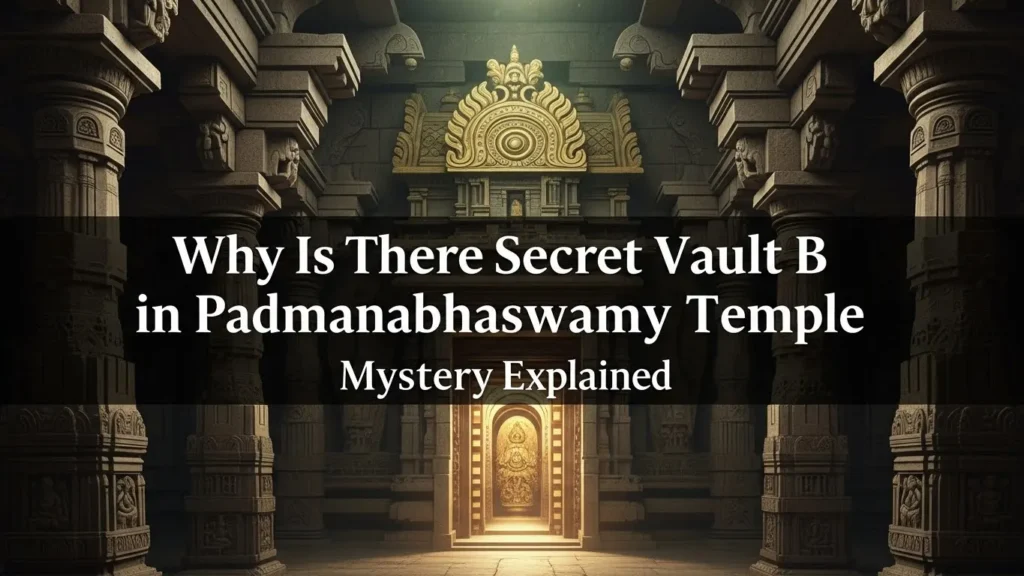
Historical records reveal that Vault B was actually opened during Kerala’s devastating famine in the 1800s to provide relief to suffering people, proving it served pragmatic emergency functions alongside its mystical reputation. The vault’s unique status stems from being sealed with Naga Paasam (serpent binding) mantras by high sages during Marthanda Varma’s era, creating both physical security through complex locks and metaphysical protection through spiritual incantations that supposedly prevent opening except by accomplished yogis chanting the Garuda mantra.
Unlike the other vaults (A, C, D, E, F) which functioned as general temple treasuries accumulating routine offerings and donations, Vault B was specifically designated as the principal vault—the largest chamber containing wealth “by far” exceeding all other vaults combined, according to Travancore royal family estimates from the 1880s when it was last inventoried, with contents then valued at INR 12,000 crores in 1880s terms.
The physical structure of Vault B supports theories about special purpose: it features an iron door with no visible locks, bolts, latches, or handles—just serpent carvings and a demon head—suggesting it was designed to be opened only through specific knowledge or spiritual power rather than conventional keys. Legends describe a secret inner chamber beyond Vault B with thick walls made of solid gold, implying the vault serves as merely an outer door protecting something far more significant hidden deeper within the temple’s underground complex.
Some researchers theorize Vault B connects to secret tunnels linking all six vaults, explaining how massive treasures could have been deposited without public knowledge and suggesting it may serve as the central hub of an underground repository system. The vault’s controversial status heightened after India’s former Auditor General Vinod Rai revealed it had been opened at least seven times since 1990, contradicting mystical narratives while raising disturbing questions about whether its contents were looted and whether current opposition to opening serves to hide embarrassing revelations about missing treasures.
This comprehensive guide explores the historical creation and strategic purposes of Vault B, evidence of past emergency openings, the spiritual protection systems and their theological significance, theories about divine relics and hidden chambers, the tension between practical and mystical explanations, and what Vault B’s existence reveals about how Hindu philosophy balances material security with spiritual mystery.
Historical Creation: Marthanda Varma’s Strategic Vision
The Kingdom Dedication of 1750
Understanding Vault B requires understanding Maharaja Marthanda Varma’s revolutionary dedication of the entire Travancore kingdom to Lord Padmanabha in 1750:
Complete Surrender: Marthanda Varma declared that:
- The deity Lord Padmanabha was the true Maharaja (ruler) of Travancore
- The royal family would serve merely as “Padmanabhadasa” (Servants of Padmanabha)
- Kings would govern on behalf of the deity, not in their own right
- All kingdom wealth ultimately belonged to Lord Padmanabha
Theological and Political Implications: This arrangement meant:
- Temple treasuries became state treasuries in a theocratic system
- Offerings to the deity equaled contributions to the kingdom’s reserve
- The temple functioned as both religious center and national bank
- Protecting temple wealth meant protecting state security
Padmanabhaswamy Temple Mystery Creating the Ultimate Reserve
Within this context, Vault B served a specific strategic purpose:
Emergency Reserve Function: Vault B was designed as the ultimate fallback resource for existential crises:
- Catastrophic famines threatening mass starvation
- Wars requiring massive military expenditures
- Economic depressions depleting state treasuries
- Natural disasters destroying agricultural production
- Epidemics requiring emergency medical interventions
Separation from Routine Treasuries: While other vaults (A, C, D, E, F) accumulated routine offerings, donations, and temple income, Vault B held concentrated strategic reserves meant to remain untouched except in gravest emergencies
“By Far the Largest”: The Travancore royal family’s own 1880s inventory described Vault B’s wealth as “by far the largest” of all six vaults—not merely comparable but dramatically exceeding the others combined
1880s Valuation: According to temple records, Vault B’s contents in the 1880s were worth INR 12,000 crores in contemporary terms—an astronomical sum representing the kingdom’s ultimate insurance policy
The Dual Protection System
Marthanda Varma implemented both physical and spiritual security:
Physical Security:
- Complex door mechanism with no conventional locks, bolts, or latches
- Heavy iron construction resistant to forced entry
- Underground location approximately 20 feet beneath the temple
- Position “beneath the sanctum sanctorum” in the most protected temple area
Spiritual Security (Naga Paasam):
- High sages chanted mantras creating metaphysical barriers
- The Naga Paasam (serpent binding) invoked protective serpent deities
- Garuda mantra requirement meant only spiritually accomplished individuals could open it
- Supernatural guardians allegedly punished unauthorized access attempts
Strategic Reasoning: This dual protection ensured:
- Deterrence: The mystical reputation prevented casual theft attempts
- Controlled Access: Only the highest religious and royal authorities possessed opening knowledge
- Emergency Override: In true crisis, authorized individuals could access resources
- Sacred Inviolability: Spiritual protection legitimized keeping the vault closed during non-emergency periods
Historical Evidence: The Vault B Openings
The 1800s Famine Opening
Contrary to mystical narratives claiming Vault B has never been opened, historical documentation reveals emergency access:
Kerala’s Devastating Famine: During a catastrophic famine in the 1800s affecting Kerala:
- Agricultural failures caused mass starvation
- The kingdom’s regular treasuries and reserves were depleted
- The economic crisis reached proportions justifying accessing the ultimate reserve
Emergency Authorization: Historical records indicate that Vault B was opened during this crisis to provide relief to suffering people
Humanitarian Purpose: The wealth was deployed for:
- Purchasing food grains from other regions
- Distributing relief to famine victims
- Preventing mass deaths and social collapse
- Stabilizing the kingdom during catastrophic conditions
Precedent Established: This opening demonstrated that Vault B was designed for exactly such circumstances—not to remain perpetually sealed but to serve as emergency resource when the kingdom faced existential threats
The 1930s Treasure Hunter Incident
Another documented opening attempt occurred in the 1930s:
Economic Depression Context: India was experiencing severe economic depression during this period:
- Temple and palace treasuries were “almost dry”
- Financial pressures created temptation to access Vault B’s wealth
Opening Attempt: A small group including the king and priests attempted to open the vault
Cobra Encounter: According to accounts:
- The group approached with torches for illumination
- Upon opening, they found the vault “infested with cobras”
- The deadly serpents caused the group to flee
Possible Interpretations:
- Literal: Actual snakes had nested in the underground chamber
- Spiritual: Supernatural manifestation punishing unauthorized access
- Security: Deliberately placed snakes serving as living guards
- Metaphorical: Exaggerated story warning against future attempts
Contents Glimpsed: Despite the cobra interruption, the group reportedly saw “a granary-sized structure almost full with mostly gold and some silver coins and jewels” before retreating
The Post-1990 Openings
The most controversial revelation came from India’s Auditor General:
Vinod Rai’s Statement: Former CAG (Comptroller and Auditor General) Vinod Rai informed the Supreme Court that Vault B had been opened at least seven times to his knowledge since 1990
Implications: If accurate, this means:
- The vault was not mystically sealed preventing all access
- Temple authorities or royal family had the means and knowledge to open it
- The dramatic mystical narratives may obscure prosaic reality
- “What’s inside has not been revealed” from these openings
Audit Findings: Subsequent investigations revealed disturbing patterns:
- “Massive amounts of gold from repositories mysteriously disappeared”
- Silver ingots removed, gold vessels deposited then subsequently withdrawn
- Poor record-keeping with incomplete information about treasures
- Potential unauthorized removal of valuables over decades
Two Competing Narratives:
- Official/Mystical: Vault B remains sealed since 1880s, protected by divine forces, contains trillion-dollar treasures
- Critical/Skeptical: Vault B opened repeatedly, possibly looted, with mystical stories covering mismanagement or theft
Current Uncertainty: The truth remains unclear, with the Supreme Court maintaining the seal order while investigations continue
Why Vault B: Spiritual and Theological Purposes
Repository for Divine Relics
Beyond monetary wealth, Vault B may house sacred objects deemed too powerful for common access:
Sacred Weapons Theory: Legends suggest the vault contains divine weapons and relics of Lord Vishnu including:
- Sudarshana Chakra: The legendary discus used by Vishnu himself
- Other ayudhas (divine weapons) with immense spiritual power
- Artifacts directly associated with deity manifestations
Theological Reasoning: Such objects would require:
- Isolation from mundane contact maintaining ritual purity
- Protection from misuse preventing spiritual weapons falling into wrong hands
- Controlled darshan ensuring only qualified individuals access them
- Preservation for future ages when humanity might require divine intervention
Ancient Texts and Knowledge: Some theories propose Vault B contains:
- Sacred manuscripts with esoteric spiritual knowledge
- Tantric texts too powerful for public dissemination
- Historical records of ancient dynasties and spiritual lineages
- Astronomical or scientific knowledge from previous civilizations
Power Beyond Gold: This perspective suggests Vault B’s true value isn’t monetary but lies in spiritual artifacts whose power transcends material wealth
Symbol of Divine Mystery
Vault B serves theological functions beyond its physical contents:
Embodiment of Unknowability: The sealed vault represents:
- Divine secrets beyond human comprehension
- The limits of human knowledge and power
- Sacred mysteries that should remain veiled
- Respect for boundaries between mortal and divine realms
Testing Faith: The unopened door challenges:
- Materialistic impulses to exploit every resource
- Rational skepticism demanding empirical proof
- Institutional authority claiming total knowledge and control
- Individual curiosity that may violate sacred boundaries
Sacred Restraint: By maintaining the seal, devotees demonstrate:
- Trust in divine will rather than human judgment
- Patience over immediate gratification
- Reverence for traditional wisdom and prohibitions
- Humility acknowledging some things should remain beyond reach
Devotional Focus: The mystery redirects attention:
- Away from material treasures toward spiritual wealth
- From acquiring possessions toward cultivating devotion
- From temple riches toward the deity’s grace
- From worldly curiosity toward sacred reverence
The Naga Paasam: Spiritual Protection System
The serpent binding represents sophisticated spiritual security:
Mantra Technology: Traditional Hindu belief holds that:
- Sound vibrations (mantras) can manipulate subtle energies
- Properly chanted incantations create energetic barriers and locks
- These spiritual seals persist across centuries
- Only counter-mantras can neutralize them
Naga Symbolism: Serpents (Nagas) in Hindu tradition represent:
- Guardianship: Protective deities watching over treasures
- Kundalini Energy: Primordial spiritual force
- Cosmic Time: Eternal cycles of creation and dissolution
- Hidden Knowledge: Secrets coiled and protected from unworthy seekers
Garuda Counter-Mantra: The requirement for Garuda mantra reflects:
- Vishnu’s Vehicle: Garuda is Lord Vishnu’s mount, naturally overcoming serpent protection
- Spiritual Attainment: Only advanced yogis possess such knowledge
- Divine Permission: The mantra works only if deity approves the opening
- Hierarchical Access: Spiritual advancement, not material authority, grants entry
Practical Function: Beyond mysticism, this system ensured:
- Cultural transmission of opening knowledge through spiritual lineages
- Authorization control limiting access to qualified individuals
- Psychological deterrence preventing casual theft attempts
- Legitimacy maintenance for keeping vault closed during normal periods
Vault B’s Physical Mysteries
The Unopenable Door
The vault’s entrance defies conventional security mechanisms:
No Conventional Locks: The iron door features:
- No bolts, nuts, latches, or handles visible on the surface
- Just “a plain chunk of steel”
- Serpent carvings and demon head serving as warnings
- No apparent mechanism for key-based entry
Design Implications: This construction suggests:
- Sliding or rotating mechanism requiring specific knowledge to activate
- Internal locking bars accessible only from inside or through hidden triggers
- Pressure-activated systems responding to specific patterns
- Mantra-responsive design (if one believes mystical accounts) opening through vibration
Failed Opening Attempts: During 2011 investigation:
- A blacksmith was summoned but could not open the ancient lock
- The extreme rust and corrosion made conventional methods impossible
- The team decided not to force entry to avoid damaging the sacred door
- The peculiar design resisted modern engineering approaches
Secret Inner Chamber Theories
Legends describe Vault B as merely an antechamber to something far greater:
The Gold-Walled Chamber: According to tradition, beyond Vault B lies a secret inner chamber with thick walls made of solid gold
True Treasure Location: This theory suggests:
- Vault B itself may be relatively modest
- The real treasures lie in the hidden chamber beyond it
- Opening Vault B would reveal another sealed door leading deeper
- The trillion-dollar estimates refer to the inner chamber, not Vault B proper
Architectural Plausibility: Such construction would:
- Explain why Vault B is “by far the largest”—it encompasses the inner chamber
- Justify extraordinary protection measures for unprecedented wealth
- Create layered security with multiple barriers
- Follow ancient treasury design principles of concentric protection
Discovery Method: Accessing the inner chamber might require:
- First opening Vault B successfully
- Discovering the hidden passage or door within
- Overcoming additional spiritual or physical locks
- Navigating underground chambers beneath the temple
The Tunnel Network Theory
Some researchers propose Vault B connects to an underground tunnel system:
Logistical Puzzle: A practical question arises: How could massive treasures be deposited without public knowledge?
Secret Tunnel Hypothesis:
- Underground passages connect Vault B to locations outside the temple
- Treasures were transported through tunnels avoiding public observation
- The vault serves as central hub linking all six vaults
- Tunnels might extend to palace, river, or distant locations
Supporting Evidence:
- Ancient temples often featured underground passages for strategic purposes
- The extreme quantity of treasures seems difficult to transport visibly
- Some vaults may be antechambers connecting to Vault B
- The underground complex may be far more extensive than currently known
Food and Water Source: The theory helps explain the cobra survival mystery:
- Snakes require food and water to survive underground
- Tunnels could provide access to ecosystem supporting snake populations
- This would enable cobras to persist as living guards over centuries
Implications: If true:
- Vault B’s importance extends beyond its immediate contents
- It may control access to entire underground network
- Opening it could reveal massive hidden infrastructure
- The temple’s wealth may far exceed current estimates
The Controversy: Practical vs. Mystical Explanations
The Believer Perspective
Devotees and traditionalists maintain Vault B’s mystical status:
Divine Protection: The vault remains sealed because:
- Naga Paasam mantras create supernatural barriers
- Divine guardians punish unauthorized access
- The deity’s will requires it remain closed
- Spiritual forces beyond material understanding protect it
Sacred Contents: What lies within transcends:
- Monetary value of gold and jewels
- Historical significance of artifacts
- Material benefits to contemporary society
- Human right to access all knowledge and wealth
Catastrophic Consequences: Opening by force would cause:
- Divine anger bringing misfortune
- Natural disasters and calamities affecting the region
- Mysterious deaths for those involved (citing Sundararajan’s death)
- Spiritual pollution defiling the sacred site
Astrological Warnings: Consultations revealed:
- Vault B is “deeply connected to the divine energy of the main idol”
- Opening would “make the god very angry”
- The verdict was “chilling and clear: the vault must never be opened”
Proper Respect: The appropriate response is:
- Accept mystery rather than demand revelation
- Trust traditional wisdom over modern curiosity
- Preserve sacredness rather than exploit resources
- Wait for divine timing or qualified sage to emerge
The Skeptical Perspective
Critics and rationalists offer alternative explanations:
Already Opened: Evidence suggests:
- Seven documented openings since 1990 per Auditor General
- 1800s famine opening proving it’s accessible
- 1930s opening despite cobra encounters
- The door can be opened with proper knowledge or tools
Looting Hypothesis: Disturbing audit findings indicate:
- “Massive amounts of gold mysteriously disappeared”
- Poor record-keeping enabling theft
- Possible secret tunnel used for looting
- Current seal protects embarrassing truth about missing treasures
Mystical Cover Story: Supernatural narratives may:
- Obscure prosaic reality of institutional failures
- Prevent accountability for mismanagement or corruption
- Justify resistance to transparency and audit
- Protect powerful interests benefiting from opacity
Natural Explanations: Phenomena attributed to divine intervention have mundane causes:
- Cobras naturally inhabit dark underground spaces
- Ancient lock corrosion makes opening difficult, not supernatural barriers
- Coincidental deaths don’t prove divine retribution
- Psychological effects create perceived supernatural experiences
Public Interest Argument: Transparency serves:
- Archaeological understanding of ancient wealth and culture
- Historical knowledge about past dynasties and trade
- Cultural heritage belonging to all people
- Economic benefit if treasures properly utilized
Proper Approach: Opening should occur with:
- Scientific methodology and archaeological expertise
- Comprehensive documentation and transparent inventory
- Legal oversight ensuring public accountability
- Respectful procedures honoring cultural sensitivities while pursuing truth
The Middle Ground
A balanced perspective acknowledges complexity:
Both/And Rather Than Either/Or:
- Vault B has been opened historically during emergencies
- Yet it currently remains sealed with Supreme Court sanction
- Spiritual traditions and practical functions coexisted in its design
- Mystery and material reality aren’t mutually exclusive
Partial Truth in Both Narratives:
- The vault does contain extraordinary wealth (demonstrated by other vaults)
- Opening has occurred without catastrophe (1800s famine relief)
- Spiritual protections served real security functions historically
- Institutional failures may have compromised integrity recently
Context-Dependent Access:
- Vault B was designed for emergency access, not perpetual sealing
- Proper authorization and purpose matter more than absolute prohibition
- Spiritual preparation and respect can coexist with practical opening
- The question is “why and how to open” rather than “whether to open”
Resolution Requires:
- Honest accounting of past openings and current contents
- Respect for genuine spiritual concerns without enabling corruption
- Transparent investigation balancing archaeology and theology
- Cultural sensitivity acknowledging multiple stakeholder perspectives
What Vault B Reveals About Hindu Philosophy
Sacred Stewardship vs. Ownership
Vault B embodies Hindu concepts of trusteeship:
Divine Ownership: The vault’s existence reflects belief that:
- Wealth ultimately belongs to the divine, not humans
- Humans serve as temporary caretakers of divine property
- Accumulation serves spiritual purposes, not personal enrichment
- Future generations have equal claim to resources
Limits of Human Control: The unopened vault demonstrates:
- Not everything should be accessed merely because it’s possible
- Restraint and respect outweigh curiosity and exploitation
- Divine mystery has intrinsic value beyond material utility
- Sacred boundaries should be maintained even at cost
Material and Spiritual Integration
Vault B shows how Hinduism unites worldly and divine:
Wealth as Offering: The treasures represent:
- Devotion transformed into material form through donations
- Spiritual merit accumulated across generations
- Divine blessing manifested in earthly prosperity
- Sacred and secular merged in temple treasury
Mystery as Teaching: The sealed vault instructs:
- Beyond material values lie spiritual truths
- What’s hidden can be more valuable than what’s revealed
- Divine grace transcends human understanding
- Faith requires accepting unknowing as sacred space
Time and Preservation
Vault B represents thinking across centuries:
Intergenerational Responsibility: Creating the vault showed:
- Planning beyond one lifetime for kingdom’s ultimate security
- Trust in future generations to maintain sacred duties
- Preservation for unknown future needs not yet imagined
- Continuity of spiritual tradition across temporal change
Patience Over Immediacy: Keeping it sealed teaches:
- Delayed gratification serving higher purposes
- Endurance of mystery across centuries
- Respect for timescales exceeding individual lives
- Faith that proper time will eventually arrive
Frequently Asked Questions
Why was Vault B created at Padmanabhaswamy Temple?
Vault B was created during Maharaja Marthanda Varma’s reign in the 18th century as the ultimate emergency reserve for Travancore kingdom during catastrophic famines, wars, or economic crises, functioning as the state’s final insurance policy in the theocratic system where kingdom wealth belonged to Lord Padmanabha. It was designed as “by far the largest” vault, separate from routine temple treasuries, and protected with both physical security (complex locks) and spiritual security (Naga Paasam mantras chanted by high sages).
Has Vault B ever been opened?
Yes, historical records confirm Vault B was opened during Kerala’s devastating famine in the 1800s to provide relief to suffering people. Additionally, it was accessed in the 1930s during economic depression, and India’s former Auditor General stated it had been opened at least seven times since 1990, though contents from these openings were not publicly revealed. This contradicts mystical narratives claiming perpetual sealing but raises questions about potential looting.
What is the Naga Paasam protecting Vault B?
Naga Paasam (serpent binding) refers to powerful Vedic mantras chanted by high sages during King Marthanda Varma’s reign that supposedly created supernatural barriers protecting the vault. According to belief, these spiritual seals can only be opened by an accomplished sadhu or yogi who knows the Garuda mantra and performs it correctly with divine permission. The serpent symbolism represents guardianship, cosmic time, and hidden knowledge in Hindu tradition, while practically serving as psychological deterrence against unauthorized access.
Is there a hidden chamber beyond Vault B?
Legends describe a secret inner chamber beyond Vault B with thick walls made of solid gold containing the true immeasurable treasures. This theory suggests Vault B serves as merely an outer door or antechamber protecting something far more significant hidden deeper within the temple’s underground complex. Some researchers propose tunnel networks connecting all vaults with Vault B as the central hub. However, these remain unverified theories rather than documented facts.
Why does the Vault B door have no locks?
The iron door features no visible bolts, nuts, latches, or handles—just serpent carvings and a demon head. This unusual design suggests it was meant to be opened through specific knowledge or spiritual power rather than conventional keys, possibly using sliding/rotating mechanisms, internal locking bars, or pressure-activated systems. During 2011 attempts, a blacksmith couldn’t open it due to extreme rust and the peculiar mechanism resisting modern engineering approaches.
What happened to the lawyer who tried to open Vault B?
Advocate TP Sundararajan, who filed the 2011 petition seeking vault access and transparency, died unexpectedly just one month after attempts to open Vault B. Team members reportedly experienced various misfortunes including family deaths and injuries. While believers cite this as evidence of divine retribution and the vault’s curse, skeptics view these as coincidental events not causally connected to the investigation, though the timing intensified belief in supernatural consequences for unauthorized access attempts.
What does Vault B supposedly contain?
The Travancore royal family estimates Vault B contains treasures worth at least $1 trillion in present value. Beyond monetary wealth, theories suggest it houses divine relics like Vishnu’s Sudarshana Chakra, sacred weapons, ancient spiritual texts with esoteric knowledge, powerful tantric manuscripts, or artifacts too spiritually potent for common access. The 1880s inventory valued its contents at INR 12,000 crores in contemporary terms, describing it as “by far the largest” vault exceeding all others combined.
Why won’t authorities open Vault B?
The Supreme Court maintains the seal order respecting religious sentiments and traditional beliefs about divine protection. An Ashtamangala Devaprasnam (divination ritual) revealed that opening would cause divine displeasure. Astrological consultations warned it would anger the deity and bring catastrophe. However, audit findings showing missing treasures and seven alleged post-1990 openings suggest authorities may also wish to avoid revealing embarrassing truths about potential looting or mismanagement. The situation balances spiritual concerns with transparency demands.
Conclusion
Vault B exists at the intersection of sacred mystery and pragmatic statecraft—a repository created by Maharaja Marthanda Varma’s vision combining theocratic philosophy (kingdom wealth belonging to Lord Padmanabha) with strategic planning (emergency reserves for existential crises) and spiritual protection (Naga Paasam mantras deterring unauthorized access). The historical evidence of 1800s famine opening proves it was designed for emergency use, not perpetual sealing, yet the Naga Paasam system ensured access required highest authorization and spiritual qualification, creating controlled transparency rather than either total secrecy or casual availability.
The contemporary controversy between believers maintaining mystical inviolability and skeptics citing evidence of recent openings and possible looting reflects deeper tensions in modern Hindu practice—balancing traditional spiritual authority with demands for institutional accountability, respecting sacred boundaries while pursuing historical truth, and acknowledging divine mystery without enabling human corruption. The fact that both narratives contain partial truth (the vault has been opened historically yet remains currently sealed; spiritual traditions served real security functions yet may now obscure institutional failures) suggests reality is more complex than either pure mysticism or reductive materialism can accommodate.
Vault B ultimately represents what Hindu philosophy teaches about the relationship between humans and ultimate reality—some mysteries should remain veiled not because they cannot be penetrated but because the act of penetration may destroy their sacred character, some treasures serve humanity better by remaining preserved than by being immediately utilized, and true wealth lies not in possessing everything but in knowing when restraint serves higher purposes than exploitation.
Whether Vault B contains trillion-dollar treasures or has already been looted, whether divine forces protect it or institutional interests do, whether it should eventually be opened with proper respect or remain forever sealed—these questions matter less than what the vault’s mere existence teaches about patience, mystery, stewardship across generations, and the possibility that some things are meant to remain beyond our immediate grasp, awaiting the proper time that only divine wisdom, not human impatience, can discern.
About the Author
Arvind Mehta – Cultural Heritage & Temple Architecture Specialist
Arvind Mehta is an accomplished writer and researcher specializing in Hindu festivals, temple architecture, and India’s rich cultural traditions. With a Master’s degree in Indian Art History from Maharaja Sayajirao University, she has extensively documented pilgrimage sites, temple iconography, and folk traditions across India. Her work focuses on making India’s spiritual heritage accessible to contemporary audiences while preserving authentic cultural narratives.