


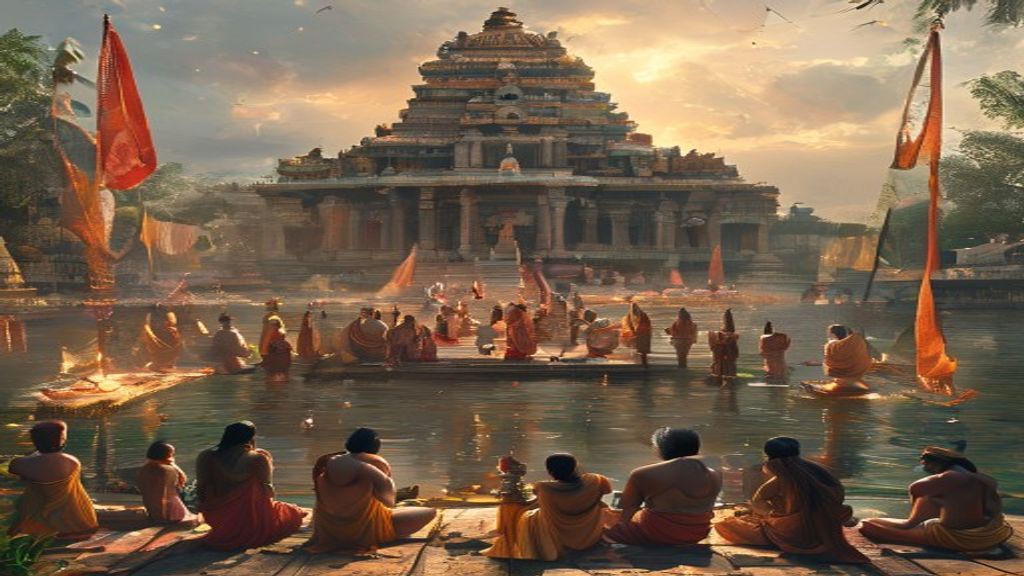
The **Yamuna River**, revered as **Yamuna Devi** or **Kalindi**, is one of Sanatan Dharma’s most sacred rivers, holding paramount significance as the intimate childhood playground of **Lord Krishna**. Originating from the Yamunotri Glacier, she is considered the sister of Yama (God of Dharma) and the daughter of Surya Dev, embodying divine love and purification for devotees.
| Attribute | Details |
|---|---|
| **Deity** | Yamuna Devi (Kalindi), wife of Lord Krishna (in some Puranic accounts) |
| **Origin** | Yamunotri Glacier, Bandarpoonch Peaks, Lower Himalayas, Uttarakhand |
| **Key Festival** | Yamuna Chhath (Chaitra Shukla Shashti), Bhai Dooj (Yam Dwitiya) |
| **Scripture Reference** | Vishnu Purana, Bhagavata Purana, Brahma Vaivarta Purana, Skanda Purana |
| **Key Association** | Lord Krishna’s childhood **leelas**, **Vraja Bhumi** (Mathura, Vrindavan, Gokul) |
Introduction: The Divine Mother of Bhakti
The Yamuna River, far more than a mere geographical entity, is a living goddess, a celestial current flowing through the heart of Bharatavarsha. For every devotee, she is **Yamuna Maharani**, a benevolent mother who witnessed and participated in the most intimate pastimes of **Bhagavan Sri Krishna**. Her waters are not just water but the very essence of divine love (prema) and liberation. She is the spiritual artery of **Vraja Bhumi**, the sacred land where Krishna enacted his eternal **leelas**, making her indispensable to the spiritual fabric of **Sanatan Dharma**.
Her sanctity rivals that of the Ganga, especially for followers of the **Vallabha Sampradaya** (Pushtimarg), where she is revered as the fourth Swaroop (form) of the Lord, bestowing grace and fostering unalloyed devotion. To understand Yamuna is to grasp the very spirit of **Bhakti Yoga**, for her currents carry the echoes of Krishna’s flute and the divine fragrance of his presence.
Puranic History & Divine Legends of Yamuna Devi
The **Yamuna River** possesses an illustrious lineage detailed extensively in the Puranas, establishing her as a central figure in the cosmic drama of Hindu mythology.
Celestial Origin
The **Vishnu Purana** and **Brahma Vaivarta Purana** describe Yamuna’s divine birth. She is the daughter of **Surya Dev** (the Sun God) and his wife, Saranyu (Chhaya). This makes her the beloved sister of **Yama Raj** (the God of Dharma and Death) and **Shani Dev** (the planetary deity Saturn). Her other name, **Kalindi**, derives from the Kalinda mountain range, from which she descends, specifically the Yamunotri Glacier. It is said that the sun’s intense heat gave her a dark complexion, hence “Kalindi” (the dark one), a hue that beautifully complements the Shyam (dark-blue) complexion of **Lord Krishna**.
Tradition recounts that Yamuna Devi performed severe austerities (tapasya) to have **Lord Vishnu** as her husband. Pleased by her devotion, Vishnu promised to appear as **Sri Krishna** and fulfill her wish, making her an eternal companion in his earthly pastimes.
The Sacred Crossing: Vasudeva and Infant Krishna
One of the most pivotal and miraculous events associated with Yamuna is recorded in the **Bhagavata Purana** (Canto 10, Chapter 3). When **Lord Krishna** was born in the prison cell of Mathura, his father **Vasudeva** was divinely instructed to carry the infant across the Yamuna to Gokul to protect him from the tyrannical King Kamsa. Despite the raging storms and the flooded river, as Vasudeva approached her banks, Yamuna’s waters miraculously parted, creating a path for him. It is said that the river rose to touch the lotus feet of the infant Lord, recognizing her future consort and fulfilling her longing.
Kaliya Mardan: Purification of the River
The **Kaliya Mardan** pastime, vividly described in the **Bhagavata Purana** (Canto 10, Chapter 15-17), showcases Krishna’s divine power and Yamuna’s deep connection to him. A ferocious multi-headed serpent named **Kaliya** had poisoned the waters of the Yamuna near Vrindavan, making them deadly for all living beings. To protect the cows, gopas, and the river itself, young Krishna bravely jumped into the toxic waters, confronted Kaliya, and subdued him by dancing on his many heads. This act purified Yamuna’s waters, demonstrating Krishna’s guardianship over creation and his special relationship with the river.
Rasa Leela and Other Divine Pastimes
The banks of the Yamuna, particularly in Vrindavan, were the chosen grounds for Krishna’s most enchanting **leelas**. The **Rasa Leela**, the divine dance of Krishna with the Gopis, often took place on her sandy shores under the moonlight. Countless stories from the **Garg Samhita** and **Brahma Vaivarta Purana** speak of Krishna’s playful splashing, swimming, and boating with his friends, his romantic dalliances with Radha and the Gopis, and his cow-herding pastimes along her serene banks. Thus, every ripple in the Yamuna is believed to carry the vibrations of Krishna’s divine presence.
Spiritual Geography & Architectural Significance of Yamuna’s Banks
While the Yamuna is a river and not a temple in the conventional sense, her banks and the sacred cities cradled by her waters represent profound spiritual geography and boast architectural marvels that serve as gateways to devotion. The river itself acts as a living temple, hallowed by the footsteps of the divine.
The Yamuna delineates the sacred **Vraja Mandala**, an area encompassing Mathura, Vrindavan, Gokul, and Goverdhan. Along her course, numerous **ghats** (steps leading to the river) have been constructed over millennia, serving as communal spaces for spiritual practices. These ghats are architectural marvels in their own right, reflecting diverse regional styles from ancient times to the Mughal and Maratha periods, all dedicated to facilitating devotion.
In **Vrindavan**, key ghats like **Kesi Ghat**, where Krishna purportedly killed the demon Kesi, and **Chir Ghat**, where he stole the clothes of the bathing Gopis, are not just stone structures but sites of vibrant pilgrimage. The intricate carvings, multi-tiered steps, and the adjacent temples, such as the Govind Dev Temple or the Banke Bihari Temple (though not directly on the ghats), form a cohesive spiritual landscape. The ancient city of Mathura, Krishna’s birthplace, also features numerous historic ghats, testament to its continuous habitation and spiritual significance along the Yamuna.
These architectural elements, combined with the river’s flow, create a unique ecosystem of **Bhakti**, where every stone and every drop of water is imbued with centuries of devotion. The engineering of these ghats, designed to withstand the river’s flow while providing safe access, reflects ancient Indian wisdom in harmony with nature’s power.
Rituals & Puja Vidhi for Yamuna Devi
Worship of Yamuna Devi is integral to **Vraja Bhakti** and offers profound spiritual benefits. Devotees perform various rituals to honor her.
- **Snan (Holy Bath):** Taking a purifying dip in the Yamuna’s waters is considered highly meritorious, believed to cleanse sins and bestow devotion to Lord Krishna. It is especially auspicious during specific astrological conjunctions or festivals.
- **Arghyam (Water Offering):** Facing the rising sun, devotees cup their hands and offer water from the Yamuna back into her currents, chanting her holy names, a gesture of reverence and gratitude.
- **Deep Daan (Lamp Offering):** During evenings, particularly on **Kartik Purnima** or **Yamuna Chhath**, devotees light earthen lamps (diyas) and float them on the river, symbolizing an offering of light and prayers to the goddess.
- **Aarti:** Grand aartis are performed at major ghats (like Kesi Ghat in Vrindavan) every morning and evening, with devotees singing hymns, ringing bells, and waving lamps in devotion to Yamuna Devi.
- **Puja:** Offering flowers, incense, fruits, and sweets directly to the river or at designated shrines along her banks.
- **Parikrama (Circumambulation):** Many devotees undertake the **Vraja Mandala Parikrama**, which involves circumambulating the sacred sites of Vraja, often following the course of the Yamuna, experiencing her spiritual energy firsthand.
- **Yamuna Chhath:** Celebrated on the sixth day of the bright half of Chaitra month, this festival commemorates the appearance day of Yamuna Devi. Devotees observe fasts, perform special pujas, and take holy dips to seek her blessings for purity and spiritual upliftment.
Mantras & Chants for Yamuna Devi
Chanting the divine names and mantras associated with Yamuna Devi deepens one’s connection to her and to Lord Krishna.
- **Basic Yamuna Mantra:**
ॐ ऐं ह्रीं क्लीं श्रीं यमुनायै नमः ॥
Om Aim Hrim Klim Shrim Yamunāyai Namah ॥
(This mantra invokes the auspicious energies associated with Yamuna Devi.) - **Yamunastakam:**
Composed by the great Vaishnava Acharya **Vallabhacharya**, the **Yamunastakam** is an eight-verse hymn dedicated to Yamuna Devi, glorifying her divine attributes and her intimate relationship with Lord Krishna. Chanting or listening to this stotram is considered highly meritorious for developing pure devotion. A profound verse from the Yamunastakam:
कृष्णारविंदद्युतिभिः प्रदीप्तदेहां, मुक्तावलीस्फुरितदिव्यविभूषणे च ।
कालिंदि कालिंदि जलं त्वदीयं, तत्र स्नानात् सकलं प्रमुच्यते पापम् ॥
Kṛṣṇāravindadyutibhiḥ pradīptadehāṁ, Muktāvalīsphuritadivyavibhūṣaṇe ca |
Kālindi Kālindi jalaṁ tvadīyaṁ, Tatra snānāt sakalaṁ pramucyate pāpam ||
(O Kalindi, Kalindi, your body shines with the splendor of Krishna’s lotus-like form, adorned with divine ornaments of pearls. Bathing in your waters, all sins are completely absolved.) - **Hare Krishna Mahamantra:**
As Yamuna is inseparable from Krishna, chanting the **Hare Krishna Mahamantra** while contemplating her divine presence is also a potent form of worship:
Hare Krishna Hare Krishna, Krishna Krishna Hare Hare |
Hare Rama Hare Rama, Rama Rama Hare Hare ||
Dos and Don’ts for Devotees at Yamuna River
To maintain the sanctity and spiritual purity of **Yamuna Devi**, devotees should adhere to certain guidelines:
Do’s:
- **Maintain Reverence:** Approach the river with humility and respect, recognizing her as a living goddess.
- **Keep it Clean:** Participate in keeping the ghats and the river clean. Dispose of waste responsibly.
- **Modesty:** Dress modestly, especially when taking a holy dip in her waters.
- **Offerings:** Use eco-friendly offerings (flowers, lamps made of natural materials). Avoid plastic or non-biodegradable items.
- **Bhakti:** Perform rituals like bathing, offering prayers, and chanting with a sincere heart and devotional attitude.
- **Support Conservation:** Encourage and support efforts for the cleaning and conservation of the Yamuna River. Learn more about such initiatives at Hindutva.online.
Don’ts:
- **Pollute:** Do not throw garbage, plastic, or harmful chemicals into the river.
- **Disrespect:** Avoid any acts that disrespect the sanctity of the river, such as washing clothes with harsh detergents, defecating, or consuming intoxicants on the ghats.
- **Selfie Obsession:** While photography is common, avoid turning sacred spaces into mere tourist spots; prioritize the spiritual experience.
- **Harm Wildlife:** Do not harm or disturb the aquatic life within the river.
- **Loud Disturbances:** Maintain a peaceful atmosphere conducive to spiritual reflection.
Frequently Asked Questions About Yamuna River
Who is Yamuna Devi’s father?
Yamuna Devi’s father is **Surya Dev**, the Sun God. She is also the sister of **Yama Raj**, the God of Dharma and Death, and **Shani Dev**.
Why is the Yamuna River considered sacred?
The **Yamuna River** is considered profoundly sacred due to her divine origin as the daughter of Surya Dev, her intimate connection with **Lord Krishna** (being the site of many of his childhood **leelas** like Kaliya Mardan and Vasudeva’s crossing), and her role as a bestower of liberation and pure devotion (prema bhakti) in **Sanatan Dharma**.
What is Yamuna Chhath?
**Yamuna Chhath** is an auspicious festival celebrated on the sixth day of the bright half of the Chaitra month (Chaitra Shukla Shashti) to commemorate the appearance day of **Yamuna Devi**. Devotees observe fasts, perform special pujas, and take holy dips in the Yamuna to seek her blessings.
Why This Matters for Every Hindu
The **Yamuna River** is not merely a water body; she is a living embodiment of divine grace, a tangible link to the earthly pastimes of **Lord Krishna**. For every Hindu, understanding and honoring Yamuna Devi is to embrace the essence of **Bhakti** itself. Her spiritual purity is intrinsically linked to the spiritual health of **Vraja Bhumi** and indeed, the entire nation.
Her preservation is not just an environmental issue but a dharmic imperative. To neglect her is to neglect a vital aspect of our spiritual heritage, a goddess who facilitates our journey towards Krishna. By cherishing Yamuna, we uphold the sacred traditions, ensure the continuation of our rich cultural narratives, and keep the flame of devotion alive for future generations. She is an eternal mother, a purifier, and a silent witness to millennia of devotion, reminding us that the divine is ever-present in nature, particularly in the sacred rivers of Bharat.