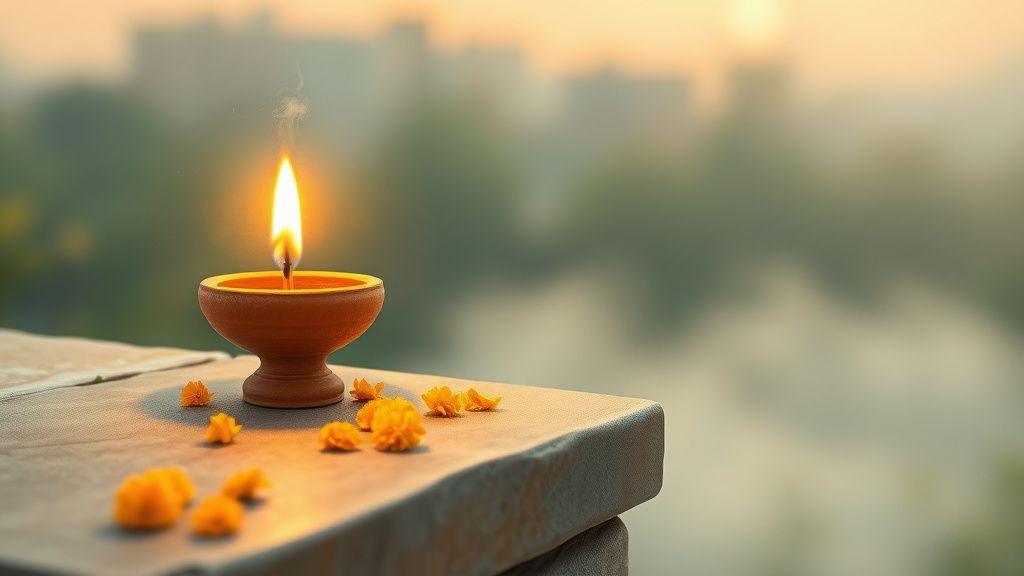
Why Do Hindus Light Diya Oil Lamps practice of lighting diya – traditional clay oil lamps with cotton wicks soaked in ghee or various oils – represents one of Hinduism’s most ancient, universal, and visually beautiful rituals, transcending sectarian boundaries to appear in every Hindu home from humble village dwellings to elaborate urban residences, observed daily during morning and evening puja, amplified during festivals especially Diwali (Festival of Lights), marking special occasions like births and weddings, and serving as fundamental symbol bridging material and spiritual realms through transformative power of fire converting physical oil into ethereal light creating visible metaphor for spiritual journey from ignorance ([translate:avidya]) toward enlightenment ([translate:jnana]).

Unlike modern electric lights offering mere illumination convenience, the diya carries profound multi-layered significance – spiritually representing divine presence dispelling darkness of ignorance and negative forces, psychologically creating sacred atmosphere conducive to meditation and devotion, scientifically purifying air through specific oils’ medicinal properties while generating negative ions improving mental clarity, and culturally connecting practitioners to millennia-old tradition linking current generation with countless ancestors who performed identical ritual establishing temporal continuity transcending individual lifespan.
The complete diya lighting practice involves understanding rich symbolism where flame represents pure consciousness, oil symbolizes accumulated negative karmas being consumed, wick embodies ego requiring burning away, clay vessel signifies physical body housing divine spark, and upward-moving light demonstrates soul’s natural aspiration toward higher realms – recognizing proper directional placement according to Vastu principles (Northeast for spiritual growth, Southeast for health and energy, North for wealth,
South during specific rituals), selecting appropriate oils based on desired benefits (ghee for sattvic purity and overall blessings, sesame for removing negative energy and propitiating Saturn, coconut for prosperity and cool energy, castor for dispelling evil eye, mustard for protection), and maintaining correct procedures from preliminary cleaning through mantra recitation to proper extinguishing ensuring maximum spiritual efficacy while avoiding inauspicious practices like blowing out flames or allowing lamps to run dry.
For families in 2025 navigating modern life’s complexities while seeking authentic spiritual practice, understanding why this simple act of lighting small clay lamp holds such profound significance – that Hindu philosophy recognizes light ([translate:jyoti]) as closest physical manifestation of formless divine consciousness making diya literal representation of God’s presence in home, that regular lighting creates positive energy field ([translate:prana shakti]) affecting household members’ consciousness and wellbeing through subtle energy interactions modern science increasingly validates through studies on negative ionization and aromatherapy effects, that directional placement aligns dwelling with cosmic forces governing
health, wealth, and spiritual progress through Vastu Shastra’s sophisticated energy management system, and that maintaining traditional practice even in simplified form preserves cultural continuity while providing psychologically beneficial rhythm and sacred pause in otherwise relentless secular routine – enables approaching diya lighting with renewed appreciation transforming potentially mechanical habit into conscious spiritual practice recognizing each flame’s quiet testimony to eternal truth that darkness never ultimately prevails against smallest light’s persistent presence.
The Deep Spiritual Symbolism of Diya
Before examining practical procedures, understanding multi-layered spiritual significance reveals profound wisdom encoded in this deceptively simple ritual.
The Primary Symbolism: Light Dispelling Darkness
Hindu philosophy recognizes fundamental opposition between light and darkness as cosmic principles:
Light ([translate:Jyoti/Prakash]) Represents:
- Knowledge ([translate:Jnana]) – Spiritual wisdom and understanding
- Consciousness ([translate:Chaitanya]) – Pure awareness, divine presence
- Truth ([translate:Satya]) – Reality as it actually is
- Positivity – Auspicious energies, divine grace
- Life ([translate:Prana]) – Vitality and life force
Darkness ([translate:Tamas/Andhakara]) Represents:
- Ignorance ([translate:Avidya]) – Spiritual blindness, delusion
- Unconsciousness – Ego-dominated, materialistic existence
- Illusion ([translate:Maya]) – False perception of reality
- Negativity – Inauspicious forces, obstacles
- Death/Inertia – Stagnation, spiritual dormancy
The Fundamental Truth:
Just as smallest flame can dispel vast darkness, smallest spiritual knowledge can transform deepest ignorance. A tiny diya in pitch-black room creates dramatic transformation – this physical reality serves as perfect metaphor for spiritual awakening.
As Upanishads proclaim:
[translate:तमसो मा ज्योतिर्गमय]
“Lead me from darkness to light” – Brihadaranyaka Upanishad
Divine Presence Manifestation:
Light as Brahman Symbol:
Hindu philosophy considers light itself as closest physical manifestation of formless divine consciousness:
[translate:ज्योतिः स्वरूपः परमात्मा]
“The Supreme Self is of the nature of light”
Why Light Represents God:
- Formless yet perceptible – Like Brahman (ultimate reality)
- Self-illuminating – Doesn’t depend on external source
- Reveals everything – Makes hidden things visible
- Doesn’t discriminate – Shines equally on all
- Transforms through presence – Changes atmosphere merely by existing
Lighting diya = inviting divine presence into home, making abstract spiritual reality tangibly present.
The Five Elements of Diya:
Each diya component carries symbolic meaning:
1. The Clay Vessel ([translate:Prithvi] – Earth Element):
- Represents physical body – temporary vessel
- Made from earth, returns to earth (like human body)
- Container holding divine potential
- Symbolizes humility – common clay elevated by divine flame
2. The Oil ([translate:Jala] – Water Element Transformed):
- Represents accumulated karmas – both good and bad
- Acts as fuel being consumed/transformed
- Like karmas gradually exhausted through spiritual practice
- Different oils = different karma types being processed
- Continuous replenishment needed (like good deeds)
3. The Cotton Wick ([translate:Vayu] – Air Element Channel):
- Represents ego/individual self ([translate:ahamkara])
- Must be consumed for light to manifest
- The “I” that must burn away for divine realization
- Channels oil upward (like spiritual practices channel energy)
- Becomes ash – ego’s ultimate destiny
4. The Flame ([translate:Agni] – Fire Element):
- Represents pure consciousness/Atman/soul
- Eternal, unchanging essence
- Transforms matter into light and heat
- Always moves upward (spiritual aspiration)
- Source of illumination and warmth (knowledge and devotion)
5. The Light ([translate:Akasha] – Ether/Space Pervaded):
- Represents divine knowledge spreading
- Dispels darkness in all directions
- Cannot be contained or limited
- Shared without diminishing
- Reveals hidden truths
The Complete Symbol:
Diya = Complete representation of spiritual journey:
- Physical body (clay) housing divine potential
- Karmas (oil) being gradually consumed
- Ego (wick) burning away through practice
- Revealing eternal soul (flame)
- Spreading enlightenment (light) dispelling ignorance (darkness)
Upward Movement Significance:
Flame Always Rises:
Unlike water (flows down) or earth (stays still), fire naturally moves upward – symbolic of soul’s inherent tendency toward liberation.
Even if diya inverted, flame still seeks upward direction – representing soul’s persistent aspiration toward divine despite material circumstances.
Why Do Hindus Light Diya Oil Lamps
This teaches:
- Spiritual progress is natural, not forced
- Soul’s true nature is ascension
- Material circumstances don’t determine spiritual potential
- Like flame, consciousness seeks higher states
Aarti: Waving Light Before Deity
The practice of aarti – circular waving of lit lamp before deity – carries additional symbolism:
Clockwise Movement ([translate:Pradakshina]):
- Follows sun’s apparent path (East to West through South)
- Creates positive energy vortex
- Aligns with cosmic order ([translate:Rita])
- Seven circles often (seven chakras/levels)
Symbolism:
- Offering light to Light itself – acknowledging God as source
- Illuminating divine form – focusing devotion
- Receiving blessings – light returned represents grace
- Circle of life – continuous devotion throughout existence
Touching Flame and Forehead:
After aarti, devotees pass hands over flame and touch forehead:
- Receiving divine blessing from sanctified fire
- Activating Ajna chakra (third eye – spiritual insight)
- Internalizing divine light – “Let this light guide my thoughts”
Philosophical Depth: Advaita Perspective
Non-Dual Understanding:
Advanced Vedantic philosophy sees diya as teaching ultimate truth:
Many lamps, one light:
- Individual diyas = individual souls ([translate:Jivatman])
- All flames = same fire element
- All light = same illumination principle
- Ultimate reality: No real separation between individual flames and universal Fire/Light (Brahman)
Teaching: Just as waves aren’t separate from ocean, individual souls aren’t separate from cosmic consciousness – difference is apparent, not real.
Lighting One Lamp from Another:
Beautiful metaphor for knowledge transmission:
- Guru’s lamp lights disciple’s lamp
- Original flame doesn’t diminish
- Both burn equally bright
- Knowledge shared without loss
As Upanishads say: Knowledge is unique wealth that increases when shared, unlike material wealth that decreases.
This profound symbolic framework explains why seemingly simple act of lighting small clay lamp carries such tremendous spiritual significance in Hindu tradition.
Types of Oils and Their Specific Benefits
Different oils used in diyas carry distinct properties – spiritual, medicinal, and energetic – making selection meaningful beyond mere availability.
1. Ghee (Clarified Butter) – Most Sattvic
Spiritual Significance:
- Supreme choice for worship – considered purest substance
- Associated with divine offerings in Vedic fire ceremonies
- Represents ultimate sattvic (pure) quality
- Pleasing to all deities, especially Lakshmi
Benefits:
Spiritual:
- Creates most auspicious atmosphere
- Attracts divine presence powerfully
- Purifies environment completely
- Enhances meditation and prayer effectiveness
Physical/Scientific:
- Air purification: Ghee combustion creates formaldehyde-neutralizing compounds
- Positive ionization: Generates negative ions improving air quality
- Aromatherapy: Pleasant subtle fragrance calming nervous system
- Long burn time: Efficient fuel lasting longer than most oils
Ayurvedic:
- Cooling effect on environment
- Balances all three doshas (Vata, Pitta, Kapha)
- Sacred smoke beneficial for respiratory health
- Antimicrobial properties
When to Use:
- Daily puja in home altar
- All festivals, especially Diwali
- Special ceremonies (weddings, naming, etc.)
- When seeking overall spiritual blessings
2. Sesame Oil ([translate:Til ka Tel]) – Most Powerful for Protection
Spiritual Significance:
- Favored by Lord Shani (Saturn) and Hanuman
- Specifically used for removing negative energies
- Traditional choice for Saturday worship
- Protective and grounding properties
Benefits:
Spiritual:
- Wards off evil eye ([translate:nazar])
- Removes obstacles and difficulties
- Propitiates malefic Saturn influences
- Grounds excessive Vata (air element) creating stability
Physical/Scientific:
- Medicinal smoke: Sesame combustion releases beneficial compounds
- Respiratory benefits: Helps clear congestion
- Vitamin E antioxidants: Released during burning
- Warm energy: Heating effect beneficial in cold climates
Ayurvedic:
- Balances Vata dosha (anxiety, fear, instability)
- Strengthening and nourishing quality
- Supports bone health energetically
- Grounding for scattered minds
When to Use:
- Saturdays (Shani worship)
- Tuesdays (Hanuman worship)
- When experiencing obstacles or setbacks
- During Shani Sade Sati or difficult planetary periods
- For protection from negative influences
- In evening lamps (removes day’s accumulated negativity)
3. Coconut Oil ([translate:Nariyal ka Tel]) – Cooling and Prosperity
Spiritual Significance:
- Associated with Goddess Lakshmi (wealth and prosperity)
- Cooling spiritual energy
- Popular in South Indian traditions
- Represents abundance and fertility
Benefits:
Spiritual:
- Attracts wealth and prosperity
- Cooling effect on aggressive energies
- Balances excessive heat (Pitta)
- Creates gentle, welcoming atmosphere
Physical/Scientific:
- Pleasant aroma: Natural calming fragrance
- Air moisturizing: Beneficial in dry climates
- Medium chain fatty acids: Healthier combustion
- Longer burning: Relatively efficient fuel
Ayurvedic:
- Balances Pitta dosha (anger, inflammation, heat)
- Cooling to body and mind
- Nourishing quality
- Supports hair and skin health energetically
When to Use:
- Friday (Lakshmi worship)
- Summer months (cooling energy)
- When seeking prosperity and financial blessings
- In hot climates or for Pitta-dominant individuals
- During business-related pujas
4. Castor Oil ([translate:Arandi ka Tel]) – Evil Eye Removal
Spiritual Significance:
- Specifically for dispelling evil eye and black magic
- Protective properties
- Used in removal rituals ([translate:nazar utarna])
- Not typically used in regular daily puja
Benefits:
Spiritual:
- Extremely powerful for removing negative influences
- Creates protective shield
- Dispels jealousy-caused problems
- Cleansing effect on environment
Physical/Scientific:
- Thick smoke: Physically represents removal of negativity
- Detoxifying properties: Even in combustion form
- Purifying: Strong cleansing effect
When to Use:
- Not for daily puja (too heavy, tamasic)
- Specific nazar removal rituals
- When suspecting evil eye or negative energy attack
- Protective cleansing of new space
- Usually waved around person/object then discarded (not kept burning in altar)
5. Mustard Oil ([translate:Sarson ka Tel]) – Strong Protection
Spiritual Significance:
- Powerful protective properties
- Associated with Lord Hanuman and Shani
- Dispels negative entities
- Stimulating and activating energy
Benefits:
Spiritual:
- Strong protection from negative forces
- Removes obstacles aggressively
- Activates stagnant energies
- Courage and strength invocation
Physical/Scientific:
- Pungent aroma: Stimulating, alertness-inducing
- Antibacterial properties: Air purification
- Warmth: Heating effect beneficial in cold
- Omega-3 fatty acids: Released during combustion
Ayurvedic:
- Balances Kapha dosha (lethargy, depression, stagnation)
- Stimulating and activating
- Improves circulation energetically
- Dispels heaviness
When to Use:
- Tuesdays and Saturdays
- When feeling lethargic or depressed
- During Hanuman Jayanti or special Hanuman worship
- For energizing space
- Winter months (warming effect)
6. Pancha Deepam (Five-Oil Mixture) – Complete Balance
Combination:
Traditional South Indian practice mixing five oils:
- Cow’s ghee
- Sesame oil
- Coconut oil
- Castor oil
- Neem oil or Mahua oil
Significance:
- Balances all five elements (earth, water, fire, air, ether)
- Complete spiritual benefits combining all oil properties
- Harmonizes rather than emphasizing single quality
- Comprehensive protection and blessing
Benefits:
- All benefits of individual oils combined
- Balanced energy (not too heating, cooling, stimulating, or calming)
- Suitable for most occasions
- Holistic approach to spiritual practice
When to Use:
- Regular daily puja seeking balanced blessings
- Festivals where complete auspiciousness desired
- When uncertain which single oil most appropriate
- For comprehensive energy harmonization
Directional Placement: Where to Light Diyas
Vastu Shastra prescribes specific directional placements for diyas based on desired energetic effects:
The Primary Directions and Their Significance:
Northeast (Ishaan Kon) – Most Auspicious for Daily Puja
Ruling Deity: Lord Shiva (Ishaan)
Element: Water + Air = Most subtle, spiritual energy
Benefits of Lighting Diya Here:
- Spiritual growth and wisdom
- Mental clarity and focus
- Enhanced meditation depth
- Divine knowledge and insight
- Overall auspiciousness
- Health and wellbeing
Best For:
- Home altar/puja room (ideal location)
- Morning and evening daily worship
- Student study areas (knowledge and concentration)
- Permanent diya that burns continuously
Oil Recommendation: Ghee or sesame oil
East – New Beginnings and Health
Ruling Deity: Indra (Sun rises here)
Element: Air
Benefits:
- Good health and vitality
- Children’s welfare
- New ventures and beginnings
- Energy and enthusiasm
- Positive outlook
Best For:
- Morning puja specifically
- Children’s rooms
- When starting new projects
- Health-related intentions
Oil Recommendation: Ghee or coconut oil
Southeast (Agni Kon) – Fire and Energy
Ruling Deity: Agni (Fire God)
Element: Fire
Benefits:
- Health and freedom from disease
- Digestive strength
- Energy and vitality
- Managing expenses wisely
- Passion and motivation
Best For:
- Kitchen area (if lighting diya there)
- When needing energy boost
- Health recovery prayers
- Managing financial outflow
Oil Recommendation: Ghee or sesame oil
South – Fame, Longevity, and Ancestors
Ruling Deity: Yama (Lord of Death and Dharma)
Element: Fire
Benefits:
- Longevity
- Fame and recognition
- Ancestral blessings
- Disciplined living
- Overcoming enemies
Best For:
- Ancestor worship (Pitru Tarpan)
- When seeking recognition
- Protection from untimely death
- Specific rituals only (not daily puja)
Oil Recommendation: Sesame oil (especially on Saturdays)
Note: South generally avoided for regular daily puja; reserved for specific rituals.
Southwest – Stability and Relationships
Ruling Deity: Nirriti/Rahu
Benefits:
- Relationship stability
- Grounding energy
- Protection from negative forces
- Ancestral protection
Best For:
- Generally not recommended for diya lighting (heavy energy)
- Specific protective rituals only
West – Gains and Profits
Ruling Deity: Varuna (Water God)
Element: Water
Benefits:
- Financial gains
- Profits in business
- Children’s future prosperity
- Emotional bonding
- Completing tasks successfully
Best For:
- Business-related prayers
- When seeking specific financial gains
- Occasional use, not daily
Oil Recommendation: Coconut or ghee
Northwest – Movement and Support
Ruling Deity: Vayu (Wind God)
Element: Air
Benefits:
- Beneficial for travel
- Social connections and networking
- Support from others
- Movement and change
Best For:
- When traveling frequently
- Guest rooms
- Not typically primary puja location
North (Uttara) – Wealth and Prosperity
Ruling Deity: Kubera (Wealth God)
Element: Water
Benefits:
- Wealth accumulation
- Business prosperity
- Career advancement
- Opportunities
- Financial stability
Best For:
- Business offices, shops
- When specifically seeking financial blessings
- Kubera puja
- Lakshmi worship on Fridays
Oil Recommendation: Ghee or coconut oil
Practical Guidelines:
For Home Puja Room:
Primary Diya: Northeast corner (most spiritual)
Secondary Diyas: Can add East (health) and North (prosperity) for comprehensive blessings
Avoid: South and Southwest for regular daily worship
Number of Diyas:
Odd numbers considered auspicious:
- One: Simplest, single-pointed devotion
- Three: Common (representing Brahma-Vishnu-Mahesh or past-present-future)
- Five: Representing five elements
- Seven: Seven chakras or seven days
Even numbers generally avoided (except specific rituals requiring pairs)
Height and Placement:
- Eye level or above when standing preferred
- Never place diya on floor (disrespectful)
- Clean platform or shelf
- Stable base preventing tipping
How to Light Diya Properly: Complete Procedure
The proper method for lighting diya maximizes spiritual and practical benefits:
Preliminary Preparation:
1. Cleanliness:
- Clean the diya before use (wash if clay, wipe if metal)
- Clean the placement area
- Personal cleanliness: Wash hands and face; ideally bath before puja
2. Diya Setup:
Clay Diya (Traditional):
- Fill diya 2/3 full with chosen oil
- Don’t overfill (prevents spillage and soot)
- Don’t under-fill (wick won’t reach oil)
Cotton Wick Preparation:
- Use pure cotton wicks (not synthetic)
- If making own: Roll cotton tightly, twist slightly
- Insert wick into oil
- Allow few minutes for oil absorption
- Wick tip should extend slightly above oil surface
Correct Wick Placement:
- Single wick: Center of diya
- Multiple wicks: Evenly spaced
- Some diyas have specific holes for wick placement
3. Facing Direction While Lighting:
Traditional practice: Face East while lighting (welcoming sun/divine light)
Alternative: Face the deity’s direction in your puja room
The Lighting Procedure:
Step 1: Mental Preparation
Before striking match:
- Calm your mind – take few deep breaths
- Set intention – why are you lighting this lamp?
- Invoke divine presence mentally
Step 2: Lighting with Mantra
Basic Mantra (while lighting):
[translate:ॐ दीपं ज्योतिः परं ब्रह्म दीपं सर्वतमोपहम्।
दीपेन साध्यते सर्वं संध्यादीपं नमोऽस्तु ते॥]
“Om, the lamp is the supreme light of Brahman. The lamp destroys all darkness. Everything is accomplished through the lamp. Salutations to the lamp lit at twilight.”
Simplified:
[translate:ॐ दीपज्योति परब्रह्म दीपसर्व तमोपहम्।
दीपेन साध्यते सर्वं सन्ध्या दीपो नमोस्तु ते॥]
Even Simpler (if mantras challenging):
[translate:ॐ नमः शिवाय] or [translate:ॐ नमो नारायणाय] or simply [translate:ॐ]
Or in your language: “I light this lamp inviting divine presence to bless this home.”
Step 3: Lighting Technique
- Use match stick or another lit diya (traditional)
- Modern: Use lighter if necessary (not ideal but acceptable)
- Never use cigarette lighter or electric lighter for puja diya (inauspicious)
- Light wick gently without disturbing diya
Step 4: Observe the Flame
After lighting:
- Watch flame for few moments
- Observe it steadying (initially flickers)
- Steady, bright flame = auspicious
- Flickering or smoky = check wick positioning, oil level, air currents
Step 5: Initial Prayers
With lit diya before you:
Simple Prayer:
[translate:दीपोऽस्तु सुकृतं तेजः देवानां निलयोऽव्ययः।
आत्मज्योतिर्मयं देव दीपं शुभायते॥]
“May this lamp be the auspicious light, the eternal abode of gods. May this light be the light of my soul. I offer this lamp for auspiciousness.”
Or simply:
“May this divine light dispel all darkness of ignorance. May it bring peace, prosperity, and spiritual wisdom to all beings.”
Step 6: Waving (Aarti) If Applicable
If performing formal puja:
- Wave diya clockwise before deity
- Usually 7 circles (or 3, 5, 11 depending on tradition)
- Maintain steady hand to prevent oil spilling
- Ring bell with other hand if possible
Daily Routine Guidelines:
Morning Diya:
When: Ideally during Brahma Muhurta (4-6 AM) or at least before sunrise
Procedure:
- Light after morning bath
- Face East
- Keep burning during morning puja
- Can extinguish after puja or maintain throughout day (if safe)
Evening Diya:
When: Sandhya time (twilight, around sunset)
Procedure:
- Light before dusk (never wait for complete darkness)
- Dispels day’s accumulated negative energy
- Keep burning during evening puja
- Tradition: Keep lit until bedtime in some families
Special Occasions:
Diwali:
- Light multiple diyas throughout home
- All directions welcome (illuminate entire space)
- Keep burning as long as safely possible
- Re-light if extinguished during night
Thursday (Lakshmi worship):
- Light facing North for wealth
- Coconut or ghee oil
- Yellow flowers offered alongside
Saturday (Shani/Hanuman worship):
- Light sesame oil diya
- Face South or deity’s direction
- Keep burning entire puja duration
What NOT to Do:
❌ Never blow out diya flame
Why:
- Breath considered impure for sacred fire
- Disrespectful to divine presence
- Inauspicious energetically
✅ Instead: Use small metal cap/lid to cover flame, or wave hand to gently extinguish
❌ Don’t light from stove flame
Kitchen fire used for cooking (mixed energies) – not pure enough for puja diya
❌ Don’t let diya burn dry
Oil completely exhausted = inauspicious
Refill before it runs out
❌ Don’t use broken or cracked diya
Represents incompleteness – use whole, intact vessels
❌ Don’t light with left hand
Right hand considered pure for sacred activities (if you’re left-handed, it’s acceptable but traditionally right preferred)
❌ Don’t place near flammable materials
Safety essential – keep away from curtains, papers, fabrics
Maintaining the Diya:
Daily:
- Check oil level
- Clean soot from rim
- Adjust wick if needed
- Ensure stability of placement
Weekly:
- Thorough cleaning
- Replace oil completely
- Examine diya for cracks
Monthly:
- Deep clean with turmeric water
- Consider replacing clay diyas (they degrade)
- Energetically cleanse placement area
Frequently Asked Questions
Can we light diya with electric lighter or does it need to be match?
Ideally match stick or another lit diya (transferring sacred flame), but modern lighters acceptable if necessary – spiritual intention matters more than ignition method. Avoid: Cigarette lighters or anything associated with non-sacred use. Best practice: Keep dedicated match box or long wooden matches specifically for puja use. Traditional families maintain “eternal flame” transferring from one diya to next so they never use match after initial lighting. Practical reality: Most modern homes use matches or kitchen lighter – perfectly acceptable with respectful attitude.
How long should diya burn – whole day or just during puja?
Three approaches: 1) During puja only (20-30 minutes morning/evening) – most common modern practice, 2) Entire day/night (Akhanda deep) – traditional ideal requiring safety measures and oil refilling, 3) Morning to evening – middle path. Safety critical: Never leave burning diya unattended if flammable materials nearby, pets/children present, or leaving home. Spiritual benefit: Longer burning = more purification, but brief sincere lighting better than careless all-day burning causing anxiety. Diwali special: Tradition keeps diyas burning as long as safely possible (re-light if extinguished).
Is there scientific benefit or only spiritual significance?
Both! Scientifically validated benefits: 1) Air purification: Ghee combustion releases formaldehyde-neutralizing compounds, 2) Negative ionization: Flame produces negative ions improving air quality and mental clarity (similar to ocean/waterfall effect), 3) Aromatherapy: Different oils release beneficial volatile compounds affecting mood and cognition, 4) Circadian rhythm: Evening diya lighting signals day-end preparing body for rest, 5) Reduced electromagnetic stress: Natural light source creating respite from LED/screen exposure, 6) Meditation enhancement: Focal point for concentration, steady flame calms nervous system. Studies show: Flame meditation reduces cortisol, improves attention, lowers blood pressure.
Can we reuse oil from diya or should we discard?
Traditional approach: Oil offered in diya becomes prasad (blessed) and shouldn’t be reused for cooking or secular purposes. Options: 1) Let burn completely (best), 2) Pour at base of sacred tree/plant (tulsi, peepal), 3) Dispose respectfully in flowing water or garden (not drain/trash), 4) Apply as tilak (small amount on forehead for blessing). Never: Pour back into main oil container or cook with it (energetically mixed). Clay diyas: After several uses, clay absorbs oil and becomes brittle – respectfully dispose (bury in garden or flowing water) rather than trash. Metal diyas: Clean thoroughly and reuse vessel itself.
What if diya keeps extinguishing – is it bad omen?
Usually practical cause, not ominous: 1) Draft/wind – most common (close windows/doors), 2) Wick too short – not reaching oil adequately, 3) Oil low – refill immediately, 4) Wick quality – synthetic or loose cotton (use tight pure cotton), 5) Oil impurity – water mixed in oil. Spiritual interpretation: Some traditions see repeated extinguishing as negative energy presence requiring cleansing – perform space purification (salt water sprinkle, dhoop smoke). Not panic-worthy – simply identify practical cause and correct. If genuinely unexplainable: Perform Satyanarayan puja or Ganesh puja for removing obstacles.
Do we need separate diya for each deity or one is enough?
One central diya acceptable for home puja (many families do this). Multiple diyas: 1) Traditional elaborate puja: Separate for each deity, 2) Special festivals: Multiple creating ambiance, 3) Large puja room: Can maintain several, 4) Specific worship: Dedicated to that deity. Practical: Even one sincere diya invokes all divine presence – God isn’t separate entities requiring individual lamps but one supreme consciousness. Minimum: One in Northeast corner sufficient for daily worship. Symbolic: Two diyas can represent Shiva-Parvati or Lakshmi-Narayan (divine couple), three for Trimurti (Brahma-Vishnu-Mahesh). Quality over quantity: Better one well-maintained diya than multiple neglected ones.
Should diya face specific direction or deity’s direction?
Flame naturally illuminates all directions but placement matters: Diya placement: According to Vastu (Northeast primary for home altar). Your facing: When lighting, face East or face the deity. Flame direction: Flame rises vertically – it naturally “faces” upward (symbolizing soul’s ascension). Not critical: Unlike murti (deity idol) which should face specific direction, diya’s illumination spreads equally. Focus on: Placing in auspicious corner (Northeast best) and ensuring safety/stability. Deity photos/idols should face East or West (so worshipper faces East or West respectively); diya placed before them receives their blessing and illuminates their form.
Can non-Hindus or people from other religions light diya?
Absolutely yes! Diya lighting welcomes anyone with respectful intention. Universal symbolism: Light dispelling darkness transcends religious boundaries – recognized across spiritual traditions (candles in Christianity, menorah in Judaism, lamps in Buddhism, etc.). Interfaith homes: Partners from different faiths can light diya together as beautiful practice. Respectful approach: Understand basic symbolism, maintain cleanliness, follow simple procedure sincerely. No conversion required: Lighting diya doesn’t make one Hindu – it’s simply inviting positive energy and acknowledging divine presence. Many non-Hindus: Light diyas during Diwali or for meditation/yoga practice, appreciating universal spiritual symbolism. Key: Sincere respect and avoiding mockery/casual disregard of sacred practice.
Conclusion
The ancient practice of lighting diya represents Hinduism’s beautiful integration of profound spiritual philosophy with accessible daily ritual – creating tangible method for ordinary householders to invoke divine presence, transform home atmosphere, and participate in millennia-old tradition connecting current practitioners with countless generations who performed identical act establishing temporal and spiritual continuity transcending individual lifespan while simultaneously addressing practical concerns through oil lamps’ scientifically validated benefits including air purification through ghee’s formaldehyde-neutralizing combustion, negative ionization improving mental clarity and mood, aromatherapeutic effects from different oils’ medicinal properties, and circadian rhythm support through natural evening light signaling day’s end preparing consciousness for rest and rejuvenation.
Understanding complete framework – that each diya component carries symbolic meaning from clay vessel representing physical body through oil symbolizing karmas being consumed to wick embodying ego requiring burning away revealing eternal flame of pure consciousness spreading light that dispels ignorance in all directions, that different oils provide distinct benefits from ghee’s supreme sattvic purity and comprehensive blessings through sesame’s protective grounding and Saturn propitiation to coconut’s
cooling prosperity and wealth attraction, that directional placement according to Vastu principles aligns dwelling with cosmic forces governing health, wealth, and spiritual progress, and that proper procedures from preliminary cleanliness through mantra recitation to respectful extinguishing ensure maximum efficacy while avoiding inauspicious practices – enables approaching this deceptively simple ritual with renewed appreciation transforming potentially mechanical habit into conscious spiritual practice.
As you incorporate diya lighting into your 2025 daily routine, remember that practice’s ultimate value lies not in perfect technical execution or expensive elaborate arrangements but in sincere devotional consciousness recognizing each small flame’s quiet testimony to eternal truth that darkness – whether manifest as ignorance, negativity, suffering, or spiritual blindness – never ultimately prevails against even smallest light’s persistent presence, that divine consciousness perpetually available awaiting only our conscious invitation through simple acts like lighting clay lamp with pure intention, and that maintaining traditional practices even in simplified modern adaptations preserves cultural wisdom while providing psychologically.
beneficial rhythm creating sacred pause in otherwise relentless secular routine reminding us daily that life’s ultimate purpose transcends material accumulation toward spiritual illumination gradually dispelling ignorance through consistent practice until individual consciousness merges with cosmic light realizing fundamental non-separation between personal awareness and universal divine presence symbolized beautifully in single principle: many lamps creating many flames yet all sharing identical light-nature pointing toward ultimate Vedantic truth that apparent multiplicity masks underlying unity awaiting recognition through spiritual practice beginning with smallest steps like daily lighting of humble clay diya.
[translate:॥ तमसो मा ज्योतिर्गमय। असतो मा सद्गमय। मृत्योर्मा अमृतं गमय॥]
(Lead me from darkness to light. Lead me from untruth to truth. Lead me from death to immortality.)
About the Author
Kavita Iyer – Daily Worship Rituals, Home Puja Practices, and Sacred Symbolism Expert
Kavita Iyer is a dedicated teacher and practitioner specializing in Hindu daily worship rituals, home puja practices, sacred symbolism, and making traditional devotional practices accessible and meaningful for contemporary families navigating modern life while seeking authentic spiritual connection. Drawing from personal experience growing up in traditional South Indian Brahmin household where grandmother’s meticulous daily puja rituals including elaborate diya lighting created sacred atmosphere pervading entire home, combined with study of temple agama procedures and symbolic frameworks underlying Hindu ritual practices, her work focuses on explaining the deep significance behind seemingly simple acts like diya lighting that modern practitioners often perform mechanically without understanding rich multi-layered meanings encoded in traditional procedures.
Kavita has extensively researched various aspects of Hindu home worship including diya symbolism, directional placements, oil selections, proper procedures, and integration of Vastu principles, demonstrating how these practices address both spiritual aspirations and practical wellbeing through sophisticated understanding of energy dynamics, environmental purification, psychological rhythm creation, and conscious engagement with sacred dimensions of ordinary domestic space. She regularly guides families through establishing sustainable daily worship routines balancing authentic tradition with realistic modern constraints including time limitations, space restrictions, and varying levels of Sanskrit knowledge, emphasizing that even simplified sincere practice proves more valuable than elaborate mechanical ritual lacking genuine devotional consciousness.
Her teaching emphasizes that traditional practices like diya lighting preserve profound wisdom in accessible symbolic form making abstract spiritual concepts tangibly experienceable through direct sensory engagement with light, fragrance, and ritual gesture, that regular devotional rhythm creates psychological structure supporting wellbeing alongside spiritual benefits, and that maintaining sacred practices in modern homes establishes connection with timeless tradition while creating sanctuary space where divine presence consciously acknowledged and welcomed transforms ordinary dwelling into sacred temple supporting family’s complete flourishing across material prosperity, emotional harmony, and ultimate spiritual realization.