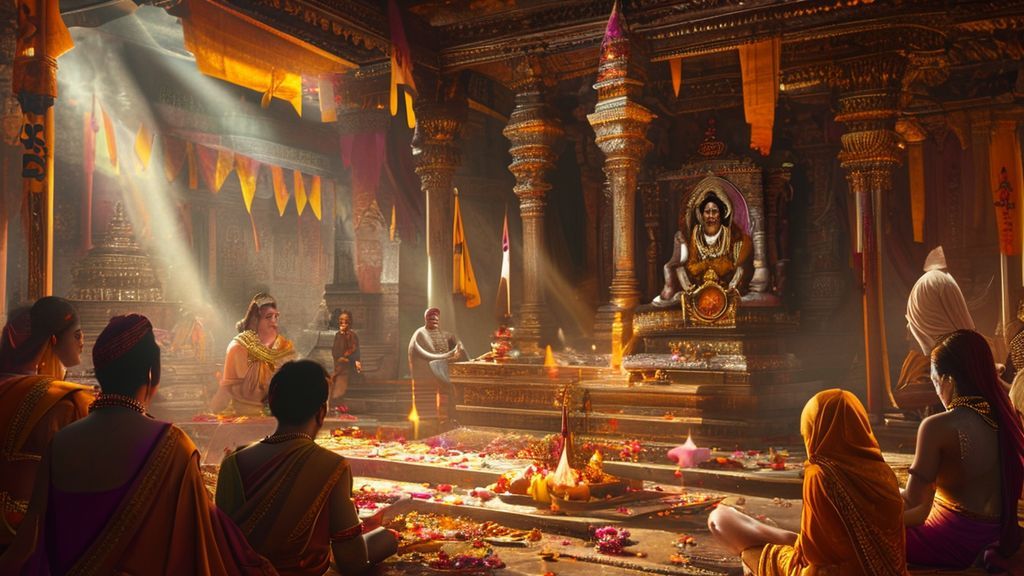
Abhishekam at Home for Shiva Linga is a sacred ritual involving the ceremonial bathing of a Shiva Linga with various purifying substances like water, milk, honey, and ghee, accompanied by specific mantras. This devotional practice invokes Lord Shiva’s blessings, cleanses the devotee’s karma, and establishes a profound spiritual connection with the ultimate reality of Brahman.
| Attribute | Details |
|---|---|
| Deity | Lord Shiva (Mahadeva, Parameshwara, Rudra) |
| Primary Object of Worship | Shiva Linga (symbol of formless Brahman) |
| Key Festival for Abhishekam | Maha Shivaratri, Sawan Somvar (Mondays in Shravan month), Pradosham |
| Scripture Reference | Shiva Purana, Linga Purana, Yajurveda (Shri Rudram) |
| Spiritual Significance | Purification, karma cleansing, invoking divine grace, liberation (Moksha) |
Introduction: The Sanctifying Power of Abhishekam
The practice of Abhishekam, the ceremonial bathing of a deity, represents a profound and spiritually uplifting act within Sanatan Dharma. For devotees of Lord Shiva, performing Abhishekam upon the sacred Shiva Linga at home is an act of supreme devotion. It is a deep spiritual purification, a heartfelt offering, and a direct communion with the cosmic consciousness that Lord Shiva embodies. This ancient ritual transcends mere custom; it is a meticulously designed spiritual technology, connecting the devotee’s microcosm with the macrocosm of the divine. To bathe the Shiva Linga, representing the formless yet all-pervasive aspect of the Divine, is to honor the very source of existence.
Puranic History & Legend: The Cosmic Origins of Abhishekam
The profound significance of Abhishekam is richly documented in our Itihasas and Puranas. The Shiva Purana, particularly the Vidyeshwar Samhita, extensively glorifies Shiva Linga worship and the merits of Abhishekam, affirming that offerings made to the Linga are direct offerings to Lord Shiva, granting liberation and fulfilling desires.
A pivotal legend from the Linga Purana recounts the cosmic manifestation of the Jyotirlinga. In a dispute between Brahma and Vishnu, an infinite, effulgent pillar of light, the Jyotirlinga, appeared. This was Lord Shiva in His unmanifest form, establishing His supremacy. Abhishekam to the Linga thus commemorates and venerates this primal cosmic revelation.
Further, the episode of Samudra Manthan (the churning of the cosmic ocean), detailed in the Bhagavata Purana, illustrates Abhishekam’s power. When the deadly Halahala poison emerged, threatening all creation, Lord Shiva consumed it. To soothe its burning effects, the Devas performed Abhishekam with holy Ganga water and cooling substances. This act of bathing Shiva to mitigate suffering became a foundational inspiration for devotees seeking relief from troubles and karmic burdens through this sacred ritual.
The Mystical Design of the Shiva Linga: Its Spiritual Architecture
The Shiva Linga is not merely an idol but a powerful yantra, a geometric form designed to channel and radiate divine energy. Its three parts—the square base (Brahma-Pitha), the octagonal middle (Vishnu-Pitha), and the cylindrical top (Shiva-Pitha)—symbolize the Trimurti and the integration of creation, preservation, and dissolution into the singular cosmic principle of Shiva. The cylindrical Linga-bhaga represents the formless Purusha (consciousness), while the Yoni base embodies Prakriti (primordial matter/energy). Their union signifies the creative principle, where consciousness and energy unite to manifest the universe.
The substances used in Abhishekam hold profound scientific and energetic significance. Each interacts with the subtle energies of the Shiva Linga and the environment, fostering purification and revitalization:
- Water (Jala): Universal cleanser, life force, symbolizing purity.
- Milk (Dugdha): Represents purity, nourishment, and longevity.
- Ghee (Ghrita): Symbolizes health, prosperity, and spiritual light (Jnana).
- Honey (Madhu): Represents sweetness, unity, and healing.
- Yogurt (Dadhi): Signifies prosperity and mental peace.
- Sandalwood Paste (Chandan): Offers coolness, calm, and fragrance.
- Bael Leaves (Bilva Patra): Extremely dear to Lord Shiva, representing His three eyes and potent for spiritual merit.
The continuous flow of these substances during Abhishekam, combined with sacred mantras, purifies the Linga and the surrounding atmosphere, creating a potent vibrational field that calms the mind, elevates consciousness, and attracts divine grace. This systematic application reflects the ancient rishis’ deep understanding of subtle energies.
Rituals & Puja Vidhi: A Step-by-Step Guide to Home Abhishekam
Performing Abhishekam at home requires a pure heart and adherence to a simple, yet profound, sequence. Ensure your Shiva Linga is clean and placed on a stable pedestal (Yoni base) in your puja altar.
- Purification & Intention (Achamanam & Sankalpa):
- Bathe and wear clean clothes. Sip water thrice chanting “Om Keshavaya Namah,” etc.
- Sprinkle purified water on yourself and puja items, chanting “Om Apavitrah Pavitro Va…”
- Formulate your Sankalpa (sacred intention) for the ritual.
- Preparations:
- Gather fresh water (Ganga Jal if possible), raw milk, yogurt, ghee, honey, sugar, sandalwood paste, Vibhuti, flowers (white flowers, Dhatura, Arka), Bilva leaves, lamp, incense, camphor.
- Arrange them neatly near the Shiva Linga, placed in a vessel to collect offerings.
- Initial Washing:
- Begin by bathing the Linga with pure water, gently cleaning it while continuously chanting “Om Namah Shivaya.”
- The Panchamrita Abhishekam (Five Nectar Bath):
Offer each substance sequentially, followed by a water rinse:
- Milk: Pour slowly. Rinse with water.
- Yogurt: Offer yogurt. Rinse with water.
- Ghee: Pour ghee. Rinse with water.
- Honey: Offer honey. Rinse with water.
- Sugar: Sprinkle sugar (or offer sugar water). Rinse with water.
- Subsequent Offerings:
- Gently apply sandalwood paste and adorn with Vibhuti.
- Perform a final extensive water Abhishekam.
- Offer fresh flowers and, crucially, Bilva leaves reverently on the Linga.
- Aarti & Pradakshina:
- Light the lamp and incense. Perform Aarti, circling the lamp clockwise. Offer camphor.
- Perform Pradakshina (circumambulation) three times around your altar, if feasible.
- Prayer & Prasadam:
- Offer heartfelt prayers. Distribute the collected Abhishekam water (Tirtha) and other edible offerings (Prasadam) to family.
Mantras & Chants: Invoking Lord Shiva’s Grace
The power of Abhishekam is profoundly magnified by the resonance of sacred mantras. Chanting with devotion purifies the mind and vibrates the entire being with divine energy.
- Moola Mantra: ॐ नमः शिवाय (Om Namah Shivaya) – The five-syllable mantra, the ultimate salutation to Lord Shiva.
- Maha Mrityunjaya Mantra: ॐ त्र्यम्बकं यजामहे सुगन्धिं पुष्टिवर्धनम्। उर्वारुकमिव बन्धनान् मृत्योर्मुक्षीय मामृतात्॥ (Om Tryambakam Yajamahe Sugandhim Pushtivardhanam. Urvarukamiva Bandhanan Mrityormukshiya Maamritat.) – A powerful mantra for health, longevity, and liberation.
- Shiva Gayatri Mantra: ॐ तत्पुरुषाय विद्महे महादेवाय धीमहि तन्नो रुद्रः प्रचोदयात्॥ (Om Tatpurushaya Vidmahe Mahadevaya Dhimahi Tanno Rudrah Prachodayat.) – A prayer for wisdom and divine guidance.
Dos and Don’ts for Abhishekam at Home
Dos:
- Maintain Purity: Bathe and wear clean clothes. Keep your mind focused and pure.
- Use Fresh Offerings: Always use fresh, unadulterated substances.
- Collect Tirtha: Place a vessel beneath the Linga to collect the holy Abhishekam water for consumption/purification.
- Offer Bilva Patra: Bilva leaves are Lord Shiva’s favorite; offer them with devotion, smooth side facing up.
- Be Mindful: Perform with complete focus, love, and devotion, understanding each step’s spiritual significance.
Don’ts:
- Do Not Offer Tulasi: Tulasi (Holy Basil) is traditionally not offered to Lord Shiva.
- Avoid Coconut Water: Coconut water is generally not used for Shiva Abhishekam.
- Do Not Offer Ketaki Flowers: As per Puranic lore, Ketaki flowers are forbidden in Shiva worship.
- Do Not Disturb: Avoid distractions, unnecessary talking, or phone use during the ritual.
- Avoid Iron Utensils: Use copper, brass, silver, or earthen vessels for puja.
Can women perform Abhishekam during menstruation?
Traditionally, women observe a period of rest and non-participation in direct temple rituals during menstruation, focusing on mental prayers (manasik puja). Views vary, but many devout Hindu women choose to refrain from direct physical contact with deities during this time.
Is it necessary to have a priest for home Abhishekam?
No, it is not necessary. While a priest can guide elaborate Vedic rituals, a simple, heartfelt Abhishekam performed by a devotee at home with purity of intention and devotion is equally potent and acceptable to Lord Shiva. The provided mantras suffice for effective personal worship.
What if I don’t have all the Abhishekam ingredients?
Lord Shiva, known as Bholenath, is easily pleased by pure devotion. If you cannot arrange all ingredients, offer what you have with sincerity. A simple Abhishekam with pure water and Bilva leaves, accompanied by “Om Namah Shivaya,” is considered immensely meritorious. Intention and devotion are paramount.
Dharmic Significance: Why This Matters for Every Hindu
Performing Abhishekam at Home is more than a ritual; it is a profound act of spiritual discipline that reinforces the very foundations of Sanatan Dharma in our daily lives. In a world increasingly driven by materialism, such practices serve as anchors, reminding us of our spiritual heritage and the ultimate purpose of human existence. It fosters a personal, intimate connection with the divine, cultivating inner peace, clarity, and devotion. This spiritual practice cleanses our karma, purifies our subtle body, and aligns our consciousness with the cosmic rhythm embodied by Lord Shiva. By regularly engaging in Abhishekam, devotees contribute to the preservation of ancient traditions, transmitting the wisdom of our Rishis to future generations. This timeless path to self-realization ensures the eternal flame of Dharma burns brightly through our personal dedication, as championed by resources like Hindutva.online.