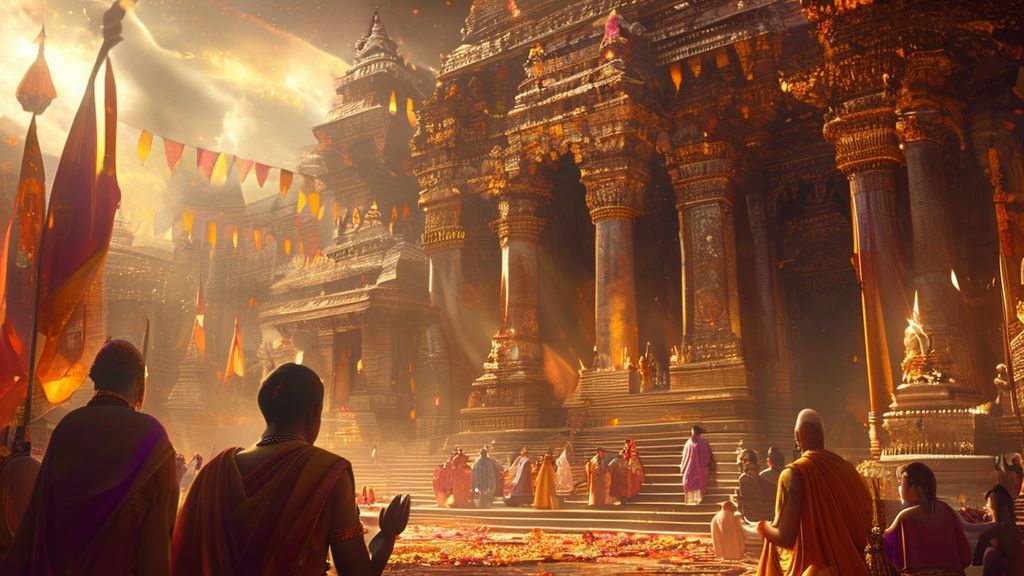
Bajrang Baan is a potent devotional hymn dedicated to Bhagwan Hanuman, revered as an embodiment of strength, devotion, and unwavering courage. This sacred prayer is primarily invoked for divine protection against malevolent forces, fear, and negativity, empowering devotees to surmount life’s myriad challenges with steadfast faith and spiritual resolve.
| Attribute | Details |
|---|---|
| Deity | Bhagwan Hanuman (Maruti Nandan, Pavanputra, Sankat Mochan) |
| Origin/Attribution | Awadhi region of Uttar Pradesh, widely attributed to Goswami Tulsidas |
| Key Festivals/Days | Hanuman Jayanti, Tuesdays, Saturdays, during periods of acute distress |
| Primary Purpose | Protection, courage, removal of obstacles, conquest over enemies (internal and external) |
| Scripture Reference Spirit | Rooted in the Bhakti tradition, aligning with the devotional ethos of Ramcharitmanas |
The Unrivaled Power of Bajrang Baan
In the vast ocean of Sanatan Dharma, certain hymns and prayers stand as towering beacons of spiritual power, offering solace and strength to the earnest devotee. Among these, the Bajrang Baan holds a unique and revered position. It is not merely a collection of verses; it is a sacred invocation, a fervent appeal to Bhagwan Hanuman, the eternal servant of Bhagwan Rama, for His immediate and overwhelming intervention. For sincere seekers and devotees, the recitation of Bajrang Baan is a direct communion with the boundless energy of Maruti Nandan, a pathway to dispelling fear, overcoming adversity, and fortifying one’s spiritual resolve. Its cultural significance resonates deeply within Hindu society, where it is often the first resort for those grappling with inexplicable troubles, health crises, or overwhelming negativity. It embodies the unwavering faith in Hanumanji’s ability to protect, guide, and liberate His devotees from all forms of suffering.
The Genesis and Puranic Context of Bajrang Baan
While the Puranas extensively chronicle the magnificent exploits of Bhagwan Hanuman, from His birth as the son of Vayu and Anjana to His pivotal role in the Ramayana, the Bajrang Baan itself is a later, yet profoundly significant, composition. It is widely attributed to the revered poet-saint Goswami Tulsidas, the immortal author of the Ramcharitmanas. Tulsidas, renowned for his unparalleled devotion to Bhagwan Rama and Hanuman, is believed to have composed this powerful hymn during a period of personal tribulation or while witnessing the suffering of his contemporaries. It is said that when he was afflicted by an incurable disease or faced immense opposition, he invoked Hanumanji through this very Baan, experiencing immediate relief and protection. This narrative, while not found in ancient Puranas, has been passed down through generations of the Bhakti tradition, cementing the Baan’s reputation as a direct appeal for Hanuman’s immediate grace. The spirit of Bajrang Baan is deeply intertwined with the narratives found in the Skanda Purana and other Itihasas, which glorify Hanuman as the ultimate protector of Dharma and the embodiment of Nishkama Seva (selfless service).
The Esoteric Structure and Vibrational Science of Bajrang Baan
Unlike grand temple architecture, the marvel of Bajrang Baan lies in its intricate literary and spiritual engineering. The hymn is structured as a series of impassioned appeals, invoking various aspects of Bhagwan Hanuman’s divine form, powers, and past deeds. Each couplet (doha) and quatrain (chaupai) is a precisely crafted energy capsule, designed to resonate with specific divine vibrations. It begins with an invocation of Hanuman’s strength and then progressively calls upon His different manifestations and attributes – as the annihilator of demons, the carrier of the Sanjeevani herb, the destroyer of Lanka, and the saviour of Sita. The repetitive chanting of phrases like “Jai Jai Hanuman Gosai Kripa Karahu Gurudev Ki Nyai” (Victory, Victory to Lord Hanuman, shower Your grace like a divine guru) builds a cumulative spiritual force. This is the essence of Mantra Shastra – the science of sound. Each syllable, when chanted with focus and devotion, is believed to create a specific vibrational pattern in the devotee’s mind and aura, attracting divine energy and dispelling negative influences. The Baan’s power stems from this consistent, heartfelt invocation, transforming the devotee’s inner landscape and manifesting external protection and strength.
Performing Bajrang Baan Puja Vidhi
Reciting the Bajrang Baan is a sacred ritual that demands purity, sincerity, and unwavering faith. Here is a step-by-step guide for performing its worship:
- Purification (Shuddhi): Begin with a complete bath (snana) and wear clean clothes. Ensure the puja area is also thoroughly cleaned.
- Asana & Direction: Sit on a clean mat (asana) facing the east or north direction. Place an image or idol of Bhagwan Hanuman before you.
- Sankalpa (Intention): With folded hands, declare your intention (sankalpa) for reciting the Bajrang Baan, stating your purpose clearly and humbly to Hanumanji. For example, “I, (Your Name), for the removal of (specific problem) and for divine protection, am performing this recitation of Bajrang Baan.”
- Lamp & Incense: Light a ghee lamp (diya) and incense sticks (dhoop), symbolizing the illumination of knowledge and the fragrance of devotion.
- Offerings: Offer fresh flowers (especially red or orange), sindoor (vermilion), sweets like boondi laddoo or jaggery (gud), and fruits to Bhagwan Hanuman. Offer a small glass of water.
- Dhyana (Meditation): Before chanting, meditate on the form of Bhagwan Hanuman – His powerful physique, holding the mace (gada), and His eternal devotion to Rama.
- Recitation: Begin reciting the Bajrang Baan. It is customary to recite it 3, 7, 11, 21, 51, or 101 times, depending on the intensity of the issue and your commitment. Recite slowly, clearly, and with full concentration on the meaning and sound.
- Concluding Prayer: After completing the recitation, offer a final prayer, express gratitude, and ask for forgiveness for any unintentional errors. Distribute the prasad to family members.
- Brahmacharya & Satvik Aahar: During the period of regular recitation, observe Brahmacharya (celibacy) and consume only Sattvic (pure, vegetarian) food.
Potent Mantras and Chants
The Bajrang Baan itself is a powerful chant. It typically begins with a Doha invoking Hanuman and then proceeds with the Chaupais. The most vital part is the unwavering appeal to Hanuman to protect and destroy all enemies and obstacles.
Doha (Opening Verse):
निश्चय प्रेम प्रतीति ते, विनय करैं सनमान |
तेहि के कारज सकल शुभ, सिद्ध करैं हनुमान ||
Nischaya Prema Prateeti Te, Vinay Karai Sanman |
Tehi Ke Kaaraj Sakala Shubha, Siddha Karai Hanuman ||
(With sure love and faith, one who respectfully entreats;
All their auspicious works, Hanuman makes successful.)
Excerpts from the Bajrang Baan (Chaupais):
जय जय हनुमान गोसाईं । कृपा करहु गुरुदेव की नाईं ॥
Jai Jai Hanuman Gosai | Kripa Karahu Gurudev Ki Naai ||
(Victory, victory to Lord Hanuman, shower your grace like a divine guru.)
जय कपि सूर लोक उजियारा । तुमहीं जानहु लंका द्वारा ॥
Jai Kapi Soora Loka Ujiyara | Tumhi Janahu Lanka Dwara ||
(Victory to the monkey warrior, light of the world; You know the gate to Lanka.)
महाँ वीर हनुमान जब तेरो नाम ले |
संकट कटै मिटै सब पीरा जो सुमिरै हनुमत बलबीरा ||
Mahaan Veer Hanuman Jab Tero Naam Le |
Sankat Katai Mitai Sab Peera Jo Sumirai Hanumat Balbira ||
(When the name of the great warrior Hanuman is taken;
All troubles cease, all pains vanish for those who remember the mighty Hanuman.)
With each verse, the devotee builds a connection, affirming faith and inviting Hanuman’s immediate presence and protective power.
Dos and Don’ts for Bajrang Baan Recitation
- DO: Maintain utmost physical and mental purity.
- DO: Recite with full faith, devotion, and a clear heart.
- DO: Maintain consistency, especially if undertaken for a specific number of days.
- DO: Observe a Sattvic diet and lifestyle during the recitation period.
- DO: Dedicate the recitation to Bhagwan Hanuman, seeking His blessings for all beings.
- DON’T: Recite with impure thoughts, anger, or hatred towards anyone.
- DON’T: Consume non-vegetarian food, alcohol, or tobacco.
- DON’T: Recite for selfish, harmful, or vengeful purposes.
- DON’T: Doubt the power of the Baan or Hanumanji’s grace.
- DON’T: Interrupt the recitation once started.
Frequently Asked Questions About Bajrang Baan
Who should recite Bajrang Baan?
Bajrang Baan is ideal for anyone seeking protection from negative energies, illness, fear, enemies, or obstacles in life. Devotees facing financial distress, legal troubles, or psychological burdens can also find solace and strength in its recitation, provided it is done with unwavering faith and pure intentions.
When is the best time to recite Bajrang Baan?
While it can be recited at any time of distress, Tuesdays and Saturdays are particularly auspicious days dedicated to Bhagwan Hanuman. Many devotees prefer to recite it in the early morning (Brahma Muhurta) or evening after sunset, following a bath and ritual purity. Continuous recitation for 21 or 41 days is often recommended for profound results.
What are the specific benefits of reciting Bajrang Baan?
Reciting Bajrang Baan is believed to bestow numerous benefits: it grants courage and dispels fear, provides protection from black magic and evil spirits, heals physical ailments, removes obstacles, fosters mental peace, strengthens willpower, and attracts divine grace. It is particularly effective in resolving long-standing and complex problems.
Is there a specific number of times to recite it?
While there is no rigid rule, reciting Bajrang Baan 3, 7, 11, 21, 51, or 101 times is common practice. For very severe problems, some devotees undertake a vow to recite it 108 times daily for a prescribed period. The sincerity of devotion and the quality of chanting are considered more important than the mere quantity.
Bajrang Baan: A Shield of Dharma in Kaliyuga
In the challenging epoch of Kaliyuga, where chaos and negativity often seem rampant, the Bajrang Baan stands as a powerful shield of Dharma. It serves not just as a prayer for personal well-being, but as a profound spiritual practice that reinforces the tenets of Sanatan Dharma – faith in the divine, the pursuit of righteousness, and the cultivation of inner strength. By invoking Bhagwan Hanuman, the embodiment of devotion, service, and power, devotees are reminded of their own inner potential to overcome adversity and uphold moral values. This sacred hymn is a testament to the timeless wisdom of our Rishis and saints, providing a direct and accessible means for every Hindu to connect with the divine, draw upon cosmic strength, and navigate the trials of existence with unwavering confidence and spiritual grace. It is a legacy of courage, passed down through generations, ensuring that the flame of Dharma continues to burn brightly.