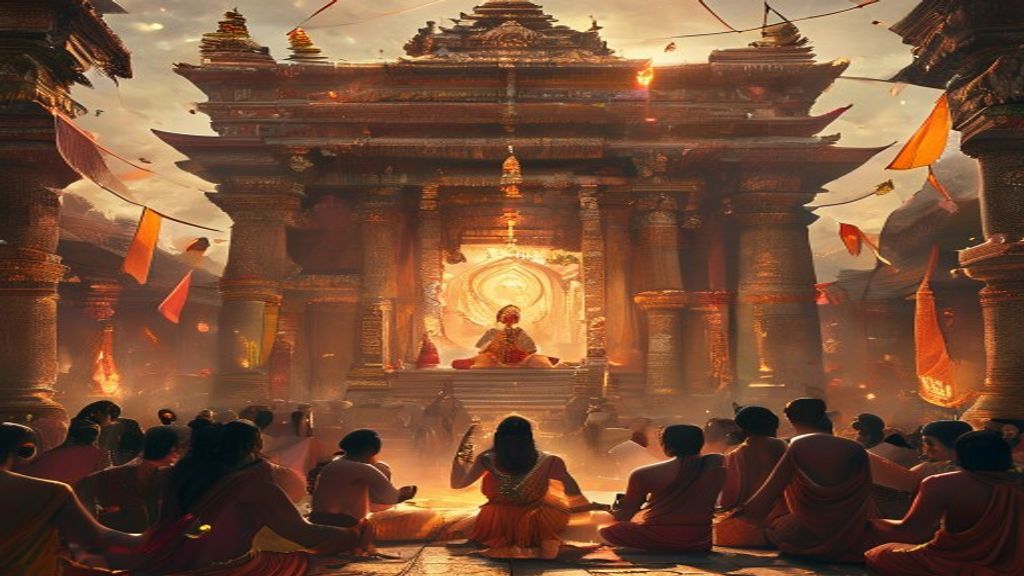
Durga Path, often synonymous with the sacred recitation of the Devi Mahatmyam or Durga Saptashati, is a profound nine-day spiritual regimen meticulously designed to invoke the protective energies of Adi Shakti, Goddess Durga. This potent practice systematically eradicates negativities, fosters spiritual strength, and bestows boundless well-being, courage, and divine grace upon the sincere devotee, ensuring comprehensive protection.
| Attribute | Details |
|---|---|
| Deity | Maa Durga, Mahishasuramardini, Mahakali, Mahalakshmi, Mahasaraswati |
| Origin of Path | Ancient India, rooted in Vedic tradition, codified in the Markandeya Purana |
| Key Festival for Path | Navaratri (Sharad Navaratri, Chaitra Navaratri) |
| Primary Scripture Reference | Markandeya Purana (specifically Chapters 81-93, forming the Devi Mahatmyam), Kalika Purana, Devi Bhagavata Purana |
The Invocation of Cosmic Protection: Understanding Durga Path
In the vast ocean of Sanatan Dharma, the practice of
Durga Path stands as a towering beacon for spiritual aspirants seeking profound protection and liberation from adversity. It is not merely a ritualistic reading but a transformative journey into the heart of the Divine Feminine, Adi Shakti, whose power pervades and sustains the entire cosmos. The nine-day reading, primarily of the Devi Mahatmyam (also known as Durga Saptashati or Chandi Path), is a potent spiritual discipline that cleanses the mind, invigorates the spirit, and creates an impenetrable shield of divine energy around the devotee. This sacred text, consisting of 700 verses divided into 13 chapters, narrates the glorious exploits of Goddess Durga in her various manifestations, particularly her triumph over demonic forces representing human ignorance, ego, and attachment. Engaging in Durga Path is to actively participate in this cosmic drama, aligning one’s own consciousness with the conquering power of the Mother Goddess, thereby attracting her blessings for peace, prosperity, and unparalleled protection in all facets of life.
The Puranic Genesis: Tales of Devi’s Valor
The genesis of
Durga Path is deeply embedded in the rich tapestry of Hindu Puranas, primarily the
Markandeya Purana. The Devi Mahatmyam, which forms the core of this path, is a direct narration within this Purana, specifically chapters 81 to 93. It recounts three major battles of the Divine Mother against formidable demonic entities, each symbolizing different aspects of ignorance and negative tendencies that afflict humanity.
Mahakali and Madhu-Kaitabha
The first chapter describes the emergence of
Mahakali from the yoganidra (divine sleep) of Lord Vishnu to vanquish the primordial demons
Madhu and Kaitabha. These demons symbolize our deepest attachments and material desires that arise from Maya. The story illustrates that even the creator Brahma sought Devi’s intervention, highlighting her supreme power over creation, preservation, and dissolution. This narrative emphasizes the importance of awakening the inner dormant spiritual energy to overcome foundational obstacles.
Mahalakshmi and Mahishasura
The second through fourth chapters detail the most iconic legend: the slaying of
Mahishasura by
Mahishasuramardini Durga. When the buffalo demon Mahishasura, empowered by boons, conquered the heavens, the Devas, bereft of power, combined their divine energies into a brilliant effulgence, from which emerged the magnificent Goddess Durga. Each weapon she wielded was a gift from a specific deity, signifying the collective power of the universe manifested through her. Mahishasura embodies extreme ego, arrogance, and the beastly instincts that dominate the unrefined mind. Her victory signifies the triumph of divine truth and righteous action over immense ego and adharmic forces. As detailed in the
Devi Bhagavata Purana, this episode underscores the Devi’s role as the protector of the cosmos and the restorer of Dharma.
Mahasaraswati and Shumbha-Nishumbha
The longest section, chapters five through thirteen, narrates the battle of
Mahasaraswati (often invoked as Ambika or Chandika in this context) against the mighty demons
Shumbha and Nishumbha, and their formidable generals like Chanda, Munda, Raktabija, and Dhumralochana. These demons represent the sophisticated forms of ignorance, duality, and the desire for power and control. Raktabija, whose drops of blood create new demons, symbolizes the endless proliferation of desires and negative thoughts. The Devi’s manifestation as Kali (born from Durga’s third eye) to devour Raktabija’s blood signifies the complete annihilation of the root causes of suffering. This section culminates in the ultimate victory over Shumbha and Nishumbha, representing the transcendence of all dualities and the attainment of supreme knowledge and liberation. The narrative in the
Kalika Purana further elaborates on the worship methods associated with these forms of Devi.
The Divine Architecture of the Path: Structuring the Sacred Reading
While Durga Path does not pertain to physical temple architecture in the traditional sense, the
Devi Mahatmyam itself possesses a profound internal “architecture” – a divine structure meticulously designed to guide the devotee through a spiritual transformation. This architecture is revealed through its three major sections or
Charitras, each corresponding to a specific manifestation of the Divine Mother and targeting distinct aspects of human existence.
Prathamam Charitram (The First Episode)
Comprising a single chapter (Chapter 1), this section focuses on
Mahakali. The reading of this chapter is believed to purify the individual at the deepest level, dissolving the gross impurities, attachments, and inertia (tamas guna) that bind the soul. It invokes the power to conquer the primordial darkness and ignorance.
Madhyama Charitram (The Middle Episode)
Spanning chapters 2 to 4, this section is dedicated to
Mahalakshmi. Reciting these chapters is said to bestow prosperity, eradicate obstacles, and grant victory over internal and external adversaries. It cultivates righteous action and promotes balance, wealth (both material and spiritual), and courage, aligning with the rajas guna, guiding disciplined action.
Uttama Charitram (The Final Episode)
The longest section, encompassing chapters 5 to 13, focuses on
Mahasaraswati. This part is considered the pinnacle, granting supreme knowledge, spiritual liberation, and the eradication of the most subtle forms of ego and illusion. It elevates consciousness, bestows clarity, wisdom, and profound peace, aligning with the sattva guna, leading to enlightenment. The progression through these Charitras during the nine-day reading is thus a scientific and systematic approach to purifying the self, empowering one’s actions, and ultimately achieving spiritual wisdom.
Rituals & Puja Vidhi for Durga Path
Performing
Durga Path requires devotion, sincerity, and adherence to specific steps to maximize its spiritual benefits. While variations exist, the general outline for a nine-day reading is as follows:
- Sankalpa (Intention): On the first day, typically after a purifying bath, the devotee takes a solemn vow or
Sankalpa, stating the purpose of the Path (e.g., protection, spiritual growth, fulfillment of a wish) and the duration. This sets the spiritual commitment.
- Installation of Deity: Place a clean idol or image of Maa Durga, a
Devi Yantra (like the Shri Yantra), or a Kalasha (pot filled with water, mango leaves, and a coconut) representing the Goddess on a clean altar.
- Invocation and Offerings: Begin daily with an invocation of Ganesha (Om Gam Ganapataye Namaha) for obstacle removal, followed by the Dhyanam (meditation) of Durga. Offer fresh flowers, incense, lamp (deepak), fruits, and sweets (naivedyam).
- Daily Recitation:
- Day 1: Chapter 1 (Prathamam Charitram)
- Day 2: Chapters 2, 3, 4 (Madhyama Charitram)
- Day 3: Chapters 5, 6
- Day 4: Chapter 7
- Day 5: Chapter 8
- Day 6: Chapter 9
- Day 7: Chapter 10
- Day 8: Chapters 11, 12
- Day 9: Chapter 13 (Uttama Charitram), along with the Phalastuti (fruit of recitation) and Devi Suktam. Many traditions also include reading the Argala Stotram, Kilak Stotram, and Devi Kavacham before starting the Devi Mahatmyam each day.
- Kumari Puja (Optional but Meritorious): On Ashtami (8th day) or Navami (9th day), worship young unmarried girls (Kumari) as manifestations of the Divine Mother, offering them food, clothes, and dakshina.
- Homa/Yajna (Fire Sacrifice): On the final day (Navami or Dashami), perform a
Homa with specific mantras and offerings into the sacred fire, symbolizing the surrender of ego and impurities.
- Purnahuti & Aarti: Conclude the Homa with
Purnahuti (final offering) and perform the Aarti of Goddess Durga, circling a lamp before her image while chanting devotional songs.
- Brahmin Bhojan & Prasad Vitaran: Offer food to Brahmins and distribute
Prasad (consecrated food) to all devotees, signifying the completion and sharing of blessings.
Potent Mantras & Chants for Devotees
The
Durga Path is replete with powerful mantras and verses. Chanting these with focus amplifies the protective and transformative energies of the Devi. Some essential ones include:
- Navarna Mantra:
Om Aim Hrim Klim Chamundaye Vichche
This nine-letter mantra is the core of Devi worship, invoking Mahakali, Mahalakshmi, and Mahasaraswati.
- Durga Dhyana Mantra:
Sarva Mangala Mangalye, Shive Sarvartha Sadhike.
Sharanye Tryambake Gauri, Narayani Namostute.(O auspicious one of all auspiciousness, the beneficent one, the fulfiller of all objectives, the refuge, with three eyes, Gauri, Salutations to You, Narayani.)
- Devi Suktam (from Rig Veda, Mandala 10, Sukta 125):
Aham Rudrebhirvasubhishcharamyaham Adityairuta Vishvadevaih.
Aham Mitravarunobha Bibharmyahamindra Gni Ahamashvinobha.(I move with the Rudras and the Vasus, with the Adityas and all the Devas. I uphold both Mitra and Varuna, I uphold Indra and Agni, and the two Ashvins.) This identifies the Devi as the supreme cosmic power.
- Selected Verses from Devi Mahatmyam:
- For protection: Sharanagata Dinarta Paritrana Parayane | Sarvasyarti Hare Devi Narayani Namostute || (Salutations to You, Narayani, You who are intent on saving the distressed and afflicted who have taken refuge in You, You who remove the suffering of all.)
- For well-being: Sarva Badha Prashamanam Trai Lokyasyakhileshwari | Evameva Tvaya Karyamasmadvairi Vinashanam || (O sovereign of the three worlds, may all obstacles be removed, and thus, destroy our enemies.)
Dos and Don’ts During Durga Path
Observing certain disciplines enhances the efficacy of
Durga Path:
Dos:
- Maintain utmost physical and mental purity throughout the nine days.
- Observe
Brahmacharya (celibacy) and abstain from sensual pleasures.
- Practice
Ahimsa (non-violence) in thought, word, and deed.
- Consume only sattvic food (vegetarian, fresh, non-spicy); ideally, observe partial or full fasting.
- Wake up early, bathe, and perform daily puja with sincerity.
- Wear clean, traditional clothing.
- Maintain truthfulness and humility.
- Chant mantras and meditate regularly, even outside of the main reading.
Don’ts:
- Consume tamasic foods like onion, garlic, meat, alcohol, or stale food.
- Engage in anger, gossip, slander, or harsh speech.
- Indulge in laziness, procrastination, or excessive sleep.
- Shave or cut hair/nails.
- Leave the Devi Mahatmyam book on the floor or in an impure place.
- Break the vows or Sankalpa once taken.
- Perform the Path without belief or sincerity.
Frequently Asked Questions About Durga Path
Who can perform Durga Path?
Anyone, irrespective of gender, caste, or age, who has sincere devotion and can commit to the disciplines, can perform Durga Path. It is open to all who seek the blessings and protection of Maa Durga. Guidance from an experienced priest or elder is beneficial, especially for beginners.
What is the significance of the 13 chapters?
The 13 chapters of the Devi Mahatmyam are not arbitrary; they are meticulously structured to correspond to the three Charitras (Mahakali, Mahalakshmi, Mahasaraswati) and systematically guide the devotee through a process of purification, empowerment, and enlightenment. Each chapter focuses on overcoming specific types of demonic forces, symbolizing the eradication of different negative human tendencies, leading to complete spiritual liberation over the course of the reading.
Can one read the Durga Path in English or other vernacular languages?
While the original Sanskrit recitation with proper intonation is highly meritorious for its vibrational energy, reading the Devi Mahatmyam in English or other vernacular languages is also highly beneficial. The primary essence is the understanding of the Devi’s glories and the sincere devotion. Translations make the profound wisdom accessible to a wider audience, allowing them to grasp the narrative and imbibe the spiritual lessons effectively.
Is fasting mandatory during Durga Path?
Fasting is not strictly mandatory for all, but it is highly recommended and considered a powerful austerity (tapasya) that enhances the spiritual efficacy of the Path. It helps purify the body and mind, redirecting energy from physical indulgence to spiritual focus. Devotees can choose to observe various forms of fasting – full fast, fruit-only fast, or consuming only sattvic food once a day – according to their health and capacity.
Upholding Sanatan Dharma Through Durga Path
The practice of
Durga Path is far more than a personal spiritual endeavor; it is a vital pillar in the preservation and perpetuation of
Sanatan Dharma. By engaging in this profound nine-day reading, devotees not only seek individual protection and blessings but actively participate in the cosmic dance of Dharma’s triumph over Adharma. Each recitation strengthens the collective consciousness, reinforces the principles of righteousness, and keeps alive the ancient wisdom of our scriptures. It fosters a deep connection to the Divine Feminine, reminding humanity of the immense power inherent in compassion, courage, and selfless action. The stories of Devi’s valor inspire moral fortitude, while the structured path cultivates discipline and devotion, ensuring that the spiritual heritage of our ancestors continues to illuminate the path for future generations. Through such dedicated practices, the eternal light of Sanatan Dharma shines ever brighter, offering guidance and solace in an ever-changing world. For more such insights into our timeless traditions, visit Hindutva.online.