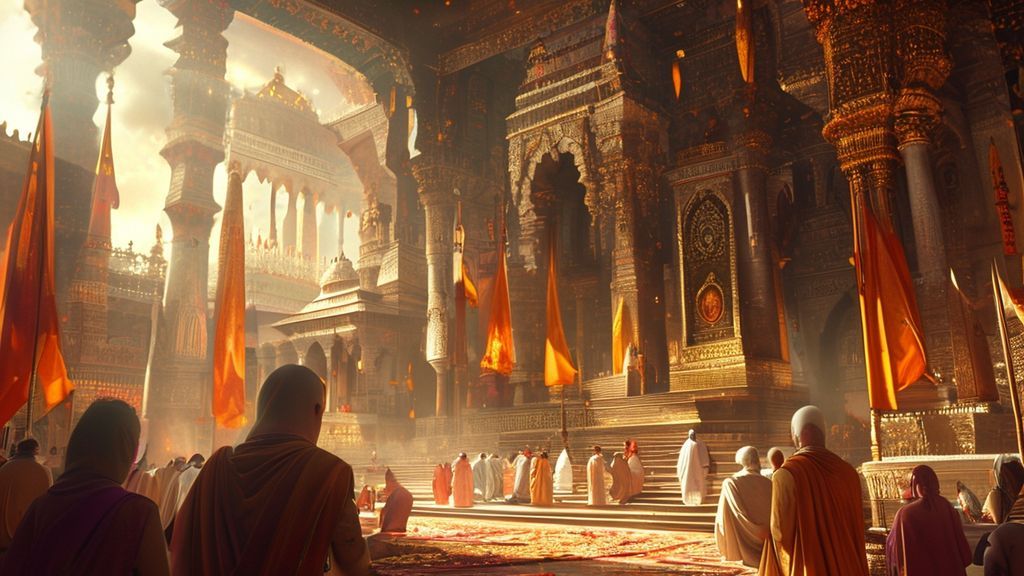
The Gyanvapi Mosque Controversy centers on the profound aspiration of Hindus to reclaim and restore the ancient Kashi Vishwanath Temple, believed to be demolished and built over by invaders. For devout Hindus, this pursuit is a spiritual imperative, seeking the re-establishment of Bhagwan Shiva’s sacred Jyotirlinga, ensuring the rightful, unhindered worship at this paramount pilgrimage site, safeguarding Sanatan Dharma’s heritage.
| Attribute | Details |
|---|---|
| Deity | Bhagwan Shiva (As Vishwanath – Lord of the Universe) |
| Primary Location | Kashi (Varanasi), Uttar Pradesh, Bharat |
| Associated Sacred Site | Gyanvapi (The Well of Knowledge) |
| Key Scripture Reference | Skanda Purana (Kashi Khanda), Linga Purana |
| Hindu Aspiration | Restoration of original Kashi Vishwanath Temple, unhindered worship of the Jyotirlinga |
The Heartbeat of Kashi: A Spiritual Imperative for Hindus
Kashi, known as Varanasi or Benaras, is not merely a city; it is a living embodiment of Sanatan Dharma itself, hailed as a Moksha-dayini Kshetra – a place that grants liberation. For millennia, devout Hindus have considered a visit to Kashi and the darshan of Bhagwan Vishwanath to be the pinnacle of spiritual pilgrimage. The Kashi Vishwanath Jyotirlinga holds a supreme position among the twelve sacred Jyotirlingas, symbolizing the primordial light of Shiva, the ultimate reality. The ongoing discourse surrounding the Gyanvapi structure is thus not a mere land dispute for Hindus, but a profound spiritual yearning, a civilizational quest to restore the sanctity and rightful worship at one of the holiest sites in Bharat. It is a profound call for historical justice and the unhindered practice of Dharma, echoing the deep reverence Hindus hold for their heritage and deities.
Puranic History and the Enduring Legend of Vishwanath
The glory of Kashi and its presiding deity, Bhagwan Vishwanath, is extensively documented in our ancient scriptures. The Skanda Purana, specifically its Kashi Khanda, dedicates numerous chapters to detailing the greatness of Kashi, narrating how it is Shiva’s favorite abode, never forsaken by Him even during the Pralaya (cosmic dissolution). It describes Kashi as resting on Shiva’s Trishul (trident), making it eternally sacred and indestructible. The Kashi Khanda extols the Vishwanath Jyotirlinga as the supreme manifestation, whose darshan grants merit equivalent to all other pilgrimages combined. The Linga Purana further elaborates on the emergence of the Jyotirlingas, affirming Vishwanath’s primal significance.
Historical accounts, corroborated by Hindu tradition, speak of repeated destruction and reconstruction of the Kashi Vishwanath Temple. The original temple, revered for centuries, faced devastating desecrations by invaders. The most notable destruction, as per historical records and popular Hindu belief, occurred under Aurangzeb in 1669 CE, who then ordered the construction of a mosque over a part of the demolished temple. Yet, the spiritual resilience of Hindus ensured continuous worship. Great figures like Adi Shankaracharya revived its spiritual significance, and centuries later, Maharani Ahilyabai Holkar of Indore, in the late 18th century, rebuilt the present Kashi Vishwanath Temple adjacent to the disputed structure, ensuring that the eternal flow of devotion continued. For Hindus, the Gyanvapi structure stands as a painful reminder of historical oppression and a fervent hope for the restoration of their original sacred space.
Architectural Glimpses and Scientific Markers of Sanatan Heritage
While the original grandeur of the ancient Kashi Vishwanath Temple largely exists in scriptural descriptions and devotional memory, the current structure and surrounding areas bear undeniable markers of Hindu architectural and cultural heritage. The temple architecture prevalent in North India, known as the Nagara style, typically features a curvilinear tower (Shikhara) over the garbhagriha (sanctum sanctorum), intricate carvings, and an assembly hall (mandapa). Archaeological observations and recent surveys within the Gyanvapi complex have revealed pillars, sculptures, and architectural elements unmistakably Hindu in origin and style, strongly suggesting the prior existence of a grand temple.
Central to the Hindu aspiration is the reverence for the Gyanvapi Kuan, the “Well of Knowledge.” Scriptures often mention sacred kunds (water bodies) associated with temples, possessing purifying and spiritual properties. Tradition holds that the original Jyotirlinga was carefully moved into this well by priests to protect it during invasions. The perennial presence of the large Nandi idol, traditionally placed facing the main Shiva Linga, directly gazing towards the Gyanvapi structure, is a poignant testimony. This architectural orientation is a fundamental principle of Shiva temples, wherein Nandi offers eternal devotion to his Lord. The presence of numerous Hindu deities’ carvings, temple bells, and other symbols within the structure itself, as revealed by surveys, serves as compelling evidence for the Hindu populace, reinforcing the belief that the structure was built upon the ruins of a Hindu temple. These are not mere stones; they are silent witnesses to a continuous spiritual tradition, resonating with our shared history as documented on Hindutva.online.
Traditional Puja Vidhi and the Longing for Unhindered Worship
The traditional worship of Bhagwan Shiva, particularly a Jyotirlinga, follows a sacred protocol known as Puja Vidhi, aimed at invoking divine blessings and establishing a deep spiritual connection. For the Kashi Vishwanath Jyotirlinga, this would typically involve:
- Sankalpa: The devotee takes a vow or intention for the puja.
- Abhishekam: The most significant ritual, involving bathing the Shiva Linga with sacred substances like water (Jal), milk (Dugdha), ghee (Ghrita), honey (Madhu), yogurt (Dadhi), and Bilva Patra (Aegle marmelos leaves), each offering holding profound spiritual meaning.
- Alankaram: Adorning the Linga with flowers, garlands, sandalwood paste (Chandana), and Vibhuti (sacred ash).
- Archana: Offering prayers, chanting names of Shiva (Ashtottarashatanama or Sahasranama), and lighting incense (Dhupa) and lamps (Deepa).
- Aarti: Waving lamps before the deity, symbolizing the dispelling of ignorance and the light of divine knowledge.
- Pradakshina: Circumambulating the temple, typically three or seven times, in a clockwise direction.
For Hindus, the desire to perform these rituals with complete freedom and reverence at the original, sanctified site of Kashi Vishwanath Jyotirlinga within the Gyanvapi complex is a fundamental aspect of their spiritual aspiration. The current setup, where worship is restricted and the full historical context is obscured, remains a source of profound spiritual longing.
Sacred Mantras and Chants for Bhagwan Vishwanath
Chanting sacred mantras is a powerful means of connecting with Bhagwan Shiva. Devotees seeking the blessings of Vishwanath ji can regularly chant these potent sounds:
- Om Namah Shivaya (ॐ नमः शिवाय): The Panchakshari Mantra, the primordial sound invoking Shiva’s presence.
- Maha Mrityunjaya Mantra (ॐ त्र्यम्बकं यजामहे सुगन्धिं पुष्टिवर्धनम्। उर्वारुकमिव बन्धनान् मृत्योर्मुक्षीय माऽमृतात्॥): A powerful mantra for protection, health, and liberation, offering reverence to the three-eyed Shiva.
- Vishwanathashtakam (विश्वानाथ अष्टकम्): A beautiful hymn praising Bhagwan Vishwanath, often recited by devotees during their pilgrimage to Kashi.
Dos and Don’ts for Devotees in Kashi
When visiting any sacred site in Kashi, especially near the Kashi Vishwanath complex, devotees should observe certain cultural and spiritual etiquette:
- Do maintain utmost reverence and devotion, recognizing Kashi as a holy land.
- Do dress modestly, covering shoulders and knees, as a sign of respect.
- Do remove footwear before entering the temple premises or any sacred area.
- Do offer prayers with a pure heart and mind.
- Do respect local customs and traditions.
- Don’t engage in loud conversations or disruptive behavior.
- Don’t litter or defile the sacred surroundings.
- Don’t consume non-vegetarian food or intoxicants within the holy city boundaries, especially near temples.
- Don’t take photographs where prohibited.
Frequently Asked Questions
What is the spiritual significance of Kashi Vishwanath?
Kashi Vishwanath is one of the twelve Jyotirlingas, symbolizing Bhagwan Shiva’s luminous presence. It is believed that a darshan here grants liberation (moksha) from the cycle of birth and death, making Kashi the holiest city for Hindus and the deity Vishwanath the giver of universal liberation.
What is the Gyanvapi Kuan (Well of Knowledge)?
The Gyanvapi Kuan is an ancient well located within the disputed complex. Hindu tradition holds that its waters are sacred, imbued with divine knowledge. It is also believed that the original Jyotirlinga was hidden within this well by priests during periods of temple destruction to safeguard its sanctity.
Why is the Gyanvapi site important to Hindus?
The Gyanvapi site is revered by Hindus as the original location of the ancient Kashi Vishwanath Temple, a paramount Jyotirlinga. The presence of numerous Hindu idols, symbols, and architectural remains within the current structure, along with the eastward gaze of the Nandi idol, reinforces the Hindu belief that it is their ancestral place of worship, desecrated and built over.
What do Hindus seek regarding the Gyanvapi Mosque Controversy?
Hindus seek the restoration of the original Kashi Vishwanath Temple at the Gyanvapi site, affirming their constitutional right to religious freedom and the unhindered worship of their deities. This aspiration is rooted in historical justice, scriptural injunctions, and a deep spiritual connection to this ancient, sacred land, as elaborated on Hindutva.online.
Why This Matters for Every Hindu
The pursuit of truth and justice regarding the Gyanvapi complex transcends a mere legal battle; it is a profound reaffirmation of Sanatan Dharma’s resilience and enduring spirit. For every Hindu, this struggle represents the reclamation of civilizational memory, the preservation of sacred heritage, and the upholding of religious freedom. Our scriptures, Puranas, and unbroken traditions bear witness to the sanctity of Kashi Vishwanath. To seek the restoration of this revered site is to honor our ancestors, transmit our rich Dharma to future generations, and reinforce the timeless principles of truth and righteousness. It is a spiritual awakening, reminding us that our identity is intrinsically linked to our sacred spaces, and their protection is a collective dharmic responsibility, ensuring the eternal glory of our Bharatavarsha.
