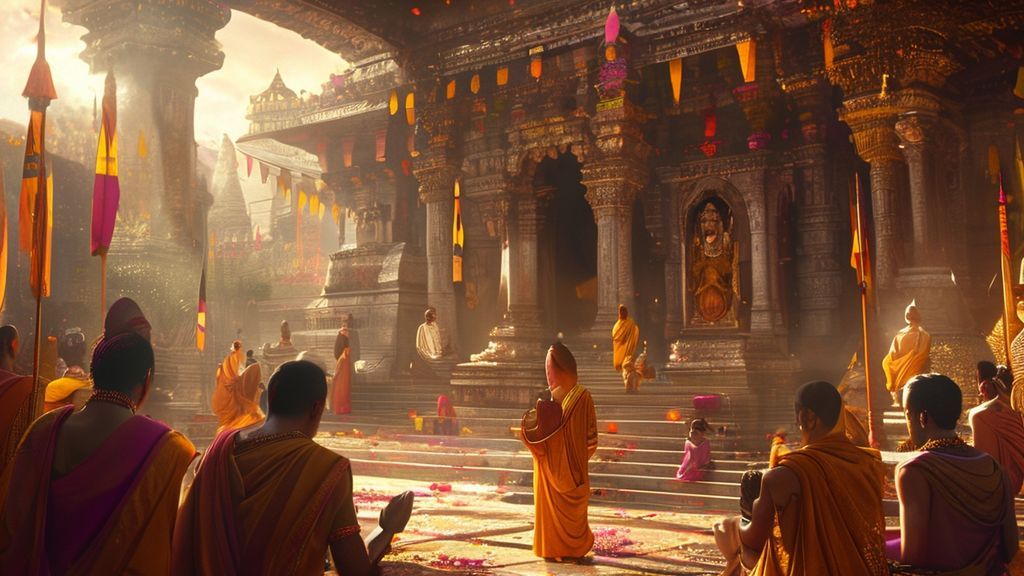
Hindu Parenting: Raising Children with Dharma is the sacred endeavor of instilling Sanatan Dharma’s eternal values, spiritual wisdom, and cultural heritage in the younger generation. It encompasses a holistic approach, guiding children to cultivate righteousness, compassion, respect for elders, and a deep connection to their spiritual roots, ensuring a fulfilling life grounded in divine principles.
| Attribute | Details |
|---|---|
| Core Philosophy | Guiding children towards Dharma (righteousness), Artha (purposeful livelihood), Kama (balanced desires), and Moksha (spiritual liberation). |
| Key Scriptures | Vedas, Upanishads, Bhagavad Gita, Ramayana, Mahabharata, Puranas, Manusmriti. |
| Primary Goal | Cultivating Sanskaras (virtuous impressions), ethical conduct, spiritual awareness, and cultural identity. |
| Guiding Principles | Samyak Darshan (right vision), Satya (truth), Ahimsa (non-violence), Asteya (non-stealing), Brahmacharya (moderation), Aparigraha (non-possessiveness), Seva (selfless service). |
The Sacred Duty of Nurturing Dharmic Generations
In Sanatan Dharma, the family unit, particularly the Grihastha Ashrama, is considered the bedrock of society and a primary avenue for spiritual growth. Raising children is not merely a biological function but a profound spiritual responsibility, an opportunity to transmit the timeless wisdom of our ancestors to the next generation. Hindu parenting, therefore, is an art and a science dedicated to cultivating not just physically healthy children, but spiritually robust individuals steeped in the principles of Dharma, truth, and devotion. It is the sacred task of shaping future custodians of our ancient civilization, ensuring the eternal flame of Sanatan Dharma continues to illuminate the world.
Our scriptures emphasize that children are not our possessions but trustees of the Divine, entrusted to our care for their proper upbringing. This guide explores the foundational tenets, practical applications, and scriptural insights into raising children who embody the virtues of Dharma, preparing them to navigate life with wisdom, resilience, and a deep sense of purpose.
Exemplars of Dharmic Upbringing in Our Itihasas
Our cherished Itihasas and Puranas are replete with narratives that subtly and overtly illustrate the principles of ideal parenting and the profound impact of a Dharmic upbringing. While direct “how-to” manuals in the modern sense are rare, the lives of divine figures and great sages serve as eternal guides.
Consider the upbringing of Sri Rama, as depicted in the Valmiki Ramayana. King Dasharatha and Queen Kausalya, along with Guru Vashistha, ensured Rama’s education encompassed not only martial arts and statecraft but also profound knowledge of the Vedas, Dharma, and moral ethics. Rama’s unwavering adherence to Dharma, even in the face of immense personal sacrifice, is a testament to the strong moral foundation laid in his childhood. His respect for elders, compassion for all beings, and steadfast commitment to truth (Satya) are direct reflections of his Dharmic education.
Similarly, the stories surrounding Lord Krishna’s childhood in the Srimad Bhagavatam highlight different facets of parenting. Yashoda and Nanda Maharaj, though foster parents, provided an environment of unconditional love, discipline, and freedom that allowed Krishna’s divine nature to flourish. Even Devaki and Vasudeva, despite their imprisonment, maintained their spiritual resolve, knowing their child’s divine purpose. These narratives underscore that a child’s environment, the values they witness, and the love they receive are paramount in shaping their character.
The Mahabharata provides numerous examples, both positive and cautionary. Bhishma’s unwavering dedication to his vows, taught by his father Shantanu and Guru Parashurama, exemplifies the power of early moral instruction. Conversely, the downfall of the Kauravas can be traced, in part, to a lack of proper Dharmic guidance from their elders. These epics teach us that parents are the child’s first gurus, and their own conduct serves as the most potent lesson.
The Architecture of Character: Sanskaras and Holistic Development
Sanatan Dharma offers a profound “architecture” for human development through the system of Sanskaras (sacraments or purifying rites). These are not mere rituals but scientifically designed spiritual practices intended to refine the individual, integrate the physical, mental, and spiritual aspects, and etch virtuous impressions (Samskaras) onto the consciousness from conception to cremation. They represent the “scientific marvel” of Hindu parenting.
From the Garbhadhana Samskara (conception rite) to the Upanayana Samskara (sacred thread ceremony marking the initiation into formal Vedic study) and beyond, each rite is imbued with specific mantras and actions aimed at purifying the body, mind, and intellect, fostering a sense of identity and purpose.
Key Sanskaras relevant to childhood development include:
- Jatakarman (Birth Ceremony): Performed immediately after birth, praying for the child’s intelligence, longevity, and purity.
- Namakarana (Naming Ceremony): Bestowing a name, often of a deity, sage, or virtuous quality, to invoke positive vibrations and remind the child of their spiritual heritage.
- Annaprashana (First Feeding): Introducing solid food, accompanied by prayers for healthy growth and proper assimilation of nutrients.
- Chudakarana (Hair-cutting Ceremony): Shaving the head, symbolizing purification and spiritual dedication.
- Vidyarambha (Beginning of Study): Initiating formal education, often invoking Goddess Saraswati for knowledge and wisdom.
These Sanskaras are not just external acts; they are internal catalysts for character building. They systematically prepare a child for life’s challenges, instilling discipline, reverence, and a deep appreciation for the spiritual dimension of existence, forming the strong foundation upon which a Dharmic life is built. This unique methodology, detailed in scriptures like the Grihya Sutras and various Smritis, ensures the holistic development of a child’s personality.
Practical Guide: Nurturing Dharma in Daily Life
Raising children with Dharma requires consistent effort, patience, and a living example from parents. Here is a step-by-step guide:
- Establish a Daily Spiritual Routine (Dincharya): Begin and end the day with short prayers or devotional songs. Teach children to offer gratitude before meals and maintain cleanliness (Shaucha).
- Share Stories from Itihasas and Puranas: Narrate tales of brave heroes, wise sages, and benevolent deities from the Ramayana, Mahabharata, and Puranas. Explain the moral lessons embedded in each story, cultivating virtues like honesty, courage, and compassion.
- Involve Children in Puja and Festivals: Encourage participation in daily family Pujas, however simple. Explain the significance of Hindu festivals like Diwali, Holi, Navratri, and Janmashtami, turning them into joyous learning experiences.
- Teach Respect and Seva (Selfless Service): Emphasize respect for elders (parents, teachers, grandparents), guests, and all living beings. Involve them in small acts of service within the family and community.
- Encourage Ethical Living: Guide children to practice Satya (truthfulness), Ahimsa (non-violence in thought, word, and deed), and Asteya (not coveting others’ possessions). Discuss moral dilemmas appropriate to their age.
- Cultivate a Love for Sanskrit and Mantras: Introduce simple Sanskrit phrases and mantras. Even reciting fundamental prayers like the Gayatri Mantra or “Om Namah Shivaya” can instill spiritual vibrations.
- Lead by Example: Parents are the first and most influential teachers. Your own conduct, integrity, devotion, and adherence to Dharma will be the most powerful lesson for your children.
Mantras for Blessings and Guidance
Incorporating simple mantras into a child’s life can provide solace, strength, and a spiritual anchor. Parents can chant these for their children, and children can be taught simpler ones:
- For General Well-being and Protection:
ॐ सर्वे भवन्तु सुखिनः। सर्वे सन्तु निरामयाः।
सर्वे भद्राणि पश्यन्तु। मा कश्चिद् दुःखभाग् भवेत्॥
Om Sarve Bhavantu Sukhinah | Sarve Santu Niramayah |
Sarve Bhadrani Pashyantu | Maa Kaschid Dukha Bhagh Bhavet ||
(May all be happy, May all be free from illness. May all see what is auspicious, May no one suffer.) - For Wisdom and Knowledge (Saraswati Mantra):
ॐ ऐं सरस्वत्यै नमः।
Om Aim Saraswatyai Namah. - A Simple Mantra for Children:
त्वमेव माता च पिता त्वमेव। त्वमेव बन्धुश्च सखा त्वमेव।
त्वमेव विद्या द्रविणं त्वमेव। त्वमेव सर्वं मम देव देव॥
Tvameva Mata Cha Pita Tvameva | Tvameva Bandhushcha Sakha Tvameva |
Tvameva Vidya Dravinam Tvameva | Tvameva Sarvam Mama Deva Deva ||
(You are my Mother, You are my Father. You are my Relative, You are my Friend. You are my Knowledge, You are my Wealth. You are my Everything, O Lord of Lords.)
Dos and Don’ts of Dharmic Parenting
Here are crucial guidelines for effective Hindu parenting:
- DO lead by example in your own spiritual practice and ethical conduct.
- DO create a positive, loving, and spiritually enriched home environment.
- DO encourage questions and open discussions about Dharma, rather than imposing beliefs.
- DO teach reverence for all living beings and the environment.
- DO provide opportunities for children to serve others (Seva).
- DON’T force rituals or practices without explaining their significance.
- DON’T criticize or disrespect elders, Gurus, or deities in front of children.
- DON’T neglect to address moral lapses or improper conduct; provide gentle guidance and correction.
- DON’T compare children with others; foster individual growth and unique talents.
- DON’T make Dharma feel like a burden; make it a joyous path to self-discovery and connection.
Frequently Asked Questions on Hindu Parenting
How early should Dharmic parenting begin?
Dharmic parenting, in its essence, begins even before conception with the Garbhadhana Samskara, emphasizing the importance of parental purity and intention. During pregnancy, practices like reciting mantras and reading scriptures (known as Garbha Sanskar) are believed to positively influence the child in the womb. From birth, through naming ceremonies and early rituals, a Dharmic environment is systematically created, ensuring values are imbibed from the earliest stages of life.
What is the role of a Guru in addition to parents?
While parents are the child’s first Gurus, a formal Guru plays a pivotal role, especially post-Upanayana, in imparting spiritual knowledge, guiding philosophical understanding, and initiating into specific practices. The Guru provides unbiased spiritual guidance, helps clarify doubts, and serves as a beacon of Sanatan Dharma, complementing the foundational values instilled by parents. Parents should encourage children to seek and respect a genuine Guru, emphasizing the Guru-Shishya parampara.
How can we balance modern education with Dharmic values?
Balancing modern education with Dharmic values involves selective integration. Teach children to excel in their academic pursuits while simultaneously emphasizing ethical conduct, humility, and service (Seva). Discuss how scientific principles often echo ancient wisdom. Encourage critical thinking from a Dharmic perspective. Limit excessive exposure to materialistic culture and ensure regular engagement with spiritual practices at home, reinforcing that material success is valuable when underpinned by righteous living. Resources on Hindutva.online can provide further guidance on this integration.
Is it essential for both parents to be equally devout?
While a unified approach from both parents strengthens the Dharmic upbringing, it is not always a prerequisite for success. One parent’s sincere devotion and consistent effort can profoundly impact a child. However, mutual respect for each other’s beliefs, open communication, and agreement on core values are crucial. Children learn best from observing harmony and consistency in their parents’ actions, irrespective of individual levels of devotion, as long as Dharma is upheld as a guiding principle in the home.
Preserving Sanatan Dharma: The Ultimate Legacy
The endeavor of Hindu parenting is more than just raising good children; it is about ensuring the continuity and vibrancy of Sanatan Dharma itself. Every child brought up with a deep understanding and love for their heritage becomes a living testament to our timeless traditions, values, and spiritual truths. It is through these conscious efforts that we safeguard our identity, our culture, and our spiritual wisdom, transmitting a legacy that enriches not only individual lives but also the entire global human family. By nurturing Dharmic children, we are not just raising individuals; we are cultivating the future of humanity, ensuring that the light of Dharma continues to shine brightly through the ages.
