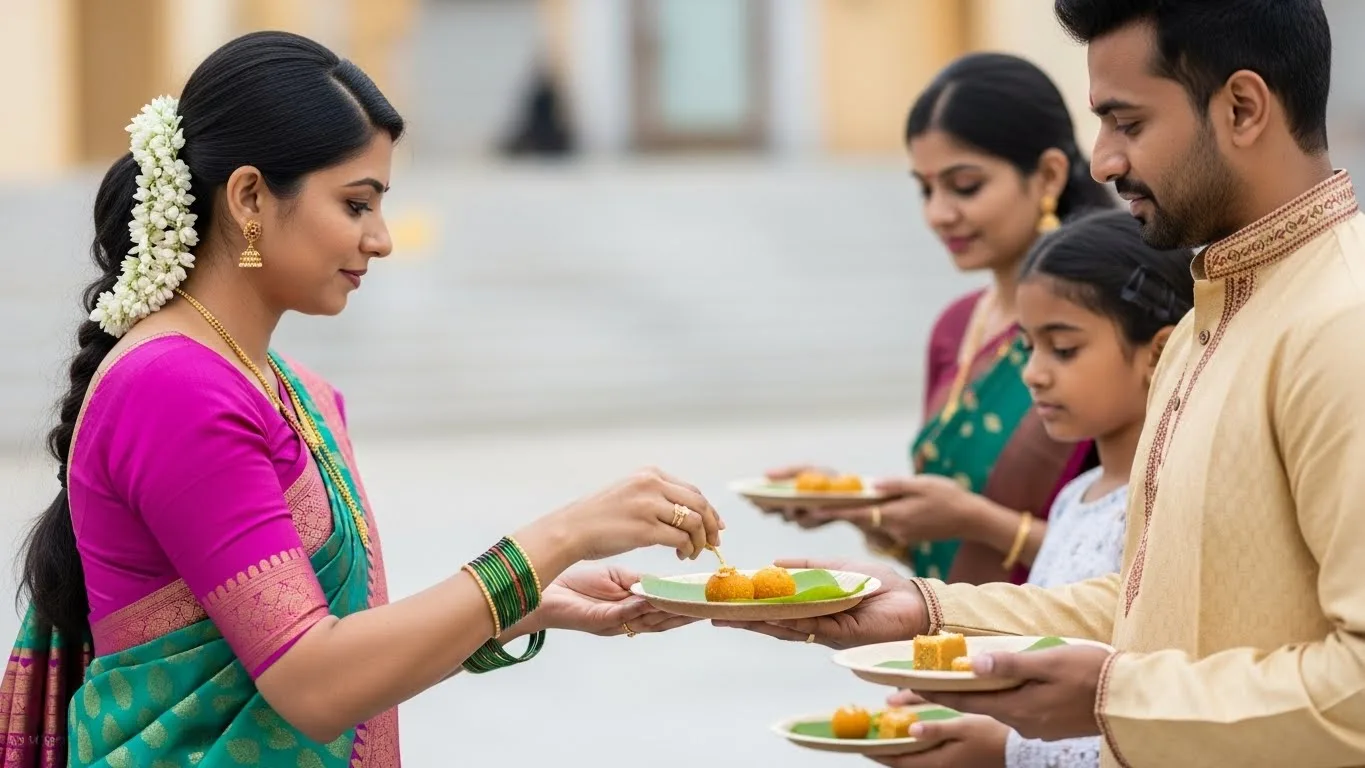
The practice of distributing prasad represents How to Distribute Prasad Properly one of Hinduism’s most sacred yet practical acts where blessed food offered to deity and returned as divine grace must be shared respectfully following traditional protocols that maintain sanctity while ensuring all devotees regardless of status receive equal blessing, embodying beautiful synthesis of spiritual reverence treating prasad as deity’s direct gift requiring utmost respect through careful handling, social etiquette honoring hierarchy while simultaneously emphasizing equality since seniors receive precedence out of cultural respect yet portion sizes remain identical demonstrating spiritual egalitarianism, practical hygiene maintaining cleanliness preventing contamination
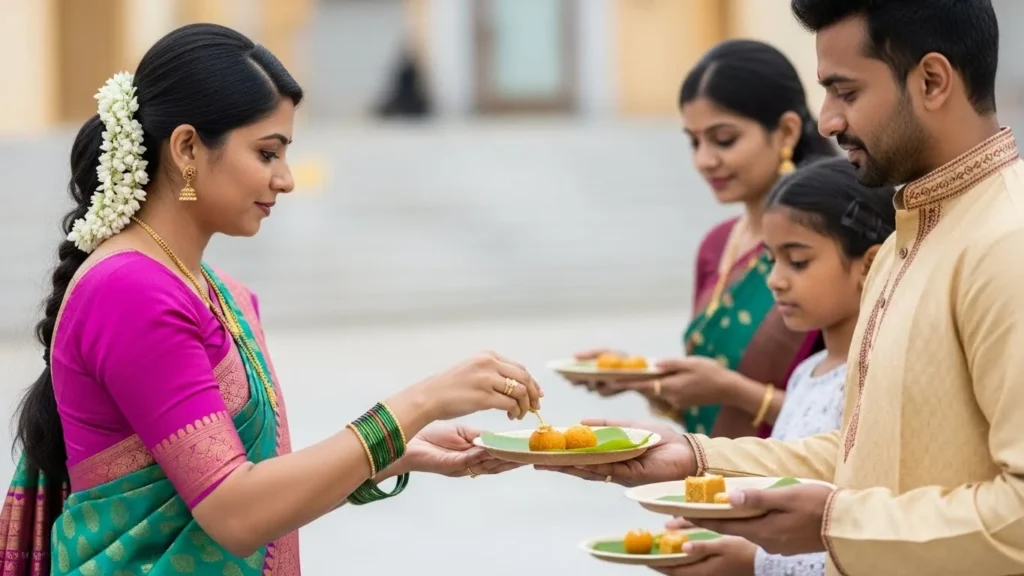
through specific serving techniques like never touching plates with communal spoons and using right hand for distribution reflecting both cultural convention and scientific wisdom about dominant hand’s cleanliness, and conscious generosity avoiding waste by serving appropriately-sized portions while ensuring everyone sufficiently fed since [translate:anna-daan] (food donation) considered highest service yet wasting blessed food shows disrespect to divine provider.
Unlike casual food service where efficiency and convenience paramount, prasad distribution requires meditative consciousness recognizing each serving act as sacred service ([translate:seva]) where distributor functions as instrument through which deity’s grace flows to devotees making humble servant attitude essential rather than ego-inflating sense of being generous giver, transforming potentially mechanical task into devotional practice where silence maintained (avoiding casual chatter), gentle movements employed (not clanging pots or dragging buckets), and continuous awareness preserved that prasad isn’t ordinary food requiring special reverence in every handling aspect from preparation through serving to consumption.
The complete etiquette framework encompasses understanding proper serving order beginning with seniors, elders, saints, and guests demonstrating cultural respect while proceeding systematically ensuring nobody overlooked, mastering specific techniques including using right hand exclusively (scientific and cultural reasons), maintaining separate serving spoons for each dish preventing flavor mixing and contamination, serving small initial portions allowing seconds preventing waste from over-serving, and approaching with proper internal consciousness cultivating gratitude for opportunity to serve rather than viewing as burdensome duty while external actions follow prescribed protocols creating beautiful integration of inner devotion and outer discipline.
For practitioners in 2025 whether temple volunteers regularly distributing prasad to hundreds maintaining traditional standards amid modern efficiency pressures, family elders serving home puja prasad teaching younger generations authentic protocols, event organizers managing large festival distributions coordinating volunteers and ensuring orderly equitable service, or simply devotees wanting to understand proper receiving etiquette when accepting blessed food from others, recognizing prasad distribution as sacred responsibility governed by time-tested guidelines rather than arbitrary personal preference enables approaching.
this practice with renewed appreciation transforming simple act of handing food to someone into conscious spiritual service where every detail from which hand holds serving spoon to how quietly pots handled matters because underlying principle remains constant: prasad embodies divine presence requiring same reverence whether distributed to thousands in grand temple or shared among family members at modest home altar, making distributor’s consciousness and technique equally important in maintaining sanctity of blessed food journey from deity’s feet through servant’s hands into devotee’s grateful reception.
Understanding the Spiritual Foundation of Prasad Distribution
Before examining specific techniques, recognizing deeper significance transforms mechanical service into conscious devotion.
Prasad Distribution as Sacred Seva
Hindu tradition recognizes serving prasad as supreme form of service ([translate:seva]).
The Theological Understanding:
Prasad = Krishna’s Mercy ([translate:Kripa])
When distributing prasad, you’re not giving “your food” but channeling divine grace to recipients.
As Srila Prabhupada taught:
“When a devotee distributes prasada, remnants of food offered to the Supreme Personality of Godhead, in order to maintain our spirit of devotional service we must accept this prasada as the Lord’s grace received through the pure devotees.”
The Servant’s Position:
You are instrument, not source:
- Like water pipe carrying water but not creating it
- Divine grace flows through you to devotees
- This recognition prevents ego (“I’m feeding everyone”)
- Cultivates humility (“I’m blessed to serve”)
Service Above Self-Enjoyment:
Traditional Ideal:
Story from Srila Prabhupada’s Life:
His godbrother Ananda would:
- Cook elaborate feasts
- Serve all guests personally
- Not eat until everyone fully satisfied
- Find greater joy in serving than consuming
Prabhupada commented How to Distribute Prasad Properly :
“See how he is cooking. He cooks everything, he serves it, and then he doesn’t eat until everyone is fully satisfied. This is Vaisnava, how he should act. He is more satisfied to serve than to enjoy himself.”
Modern Application:
While such extreme austerity not required for all, principle remains:
- Distributors should serve before eating themselves
- Guests before hosts
- Ensuring others satisfied before own consumption
- Joy found in service, not reward
Equality in Distribution: The Great Equalizer
Fundamental Principle:
All receive identical prasad – no discrimination based on:
- Caste or social class
- Wealth or poverty
- Education or ignorance
- Gender
- Age (beyond serving order respect)
Historical Significance:
In caste-stratified traditional society, prasad distribution created radical equality:
- Brahmin and shudra sat together
- Rich and poor ate identical food
- Temple space became egalitarian zone
Many bhakti saints (Kabir, Ravidas, Chaitanya Mahaprabhu) emphasized this equalizing aspect challenging social hierarchies.
Practical Implementation:
Equal Portions:
- Same quantity regardless of person’s status
- No “special treatment” for wealthy donors
- No discrimination against lower social groups
Exception:
- Children receive smaller portions (physical capacity)
- But same quality and variety as adults
Respecting Without Discriminating:
Seniors served first (respect for age)
But receive same prasad (spiritual equality)
This balance beautifully integrates cultural respect with spiritual egalitarianism.
Avoiding Waste: Respect for Divine Gift
Core Teaching:
Srila Prabhupada emphasized: “We should never waste Krishna prasadam.”
Why Waste is Disrespectful:
Prasad = Divine Grace Manifest
Wasting prasad = disrespecting God’s gift
Offered to Deity:
- Supreme Lord accepted this food
- Now sanctified through divine touch
- Throwing away shows lack of reverence
The Vedic Solution:
“Best thing is to cook only what is required and then give each person what he wants. That is the Vedic system, that the people sit in rows behind their plates and servers pass down the rows and put a very small portion of each foodstuff on each plate, unless there is some objection by a person. Then nothing is given. Then if anyone wants more, the servers pass up and down the rows continually and give more if anyone requests. In this way nothing is wasted and everyone is satisfied.”
Modern Application:
Initial Small Portions:
- Start with modest serving
- Allow multiple rounds for seconds
- Better slight hunger initially than waste later
Ask Preferences:
- “Would you like rice?”
- “How much subji?”
- Respecting individual appetites and tastes
Storage for Later:
- Leftover prasad stored properly (refrigerated)
- Consumed next day
- Never discarded carelessly
Maintaining Cleanliness and Purity
Contamination Prevention:
The Rules:
Separate Serving Spoons:
- Each dish has dedicated spoon
- Never use same spoon across dishes (flavor mixing)
- Prevents contamination
Don’t Touch Plates:
- Never let serving spoon touch individual plates
- “Touching the plate contaminates the spoon”
- If contaminated, wash immediately before continuing
No Hand Contact:
- “Don’t let your fingers touch any of the preparations, even water”
- Use spoons for everything including salt
- Maintains purity
Personal Cleanliness:
Servers Should:
- Wash hands, feet, mouth before serving
- Be freshly bathed ideally
- Wear clean clothes
- Maintain pure consciousness (peaceful, satisfied state)
If Ate Before Serving:
Traditional preference: Servers fast until all fed
Modern compromise: If must eat first, ensure thorough mouth rinsing and hand washing before serving others
Conscious, Quiet Service
Mental State:
Servers Should Be:
- “Very clean, peaceful, and satisfied“
- Not agitated or angry
- Not talking unnecessarily
- Focused on service, not distracted
Physical Behavior:
Quiet Movements:
- “Don’t drag buckets along the floor”
- “Don’t make clanging noises with pot handles or utensils”
- “Serve quietly“
Why Silence Matters:
Maintains Sacred Atmosphere:
- Prasad distribution is spiritual moment
- Casual chatting diminishes sanctity
- Recipients should eat meditatively
- Server’s silence supports this
Exceptions:
- Asking preferences (“Would you like more?”)
- Glorifying Krishna/prasad
- Necessary coordination among servers
This spiritual foundation transforms prasad distribution from mundane food service into sacred devotional act.
Proper Serving Order and Protocol
Traditional protocol establishes specific sequence ensuring respect while maintaining organization.
The Traditional Serving Hierarchy
Correct Order:
1. Saints and Spiritual Masters:
- Visiting swamis, gurus, advanced practitioners
- Highest spiritual position = served first
- Shows reverence for spiritual advancement
2. Seniors and Elders:
- Elderly family members
- Senior community members
- Respected for age and wisdom
3. Guests:
- Visitors from outside
- Traditional hospitality priority
- “Householders should serve the guests” – Prabhupada
4. Children:
- Young family members
- “Old people and children should be served first” – serving order guideline
- Ensures they’re not forgotten or have to wait excessively
5. Men (in some traditional settings):
- Historical practice (controversial today)
- Many modern contexts skip gender hierarchy
- Depends on family/community tradition
6. Women and Servers:
- Those who prepared and served
- Eat last after ensuring all satisfied
- Ultimate service position
Why This Order?
Not Inequality But Respect:
Spiritual advancement honored (saints first)
Age and wisdom respected (elders)
Guests receive special care (hospitality)
Vulnerable protected (children, elderly)
Simultaneous Equality:
Though served in order, all receive identical quality and quantity – combining cultural respect with spiritual egalitarianism.
Practical Seating Arrangement
Traditional Method:
Pangat (पंगत) System:
Rows of Seated Diners:
- Everyone sits in parallel lines (pangat)
- Typically cross-legged on floor
- Clean cloth or banana leaves as plates
- Servers walk between rows distributing
Advantages:
- Organized, efficient
- All visible to servers
- Creates community atmosphere
- Traditional Vedic method
Modern Adaptations:
Tables and Chairs:
- Elderly/Western practitioners use furniture
- Same principles apply
- Servers circulate among tables
Buffet Style:
- Self-service lines
- Still maintain protocols (serving utensils, portions)
- Less traditional but practical for large numbers
Specific Serving Techniques and Hand Usage
Mastering proper technique ensures cleanliness, efficiency, and sanctity maintenance.
Right Hand for Serving: The Universal Rule
The Guideline:
Use right hand for serving and distributing prasad.
Why Right Hand?
Cultural Reasons:
Hindu Tradition:
- Right hand = pure, auspicious
- Left hand = impure, inauspicious (used for cleaning after toilet)
- Sacred acts performed with right
Universal Pattern:
Many cultures share this:
- Middle Eastern traditions
- South Asian customs
- Based on practical hygiene before modern plumbing
Scientific Basis:
Dominant Hand (for most people = right):
- Better controlled movements
- Less spillage, more precision
- Generally cleaner (used for eating, not cleaning)
Hygienic Separation:
- Left for sanitation
- Right for food
- Clear functional division
Neurological Research:
Some studies suggest:
- Right hand connected to left brain (logic, order)
- Better fine motor control in dominant hand
- More conscious, deliberate movements
Modern Adaptations:
Left-Handed People:
Traditional: Still use right hand when possible
Practical: If truly difficult, left hand acceptable when:
- Serving with utensils (spoon/ladle)
- Not directly touching food
- Maintaining other cleanliness protocols
Ambidextrous:
- Prefer right when serving prasad
- Respects traditional convention
Serving Spoon Protocol
Dedicated Spoons:
Each Dish = Separate Spoon:
- Rice has own spoon
- Dal has own spoon
- Each subji (vegetable) separate
- Prevents flavor mixing
- Maintains purity
Never Touch Plates:
Critical Rule:
“Do not touch plates with the serving spoon. Touching the plate contaminates the spoon.”
Why This Matters:
Contamination Chain:
- Spoon touches plate
- Person’s saliva/germs on plate edge
- Spoon now contaminated
- Next person served gets contaminated serving
If Spoon Touches Plate:
“If a spoon becomes contaminated, you should wash it” immediately before continuing service.
Practical Technique:
- Hold spoon above plate
- Let food drop/pour onto plate
- Maintain distance from plate surface
- Requires practice and attention
No Finger Contact
Strict Guideline:
“Don’t let your fingers touch any of the preparations, even water.”
Everything Via Utensils:
Salt: “Should never be served by hand, use a spoon“
Water: Pour from vessel, don’t dip fingers
Anything: Use ladles, spoons, tongs – never bare hands touching food directly
Why So Strict?
Maximum Hygiene:
- Hands carry germs even when washed
- Multiple people served from same pot
- Preventing disease transmission
Spiritual Purity:
- Maintains prasad’s sanctity
- Shows reverence through careful handling
Exception:
Personal Portion:
Once on YOUR plate, you eat with hands (traditional Indian method for rice dishes)
But serving from communal pot requires utensils.
Serving from Buckets/Pots
Container Protocol:
Use Serving Buckets:
- “Serve the prasadam from serving buckets“
- Separate containers for different dishes
- Not directly from cooking pots (maintains organization)
Handle Carefully:
- Don’t drag along floor (creates noise, shows disrespect)
- Lift and carry
- Place gently
Minimize Noise:
- “Don’t make clanging noises with pot handles or utensils”
- Quiet service maintains peaceful atmosphere
- Shows mindfulness and respect
Proper Serving Procedure Step-by-Step
Following systematic sequence ensures smooth efficient distribution.
Pre-Serving Preparation
Step 1: Invite to Sit
“All to be served should be invited to sit on the floor” (or at table)
Organized Seating:
- Ensure everyone has place
- Proper spacing
- Clean surface (cloth, banana leaf, plate)
Step 2: Preliminary Items
Before People Sit:
“Place salt and lemon on each plate before those to be served are seated.”
Why First?
- These condiments don’t require serving rounds
- Placed once, available throughout meal
- Reduces later disturbance
Step 3: Water First
Universal Protocol:
“Always serve water first.“
Reasons:
- Cleanses palate
- Traditional beginning
- Essential before food
- Ensures hydration
Step 4: Staple Foods
Rice and Roti/Capati:
“Rice and capatis are staple foods and should be on the plate“
Foundation of Meal:
- Served early
- Central items others accompany
- Ensures everyone has basic sustenance
The Serving Order Sequence
Traditional Ayurvedic sequence follows digestive principles:
Prasadam Should Be Served in Following Order:
1. Bitter Preparations:
- Examples: Sukta (bitter vegetable mix), bitter melon (karela)
- Why first: Stimulates digestion, prepares stomach
2. Astringent Items:
- Examples: Spinach and other greens
- Purpose: Continues digestive activation
3. Fried Preparations and Dahl:
- Examples: Pakoras, puris (fried bread), lentil soup
- Protein source: Essential nutrition
4. Various Spicy Vegetables:
- Examples: Multiple sabji varieties
- Main nutrition: Vitamins, minerals
5. Sour Items:
- Examples: Pickles, chutneys, tamarind dishes
- Digestive aid: Promotes enzyme activity
6. Sweet Preparations:
- Examples: Halwa, kheer, laddus, barfi
- Last position: Sweets after main meal
- Completes meal: Satisfying conclusion
Why This Order Matters:
Ayurvedic Digestive Science:
- Specific sequence optimizes digestion
- Different tastes (rasas) affect body differently
- Bitter → Astringent → Spicy → Sour → Sweet = ideal progression
- Traditional wisdom validated by modern nutrition
Serving Seconds and Completion
Multiple Rounds:
After Initial Serving:
“Go around serving seconds until everyone is satisfied.”
The Process:
- Servers circulate continuously
- Ask “Would you like more?”
- Add to plates as requested
- Continue until all decline seconds
Generosity Without Holding Back:
“Don’t be stingy, don’t hold anything back because you want to take it later. Prasadam is meant for distribution.”
Completion:
Everyone Satisfied:
- Continue rounds until all full
- Don’t rush or pressure to finish quickly
- Allow peaceful enjoyment
Traditional Closing:
Some families/temples:
- Chant closing mantra together
- Express gratitude
- Brief moment acknowledging blessing
Post-Distribution Cleanup
Immediate Action:
“After everyone is finished honoring prasadam, clean the place immediately.”
Why Promptness:
- Shows respect for sacred space
- Prevents mess accumulation
- Maintains cleanliness for next use
Proper Disposal:
Banana Leaves/Disposable Plates:
- Collected respectfully
- Prasad remnants to compost/garden
- Not carelessly trashed
Reusable Plates:
- Washed thoroughly
- Prasad residue rinsed away properly
- Kitchen cleaned completely
Frequently Asked Questions
Can women distribute prasad or only men?
Absolutely women can and do distribute prasad! No scriptural prohibition exists. Traditional practice: Both men and women serve in homes and temples. Gender-based restrictions: Some very orthodox temples may limit women’s roles, but this cultural conservatism, not religious requirement. Modern temples: Women regularly serve prasad at most temples worldwide. Home context: Typically women prepare and distribute since they often cook. The key: Consciousness and devotion matter, not gender. Sincere service from anyone accepted lovingly by divine.
What if someone refuses prasad – is that offensive?
Context matters: Polite refusal with reason acceptable: Medical (allergies, diabetes), already full, genuine dietary restriction explained respectfully. Better approach: Accept small symbolic amount even if can’t consume fully, then share with others or dispose respectfully. Rude refusal offensive: Disdainful rejection without explanation shows disrespect to divine gift and distributor’s service. Cultural sensitivity: In Hindu contexts, total refusal awkward – better to accept graciously and manage privately. Non-Hindu guests: Usually welcomed to accept; polite “No thank you” understood if uncomfortable, but willingness to receive appreciated.
Should prasad be distributed to non-Hindus or people of other faiths?
Yes, prasad can and should be shared widely! Inclusive tradition: Divine blessings not limited by religious affiliation. Most temples offer prasad to all visitors regardless of faith. No conversion implied: Accepting blessed food doesn’t make someone Hindu – simply receiving grace. Respectful offering: Explain it’s blessed food if recipient unfamiliar, allowing informed acceptance. Interfaith courtesy: Many non-Hindus appreciate and accept prasad as gesture of hospitality and blessing. Same protocols apply: Distribute with equal respect and portions regardless of recipient’s religion. Spreading divine grace: Sharing prasad considered meritorious act extending blessings beyond Hindu community.
What’s proper etiquette if prasad falls on floor accidentally?
Handle respectfully, not carelessly: If floor clean: Some traditions (especially at Jagannath Puri) consider floor prasad still acceptable – can be picked up and consumed. If soiled: Cannot be eaten but dispose respectfully: Options: 1) Offer to animals – birds, cows appreciate blessed food, 2) Place in garden/plants – returning to nature respectfully, 3) Compost bin – if available, 4) Never trash carelessly – shows disrespect. Avoid stepping on: Whether your prasad or others’, walk around dropped food. Clean up promptly: Don’t leave for others to deal with. Spiritual view: Prasad’s blessing not destroyed by accident; reverence shown in recovery/disposal matters.
How to politely serve less to someone who’s overweight or overeating?
Tricky situation requiring sensitivity: Best approach: Serve small initial portions to EVERYONE (including healthy-weight people), then offer seconds. This avoids singling anyone out. Never: Make comments about person’s weight or eating habits while serving – extremely offensive and not server’s role. If person requests large portion: Serve as requested respectfully – their choice, not server’s judgment. Medical concerns: If family member with diabetes/health issues, discuss privately beforehand, not during public distribution. Remember: Prasad distribution emphasizes equality and non-judgment – all receive with equal respect regardless of body size or perceived health.
Can prasad be served buffet-style or must it be individually distributed?
Both methods acceptable with different advantages: Individual serving (traditional): Pros: Ensures everyone gets equal portions, prevents some taking excess while others lack, maintains sanctity through conscious distribution, creates personal service interaction. Cons: Time-consuming for large groups, requires organized seaters and servers. Buffet/self-service (modern): Pros: Efficient for large numbers, allows personal choice on quantities, less labor-intensive. Cons: Some may take excess while latecomers find empty pots, less personal interaction, requires conscious self-restraint. Best practice: Individual serving for smaller gatherings (up to 50-100), buffet for massive festivals while maintaining protocols (serving utensils, someone monitoring to ensure fairness).
Is there significance to serving order of different prasad items?
Yes, traditional Ayurvedic sequence exists (bitter → astringent → fried/protein → spicy → sour → sweet) following digestive science principles, but not rigidly mandatory for all contexts. Formal temple service: Often follows this order precisely. Home distribution: May simplify – staples (rice/roti) first, then sides, then sweets. Main principle: Some logical sequence rather than random chaos, but flexibility acceptable especially in informal settings. Sweet last: Universal agreement – desserts conclude meal in virtually all traditions. Practical adaptation: As long as respectful consciousness maintained and everyone receives all items eventually, exact sequence less critical than devotion.
What if there’s not enough prasad for everyone present?
Challenging situation requiring wisdom: Prevention best: Estimate attendees accurately, prepare sufficient quantities. If shortage occurs: Options: 1) Smaller equal portions for all – better everyone gets little than some get plenty while others get nothing (equality principle paramount), 2) Serve children and elderly first ensuring vulnerable fed even if adults go without, 3) Announce shortage honestly – ask if some willing to skip/take less so others can have, 4) Extend with simple additions – plain rice, chapati to supplement limited special items. Never: Give preferential portions to wealthy/important people while common devotees lack – violates fundamental equality principle. Learn for next time: Better slight surplus (can save/share) than shortage.
Conclusion
The sacred practice of distributing prasad represents beautiful integration of spiritual reverence, cultural respect, practical hygiene, and conscious service – transforming potentially mundane act of handing food to someone into profound devotional practice where every detail from which hand holds serving spoon through how quietly containers handled to what internal consciousness maintained matters because underlying principle remains constant: prasad embodies divine presence requiring same careful reverence whether distributed to thousands in grand temple or shared among family members at modest home altar, making distributor not merely food server but sacred instrument through which deity’s grace flows to devotees.
Understanding complete framework – that traditional serving order beginning with spiritual masters and elders proceeding through guests and children to women and servers last demonstrates cultural respect while maintaining spiritual equality since all receive identical quality and quantity regardless of position teaching profound truth about honoring hierarchy without creating inequality, that specific techniques like using right hand exclusively, never touching individual plates with communal serving spoons, maintaining separate utensils for each dish, and serving from dedicated buckets without excessive noise aren’t arbitrary fussiness but time-tested protocols maintaining maximum cleanliness preventing contamination.
while showing mindful reverence through conscious careful handling, that Ayurvedic serving sequence from bitter through astringent to sweet follows digestive science optimizing nutritional absorption though flexibility acceptable in informal contexts, and that underlying consciousness matters more than perfect technique since sincere humble servant attitude recognizing oneself as instrument channeling divine grace rather than ego-inflated generous benefactor transforms mechanical distribution into genuine spiritual service – enables approaching prasad distribution with renewed appreciation whether temple volunteer regularly serving hundreds maintaining traditional standards.
family elder teaching younger generations authentic protocols through home puja practices, festival organizer coordinating large-scale distribution ensuring orderly equitable service, or simply devotee receiving prasad understanding proper accepting etiquette enhancing grateful reception of blessed food.
As you engage with prasad distribution in 2025, whether actively serving at temples or home altars becoming conscious instrument through which divine grace flows to devotees, teaching children and newcomers proper protocols ensuring tradition continues authentically to next generation, organizing community events where hundreds fed requiring logistical skill maintaining spiritual sanctity amid practical challenges, or simply receiving prasad with enhanced understanding and gratitude recognizing blessed food’s journey from deity through devoted servant’s hands, remember.
that this practice’s ultimate purpose transcends efficient food service or rigid rule-following toward cultivating consciousness that recognizes serving as supreme blessing rather than burdensome duty, finding greater joy in ensuring others satisfied than claiming best portions for oneself like Prabhupada’s exemplary godbrother who cooked elaborate feasts serving everyone personally before eating last himself discovering that selfless service brings deeper fulfillment than any selfish enjoyment could provide.
The simple act of distributing prasad becomes training ground for ego-transcendence – each moment of serving others before self, each careful handling showing reverence, each equal portion demonstrating spiritual democracy, each quiet movement maintaining sacred atmosphere chips away at ego’s constant demand for preferential treatment, recognition, and reward until eventually
this humble service consciousness extends beyond prasad distribution into all life areas transforming how we approach relationships, work, resources, and existence itself from “what can I get” toward “how can I serve” recognizing that ultimate satisfaction comes not through grasping and accumulating but through giving and serving which prasad distribution teaches beautifully through blessed food’s sacred journey from divine provider through grateful servant to fortunate recipient completing cycle of grace that sustains both physical and spiritual life.
[translate:॥ दातव्यम् इति यद्दानं दीयतेऽनुपकारिणे।
देशे काले च पात्रे च तद्दानं सात्त्विकं स्मृतम्॥]
(That gift which is given out of duty, at the proper time and place, to a worthy person, and without expectation of return, is considered to be in the mode of goodness. – Bhagavad Gita 17.20)
About the Author
Aditya Chauhan – Hindu Philosophy, Bhakti Traditions, and Devotional Practices Scholar
Aditya Chauhan is a distinguished scholar and practitioner specializing in Hindu philosophy, bhakti (devotional) traditions, ritual practices, and the transformation of consciousness through devotional service. Holding a doctorate in Religious Studies with specialization in Vaishnava philosophy and practical devotional application, her interdisciplinary work examines how simple acts like prasad distribution encode profound spiritual principles about selfless service, ego transcendence, equality, and divine grace accessible through embodied practice.
Dr. Nair has extensively researched temple and home prasad traditions including preparation protocols, offering procedures, distribution etiquette, and receiving customs across different Hindu sampradayas (traditions) from Vaishnava ISKCON practices through Shaiva protocols to regional variations, demonstrating how these seemingly simple rules about which hand to use or what order to serve different dishes actually preserve sophisticated wisdom about hygiene, digestion, social harmony, spiritual equality, and conscious service that benefits both physical health and spiritual development. She regularly teaches courses on bhakti practices, devotional service philosophy, and practical implementation of traditional protocols in contemporary contexts, guiding students through understanding both theoretical significance and proper technique ensuring authentic engagement rather than mechanical rule-following or casual disregard of time-tested wisdom.
Her teaching emphasizes that prasad distribution represents perfect training ground for ego-transcendence since serving requires putting others before self, finding joy in their satisfaction rather than personal consumption, maintaining consciousness and care in every detail, and recognizing oneself as instrument through which divine grace flows rather than independent agent deserving recognition and reward – making simple act of distributing blessed food into profound spiritual practice when approached with proper consciousness and technique simultaneously.