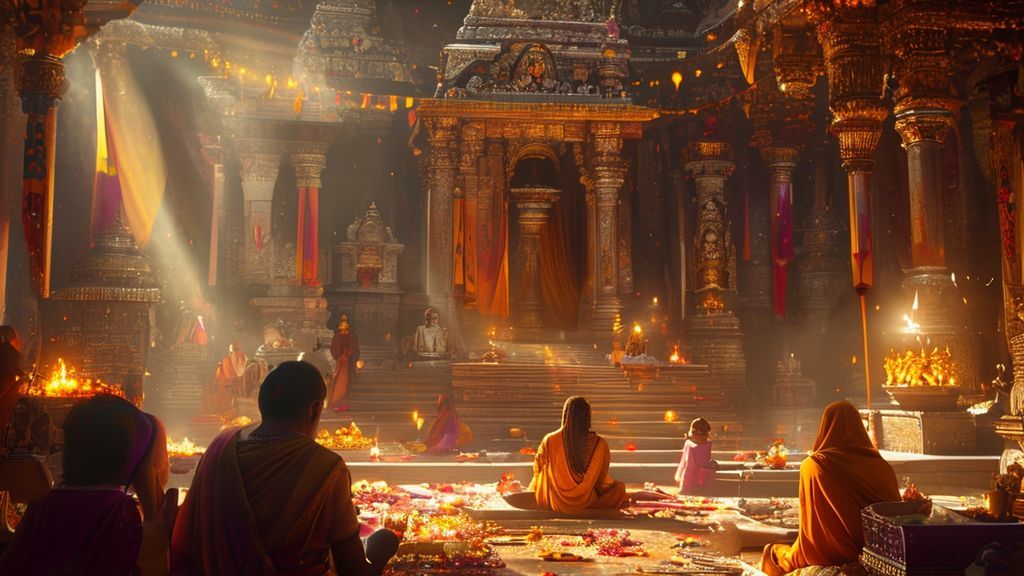
Puja Dream Meaning refers to the profound spiritual messages conveyed through visions of worship during sleep. These dreams are not random occurrences but divine communications, often signifying blessings, warnings, or guidance from the Devas, reflecting one’s karmic state and spiritual journey as expounded in ancient Vedic wisdom and the intricate science of Swapna Shastra.
| Attribute | Details |
|---|---|
| Deity Indicated | Depends on the deity seen in the dream; often suggests an affinity or a call for specific worship (Ishta Devata). |
| Origin of Concept | Rooted in Vedic philosophy, Swapna Shastra, Upanishads (e.g., Mandukya Upanishad), and Puranic narratives. |
| Key Significance | Divine guidance, karmic reflections, spiritual purification, impending events (auspicious or inauspicious). |
| Scripture Reference | Atharva Veda (Kausika Sutra), Brihadaranyaka Upanishad, Garuda Purana (Chapter on Swapna Vichara), Skanda Purana. |
The Sacred Veil: Understanding Worship in Dreams
In Sanatan Dharma, the dream state, or Swapna Avastha, is not merely a byproduct of the subconscious mind but a profound dimension of existence, a canvas where the divine often communicates with the discerning seeker. When one experiences a dream of performing puja, it transcends ordinary sleep-time imagery; it becomes a sacred encounter, a spiritual beacon from the higher realms. Such dreams are imbued with deep significance, serving as direct communications from one’s Ishta Devata, ancestral spirits, or the cosmic consciousness itself. They are invitations to introspection, calls for devotion, and sometimes, subtle warnings or affirmations on one’s spiritual path. Understanding these divine signals is crucial for every sincere devotee striving for spiritual progress and alignment with Dharma.
Puranic Narratives and Divine Dream Guidance
The annals of our Itihasas and Puranas are replete with instances where dreams of worship or divine visions have profoundly altered the course of history and individual destinies. These are not mere folklore but records of metaphysical truths. In the Mahabharata, before the great war, many warriors and sages experienced prophetic dreams, sometimes involving their Ishta Devata, guiding their actions or foretelling outcomes. For instance, Sri Krishna Himself revealed cosmic truths in visions to Arjuna, which could be seen as a form of divine communication transcending waking reality. The Skanda Purana and Garuda Purana meticulously detail the science of dreams (Swapna Shastra), explaining that dreams involving sacred acts like puja are often a manifestation of accumulated Punya Karma (meritorious deeds) or a direct blessing from the chosen deity. If one dreams of offering worship to Lord Vishnu, it signifies protection, prosperity, and spiritual growth, as Lord Vishnu is the preserver of the universe. Similarly, a dream of worshipping Shiva may indicate the destruction of obstacles and inner transformation. These scriptural references unequivocally establish that dreams of puja are not random but deeply connected to one’s spiritual journey and destiny.
The Subtle Science of Dream Interpretation in Sanatan Dharma
While Western psychology views dreams primarily through a materialistic lens, Sanatan Dharma offers a far more expansive and spiritual understanding. The Mandukya Upanishad, a foundational text, delineates four states of consciousness: Jagrat (waking), Swapna (dreaming), Sushupti (deep sleep), and Turiya (the transcendental state). The dream state is not illusory but a valid realm where the subtle body (sukshma sharira) experiences realities shaped by past actions (samskaras) and divine will. The Brihadaranyaka Upanishad also speaks of the self creating its own world in dreams. When one dreams of performing puja, it’s often a manifestation of deeply ingrained devotion or a spiritual instruction from the divine. It can signify that one’s inner spiritual architecture is aligning with higher frequencies, or that the deity is acknowledging the sincerity of one’s devotion, even if consciously dormant. The Agni Purana and Matsya Purana offer detailed classifications of dreams, attributing auspiciousness to those involving temples, deities, or acts of worship. These texts emphasize that the clarity, vividness, and emotional impact of such dreams are indicators of their potency and the urgency of their message. Such divine communications underscore the profound interconnectedness between the individual soul and the cosmic consciousness, reminding us that spiritual guidance is constantly available to those who are receptive.
Responding to the Divine Call: Rituals & Puja Vidhi
When blessed with a dream of puja, a devotee should approach it with reverence and a desire to understand and act upon its subtle message. While the specific response may vary based on the dream’s details, a general protocol of action is advisable:
- Sankalpa (Intention): Upon waking, meditate on the dream. Offer a clear Sankalpa to the Divine, expressing gratitude for the guidance and seeking clarity on how to proceed.
- Mantra Japa: Immediately engage in Japa of the mantra associated with the deity seen in the dream. If no specific deity, chant Om Namah Shivaya (ॐ नमः शिवाय) or Om Namo Bhagavate Vasudevaya (ॐ नमो भगवते वासुदेवाय) for universal well-being.
- Simple Puja/Archana: Perform a simple home puja. Light a lamp (Deepa), offer incense (Dhupa), flowers (Pushpa), and a sweet offering (Naivedya) to the deity’s image or symbol. Recite the deity’s Stuti or Chalisa.
- Seek Guidance: If the dream is particularly potent or confusing, consult a learned priest (Purohit) or a spiritual guru for proper interpretation and recommended remedies or worship.
- Charity (Dana): Often, dreams of divine interaction call for acts of charity. Offer food to the needy, donate to a temple, or perform service (Seva) to reinforce good karma and align with divine blessings.
- Fasting (Vrata): Depending on the dream’s implication, observing a specific fast dedicated to the deity (e.g., Ekadashi for Vishnu, Mondays for Shiva) can be a powerful way to honor the divine message.
Remember, the purpose is not to fear but to embrace the opportunity for deeper devotion and spiritual purification.
Sacred Vibrations: Mantras and Chants for Dream Purity
Engaging with sacred sound (Naada Brahma) is paramount when processing significant dreams. Chanting specific mantras helps purify the mind, consecrate the dream’s message, and invite divine grace. For general protection and spiritual clarity after any dream, especially one involving puja:
- Gayatri Mantra: Om Bhur Bhuvah Swah, Tat Savitur Varenyam, Bhargo Devasya Dhimahi, Dhiyo Yo Nah Prachodayat. (ॐ भूर् भुवः स्वः तत् सवितुर्वरेण्यं भर्गो देवस्य धीमहि धियो यो नः प्रचोदयात्।) – This supreme Vedic mantra invokes divine illumination and wisdom.
- Mahamrityunjaya Mantra: Om Tryambakam Yajamahe Sugandhim Pushtivardhanam, Urvarukamiva Bandhanan Mrityor Mukshiya Maamritat. (ॐ त्र्यम्बकं यजामहे सुगन्धिं पुष्टिवर्धनम्। उर्वरुकमिव बन्धनान् मृत्योर्मुक्षीय मामृतात्॥) – For protection, health, and liberation, especially if the dream felt like a warning.
- Ishta Devata Mantra: Chant the fundamental mantra of the deity seen in your dream. For example, for Lord Rama: Om Sri Ramaya Namah (ॐ श्री रामाय नमः); for Devi: Om Aim Hreem Kleem Chamundaye Vichche (ॐ ऐं ह्रीं क्लीं चामुण्डायै विच्चै).
- Hari Om: A simple, yet powerful mantra for invoking the supreme consciousness, purifying the aura, and bringing peace.
Recite these with full faith, focusing on the meaning and allowing the vibrations to permeate your being, aligning your subtle body with the divine message. You can find more detailed guidance on these practices at Hindutva.online.
Dharmic Etiquette for Dream Interpretation: Dos and Don’ts
Approaching dreams with a Dharmic perspective requires reverence and discretion.
- Do:
- Maintain purity (Shaucha) of body and mind after a significant dream.
- Note down dream details immediately upon waking for future reflection.
- Offer gratitude to the divine for the dream experience.
- Consult a knowledgeable spiritual elder or guru for interpretation.
- Perform recommended pujas or remedies with sincerity.
- Don’t:
- Dismiss auspicious dreams as mere fantasy.
- Share powerful or spiritual dreams indiscriminately with everyone.
- Fear dreams, even if they seem negative; instead, seek remedies.
- Over-analyze without proper guidance; rely on scriptural wisdom.
- Neglect one’s daily spiritual practices (Nitya Karma) in response to a dream.
Frequently Asked Questions About Puja Dreams
What does it mean if I dream of worshipping a specific deity?
Dreaming of worshipping a specific deity, such as Lord Shiva or Devi, signifies a direct connection or call from that particular deity. It often means they are acknowledging your devotion, offering blessings, or guiding you towards a specific aspect of your spiritual journey. It’s a profound invitation to deepen your relationship with that divine form and possibly undertake related vratas or sadhanas.
Are all dreams of puja auspicious?
Generally, dreams of performing puja are considered highly auspicious, indicating spiritual progress, blessings, or divine protection. However, the specific details matter. If the dream feels disturbed, incomplete, or involves obstacles, it might be a subtle warning to purify oneself, overcome inner challenges, or perform specific remedies to avert potential difficulties. Always approach with discernment and prayer.
How quickly should I act on a dream of puja?
It is advisable to acknowledge and act upon a significant puja dream as soon as possible. Begin with simple gratitude, meditation, and chanting the deity’s mantra. If the dream suggests a more elaborate ritual or a specific offering, plan to perform it within a few days, ideally on an auspicious tithi or day associated with the deity. Prompt action demonstrates reverence and maximizes the dream’s beneficial effects.
Can dreams of puja reveal future events?
Yes, dreams of puja, particularly those that are vivid and recurring, can often be prophetic. They may reveal auspicious future events, such as success in endeavors, resolution of problems, or spiritual milestones. Conversely, they can serve as subtle warnings about potential obstacles or the need for corrective spiritual action to prevent future misfortunes. Such insights underscore the divine foresight available through these sacred visions.
Preserving Sanatan Dharma Through Dream Wisdom
The profound understanding of “Puja Dream Meaning” is more than just a curiosity; it is a vital aspect of preserving and practicing Sanatan Dharma in its totality. By acknowledging and interpreting these divine messages, we reaffirm our faith in the cosmic order, the presence of our Devas, and the intricate connection between our inner world and the outer reality. It encourages us to live a life of greater awareness, devotion, and alignment with Dharmic principles. Such wisdom, passed down through generations and elucidated in our scriptures, reminds us that the divine is constantly communicating, guiding us on our path to Moksha. Embracing this ancient science of dream interpretation strengthens our spiritual foundation and ensures that the timeless truths of Hinduism continue to illuminate the lives of future generations. For more insights into such profound spiritual topics, delve into the vast resources available at Hindutva.online.