Should Hindus celebrate Christmas? While Sanatan Dharma teaches universal compassion and respect for all faiths, the celebration of Christmas, rooted in Christian theology and dogma, is not a traditional practice for Hindus. Our scriptures provide an abundance of our own sacred festivals, rich in unique spiritual significance, deeply connected to our Devatas and Dharmic principles, which serve to nourish our souls and preserve our distinct cultural identity.
| Attribute | Details |
|---|---|
| Primary Focus of Christmas | Celebration of the birth of Jesus Christ, central to Christian faith and theology, emphasizing Christian doctrines. |
| Primary Focus of Hindu Festivals | Commemoration of divine Lila, cosmic cycles, seasonal changes, and spiritual truths, nurturing Dharma. These festivals are intrinsically linked to our Devatas and spiritual evolution. |
| Origin of Christmas | Historical roots trace to ancient Roman winter solstice festivals, later adopted and spiritualized by Christianity to celebrate the Nativity. |
| Origin of Hindu Festivals | Derived from Vedic traditions, Puranic narratives, and astronomical calculations, deeply indigenous to Bharatavarsha and our Sanatana spiritual heritage. |
| Parallel Hindu Celebration/Concept | Universal values of love, peace, and giving are profoundly embodied in festivals like Diwali, Janmashtami, Rama Navami, and through selfless service (Seva) and charitable acts (Dāna). |
| Scripture Reference (Hindu) | Bhagavad Gita (e.g., Chapter 18 on Swadharma), various Puranas detailing Vratas and Utsavas (e.g., Skanda Purana, Padma Purana). |
The Sanatana Perspective on Interfaith Celebrations
Sanatan Dharma, the eternal tradition, is a vibrant tapestry woven with an unparalleled richness of festivals, rituals, philosophies, and spiritual practices. These Hindutva.online festivals, known as Utsavas, are not mere cultural events but profound spiritual anchors, connecting us to the divine, the rhythm of nature, and our ancestors. In an increasingly globalized world, questions arise regarding the appropriateness of Hindus participating in celebrations from other faiths, such as Christmas. Our tradition upholds the principle of Sarva Dharma Sambhava — respecting all paths to truth — yet this respect does not imply the adoption or assimilation of foreign religious practices, especially those with distinct theological foundations that diverge from our own.
The essence of Sanatan Dharma lies in recognizing one’s own unique path, one’s Swadharma, and adhering to it with unwavering devotion. Each festival in the Hindu calendar is a potent reminder of specific divine Lilas (cosmic plays), victories of Dharma over Adharma, or significant astronomical conjunctions that facilitate spiritual growth. To embrace a celebration like Christmas, which is inextricably linked to Christian doctrines concerning the birth of Jesus Christ as the son of God and savior, fundamentally differs from the Sanatana worldview of divinity, incarnation, and liberation (Moksha). Our focus remains on the preservation and perpetuation of our ancestral traditions, which are complete and self-sufficient for our spiritual needs.
Puranic Roots and the Sanctity of Hindu Utsavas
The profound significance of Hindu festivals is deeply embedded in our vast scriptural corpus, including the Vedas, Itihasas (Ramayana, Mahabharata), and especially the Puranas. Unlike celebrations originating from other theological frameworks, Hindu Utsavas are meticulously detailed with specific injunctions, narratives, and spiritual benefits. For instance, the celebration of Diwali, the festival of lights, is celebrated across various Puranas for different reasons: it commemorates Sri Rama’s return to Ayodhya (as narrated in the Ramayana), the slaying of Narakasura by Sri Krishna (Bhagavata Purana), and the worship of Devi Lakshmi (Skanda Purana, Padma Purana). Each narrative is a spiritual lesson, embodying the victory of light over darkness, knowledge over ignorance, and prosperity over adversity.
Similarly, Janmashtami, celebrating the birth of Sri Krishna, is vividly described in the Bhagavata Purana, detailing His miraculous birth, childhood exploits, and divine mission. Maha Shivaratri is observed with profound devotion, rooted in legends from the Shiva Purana concerning Lord Shiva’s cosmic dance (Tandava) or His marriage to Parvati. These are not mere stories but living traditions that provide spiritual succor and cultural continuity. Participating in these, with understanding and reverence, strengthens one’s connection to one’s own Dharma. Our calendar is replete with such opportunities for devotion and spiritual enrichment, requiring no external supplementation.
The Dharma in Temple Architecture: Sacred Spaces of Our Festivals
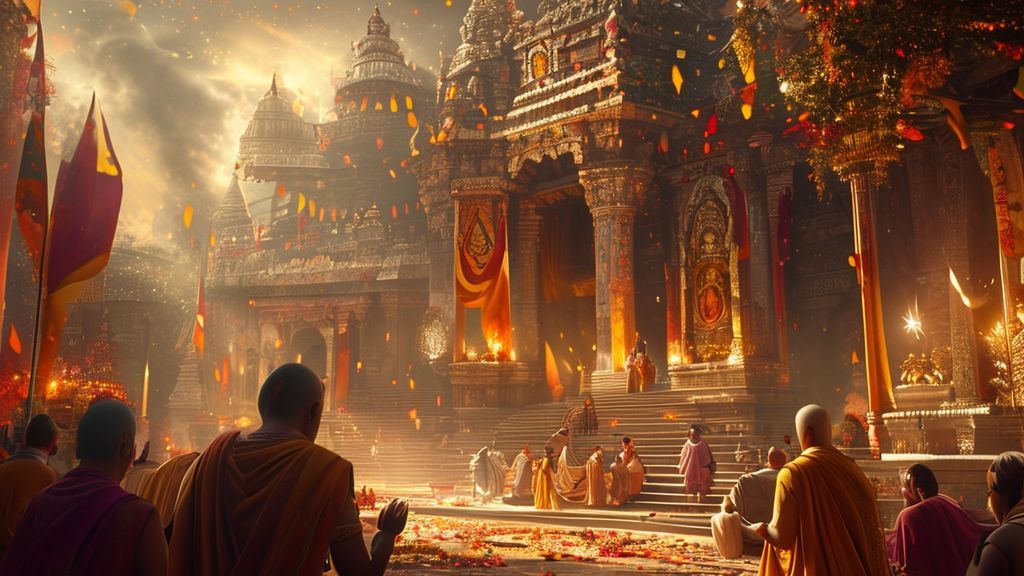
While the topic does not directly relate to Christian architecture, it is essential to highlight the intrinsic connection between Hindu festivals and our sacred spaces. Our temples, marvels of Shilpa Shastra and Vastu Shastra, are not just buildings but living embodiments of the cosmos, designed to facilitate divine communion. Whether in the towering pyramidal vimanas of Dravidian style temples in the South or the curvilinear shikharas of Nagara style in the North, every element is imbued with symbolic meaning and mathematical precision.
Many of our grandest festivals, such as the Rath Yatra of Puri, the Brahmotsavam in Tirupati, or the Navaratri celebrations in various Devi temples, are intrinsically linked to the architecture and rituals performed within these sacred enclosures. The procession of deities, the elaborate decorations, the chanting of Vedic hymns – all are designed to transform the physical space into a vibrant spiritual arena. This deep integration of architecture, ritual, and spiritual narrative underscores the self-contained and holistic nature of Sanatan Dharma. Our festivals find their natural home and fullest expression within these consecrated spaces, reinforcing our unique spiritual identity.
Principles of Puja Vidhi: The Hindu Way of Worship
The performance of Puja Vidhi, the systematic worship of Devatas, is fundamental to Sanatan Dharma. While Christmas features specific practices, a Hindu’s spiritual life is guided by the elaborate and deeply meaningful rituals handed down through millennia. A typical Puja involves sixteen steps, known as Shodashopachara Puja, each with profound symbolic significance:
- Dhyanam: Meditation and invocation of the deity.
- Avahanam: Inviting the deity to be present.
- Asanam: Offering a seat.
- Padhyam: Offering water to wash the feet.
- Arghyam: Offering water to wash the hands.
- Achamaniyam: Offering water for sipping.
- Snanam: Bathing the deity (often symbolic with water/milk).
- Vastram: Offering clothes (cloth or symbolic threads).
- Upaveetam: Offering the sacred thread.
- Gandham: Applying fragrant paste (sandalwood, kumkum).
- Pushpam: Offering flowers.
- Dhupam: Offering incense.
- Deepam: Waving a lamp.
- Naivedyam: Offering food (prasad).
- Pradakshina & Namaskaram: Circumambulation and prostration.
- Visarjan/Kshama Prarthana: Farewell or prayer for forgiveness of errors.
These practices are not mere external acts but are designed to purify the mind, focus devotion, and establish a tangible connection with the divine. The precision and depth of these rituals demonstrate the complete spiritual system that is Sanatan Dharma, offering a profound pathway to inner peace and ultimate liberation, without the need to adopt foreign religious rituals.
Mantras for Universal Well-being and Dharmic Living
Sanatan Dharma already provides us with powerful mantras and prayers that embody universal values often associated with festive seasons, such as peace, joy, and goodwill, but within our own sacred framework. Chanting these strengthens our Dharmic identity and radiates positive energy to the world:
- Om Sarve Bhavantu Sukhinah, Sarve Santu Niramayah, Sarve Bhadrani Pashyantu, Ma Kashchit Dukha Bhag Bhavet.
(May all be happy, May all be free from illness, May all see what is auspicious, May no one suffer.) - Om Lokah Samastah Sukhino Bhavantu.
(May all beings in all worlds be happy.) - Asato Ma Sadgamaya, Tamaso Ma Jyotirgamaya, Mrityorma Amritam Gamaya.
(Lead me from the unreal to the real, Lead me from darkness to light, Lead me from death to immortality.) (Brihadaranyaka Upanishad 1.3.28) - The universal Gayatri Mantra: Om Bhur Bhuvah Svah, Tat Savitur Varenyam, Bhargo Devasya Dhimahi, Dhiyo Yo Nah Prachodayat.
(We meditate on the adorable glory of the resplendent vivifier divine Savitri; may he inspire our intellects.)
These sacred utterances resonate with the highest ideals of compassion, unity, and spiritual enlightenment, confirming that our tradition provides ample means to express universal love and seeking the good of all creation.
Dos and Don’ts for the Devoted Hindu
- Do actively participate in Hindu festivals, understand their spiritual significance, and educate your family about them.
- Do express respect for all faiths, recognizing the sincerity in others’ beliefs, as taught by the principle of Sarva Dharma Sambhava.
- Do foster universal values like love, compassion, and charity, which are deeply ingrained in Sanatan Dharma, through our own practices of Dāna and Seva.
- Don’t confuse cultural appreciation of foreign customs with the adoption of religious practices that conflict with Sanatana theological principles.
- Don’t neglect your own rich heritage and the abundance of your own festivals for external celebrations that do not align with your Swadharma.
- Don’t allow social pressures or commercial influences to dilute your adherence to your ancestral spiritual path.
Can Hindus appreciate the “spirit of Christmas” like generosity and goodwill?
Yes, absolutely. The values of generosity, goodwill, peace, and universal love are not exclusive to any one religion; they are fundamental tenets of Sanatan Dharma. Our scriptures and traditions emphasize Dāna (charity), Seva (selfless service), Ahimsa (non-violence), and Karuna (compassion) as essential Dharmic virtues. These are practiced throughout the year and highlighted during our own festivals, such as Diwali, wherein sharing joy and gifts is customary, or during various Vratas where charitable giving is prescribed. We embody these virtues from our own rich tradition.
Is it disrespectful to other faiths if Hindus don’t celebrate Christmas?
No, true respect involves acknowledging and honoring distinct identities. Celebrating one’s own faith with devotion and authenticity is a sign of spiritual strength and integrity, not disrespect towards others. Just as adherents of other faiths are not expected to celebrate Hindu festivals, Hindus are not obligated to adopt non-Hindu religious observances. Mutual respect thrives when each tradition upholds its unique path while fostering harmony.
What is the Sanatan Dharma perspective on universal brotherhood?
The concept of Vasudhaiva Kutumbakam, meaning “the world is one family,” is a foundational principle in Sanatan Dharma, originating from the Maha Upanishad (Chapter 6). This profound teaching promotes a worldview of inclusive harmony and brotherhood among all beings. It encourages compassion, understanding, and peaceful coexistence while simultaneously affirming the importance of individual spiritual paths and cultural heritage. It does not advocate for syncretism but for respectful diversity.
Preserving Sanatan Dharma: Why This Matters for Every Hindu
The question of whether Hindus should celebrate Christmas transcends a simple ‘yes’ or ‘no’; it delves into the core of identity, authenticity, and preservation of Sanatan Dharma. Our tradition is not merely a collection of beliefs but a living, evolving spiritual ecosystem, passed down through countless generations. Each festival, ritual, and philosophical tenet is a vital thread in this sacred tapestry. By neglecting our own Utsavas and adopting practices from other faiths, we risk diluting the profound spiritual wisdom and unique cultural heritage that is ours.
To truly cherish and preserve Sanatan Dharma means to immerse oneself in its depths, to understand its philosophy, and to actively participate in its vibrant expressions. This dedication ensures that the ancient light of Dharma continues to shine brightly for future generations. It is our sacred duty to uphold our Swadharma, thereby contributing to the spiritual richness of the entire world, and strengthening the foundation of our eternal tradition. For deeper insights into our heritage, explore Hindutva.online.