Vallabhacharya, a profound spiritual luminary of the 15th-16th centuries, established the Pushti Marga, a distinct path of grace and devotion within Vaishnavism, centered on the worship of Lord Krishna. His philosophy, Shuddhadvaita (Pure Non-dualism), posits that the qualified Brahman is Krishna, and liberation is attained through divine grace (*Pushti*) and selfless love (*Prema*) rather than strict asceticism or mere ritual.
| Attribute | Details |
|---|---|
| Deity | Lord Krishna as Shrinathji (बालकृष्ण – Bala Krishna, the child lifting Govardhan Hill) |
| Location/Origin | Born at Champaran (modern-day Chhattisgarh); established his spiritual centers in Braj region (Gokul, Vrindavan); major temple at Nathdwara, Rajasthan. |
| Key Festivals | Janmashtami, Annakut (Govardhan Puja), Holi, Hindola Utsav, Paryushan Parva. |
| Scripture Reference | Primarily Srimad Bhagavatam (Bhagavata Purana); also Upanishads, Bhagavad Gita, and his own commentary on the Brahmasutras, the Anubhashya. |
Introduction to Pushti Marga: The Path of Divine Grace
In the illustrious tapestry of Sanatan Dharma, the Bhakti movement stands as a golden thread, weaving paths of divine love and surrender. Among its most radiant proponents was Mahaprabhu Shri Vallabhacharya (1479-1531 CE), whose profound spiritual insights gave birth to the Pushti Marga, the “Path of Grace.” This unique philosophical and devotional tradition offers an unparalleled approach to experiencing the divine, emphasizing unadulterated love for Lord Krishna, particularly in His enchanting form as Shrinathji, the child lifting the Govardhan Hill. Vallabhacharya’s teachings revitalized Vaishnavism across North India, particularly in Gujarat and Rajasthan, offering a joyous and accessible route to spiritual realization for householders, distinct from ascetic renunciatory paths. It is a path where every act, every offering, every breath is dedicated to the Lord, transforming mundane life into a continuous sacred offering.
Puranic History & Legend of Mahaprabhu Vallabhacharya
The advent of Vallabhacharya heralded a new dawn for Bhakti. Born in 1479 CE (Vikram Samvat 1535) at Champaran, a village in modern-day Chhattisgarh, to Telugu Brahmin parents, Lakshmana Bhatta and Yellamma, who were on a pilgrimage from Varanasi, his birth was considered a divine omen. Legend states he was born premature, apparently lifeless, but was miraculously revived by the grace of Lord Krishna Himself, enveloped in fire. A child prodigy, Vallabhacharya quickly mastered the Vedas, Upanishads, Puranas, and various philosophical systems by a young age, displaying an extraordinary grasp of scriptural knowledge and an innate spiritual wisdom.
His primary mission was to re-establish the supremacy of the Srimad Bhagavatam and the path of unalloyed devotion (Shuddha Bhakti). He embarked on three extensive *digvijaya* (triumphal tours) across India, covering thousands of miles on foot, engaging in scholarly debates, and converting countless individuals to the path of devotion. During these tours, he visited numerous sacred sites, revitalizing ancient temples and establishing centers for Vaishnava worship. It was during these travels that he systematized his philosophy of Shuddhadvaita, or ‘Pure Non-dualism,’ asserting that Brahman is not merely a formless Absolute (Nirguna) but is inherently Saguna, possessing all auspicious qualities, and is none other than the Purna Purushottama, Shri Krishna.
The pivotal moment in Pushti Marga’s history arrived when Lord Krishna Himself appeared before Vallabhacharya at Govardhan Hill, instructing him to reveal His form as Shrinathji. This divine manifestation of Krishna lifting the Govardhan Hill, known as Shri Govardhannathji or Shrinathji, became the central deity of the Pushti Marga. Vallabhacharya received the sacred Brahmasambandha mantra directly from the Lord and established the practice of offering oneself completely to Krishna, known as Atma Nivedan. This tradition, as detailed in the sacred texts like the Gokulnathji ke Bayalis Baithak Charitra, emphasizes a deep, personal relationship with the Lord, fostering a sense of intimacy and selfless service.
Architectural Splendor & The Seva Tradition of Pushti Marga
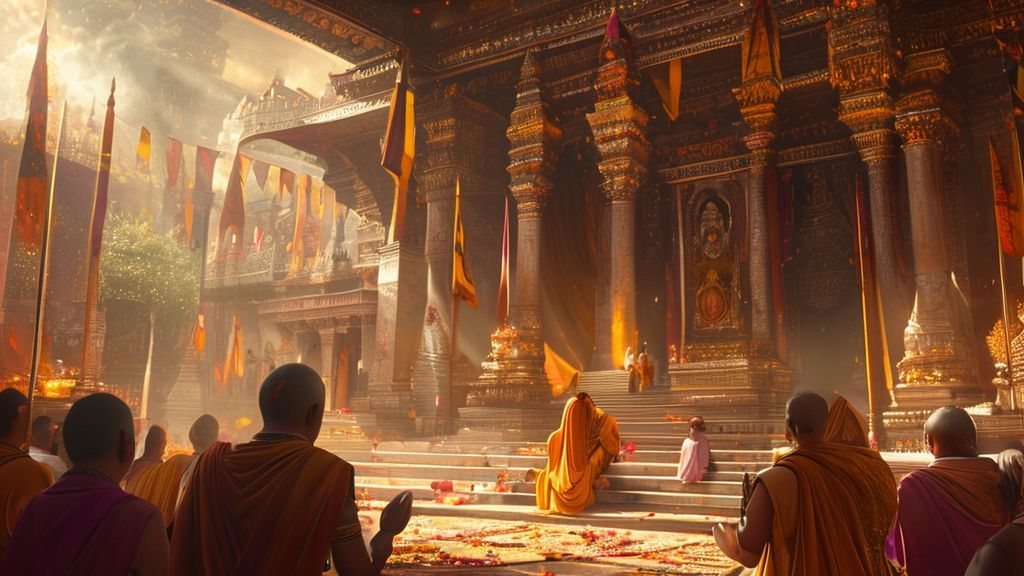
While Vallabhacharya’s contributions are primarily philosophical and devotional, the physical manifestations of Pushti Marga are found in its unique temple architecture and the profound tradition of Seva (loving service) to Shrinathji. Unlike conventional temples, Pushti Marga shrines are often referred to as Haveli (mansions), reflecting the intimate feeling of serving the Lord as a living deity within a grand household, rather than just a distant idol in a public space.
The most iconic example is the Shrinathji Temple in Nathdwara, Rajasthan. The original idol of Shrinathji, revealed on Govardhan Hill, was subsequently moved from Govardhan to various locations and eventually found its permanent abode in Nathdwara in the 17th century, following persecution by Aurangzeb. This journey itself is a tale of divine protection and human devotion, guiding the faithful to its current sacred home.
The architecture of these Havelis is designed to facilitate the elaborate daily Aṣṭa-yāma Seva (eightfold daily worship), mirroring the daily life of a beloved child or king. Each Seva involves intricate rituals – waking the Lord (Mangala), bathing (Shrungar), dressing (Rajbhog), afternoon rest (Gwal), evening snack (Sandhya), and finally putting Him to sleep (Shayan). The spaces within the Haveli, such as the ‘Dolti Paat’ (a swinging platform for the Lord), the ‘Rasoi’ (kitchen for preparing divine offerings), and the ‘Darshan Kaksh’ (viewing halls), are all meticulously designed to support this rich tradition. Devotees at Hindutva.online can explore further details on the significance of each Darshan.
Rituals & Puja Vidhi: The Path of Pure Seva
The cornerstone of Pushti Marga is Seva, the selfless service to Shri Krishna. It is not merely ritualistic worship but a complete surrender of one’s mind, body, and wealth to the Lord, performed with immense love and devotion. The primary initiation ritual for a devotee into Pushti Marga is Brahmasambandha.
- Brahmasambandha (Initiation): This is the most crucial step. A sincere seeker approaches a recognized Guru (Acharya) of the Vallabhacharya lineage. The Guru administers the Brahmasambandha Mantra, which symbolically unites the soul with Brahman (Krishna) and purifies it of all karmic impurities. Upon initiation, the devotee pledges their life and all their possessions to Shri Krishna.
- Atma Nivedan (Self-Surrender): Following initiation, the devotee practices Atma Nivedan, offering their entire being – mind, body, and wealth – to the Lord. This is a continuous state of surrender and dedication.
- Nitya Seva (Daily Service): This involves performing the eight daily Darshans (Mangala, Shrungar, Gwal, Rajbhog, Utthapan, Bhog, Sandhya, Shayan) with specific offerings. Each Darshan has unique garments, ornaments, food offerings (Bhog), and devotional songs (Kirtan) that correspond to the Lord’s mood and the time of day.
- Bhog and Shringar: Preparing exquisite food offerings (*Bhog*) with utmost purity and love, and meticulously adorning the Lord with beautiful clothes and ornaments (*Shringar*) are central to Seva. The food, once offered, becomes Prasadam, a sanctified gift from the Lord.
- Kirtan and Satsang: Devotional singing (*Kirtan*) of songs composed by the *Ashta-chhap* poets (like Surdas, Kumbhandas, Paramanandadas) is an integral part of Seva, expressing the devotee’s love and longing for Krishna. Participating in *Satsang* (spiritual congregation) further strengthens communal devotion.
Mantras & Chants for the Devotee
The heart of Pushti Marga chanting lies in the expression of love and surrender to Shri Krishna. While specific initiation mantras are transmitted by the Guru, the primary mantra for all devotees is a powerful declaration of refuge:
श्री कृष्ण शरणं मम। (Shri Krishna Sharanam Mama.)
“Shri Krishna is my refuge.” This simple yet profound mantra encapsulates the entire philosophy of surrender and seeking divine grace. It is recited continuously, internalizing the presence of the Lord in every aspect of life.
Beyond this, devotees immerse themselves in the rich poetic heritage of the *Ashta-chhap* poets, who composed thousands of *padavali* (devotional songs) extolling the various *lilas* (divine plays) of Shri Krishna. These Kirtans, sung during the various Sevas, are a form of deep meditation and communion. Vallabhacharya’s own Sodasha Granthas (Sixteen Treatises), particularly the *Yamunastakam*, are revered texts that guide devotees on the path.
Dos and Don’ts in Pushti Marga
- Do: Cultivate intense love (Prema) and devotion (Bhakti) for Shri Krishna, treating Him as a living presence.
- Do: Practice Nitya Seva (daily worship) with utmost sincerity and purity, offering fresh and lovingly prepared *Bhog*.
- Do: Maintain physical and mental purity; cleanliness is next to godliness in the service of the Lord.
- Do: Seek guidance from a qualified Acharya and perform Brahmasambandha for proper initiation into the path.
- Do: Engage in *Satsang* (devotional gatherings) and *Kirtan* (singing divine glories) regularly.
- Don’t: Perform Seva with expectations of worldly rewards or personal gain; the service must be selfless.
- Don’t: Neglect the instructions of your Guru or disrespect the lineage of Acharyas.
- Don’t: Criticize or denigrate other devotional paths or deities; focus on your chosen path with humility.
- Don’t: Allow worldly attachments and desires to overshadow your devotion during Seva.
What is Shuddhadvaita (Pure Non-dualism)?
Shuddhadvaita, Vallabhacharya’s unique philosophical system, stands distinct from other Vedantic schools. It posits that Brahman is non-dual with the individual soul (Jiva) and the universe, yet the universe is not an illusion (Maya) but a real manifestation of Brahman’s own will and sport (*Lila*). Unlike Shankaracharya’s Advaita, which considers the world as *mithya* (illusory), Shuddhadvaita maintains the world’s reality as an emanation of the pure Brahman, which is none other than the Purna Purushottama, Shri Krishna. The Jiva is a part of Brahman, and its separation is due to divine will, not ignorance, and can be overcome through divine grace (*Pushti*).
What is the significance of Shrinathji in Pushti Marga?
Shrinathji, the child form of Lord Krishna lifting the Govardhan Hill, is the central and presiding deity of Pushti Marga. He is not merely an idol but the living embodiment of Purna Purushottama Brahman. His form represents Krishna’s glorious *lila* of protecting the residents of Braj from Indra’s wrath, signifying His limitless power and compassion. Worshipping Shrinathji, particularly through the elaborate *Seva* tradition, is believed to grant direct access to the Lord’s grace and ultimately lead to union with Him, culminating in the joyous experience of His *lila*.
How does Pushti Marga differ from other Bhakti traditions?
Pushti Marga is unique in its emphasis on Pushti (divine grace) as the sole means of liberation, distinguishing it from paths relying on *Maryada* (adherence to scriptural injunctions), *Karma* (action), or *Jnana* (knowledge). It prioritizes unadulterated, spontaneous love (*Prema*) for Krishna, without any expectation of return. It particularly welcomes *Grihasthas* (householders), offering a path to devotion through their daily lives, transforming worldly activities into sacred service. The emphasis on treating the Lord as a beloved child or king, through intimate *Seva*, sets it apart from more formalistic worship.
Why Pushti Marga Matters for Every Hindu
The legacy of Vallabhacharya and Pushti Marga remains a vibrant, living tradition that deeply enriches Sanatan Dharma. It offers a powerful counter-narrative to paths of extreme asceticism, demonstrating that true spirituality can flourish within the context of family life and social engagement. By emphasizing pure, selfless love for Shri Krishna and the transformative power of divine grace, Pushti Marga provides an accessible and joyful means for all to attain spiritual liberation. Its rich artistic, musical, and literary heritage, preserved and promoted by communities like Hindutva.online, continues to inspire millions, reminding us that the divine is not distant but intimately present, awaiting our loving call and devoted service. It underscores the profound truth that the ultimate purpose of life is to experience the bliss of communion with the Purna Purushottama, Shri Krishna, through the path of unalloyed love.