Ashta Lakshmi Eight Forms In Hindu theology’s sophisticated understanding of prosperity as a multidimensional concept transcending mere financial accumulation, the Ashta Lakshmi represent eight distinct manifestations of Goddess Lakshmi, each bestowing a specific type of wealth or abundance essential for complete human flourishing—transforming the common reductionist equation of Lakshmi with money into a holistic vision encompassing spiritual peace (Adi Lakshmi), material prosperity (Dhana Lakshmi), agricultural abundance (Dhanya Lakshmi), royal power and dignity (Gaja Lakshmi), familial continuity through progeny (Santana Lakshmi), courage and valor (Veera/Dhairya Lakshmi), intellectual brilliance (Vidya Lakshmi), and success in endeavors (Vijaya Lakshmi).
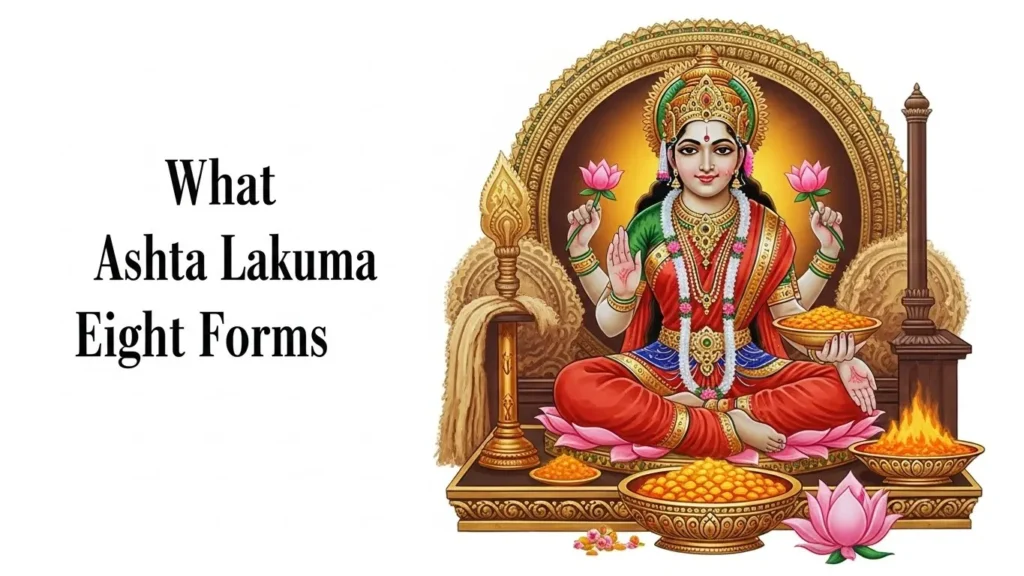
The Sanskrit term “Ashta” means eight, and together these forms communicate that genuine prosperity requires balanced development across all life dimensions—physical health, financial security, family relationships, educational achievement, moral courage, creative expression, agricultural sustainability, and spiritual realization rather than obsessive pursuit of wealth alone creating lopsided lives rich in money but impoverished in meaning, relationships, health, or inner peace.
This ancient framework remarkably anticipates contemporary holistic development models recognizing that national prosperity measured solely by GDP while ignoring education, health, environmental sustainability, and social cohesion produces hollow advancement—the Ashta Lakshmi model teaches that true abundance integrates material sufficiency with intellectual cultivation, physical strength with moral courage, family bonds with spiritual liberation, creating completeness rather than one-dimensional success.
Each Ashta Lakshmi form possesses distinct iconography—different numbers of arms, specific symbolic objects carried, unique colors, particular mudras (hand gestures), and associated vahanas (vehicles)—visually communicating their specialized functions through Hindu art’s symbolic vocabulary where every element conveys theological meaning accessible even to non-literate devotees through temple sculptures and festival processions.
The famous Ashtalakshmi Temple in Chennai, built in the 1970s on the shoreline near Elliot’s Beach in Besant Nagar, architecturally embodies this theological diversity by housing nine separate sanctums on four tiers (eight for the Ashta Lakshmi forms plus one for Lakshmi with Vishnu), designed in the sacred shape of “Om” allowing devotees to circumambulate and worship each form individually, recognizing their distinctive blessings while honoring the underlying unity of the goddess’s manifold grace.
Worship practices involve reciting the Ashtalakshmi Stotra, a devotional hymn praising all eight forms, especially during Diwali when families seek comprehensive prosperity rather than just financial gain—offering eight lotus flowers (ashtakamal), one for each Lakshmi form, symbolizing the complete invitation of holistic abundance into households prepared through cleanliness, ethical conduct, and generous sharing to receive and steward multidimensional blessings responsibly.
Understanding the Ashta Lakshmi transforms devotional practice from transactional materialism (“give me money”) into comprehensive life development (“help me become complete”), from selfish accumulation disconnected from ethics into integrated prosperity balancing worldly success with spiritual growth, material comfort with intellectual cultivation, personal achievement with family harmony, and present enjoyment with future sustainability—a vision of prosperity that nourishes rather than exhausts, liberates rather than enslaves, and uplifts entire communities rather than isolated individuals at others’ expense.
This comprehensive exploration examines each of the eight Lakshmi forms in detail, their specific attributes and blessings, iconographic characteristics, the Ashtalakshmi Stotra, worship practices, famous Ashta Lakshmi temples, the holistic prosperity philosophy, and contemporary applications for balanced life development.
The Eight Forms: Complete Prosperity Framework
The Ashta Lakshmi represent a sophisticated taxonomy of wealth types essential for human flourishing.
1. Adi Lakshmi (Primordial Lakshmi)
Meaning: “Adi” means first, original, or primeval—Adi Lakshmi represents the primordial form of Lakshmi as the mother goddess and source of all wealth.
Blessings:
- Spiritual peace, inner tranquility, mental wealth
- Liberation (moksha) from the cycle of death and rebirth
- Foundation of all other forms of prosperity
- Connection to heritage, ancestry, cultural wisdom
- Completeness and wholeness in life
Iconography:
- Four arms holding: abhaya mudra (fearlessness), varada mudra (blessings), lotus (enlightenment), flag (surrender to divine)
- Seated on pink lotus
- Serene, peaceful expression
- Sometimes depicted beside Vishnu in cosmic creation context
Significance: Adi Lakshmi is known as “Moksha Pradayani” (one who bestows liberation)—she represents the highest spiritual wealth transcending all material possessions. As Bhrigu’s daughter in some traditions, she embodies ancestral wisdom passed through generations.
Worship: Devotees seeking inner peace, spiritual growth, and liberation from material attachments worship Adi Lakshmi, recognizing that spiritual foundation precedes sustainable material prosperity.
2. Dhana Lakshmi (Wealth Lakshmi)
Meaning: “Dhana” means wealth, money, financial resources—Dhana Lakshmi is the most commonly worshipped form, representing material prosperity and monetary abundance.
Blessings:
- Financial wealth, monetary prosperity
- Business success, career advancement
- Property, assets, material possessions
- Economic stability and security
- Abundance for charitable giving
Iconography:
- Six arms typically
- Holds: gold coins cascading from hand, lotus, discus (chakra), conch (shankha), bow and arrow, or kalasha (water pot)
- Often shown with Ganesha (remover of obstacles) for combined worship
- Golden or red attire
- Showering gold coins gesture
Significance: While most people equate Lakshmi exclusively with money, Dhana Lakshmi specifically governs financial domain—worshipping her alone without other forms creates material wealth but may lack courage (Veera), wisdom (Vidya), or health (Dhanya) necessary for enjoying and preserving that wealth ethically.
Worship: Especially during Diwali, merchants and businesspeople worship Dhana Lakshmi for financial success, often keeping gold coins or lakshmi-ganesh coins in cash boxes and account books.
3. Dhanya Lakshmi (Grain/Food Lakshmi)
Meaning: “Dhanya” means grains, food, nourishment—Dhanya Lakshmi represents agricultural wealth and food abundance.
Blessings:
- Agricultural prosperity, abundant harvests
- Food security, nutritional health
- Gratitude and appreciation for sustenance
- Elimination of hunger and malnutrition
- Connection to earth and natural cycles
Iconography:
- Eight arms holding: sheaf of grain (paddy), sugarcane, banana, jug of gold, vegetables, fruits, lotus
- Green or yellow sari representing fertility and harvest
- Sometimes shown with agricultural implements
- Abhaya and varada mudras
Significance: In agricultural societies, food wealth precedes monetary wealth—Dhanya Lakshmi reminds devotees that true prosperity includes access to nutritious food, healthy soil, reliable harvests, and gratitude for nature’s abundance rather than taking sustenance for granted.
Worship: Farmers, agricultural workers, and those concerned with food security worship Dhanya Lakshmi, offering first grains of harvest in gratitude.
4. Gaja Lakshmi (Elephant Lakshmi)
Meaning: “Gaja” means elephant—Gaja Lakshmi represents animal wealth, royal power, dignity, and compassion.
Blessings:
- Royal splendor, majesty, authority
- Power with compassion and wisdom
- Animal husbandry, livestock wealth
- Dignity, grace, and noble bearing
- Restoration of lost power and status
Iconography:
- Four arms holding lotuses, displaying blessing mudras
- Flanked by two elephants performing abhisheka (sacred bathing) pouring water from golden vessels
- Seated on lotus throne
- Often depicted emerging from ocean with elephants
- Regal appearance with elaborate jewelry
Significance: According to Narayana Pancharatra, Gaja Lakshmi restored the power lost by Indra during Samudra Manthan—she represents prosperity that comes with responsibility, power combined with compassion, and wealth’s ethical obligations toward those less fortunate.
Worship: Leaders, rulers, and those seeking positions of authority worship Gaja Lakshmi for power exercised righteously and majestically.
5. Santana Lakshmi (Progeny Lakshmi)
Meaning: “Santana” means offspring, progeny, children—Santana Lakshmi represents family wealth through children and generational continuity.
Blessings:
- Children, fertility, healthy progeny
- Family harmony and domestic happiness
- Continuation of lineage and heritage
- Loving relationships, familial bonds
- Nurturing and caring capacity
Iconography:
- Six arms holding: sword, shield, child, lotuses, blessing gestures
- Often depicted holding or blessing a child
- Maternal, nurturing expression
- Red or orange attire
- Sometimes shown with multiple children
Significance: In traditional societies, children represented the greatest wealth—future security, labor force, continuation of family name and values. Santana Lakshmi recognizes that genuine prosperity includes rich family relationships, loving bonds, and the wealth of being surrounded by loved ones rather than isolated accumulation.
Worship: Couples seeking children, expecting parents, and those desiring family harmony worship Santana Lakshmi, often observing specific vratas (vows) and offering prayers.
6. Veera Lakshmi / Dhairya Lakshmi (Courage Lakshmi)
Meaning: “Veera” means heroic, brave; “Dhairya” means courage, fortitude—this form represents the wealth of courage, valor, and inner strength.
Blessings:
- Courage to face adversaries and challenges
- Mental strength and fortitude
- Valor in battles (external and internal)
- Clarity amid confusion and doubt
- Fearlessness in pursuing righteous goals
- Self-reliance and confidence
Iconography:
- Eight arms holding: discus (chakra), conch (shankha), bow, arrow, trident (trishul), sword, gold bar or book, blessing mudras
- Red sari symbolizing warrior energy
- Strong, powerful stance
- Fierce yet compassionate expression
Significance: In the Mahabharata, when Arjuna hesitated before battle, Krishna imparted courage—this embodies Dhairya Lakshmi’s blessing. Veera Lakshmi is sometimes identified with Vaishno Devi, emphasizing her warrior protective aspect. The legend of her defeating the sorcerer Bhairo who tried to molest her demonstrates divine strength and encourages women’s self-defense.
Worship: Warriors, athletes, students facing examinations, those confronting difficulties, and anyone needing courage worship Veera Lakshmi—recognizing that courage itself is a form of wealth enabling all achievements.
7. Vidya Lakshmi (Knowledge Lakshmi)
Meaning: “Vidya” means knowledge, learning, education—Vidya Lakshmi represents intellectual wealth and educational prosperity.
Blessings:
- Educational success, academic achievement
- Intellectual brilliance, sharp mind
- Wisdom, discernment, clarity of thought
- Skill development, expertise
- Learning capacity and memory
- Spiritual knowledge alongside material education
Iconography:
- Four or six arms holding: books/scriptures, lotus, abhaya mudra, varada mudra
- Sometimes holding rosary (mala) for concentrated study
- White or yellow attire
- Scholarly, contemplative appearance
- May be shown with writing implements
Significance: Vidya Lakshmi overlaps with Saraswati’s domain, showing that prosperity and knowledge are interconnected—true wealth includes educated minds capable of innovation, problem-solving, and contributing to society rather than ignorant accumulation.
Worship: Students, teachers, scholars, researchers, and anyone pursuing education worship Vidya Lakshmi, often during Vasant Panchami alongside Saraswati.
8. Vijaya Lakshmi (Victory Lakshmi)
Meaning: “Vijaya” means victory, success, triumph—Vijaya Lakshmi represents success in endeavors and victorious outcomes.
Blessings:
- Success in undertakings and projects
- Victory over obstacles and enemies
- Triumph in competitions and challenges
- Achievement of goals and ambitions
- Overcoming internal obstacles (ego, attachment)
- Spiritual victory and self-mastery
Iconography:
- Eight arms holding: discus, conch, sword, shield, lotus, noose, blessing mudras
- Often depicted in victorious stance
- Gold or red attire
- Confident, powerful expression
- May hold victory flag or mace
Significance: Vijaya Lakshmi bestows not just material success but spiritual enlightenment—victory over the self. She represents the culmination of efforts supported by all other Lakshmi forms: spiritual foundation (Adi), sufficient resources (Dhana), good health (Dhanya), royal support (Gaja), family backing (Santana), courage to persist (Veera), and wisdom to strategize (Vidya) all contributing to ultimate victory.
Worship: Those seeking success in business ventures, legal matters, competitions, or spiritual practices worship Vijaya Lakshmi, especially before important endeavors.
Ashtalakshmi Stotra: Devotional Hymn
The Ashtalakshmi Stotra is a devotional composition praising all eight forms of Lakshmi, traditionally recited for comprehensive blessings.
Ashta Lakshmi Eight Forms Structure and Content
The stotra contains eight verses, each dedicated to one Lakshmi form, describing her attributes, appearance, and blessings in melodious Sanskrit verse with the refrain “Jaya Jaya He Madhusudana Kamini” (Victory, victory to you, beloved of Vishnu).
Worship Practice
Recitation: Devotees chant the complete stotra, especially during Diwali, Navaratri, and Friday Lakshmi worship
Offerings: While reciting, devotees offer:
- Eight lotus flowers (ashtakamal)—one for each form
- Fruits, sweets, rice, turmeric, kumkum
- Incense, lamps (diyas), camphor
- Gold coins or new currency notes
Mantra: The primary mantra is “Om Shreem Maha Lakshmiyei Namaha” invoking all eight forms simultaneously.
Benefits
According to tradition, regular recitation of Ashtalakshmi Stotra brings:
- Comprehensive prosperity in all life dimensions
- Removal of financial obstacles
- Family harmony and progeny
- Success in endeavors
- Inner peace and spiritual growth
- Protection from negative influences
Famous Ashta Lakshmi Temples
Several temples in India specifically enshrine all eight Lakshmi forms with separate sanctums.
Ashtalakshmi Temple, Chennai (Besant Nagar)
Architecture:
- Four-tiered structure designed in the shape of sacred “Om”
- Nine separate sanctums: eight for Ashta Lakshmi forms, one for Lakshmi-Vishnu together
- Visitors can worship all shrines without stepping over any sanctum
- Sea-facing location adds spiritual ambiance
Worship Flow:
Level 2: Begin with Lakshmi-Vishnu shrine
Level 3: Santana Lakshmi, Vijaya Lakshmi, Vidya Lakshmi, Gaja Lakshmi
Other levels: Adi Lakshmi, Dhana Lakshmi, Dhanya Lakshmi, Veera Lakshmi
Significance: Most visited Ashta Lakshmi temple in India, especially crowded on Fridays and during Navaratri.
Other Notable Temples
Ashta Lakshmi Temple, Hyderabad (Kothapet): Traditional architecture with separate shrines for all eight forms
Ashta Lakshmi Temple, Vizag: Coastal location with comprehensive worship facilities
Various Regional Temples: Many temples dedicate specific days or corners to different Ashta Lakshmi forms
Holistic Prosperity Philosophy
The Ashta Lakshmi concept represents a sophisticated development philosophy.
Beyond GDP: Comprehensive Wealth
- Environmental sustainability (Dhanya Lakshmi)
- Educational quality (Vidya Lakshmi)
- Health and longevity (Dhanya Lakshmi)
- Social cohesion (Santana Lakshmi)
- Cultural preservation (Adi Lakshmi)
- Governance quality (Gaja Lakshmi)
The Ashtalakshmi model anticipated this holistic framework thousands of years ago, teaching that genuine prosperity balances material sufficiency with intellectual cultivation, family bonds with individual achievement, present enjoyment with future sustainability.
Integrated Development
This approach defines everything around and inside us as wealth:
- Material possessions (Dhana)
- Traditions and values (Adi)
- Family and relationships (Santana)
- Land, properties, animals, grains (Dhanya)
- Virtues like patience, persistence, purity (Veera, Vidya)
- Glory and victory (Vijaya)
Personal Application
For individuals, the Ashta Lakshmi framework suggests evaluating life across eight dimensions:
- Spiritual foundation: Do I have inner peace and purpose? (Adi)
- Financial security: Do I have sufficient material resources? (Dhana)
- Health and nutrition: Am I physically well-nourished? (Dhanya)
- Power and dignity: Do I exercise appropriate authority with compassion? (Gaja)
- Family relationships: Are my familial bonds strong and loving? (Santana)
- Courage and resilience: Can I face challenges with fortitude? (Veera)
- Knowledge and skills: Am I continuously learning and growing? (Vidya)
- Success and achievement: Am I accomplishing meaningful goals? (Vijaya)
Deficiency in any dimension indicates incomplete prosperity requiring focused attention.
Worship Practices and Rituals
Devotees worship Ashta Lakshmi through various traditional practices.
Daily Worship
Timing: Friday is especially auspicious for Lakshmi worship; early morning after bathing is preferred
Preparation:
- Clean the worship space thoroughly—Lakshmi doesn’t enter unclean homes
- Purify with Ganga jal (holy water)
- Establish Lakshmi idol or image in northeast corner
- Place Sri Yantra alongside the idol
Offerings:
- White flowers, rice, sweets, milk—symbols of purity and devotion
- Light oil lamp (diya)
- Incense and camphor
- Fresh fruits and traditional sweets
- Gold coins or currency notes
Recitation: Chant Ashtalakshmi Stotra or specific mantras for each form
Conclusion: Offer kheer (rice pudding) as bhog, then distribute as prasad
Festival Worship
Diwali: The primary Ashta Lakshmi worship occasion
- Elaborate Lakshmi Puja on the third night
- Eight lotus flower offerings
- New account books for businesses
- Lighting rows of lamps to invite all forms
Navaratri: Days 4-6 dedicated to Lakshmi worship
- Special focus on Mahalakshmi as cosmic energy
- Fasting, meditation, chanting
- Elaborate puja ceremonies
Varalakshmi Vratam: Special observance during Shravana month, primarily by women
- Fasting and devotional worship
- Exchange of gift hampers
- Community celebrations
Vrata (Vows)
Devotees undertake specific vows for focused blessings:
- Begin on Friday, continue for specified days
- Wake early, maintain cleanliness
- Recite stotra daily with devotion
- Observe partial or complete fasting
- Make charitable donations
- Maintain ethical conduct
Contemporary Relevance
The Ashta Lakshmi framework offers timeless wisdom for modern life.
Beyond Materialism
In consumer cultures obsessively pursuing financial wealth, the Ashta Lakshmi remind us that money alone creates hollow prosperity—billionaires suffering depression lack Adi Lakshmi’s peace; wealthy but lonely individuals need Santana Lakshmi’s family bonds; successful but fearful people require Veera Lakshmi’s courage.
Balanced Life Design
Using the eight dimensions as life design framework helps create balanced fulfillment:
- Don’t sacrifice health (Dhanya) for wealth (Dhana)
- Don’t neglect family (Santana) for career (Vijaya)
- Don’t abandon learning (Vidya) after formal education
- Don’t compromise courage (Veera) for comfort
Organizational Development
Businesses can apply the Ashtalakshmi model:
- Adi: Clear mission and values foundation
- Dhana: Financial sustainability and profitability
- Dhanya: Quality products/services nourishing customers
- Gaja: Ethical leadership with power and compassion
- Santana: Team cohesion and organizational culture
- Veera: Courage to innovate and take calculated risks
- Vidya: Continuous learning and skill development
- Vijaya: Strategic success and market position
National Policy
Governments can measure prosperity across eight dimensions:
- Spiritual/cultural wellbeing
- Economic growth
- Food security and agriculture
- Governance quality
- Social cohesion
- National security and resilience
- Education and innovation
- International standing and success
Frequently Asked Questions
What are the Ashta Lakshmi?
Ashta Lakshmi are eight distinct manifestations of Goddess Lakshmi, each bestowing a specific type of wealth essential for complete human flourishing: 1) Adi Lakshmi (spiritual peace and liberation); 2) Dhana Lakshmi (material wealth and money); 3) Dhanya Lakshmi (food, grains, and agricultural abundance); 4) Gaja Lakshmi (royal power, dignity, and animal wealth); 5) Santana Lakshmi (progeny, children, and family); 6) Veera/Dhairya Lakshmi (courage, valor, and strength); 7) Vidya Lakshmi (knowledge, education, and wisdom); 8) Vijaya Lakshmi (victory, success, and triumph).
Together, these forms communicate that genuine prosperity requires balanced development across spiritual, material, physical, familial, moral, intellectual, and achievement dimensions rather than one-dimensional focus on money alone creating incomplete lives.
What is the significance of worshipping all eight forms?
Worshipping all eight Ashta Lakshmi forms invites holistic prosperity rather than limited abundance. Having money (Dhana Lakshmi) without health (Dhanya Lakshmi) means inability to enjoy wealth; possessing courage (Veera Lakshmi) without wisdom (Vidya Lakshmi) leads to rash decisions; achieving success (Vijaya Lakshmi) without family (Santana Lakshmi) creates lonely accomplishment; accumulating material wealth without spiritual foundation (Adi Lakshmi) produces anxiety and meaninglessness.
The eight forms work synergistically—spiritual peace provides foundation, sufficient resources enable pursuit of goals, good health allows enjoyment, family provides support, courage enables persistence, wisdom guides decisions, and victory crowns efforts. Complete worship recognizes that true prosperity integrates all dimensions, preventing lopsided development rich in one area but impoverished in others, creating sustainable abundance nourishing body, mind, relationships, and soul.
What is the Ashtalakshmi Stotra?
The Ashtalakshmi Stotra is a devotional hymn containing eight verses, each praising one form of Lakshmi, describing her attributes, appearance, and blessings in melodious Sanskrit with the refrain “Jaya Jaya He Madhusudana Kamini” (Victory to you, beloved of Vishnu). Devotees recite the complete stotra especially during Diwali, Navaratri, and Friday Lakshmi worship to invoke comprehensive blessings. The primary mantra is “Om Shreem Maha Lakshmiyei Namaha” invoking all eight forms simultaneously.
Traditional recitation involves offering eight lotus flowers (ashtakamal)—one for each form—along with fruits, sweets, rice, incense, and lamps. Regular recitation reportedly brings comprehensive prosperity, removes financial obstacles, grants family harmony, ensures success, provides inner peace, and offers protection. The stotra transforms worship from transactional materialism into holistic life development seeking complete abundance.
Where is the famous Ashtalakshmi Temple?
The most famous Ashtalakshmi Temple is located in Besant Nagar, Chennai, Tamil Nadu, on the shoreline near Elliot’s Beach. Built in 1976, this architecturally unique temple is designed in the sacred shape of “Om” and features nine separate sanctums arranged on four tiers: eight for the individual Ashta Lakshmi forms and one for Lakshmi with Vishnu together.
The temple design allows devotees to circumambulate and worship each form individually without stepping over any sanctum. Worship begins at Level 2 with the Lakshmi-Vishnu shrine, then proceeds to Level 3 containing Santana, Vijaya, Vidya, and Gaja Lakshmi, with other forms on additional levels. The temple is especially crowded on Fridays and during Navaratri, attracting thousands seeking comprehensive prosperity. Its coastal location adds spiritual ambiance to this most visited Ashta Lakshmi temple in India.
How does Dhanya Lakshmi differ from Dhana Lakshmi?
Dhana Lakshmi represents monetary wealth—financial prosperity, business success, material possessions, and economic resources in the form of money, property, and assets. Dhanya Lakshmi represents agricultural wealth—food abundance, grains, nutritional health, agricultural prosperity, and nourishment from the earth. While Dhana gives money to buy food, Dhanya provides the actual food itself through fertile soil, abundant harvests, and nutritious sustenance.
In agricultural societies, food wealth historically preceded and enabled monetary economies. Dhanya Lakshmi reminds devotees that true prosperity includes access to healthy food, sustainable agriculture, and gratitude for nature’s abundance rather than taking sustenance for granted. Her iconography includes sheaves of grain, sugarcane, vegetables, and fruits, while Dhana Lakshmi holds gold coins. This distinction teaches that complete wealth requires both sufficient financial resources and reliable food security with good health to enjoy material prosperity.
What is Veera Lakshmi’s significance?
Veera Lakshmi (also called Dhairya Lakshmi) represents the wealth of courage, valor, fortitude, and inner strength—recognizing that courage itself is a form of prosperity enabling all achievements. She bestows bravery to face adversaries, mental strength amid difficulties, clarity despite confusion, and fearlessness in pursuing righteous goals. In the Mahabharata, when Arjuna hesitated before battle, Krishna imparted courage—embodying Dhairya Lakshmi’s blessing. Veera Lakshmi is sometimes identified with Vaishno Devi, emphasizing her warrior protective aspect.
Her legend of defeating the sorcerer Bhairo who tried to molest her demonstrates divine strength and encourages women’s self-defense and self-reliance. Warriors, athletes, students facing examinations, those confronting difficulties, and anyone needing courage worship Veera Lakshmi. Her eight-armed form holds weapons including discus, sword, trident, bow and arrows, representing readiness for both external battles and internal struggles against ego, fear, and doubt.
Can I worship only one Ashta Lakshmi form?
Yes, devotees can worship specific Ashta Lakshmi forms according to immediate needs—students seeking academic success worship Vidya Lakshmi, couples desiring children worship Santana Lakshmi, businesspeople seeking profits worship Dhana Lakshmi, those needing courage worship Veera Lakshmi. However, comprehensive worship of all eight forms is recommended for holistic prosperity preventing lopsided development.
Exclusive focus on one form may create imbalance—pursuing only Dhana Lakshmi (money) without Vidya Lakshmi (wisdom) leads to unethical wealth accumulation; seeking only Santana Lakshmi (family) without Dhana Lakshmi (resources) creates financial struggle; wanting only Vijaya Lakshmi (success) without Veera Lakshmi (courage) produces fear-driven achievement. The eight forms work synergistically, each supporting others. Complete worship during festivals like Diwali and Navaratri involves offering eight lotus flowers and reciting the full Ashtalakshmi Stotra, while daily worship may focus on specific forms based on life circumstances.
How does the Ashta Lakshmi concept apply to modern life?
The Ashta Lakshmi framework offers a holistic life design model evaluating prosperity across eight dimensions. In consumer cultures obsessively pursuing financial wealth, it reminds us that money alone creates hollow prosperity—requiring also spiritual peace (Adi), health (Dhanya), family bonds (Santana), courage (Veera), wisdom (Vidya), dignity (Gaja), and success (Vijaya). For personal development, assess life across eight areas: Do I have inner peace and purpose? Sufficient financial resources? Good health and nutrition? Loving family relationships? Courage to face challenges? Continuous learning? Appropriate authority exercised compassionately? Meaningful achievements? Deficiency in any dimension indicates incomplete prosperity needing attention.
For organizations, apply the model to evaluate mission clarity, financial sustainability, quality products, ethical leadership, team cohesion, innovation courage, continuous learning, and market success. This ancient framework remarkably anticipates modern holistic development models recognizing that true abundance integrates material sufficiency with intellectual cultivation, family bonds with individual achievement, and present enjoyment with future sustainability.
About the Author
Aditya Chauhan – PhD in Vedic Studies and Ancient Indian History
Aditya Chauhan is a distinguished scholar specializing in ancient Indian history, Vedic traditions, and Hindu cultural practices. With over 15 years of research experience focused on decolonizing historical narratives, he has published extensively on Hindu goddess theology, Ashta Lakshmi philosophy, holistic prosperity models, iconographic analysis, devotional practices, temple traditions, and the integration of ancient wisdom with contemporary development frameworks. His work bridges academic rigor with devotional accessibility, making complex theological concepts understandable to contemporary audiences seeking authentic knowledge about Hindu wisdom traditions and their transformative potential for creating balanced, sustainable, and meaningful prosperity in modern life.