Home BlogWhy Do Hindu Temples Have Flagposts (Dhwajastambha) Complete Guide

Why Do Hindu Temples Have Flagposts (Dhwajastambha) Complete Guide

by hindutva
19 minutes read
A+A-
Reset

The Hindu Temples Have Flagposts Dhwajastambha (flag post) is a sacred architectural element standing prominently in the courtyard of Hindu temples, positioned directly in front of the sanctum sanctorum and perfectly aligned with the deity, serving as the spiritual spine of the temple and a cosmic axis (axis mundi) connecting the earthly realm with the celestial heavens and the underworld. The top portion features three horizontal perches (mekhala) with tiny bells suspended from them, pointing toward the sanctum, symbolizing the Trimurti—Brahma (the creator), Vishnu (the preserver), and Shiva (the destroyer)—while the three prongs also represent peace, victory, and power.

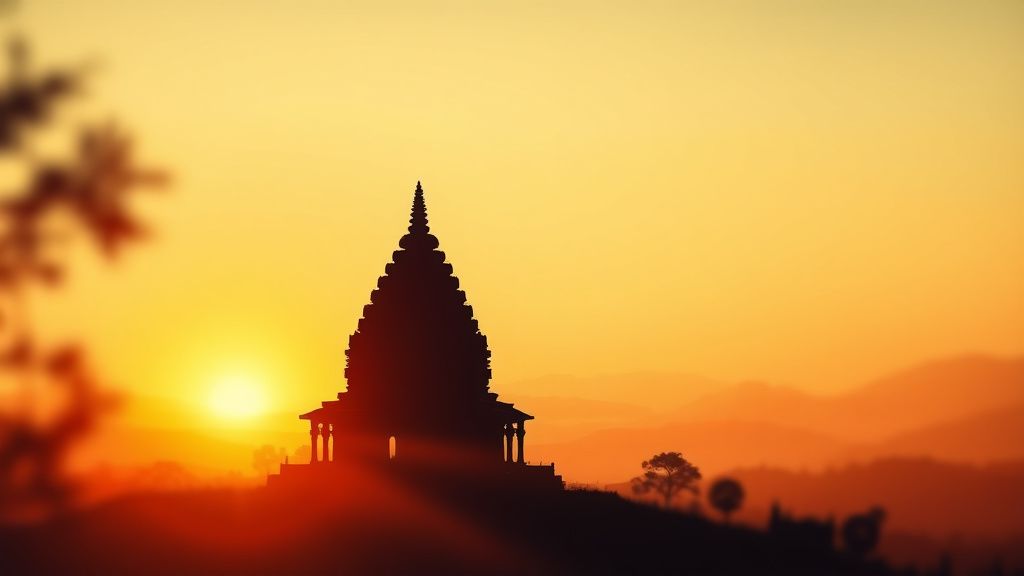
Hindu Temples Have Flagposts

The Dhwajastambha carries the power of the God in the temple, acting as a proclamation of divine presence, a symbol of the temple’s prosperity and pride, and a protective element that completes the sacred space. Symbolically, this vertical structure is likened to the human spine (jeevadhara) with traditionally 32 rings corresponding to the 32 vertebrae, channeling spiritual energy (prana) and divine blessings from the cosmos down to devotees on earth.

During festivals, the Dhwajastambha plays a central ritual role in Dwajarohanam (flag hoisting ceremony) that announces the commencement of major temple celebrations, with the festival flag often carrying the deity’s vahana (vehicle)—such as Garuda for Vishnu temples, Nandi for Shiva temples, or peacock for Murugan temples—along with auspicious symbols like sun, moon, trident, or conch. The Sanskrit word ‘dhvaja’ means “whatever is raised,” and in the religious sense, it signifies whatever raises humanity to a higher level of understanding and activity, suggesting hope and the desire to overcome ignorance.

The flagstaff’s construction follows precise Vastu and Agamic guidelines: it must be crafted from a single tree or stone for structural integrity, its height must not exceed the main gopuram (entrance tower), and its distance from the sanctum is carefully measured to maintain cosmic balance in the temple layout. This comprehensive guide explores the profound religious symbolism of Dhwajastambha as cosmic connector and divine proclamation, its architectural significance and precise placement according to temple science,

the Trimurti representation and energy channeling function, specific deity emblems like Garuda dhwaja for Vishnu temples, festival rituals and flag hoisting ceremonies, construction materials and traditional design principles, and what the flagpost reveals about Hindu philosophy‘s vision of temples as bridges between earthly and celestial realms.

Religious and Spiritual Significance

Proclamation of Divine Presence

The primary function of the Dhwajastambha is to announce the deity’s presence:

Sacred Proclamation:

  • “One of the primary reasons to have a flag or Dhvaja at the top of the temple is to symbolise the presence of the God who is worshipped in that particular temple”
  • The flag acts as a proclamation of the sacredness of the temple
  • Visible from a distance, guiding pilgrims and devotees to the sacred space

Indicating Divine Energies:

  • Not just about letting devotees know which deity resides inside
  • Also indicates the divine and spiritual energies of that temple
  • Marks the temple as a space where earthly and celestial forces converge

Symbol of God’s Victory:

  • Represents the victory of dharma over adharma (righteousness over unrighteousness)
  • Symbolizes divine triumph over evil forces
  • The raised flag as a banner of spiritual victory

Cosmic Axis: Connecting Realms

The Dhwajastambha serves as axis mundi (cosmic axis):

Three Realms Connected:

  • Earthly realm: Where devotees stand and worship
  • Celestial realm: Abode of devas (gods) and divine forces
  • Underworld: The subterranean and subtle dimensions

Spiritual Connector:

  • “The Dwajasthambam is referred to as being a medium for the Heavens to be connected to the earth”
  • Functions as spiritual connector between earthlings and the Supreme Being, God

Energy Flow:

  • As the flag flutters in the wind, it represents the constant flow of divine energy and blessings from the heavens to earth
  • The movement symbolizes dynamic exchange between cosmic and terrestrial planes
  • Devotees receive blessings channeled through this cosmic conduit

The Temple’s Spiritual Spine

The Dhwajastambha is likened to the human spine:

Jeevadhara (Life Channel):

  • The vertical form is compared to the human spine (jeevadhara)
  • Channels the temple’s spiritual energy
  • Connects the sanctum sanctorum with the outer world

32 Rings = 32 Vertebrae:

  • Traditionally constructed with 32 rings
  • Corresponds to the 32 vertebrae of the human spine
  • Represents the flow of prana (vital life force) and spiritual energy

Energy Centers:

  • The three-tiered design mirrors human energy centers and divine channels
  • Just as the spine facilitates bodily energy flow, the Dhwajastambha facilitates temple energy circulation
  • Creates a vertical axis of spiritual power

Completing the Temple:

  • “Many traditions hold that a temple without this sacred pole is incomplete”
  • Considered vulnerable to negative forces without the Dhwajastambha
  • Reinforces its role as guardian of spiritual energy

Hindu Temples Have Flagposts Symbol of Transcendence

The flag represents spiritual aspiration:

Raising Consciousness:

  • The Sanskrit word ‘dhvaja’ means “whatever is raised”
  • In religious sense, “whatever raises man to a higher level of understanding and activity is a ‘dhvaja'”

Hope and Aspiration:

  • The flag suggests hope and desire to overcome ignorance
  • Symbolizes the upward spiritual journey from darkness to light
  • Represents humanity’s eternal aspiration toward divine realization

Victory Over Darkness:

  • The Dhwajastambha represents the victory of dharma over darkness
  • Its upward thrust symbolizes transcendence of lower consciousness
  • The fluttering flag as celebration of spiritual achievement

Architectural Placement and Design

Strategic Positioning

The Dhwajastambha occupies a precise location:

In Front of Sanctum:

  • Located “in the courtyard of the temple, right in front of the sanctum”
  • Perfectly aligned with the deity in the sanctum sanctorum

Along Temple Axis:

  • Strategically placed along the temple axis
  • Typically positioned between the gopuram (entrance tower) and the main mandapa (hall)
  • Creates a direct energetic line: Gopuram → Dhwajastambha → Mandapa → Garbhagriha

Measured Distance:

  • The distance from the sanctum is precisely calculated according to Vastu principles
  • Maintains cosmic balance in the temple layout
  • Ensures proper energy flow throughout the sacred space

Structural Specifications

Construction follows strict architectural guidelines:

Single-Piece Construction:

  • Crafted from a single tree or single stone
  • Ensures structural integrity and unbroken energy channel
  • Symbolizes unity and wholeness

Height Regulation:

  • Must not exceed the main gopuram (entrance tower)
  • Maintains hierarchical harmony in temple architecture
  • The gopuram remains the dominant vertical element

Vertical Axis Alignment:

  • Positioned along the temple’s vertical axis to facilitate energy flow
  • Creates unobstructed channel for divine blessings
  • Aligns with the deity’s presence in sanctum

Materials and Construction

Traditional temple flagposts use specific materials:

Metallic Construction:

  • Described as “tall metallic or metallic coated structure”
  • Often made of brass, copper, or bronze
  • Metal cladding serves functional purposes like durability and lightning protection

Stone Flagstaffs:

  • Some temples feature monolithic stone Dhwajastambhas
  • Granite or other durable stone carved as single pillar
  • Associated with permanence and stability

Wooden Flagposts:

  • Certain regional traditions use wood
  • Typically the trunk of a sacred tree
  • Requires periodic replacement unlike metal or stone

Base Design:

  • Rests on a lotus-petal pedestal
  • The lotus symbolizes purity and divine manifestation
  • Creates sacred foundation for the cosmic pillar

The Lotus Pedestal

The base incorporates specific symbolism:

Lotus Foundation:

  • Represents purity emerging from the worldly (lotus rises from mud)
  • Symbolizes divine manifestation in material world
  • Creates energetic grounding for the vertical structure

Structural Function:

  • Provides stable platform for tall structure
  • Distributes weight appropriately
  • Often features ritual spaces for offerings

The Three Horizontal Perches: Trimurti Symbolism

The Mekhala (Three Branches)

The distinctive top portion features three horizontal elements:

Description:

  • “On the top of the dhwaja-stambha is a flag like structure constituted of three horizontal metallic strips”
  • Known as mekhala (perches or branches)
  • Tiny bells suspended from them creating gentle sacred sounds

Orientation:

  • The three prongs are directed towards the sanctum
  • Point toward the deity, focusing energy and devotion
  • Guide devotees’ attention to the garbhagriha

Trimurti Representation

The three perches symbolize the Hindu Trinity:

The Three Principal Deities:

  • Brahma (the creator)
  • Vishnu (the preserver)
  • Shiva (the destroyer)

Integration of Divine Functions:

  • The three together represent the complete cosmic cycle
  • Creation, preservation, and dissolution as unified divine process
  • All three aspects present and honored in the temple space

Architectural Tripartite Division:

  • Base symbolizes Brahma (foundation of creation)
  • Polygonal middle section represents Vishnu/Perumal (preservation of existence)
  • Cylindrical top portion represents Shiva (ultimate transcendence)
  • Encompasses the three principal deities in Hindu philosophy

Triple Symbolism

The three prongs carry multiple layers of meaning:

Peace, Victory, and Power:

  • The three horizontal strips represent peace, victory, and power
  • Peace: Spiritual tranquility and harmony
  • Victory: Triumph of dharma and divine forces
  • Power: Shakti (divine energy) manifesting in the world

Protective Function:

  • “Symbolically, these three objects are shields that protect the sanctuary of the temple from the impure and undevoted”
  • Create energetic barrier guarding the sanctum
  • Filter and purify energies approaching the deity

Three Channels:

  • Represent channels of divine energy flowing to devotees
  • Mirror human energy centers (chakras)
  • Facilitate spiritual transmission

The Bells

Small bells suspended from the horizontal perches:

Sacred Sound:

  • Create gentle tinkling as wind moves them
  • Sound purifies the atmosphere
  • Attracts divine attention and positive energies

Dispersing Negativity:

  • Bell sounds traditionally believed to disperse negative forces
  • Create sacred acoustic environment
  • Mark the temple as sonically sanctified space

Deity-Specific Emblems and Vahanas

Garuda Dhwaja for Vishnu Temples

Vaishnava temples feature distinctive Garuda emblems:

Garuda: Vishnu’s Divine Vehicle:

  • “He is always depicted on top of flagpole of Vaishnav Temple”
  • Garuda, the divine eagle, is Lord Vishnu’s vahana (mount)
  • Represents divine presence of Lord Vishnu

Symbolism of Garuda:

  • Speed and power (eagles as swift, powerful birds)
  • Freedom and transcendence (soaring to celestial heights)
  • Victory over nagas (serpents), representing triumph over lower forces
  • Devotion and service (Garuda’s dedicated service to Vishnu)

Festival Flag:

  • During temple festivals, the flag hoisted on Garuda dhwaja carries Garuda’s image
  • Often accompanied by symbols like conch (shankha), discus (chakra), mace (gada)
  • Identifies the temple as Vaishnava sanctuary

Other Deity Vahanas

Different temples display appropriate vahanas:

Nandi Dhwaja (Shiva Temples):

  • Features Nandi, the sacred bull, Shiva’s vehicle
  • Symbolizes dharma, strength, and devotion
  • Often placed with trident (trishul) or Shiva lingam symbols

Peacock Dhwaja (Murugan/Kartikeya Temples):

  • Displays peacock (mayil), Murugan’s mount
  • Represents beauty, victory, and divine grace
  • Common in South Indian temples dedicated to Murugan

Swan/Hamsa Dhwaja (Saraswati Temples):

  • Features swan, Saraswati’s vehicle
  • Symbolizes discrimination, wisdom, and purity
  • Identifies temples dedicated to the goddess of knowledge

Lion Dhwaja (Devi Temples):

  • Displays lion or tiger, Durga’s mount
  • Represents power, courage, and protection
  • Common in Shakti temples

The Lanchana (Insignia)

The temple’s specific emblem crowns the flagpole:

Deity-Specific Insignia:

  • “The lanchana (insignia) made of copper or brass fixed like a flag to the top of the post varies according to the deity in the temple and his/her nature”
  • Immediately identifies the temple’s presiding deity from a distance
  • Creates visual coherence between temple identity and architectural elements

Common Symbols:

  • Sun and moon (cosmic time and eternity)
  • Trident (Shiva’s weapon and symbol)
  • Conch (Vishnu’s sacred instrument)
  • Om symbol (primordial sound)
  • Specific mudras or deity hand gestures

Festival Rituals: Dwajarohanam

The Flag Hoisting Ceremony

The Dhwajastambha becomes central during temple festivals:

Dwajarohanam Ritual:

  • Essential ritual for festival-ready temples
  • “The ritual of hoisting the flag to announce the start of major celebrations”
  • Marks the formal commencement of the festival period
  • Signals to devotees and cosmic forces that celebrations have begun

Festival Flag:

  • Carries the deity’s vahana (Garuda, Nandi, peacock, etc.)
  • Includes auspicious symbols like sun, moon, trident, or conch
  • Often made of special silk or colorful cloth
  • Larger and more elaborate than daily flags

Timing:

  • Performed at the festival’s beginning
  • Accompanied by Vedic chanting, music, and ceremonial rituals
  • Priests conduct elaborate puja to the flagstaff before hoisting

Karthigai Deepam

Special ritual during Karthigai month:

Aakasa Deepam:

  • During Karthigai (Karthika) month, the flagstaff is used to raise the Aakasa Deepam
  • A lamp is hoisted to the top of the Dhwajastambha
  • Sends light skyward, symbolizing divine illumination

Spiritual Significance:

  • The elevated lamp represents knowledge dispelling ignorance
  • Light ascending to heavens as offering
  • Visible from great distance, guiding devotees to temple
  • Creates spectacular visual during evening ceremonies

Circumambulation and Worship

Devotees interact with the Dhwajastambha ritually:

Pausing for Respect:

  • “Devotees often pause at the flagstaff to offer their respects”
  • Performing prayers and circumambulation

Pradakshina (Circumambulation):

  • Devotees circumambulate the Dhwajastambha along with bali pitham (offering platform) and vahana (deity’s vehicle)
  • Follows Agamic and local customs
  • Creates sacred circuit before entering inner sanctum

Offerings:

  • Flowers, incense, and prayers offered at the base
  • Touching or bowing to the flagpost in reverence
  • Seeking blessings before proceeding to main deity

Festival Duration

The flag remains hoisted throughout the celebration:

Flag Lowering:

  • At festival’s conclusion, formal flag lowering ceremony (Dwaja Avarohanam)
  • Marks the end of special celebration period
  • Temple returns to normal worship schedule

Symbolism:

  • The duration of flag display = duration of heightened divine presence
  • Intensified spiritual energies during flag hoisting period
  • Community participation in raising and lowering creates collective ritual

Prosperity, Pride, and Protection

Symbol of Temple Prosperity

The Dhwajastambha indicates the temple’s status:

Pride and Prosperity:

  • “A Dwajasthambam usually represents the prosperity and pride of a temple”
  • Tall, well-maintained flagpost signals thriving temple
  • Elaborate design reflects community devotion and resources

King of Kings:

  • The Dhwajastambha represents the “flag post of the ‘King of kings'”
  • God as supreme sovereign
  • Temple as divine court or palace
  • Flagpole as royal standard of ultimate authority

Community Identity:

  • The flagpost identifies and distinguishes the temple
  • Creates landmark visible across landscape
  • Source of community pride and religious identity

Protective Guardian

The Dhwajastambha serves protective functions:

Warding Off Negative Forces:

  • Acts as shield protecting the sanctuary from impure and undevoted energies
  • “Temple without this sacred pole is incomplete and vulnerable to negative forces”
  • Functions as energetic barrier and guardian

Spiritual Defense:

  • The vertical structure creates protective field
  • Consecrated with mantras and rituals enhancing protective power
  • Bells ward off malevolent spirits and energies

Completion of Sacred Geometry:

  • The flagpost completes the temple’s sacred architectural pattern
  • Without it, the energetic circuit remains incomplete
  • Ensures proper spiritual functioning of entire complex

Lightning Protection

Practical protective function:

Functional Design:

  • Metal cladding serves practical purposes including lightning protection
  • The tall metal structure acts as lightning rod
  • Protects temple buildings from lightning strikes
  • Ancient wisdom combining spiritual and practical considerations

Height and Conductivity:

  • Tallest point in temple courtyard (though not exceeding gopuram)
  • Metal construction ensures electrical conductivity
  • Grounded to earth, safely conducting lightning strikes away from sanctum

Temple Science and Vastu Principles

Alignment with Temple Axis

The Dhwajastambha follows precise Vastu guidelines:

Central Axis:

  • Positioned exactly on the temple’s central longitudinal axis
  • Creates energetic alignment: Entrance → Flagpost → Sanctum
  • Facilitates unobstructed energy flow

Proportional Relationships:

  • Distance from sanctum calculated based on temple dimensions
  • Height proportional to gopuram and vimana (tower over sanctum)
  • Creates harmonious architectural proportions

Sight Lines:

  • From entrance, devotees see flagpost leading eye toward sanctum
  • Creates visual and spiritual pathway
  • Guides pilgrims physically and metaphorically toward deity

Energy Channeling

The flagpost functions as spiritual technology:

Cosmic Antenna:

  • Receives and channels celestial energies downward
  • Grounds cosmic forces in temple space
  • Facilitates two-way energy exchange (prayers ascending, blessings descending)

Prana Flow:

  • The 32 rings facilitate flow of prana and spiritual energy
  • Like acupuncture meridians in human body
  • Regulates and distributes temple’s spiritual vitality

Resonance Point:

  • The flagpost may function as resonant structure
  • Vibrations from bells, chanting, and rituals amplified
  • Creates harmonic field enhancing worship experience

Sacred Geometry

Mathematical and mystical proportions:

Golden Ratio:

  • Dimensions often incorporate sacred mathematical ratios
  • Creates aesthetically pleasing and spiritually harmonious structure
  • Reflects cosmic order in material form

Symbolic Numbers:

  • 32 rings (vertebrae, stages of spiritual development)
  • 3 horizontal perches (Trimurti, trigunas)
  • Height measured in traditional units with numerological significance

Modern Practices and Contemporary Relevance

Continuing Tradition

The Dhwajastambha remains integral to contemporary Hindu temples:

New Temple Construction:

  • Modern temples continue installing Dhwajastambhas
  • Traditional design maintained even with contemporary materials
  • Recognized as essential architectural element

Global Hindu Temples:

  • Temples in diaspora communities include flagposts
  • Maintains cultural and religious continuity
  • Symbol of authentic temple construction

Material Innovations

Contemporary materials while preserving tradition:

Stainless Steel and Alloys:

  • Modern metals offering greater durability
  • Resistance to corrosion in various climates
  • Maintains traditional appearance while improving longevity

Engineered Foundations:

  • Concrete bases with traditional lotus-pedestal facing
  • Ensures structural stability in seismic zones
  • Combines modern engineering with sacred design

Lighting Integration:

  • LED lighting integrated into flagpost design
  • Illuminates flag and emblem at night
  • Creates spectacular visual during festivals

Challenges and Adaptations

Urban temples face specific challenges:

Space Constraints:

  • Limited courtyard space in urban settings
  • Scaled-down flagposts maintaining proportional integrity
  • Alternative placements when traditional positioning impossible

Height Restrictions:

  • Municipal building codes limiting structure heights
  • Balancing regulatory compliance with religious requirements
  • Creative solutions maintaining symbolic presence

Maintenance:

  • Regular maintenance of metal structures
  • Cleaning, repainting, structural inspections
  • Preserving bells and decorative elements

Frequently Asked Questions

What is the significance of Dhwajastambha in Hindu temples?

Dhwajastambha (temple flagpost) serves as the spiritual spine of the temple, acting as a cosmic axis (axis mundi) connecting earthly, celestial, and underworld realms while channeling divine energy and blessings from heaven to devotees. It proclaims the deity’s presence and the temple’s sacredness, with the flag fluttering representing constant flow of divine grace. The flagpost is likened to the human spine (jeevadhara) with traditionally 32 rings corresponding to 32 vertebrae, facilitating flow of prana (spiritual energy) throughout the temple. It represents victory of dharma over darkness and serves as a protective guardian without which the temple is considered incomplete and vulnerable.

What do the three horizontal perches on the Dhwajastambha represent?

The three horizontal perches (mekhala) pointing toward the sanctum symbolize the Trimurti—Brahma (creator), Vishnu (preserver), and Shiva (destroyer). These three metallic strips with tiny bells suspended from them also represent peace, victory, and power. The architectural design features a base symbolizing Brahma, polygonal middle section representing Vishnu, and cylindrical top representing Shiva, encompassing all three principal deities in Hindu philosophy. Symbolically, these three objects function as shields protecting the sanctuary from impure and undevoted energies.

Why is Garuda on top of Vishnu temple flagpoles?

Garuda, the divine eagle and Lord Vishnu’s vehicle (vahana), is always depicted on top of Vaishnava temple flagpoles to represent the divine presence of Lord Vishnu. During festivals, the hoisted flag carries Garuda’s image along with Vishnu’s symbols like conch (shankha), discus (chakra), and mace (gada). Garuda symbolizes speed, power, freedom, transcendence, victory over lower forces (serpents), and dedicated devotion to Vishnu. The Garuda dhwaja immediately identifies the temple as a Vaishnava sanctuary and serves as Vishnu’s standard proclaiming his presence.

What is Dwajarohanam ritual?

Dwajarohanam is the ceremonial flag hoisting ritual performed at the start of major temple festivals to announce the commencement of celebrations. The festival flag, which carries the deity’s vahana (like Garuda for Vishnu or Nandi for Shiva) along with auspicious symbols such as sun, moon, trident, or conch, is hoisted on the Dhwajastambha with Vedic chanting and elaborate priestly rituals. During Karthigai month, the flagstaff is used to raise the Aakasa Deepam (sky lamp), sending light skyward symbolizing divine illumination. The flag remains hoisted throughout the festival period until the closing Dwaja Avarohanam (flag lowering) ceremony.

Where is the Dhwajastambha positioned in temple architecture?

The Dhwajastambha is strategically placed along the temple’s central axis, typically between the gopuram (entrance tower) and the main mandapa (hall), positioned directly in front of the sanctum sanctorum and perfectly aligned with the deity. Its distance from the sanctum is precisely measured according to Vastu principles to maintain cosmic balance, and its height must not exceed the main gopuram while being tall enough to serve as a landmark. The flagpost creates an energetic line: Gopuram → Dhwajastambha → Mandapa → Garbhagriha, facilitating unobstructed energy flow throughout the sacred space.

What materials are used to construct Dhwajastambhas?

Traditional Dhwajastambhas are crafted from a single tree or single stone to ensure structural integrity and unbroken energy channels. They are often described as tall metallic or metallic coated structures made of brass, copper, or bronze, with metal cladding serving functional purposes including durability and lightning protection. The base typically rests on a lotus-petal pedestal symbolizing purity and divine manifestation. The lanchana (insignia) made of copper or brass is fixed like a flag at the top, varying according to the temple deity. Modern temples may use stainless steel while maintaining traditional design.

Why do the bells hang from the Dhwajastambha?

Tiny bells suspended from the three horizontal perches create gentle tinkling sounds as wind moves them, purifying the atmosphere and attracting divine attention and positive energies. The sacred sounds are traditionally believed to disperse negative forces and create a sanctified acoustic environment, marking the temple as a sonically pure space. The bells also serve to draw devotees’ attention to the flagpost and sanctum, creating an auditory dimension to the visual proclamation of divine presence. The sound of bells is considered auspicious in Hindu tradition, awakening spiritual consciousness.

What does the flag on temple flagpost symbolize?

The flag symbolizes hope and the desire to overcome ignorance, as the Sanskrit word ‘dhvaja’ means “whatever is raised,” and in religious sense, “whatever raises man to a higher level of understanding and activity”. The fluttering flag represents the constant flow of divine energy and blessings from heavens to earth and devotees. It proclaims the temple’s sacredness and the deity’s presence, functioning as a spiritual standard of the “King of kings” (God as supreme sovereign). The raised flag symbolizes victory of dharma over darkness, spiritual triumph, and divine manifestation in the material world.

Conclusion

The Dhwajastambha represents one of Hindu temple architecture’s most profound integrations of spiritual symbolism and practical function—a vertical structure that simultaneously proclaims divine presence, channels cosmic energy, protects sacred space, marks festival celebrations, and guides pilgrims toward the sanctum, embodying the temple’s role as a bridge between earthly and celestial realms. The meticulously designed flagpost with its 32 rings mirroring the human spine, three horizontal perches representing the Trimurti, deity-specific emblems like Garuda for Vishnu or Nandi for Shiva, and lotus-petal base demonstrates how Hindu philosophy translates abstract spiritual concepts into concrete architectural forms that devotees can see, circumambulate, and venerate.

The festival rituals of Dwajarohanam (flag hoisting) that inaugurate celebrations and Aakasa Deepam that sends light skyward reveal how the Dhwajastambha transforms from permanent architectural element to dynamic ritual participant, becoming the focal point through which communities announce, celebrate, and conclude sacred time. The traditional belief that temples without flagposts are incomplete and vulnerable reflects deeper understanding that sacred architecture requires not just enclosed sanctums but also vertical elements connecting those earthly sanctuaries to cosmic sources of divine power and protection—that spiritual energy must be both grounded and reaching upward, both contained and freely flowing.

The continuing prominence of Dhwajastambhas in contemporary temple construction, from rural South Indian villages to urban diaspora communities worldwide, testifies to this architectural element’s enduring relevance as a visible, public proclamation of Hindu religious identity and divine presence—a structure that anyone approaching a temple encounters before entering,

that guides eyes and hearts toward the garbhagriha, and that stands as permanent witness to the eternal truth that the divine and human, the cosmic and terrestrial, the transcendent and immanent are not separated realms but interconnected dimensions of a unified sacred reality that temple architecture makes tangible, and that the humble flagpost, with its fluttering banner catching wind and light, embodies and transmits to all who pause, bow, and receive its blessing before proceeding toward the deity’s presence within.


About the Author


Priya Sharma
 – Cultural Heritage & Temple Architecture Specialist


Priya Sharma is an accomplished writer and researcher specializing in Hindu festivals, temple architecture, and India’s rich cultural traditions. With a Master’s degree in Indian Art History from Maharaja Sayajirao University, she has extensively documented pilgrimage sites, temple iconography, and folk traditions across India. Her work focuses on making India’s spiritual heritage accessible to contemporary audiences while preserving authentic cultural narratives.

You May Also Like

Leave a Comment

Adblock Detected

We noticed you're using an ad blocker. Hindutva.online is committed to providing quality content on Hindu heritage and culture. Our ads help support our research and writing team. Please consider disabling your ad blocker for our site to help us continue our mission.
