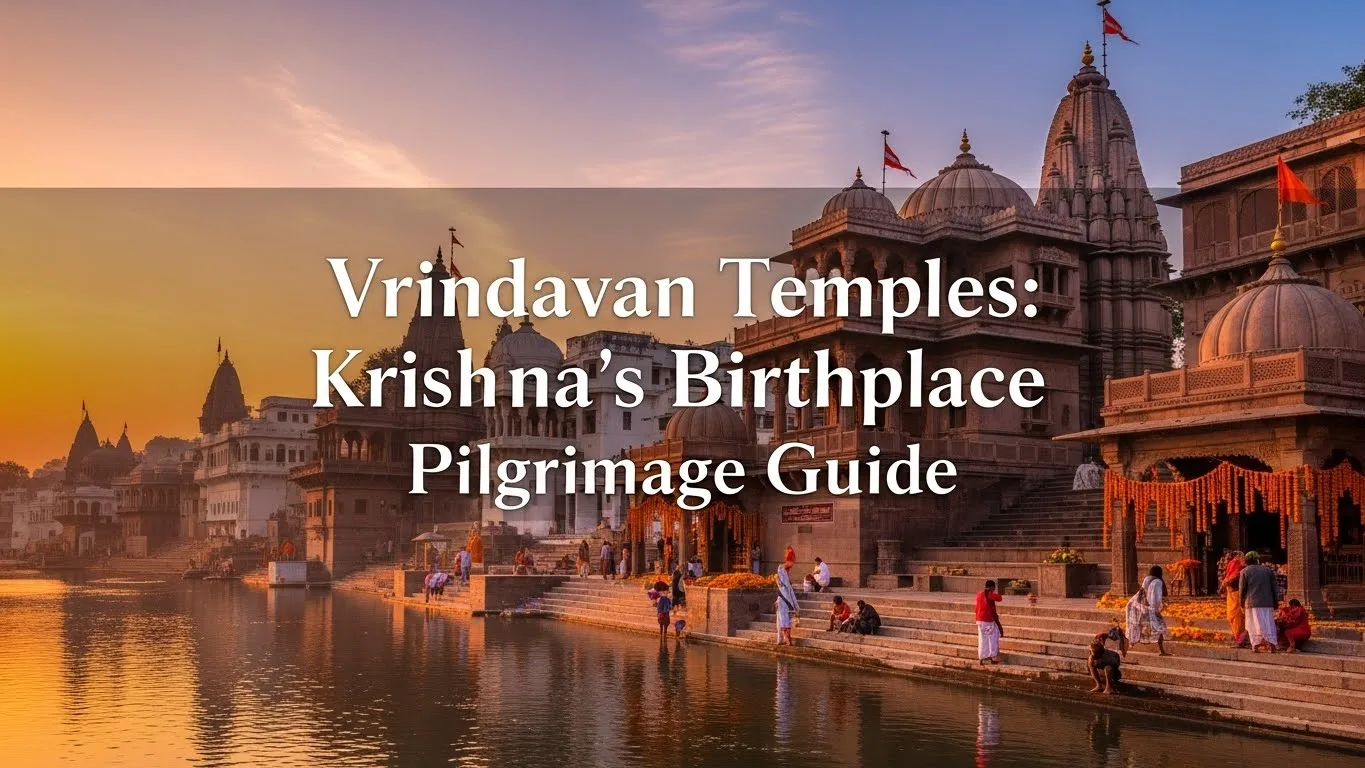
Vrindavan Temples Important Clarification: While Vrindavan and Mathura are intrinsically connected to Lord Krishna’s earthly pastimes, Krishna was actually born in Mathura (at Krishna Janmabhoomi/Katra Keshav Dev Temple), not Vrindavan. Mathura marks Krishna’s grand entrance into the world—his birth in King Kansa’s prison cell—while Vrindavan, located 10-15 km away, represents his childhood playground where his heart truly came alive, filled with playful pranks, divine love with Radha, and the eternal Raas Leela (divine dance).

Together, these twin pilgrimage cities in Uttar Pradesh’s Braj region form the spiritual heart of Krishna bhakti (devotion), with Mathura housing sacred sites like Shri Krishna Janmabhoomi Temple (the actual birthplace), Dwarkadhish Temple, and Vishram Ghat where Krishna rested after slaying demon Kansa, while Vrindavan hosts temples celebrating Krishna’s youthful pastimes including Banke Bihari Temple, ISKCON Temple, Prem Mandir, and the mysterious Nidhivan where locals believe Krishna still performs Raas Leela every night.
Vrindavan alone boasts numerous temples dedicated to Krishna and Radha, with major pilgrimage sites including Banke Bihari Temple (famous for unique curtain-darshan where the deity is briefly revealed), ISKCON Temple (serene environment with 4:30 AM Mangala Aarti), Prem Mandir (spectacular marble architecture with evening light shows), Radha Raman Temple (self-manifested deity), and Nidhivan—the enigmatic grove where devotees believe tulsi plants transform into gopis and Krishna arrives nightly to perform the divine dance, with the temple locked after sunset as no one is allowed to witness this sacred event.
A comprehensive Mathura-Vrindavan pilgrimage requires 2-3 days minimum to cover essential temples and ghats, though spiritual seekers often spend 3-5 days to include surrounding Braj sites like Gokul (Krishna’s foster home), Barsana (Radha’s birthplace), Nandgaon (Nanda’s village), and Govardhan Hill.
This comprehensive guide explores the complete temple circuit of Mathura-Vrindavan with detailed timings and significance, the mystical Nidhivan phenomenon and its nighttime restrictions, major temples including Banke Bihari’s unique darshan traditions and ISKCON’s spiritual schedule,
optimal 1-5 day pilgrimage itineraries covering both cities plus extended Braj region, practical visiting information including dress codes and accommodation, the theological and historical importance of Krishna’s birthplace and childhood lands, and what the Mathura-Vrindavan experience reveals about Hindu philosophy‘s bhakti tradition where divine love, playful devotion, and mystical experiences merge in these sacred landscapes where Krishna’s presence remains palpable five millennia after his earthly pastimes.
Understanding Mathura vs Vrindavan
Mathura: The City of Krishna’s Birth
- “Mathura, a bustling city, marks Krishna’s grand entrance into the world”
- Krishna was born here in King Kansa’s prison cell approximately 5,000 years ago
- Shri Krishna Janmabhoomi Temple built on the exact birthplace
- A city steeped in historical grandeur and sacred significance
- Urban, historical city atmosphere
- Ancient site with documented history spanning millennia
- Focuses on Krishna’s birth and his act of defeating demon-king Kansa
- Major pilgrimage site for Janmashtami (Krishna’s birthday)
- Shri Krishna Janmabhoomi – The actual birthplace
- Dwarkadhish Temple – Krishna as King of Dwarka
- Vishram Ghat – Where Krishna rested after killing Kansa
- Government Museum – Ancient sculptures and artifacts
Vrindavan: The Land of Krishna’s Heart
- “Vrindavan is where his heart truly comes alive”
- “A place that whispers stories of love, laughter, and divine connection”
- “Where Krishna’s spirit dances around every corner”
- Located 10-15 km from Mathura
- “Vrindavan is known to be the playground of the divine”
- Temple town atmosphere with devotional energy
- Focuses on Krishna’s childhood, his love for Radha, playful pastimes with gopis
- “Where your soul dances with Krishna”
- Banke Bihari Temple – Most visited Krishna temple
- ISKCON Temple – International spiritual center
- Prem Mandir – Beautifully lit marble temple
- Nidhivan – Mysterious grove of divine Raas Leela
- Radha Raman Temple – Self-manifested deity
The Relationship: Two Sides of One Coin
- “Think of them as two sides of the same coin”
- Mathura provides historical grounding and birth narrative
- Vrindavan offers intimate devotional experience
- Together they represent complete Krishna pilgrimage
- Most devotees visit both cities in one journey
Major Temples in Vrindavan
1. Banke Bihari Temple
Deity: Lord Krishna as Banke Bihari (“one who is bent in three places”)
- “One of the most visited Krishna temples with vibrant celebrations”
- Most famous temple in Vrindavan
- Established by Swami Haridas in 16th century
- “Famous for its unique darshan style, where the deity is briefly revealed behind a curtain to prevent devotees from becoming overwhelmed”
- Curtains open and close multiple times during darshan
- Brief glimpses rather than continuous viewing
- Prevents devotees from being mesmerized and not leaving
- Summer: 7:30 AM – 12:00 PM; 5:30 PM – 9:30 PM
- Winter: 8:45 AM – 1:00 PM; 4:30 PM – 8:30 PM
Crowd Management:
- Extremely crowded, especially on weekends and festivals
- Best visited early morning or late evening
- Be prepared for long queues during peak times
Special Occasions:
- Janmashtami (Krishna’s birthday) – Massive celebrations
- Holi – Famous celebration with colors
- Radha Ashtami – Radha’s appearance day
- Visit before noon for Day 1 itinerary
- Photography usually not allowed inside
- Very crowded environment; keep valuables safe
2. ISKCON Temple (Krishna Balaram Mandir)
Full Name: Sri Krishna Balaram Mandir
- “Spiritual center known for peaceful ambiance and global devotees”
- Managed by International Society for Krishna Consciousness
- “Known for its cleanliness and devotion-filled ambience”
- Morning: 4:30 AM – 1:00 PM
- Evening: 4:00 PM – 8:30 PM (or 4:30 PM – 8:15 PM)
- Afternoon closure: 1:00 PM to 4:30 PM
- Mangala Aarti: 4:30 AM (most spiritual experience)
- Morning kirtans and bhajans
- Evening aartis
- “Devotees are encouraged to attend Aarti sessions for a complete spiritual experience”
- “Renowned for its serene environment and beautifully sung bhajans by devotees”
- Govinda’s Restaurant – Pure vegetarian meals
- Clean, well-maintained premises
- International devotee community
- Guest house facilities available
Activities:
- Attend morning Mangala Aarti at 4:30 AM
- Participate in kirtans (devotional singing)
- Visit on-site museum
- Shop for spiritual books and items
3. Prem Mandir
- “Known for its spectacular architecture and enchanting light shows in the evening”
- Relatively new temple (inaugurated 2012)
- Built by Jagadguru Kripalu Parishat
- Morning: 5:30 AM – 12:00 PM
- Evening: 4:30 PM – 8:30 PM
- “A beautifully lit temple with marble carvings and fountains”
- Constructed entirely in white Italian marble
- “Intricate carvings depicting Krishna’s life stories”
- Beautiful gardens and musical fountains
- Light & sound show from 6:30 PM onwards
- Temple illuminated with colorful lights
- Musical fountains synchronized with devotional music
- Must-see attraction in Vrindavan
Photography:
- Generally allowed in outer areas
- Beautiful photo opportunities, especially at night
Best Time:
- Evening for light show
- Less crowded than Banke Bihari
- Family-friendly atmosphere
4. Nidhivan Temple – The Mysterious Grove
- “Located in a sacred forest, Nidhivan Temple is associated with Krishna’s playful Raas Leela (divine dance) with Radha and the Gopis”
- “Believed to be the place where Krishna still performs Ras Leela at night”
- “There is a place in Vrindavan, where Lord Krishna still performs Raasleela every night”
- “Every evening, once the Sandhya Aarti is completed, the gates of Nidhivan are locked”
- “No priest, no pilgrim, not even an animal remains inside”
- “Lord Krishna and Radha arrive to enact the divine dance of love — the Raas Leela, in complete secrecy”
- “The trees turn into gopis during the night time when Krishna visits, and come back to their normal forms at dawn”
- “The Tulsi plants turn into Gopis at night and dance around while Krishna performs his Raas Leela”
- Tulsi plants stand in pairs throughout Nidhivan
- Unusual hollow trees with twisted, downward branches
Rang Mahal (The Divine Chamber):
- “Inside Nidhivan, there is a little temple called Rang Mahal or shringar-ghar of Radha Rani”
- “According to folklore, Krishna visits here every night and adorns Radha with his own hands”
- Fresh bed prepared daily with sandalwood
- Water jar, paan (betel leaf), ornaments, and makeup kept ready
- In morning, “the bed looks used, and the paan and water seems to have been tasted”
- “People aren’t allowed to stay on or near the property after dark”
- “Anyone who dares to watch this ceremony will inevitably die, go insane, or become deaf, blind, and mute”
- Local residents close windows and doors after evening aarti
- No birds or animals present after 7 PM
The Mystical Evidence:
- “People hear the sound of ghungroos at night”
- Melodious flute tunes reported
- Sound of Radha’s anklets during dance
- Offerings found scattered in morning despite locked doors
- Open during daytime for visitors
- Must leave before sunset/evening aarti
- Can see the unusual vegetation and Rang Mahal
- Deeply devotional atmosphere
- Part of multi-day itineraries (Day 5)
5. Radha Raman Temple
Deity: Radha Raman (self-manifested Krishna deity)
- “Famous for its original self-manifested deity of Krishna”
- Among most revered Krishna deities in Vrindavan
- Established in 16th century by Gopala Bhatta Goswami
Unique Feature:
- Swayambhu (self-manifested) deity
- Did not require carving by human hands
- Considered highly sacred
- Daily elaborate worship rituals
6. Other Important Vrindavan Temples
- Dedicated to Radha and Krishna
- Beautiful idol of Lord Krishna
- Part of temple circuit
- Multi-story temple
- Dedicated to Goddess Vaishno Devi
- Provides variety in temple visits
Govind Dev Temple:
- Ancient temple with historical significance
- Associated with Krishna’s divine pastimes
Shahji Temple:
- Beautiful Belgian glass decorations
- Unique architectural style
Major Temples in Mathura
1. Shri Krishna Janmabhoomi Temple
- “Sri Krishna Janma Bhoomi is the actual birthplace of Lord Krishna”
- “The temple is built around the prison cell in which Lord Krishna’s parents, Mata Devaki and Vasudeva were imprisoned by his evil uncle Kansa”
- Most important pilgrimage site for Krishna devotees
- “Believed that it was first constructed by the great-grandson of Krishna Vajranabha 5000 years ago”
- Constructed in 6th century BC according to some legends
- “A bigger temple was constructed during the reign of Emperor Chandragupta Vikramaditya in the 4th century CE”
- “Renovated many times over the centuries, by different rulers”
- Also known as Katra Keshav Dev Temple
- Built around the actual prison cell (now sanctum sanctorum)
- Keshavdeva Temple with garbha griha at Krishna’s birthplace
- Bhagavata Bhavan part of complex
Location:
- 4 km from Mathura Junction Railway Station
- In crowded area of Mathura city
Timings:
- Usually early morning to late evening
- Check specific timings before visit
2. Dwarkadhish Temple
- “One of the most beautiful temples in Mathura, built in 1814 by Seth Gokul Das Parikh”
- “A grand temple celebrating Krishna in his kingly form”
- Represents Krishna as King of Dwarka
- Rajasthani style with intricate carvings
- Beautifully decorated, especially during festivals
- “Intricately carved architecture and stunning idol of Lord Krishna”
- “The temple swings during Janmashtami are legendary”
- Beautiful decorations during Holi
- Major celebration center
- 6:30 AM – 10:30 AM
- 4:00 PM – 9:30 PM (Summer)
Entry: Free
3. Vishram Ghat
- “The main bathing ghat on the Yamuna, believed to be where Lord Krishna rested after killing the demon Kansa”
- “Believed to be the place where Krishna rested after defeating Kansa”
- “Vishram” means “rest”
- “Evening aarti here is a mesmerizing experience, similar to Varanasi but more intimate”
- “Evening aartis here are a must-see”
- Creates spiritual atmosphere along Yamuna River
- Evening Aarti: 7:00 PM (Winter) / 7:30 PM (Summer)
- Boat Ride: ₹200-500 per boat
- Parikrama: 25 ghats stretch along the river
- Best Time: Early morning or evening aarti
Pilgrimage Significance:
- Starting/ending point for Yamuna parikrama
- Holy bathing during festivals
- Peaceful riverside atmosphere
Suggested Pilgrimage Itineraries
1-Day Whirlwind Tour
8:00 AM: Arrive at Mathura and visit Shri Krishna Janmabhoomi
- Allow 1.5 hours
- Darshan of birthplace prison cell
9:30 AM: Visit Dwarkadhish Temple
- 45 minutes to 1 hour
- Appreciate architecture and kingly Krishna
10:30 AM: Vishram Ghat (optional short boat ride)
- 30-45 minutes
- Peaceful riverside experience
12:00 PM: Lunch break
2:00 PM: Drive to Vrindavan (15 km, 30 minutes)
2:30 PM: Banke Bihari Temple
- Allow 1-2 hours depending on crowd
- Unique curtain darshan
4:30 PM: ISKCON Temple
- 1 hour
- Peaceful chants, optional prasad at Govinda’s
6:00 PM: Prem Mandir
- Evening light & sound show from 6:30 PM
- Stay until 8:00 PM
Note: Extremely rushed schedule; only for time-constrained visitors
2-Day Complete Braj Darshan
Day 1: Mathura
Morning:
- Krishna Janmabhoomi Temple
- Dwarkadhish Temple
- Vishram Ghat & optional boat ride
Evening:
- Vishram Ghat evening aarti (7:00-7:30 PM)
- Overnight stay in Mathura or Vrindavan
Day 2: Vrindavan & Beyond
Morning:
- Early morning Banke Bihari darshan (arrive by 8:00 AM)
- ISKCON Temple with peaceful exploration
- Radha Raman Temple
Afternoon:
- Lunch
- Govind Dev Temple
- Nidhivan (before evening closure)
Evening:
- Prem Mandir light show (6:30 PM onwards)
- Optional: Govardhan Parikrama if time permits
3-Day Spiritual Deep Dive
Day 1: Mathura
Morning:
- Shri Krishna Janmabhoomi Temple
- Dwarkadhish Temple
- Vishram Ghat with short boat ride
Evening:
- Return to Vishram Ghat for evening aarti
- Explore Mathura’s ghats and temples
- Night stay in Mathura/Vrindavan
Day 2: Vrindavan Core Temples
Morning:
- Banke Bihari Temple (visit before noon)
- ISKCON Temple – peaceful chants & vegetarian lunch (optional)
Afternoon:
- Radha Raman Temple
- Radha Vallabh Temple
- Rest/shopping
Evening:
- Prem Mandir – Light & sound show from 6:30 PM onwards
- Night stay in Vrindavan
Day 3: Barsana – The Land of Radha Rani
Morning (Depart early for Barsana, 45-60 mins from Vrindavan):
- Radha Rani Temple – Climb steps to hilltop temple
- Sankari Khor – Narrow path where Krishna teased Radha and gopis
- Maan Mandir – Place where Radha sulked with Krishna
Afternoon:
- Optional: Stop at Mukhrai (Radha’s maternal home)
- Lunch in Barsana
- Return to Vrindavan by evening
Evening:
- Free time or additional Vrindavan temples
- Departure or night stay
4-Day Extended Braj Pilgrimage
Day 1: Mathura (as above)
Day 2: Vrindavan core temples (as above)
Day 3: Barsana (as above)
- Govardhan Hill circumambulation
- Kusum Sarovar – Beautiful stepped tank
- Radha Kund – Sacred pond
- Haridev Temple
- Optional: Gokul (Krishna’s foster home) and Nandgaon (Nanda’s village)
5-Day Comprehensive Braj Yatra
Day 5: Hidden Gems
- Seva Kunj – Garden associated with Krishna’s pastimes
- Nidhivan – Mysterious grove (daytime visit)
- Raskhan Samadhi – Tomb of Muslim Krishna devotee poet
- Vishram Ghat – Final prayers
- Free time for shopping (Vrindavan markets)
Practical Visiting Information
How to Reach Mathura-Vrindavan
By Air:
- Nearest Airport: Agra Airport (60 km)
- Alternative: Delhi Indira Gandhi International Airport (150 km)
By Train:
- Mathura Junction: Major railway station, well-connected
- Trains from Delhi (2-3 hours), Agra (1 hour), Mumbai, Kolkata, etc.
- Vrindavan Railway Station: Smaller station, limited trains
- From Delhi: 150 km, 3-4 hours via Yamuna Expressway
- From Agra: 60 km, 1.5 hours
- State transport and private buses available
- Taxi/cab services
Local Transport:
- Auto-rickshaws between Mathura and Vrindavan
- Cycle-rickshaws within each town
- Private taxis for multi-day touring
Best Time to Visit
Weather Considerations:
- October to March: Pleasant weather (15-25°C), ideal for pilgrimage
- April to June: Very hot (35-45°C), less comfortable
- Monsoon (July-September): Moderate rain, fewer crowds
Festival Times (Extremely crowded but spiritually vibrant):
- Janmashtami (August-September): Krishna’s birthday, millions attend
- Holi (March): Famous Lathmar Holi in Barsana, massive celebrations
- Radha Ashtami (August-September): Radha’s appearance day
- Kartik Month (October-November): Sacred month with special rituals
Recommended:
- Winter months (November-February): Best weather
- Weekdays: Less crowded than weekends
- Avoid major festivals if you dislike extreme crowds
Where to Stay
Mathura:
- Budget hotels: ₹800-1,500 per night
- Mid-range hotels: ₹2,000-4,000 per night
- Few luxury options
Vrindavan:
- Dharamshalas (pilgrim guest houses): ₹300-1,000 per night
- Budget hotels: ₹1,000-2,000 per night
- Mid-range hotels: ₹2,500-5,000 per night
- ISKCON Guest House: Clean, spiritual atmosphere
Recommendations:
- Stay in Vrindavan if focusing on temple circuit
- Stay in Mathura for birthplace proximity
- Many pilgrims split nights between both cities
Temple Visiting Protocols
Dress Code:
- Men: Dhoti, kurta, or modest pants with shirt
- Women: Saree, churidar, salwar kameez
- Avoid shorts, sleeveless tops, overly Western attire
- Head covering for women in some temples
Footwear:
- Remove shoes before entering all temples
- Paid footwear stands available (₹5-10)
- Carry socks for hot temple floors in summer
Photography:
- Generally prohibited inside sanctum sanctorums
- Allowed in outer areas of some temples
- Always ask permission
- Prem Mandir more photography-friendly
Conduct:
- Maintain respectful silence inside temples
- Follow queue discipline (can be chaotic)
- Don’t push or jostle devotees
- Participate respectfully in aartis and bhajans
Offerings:
- Flowers, garlands, sweets available at temple shops
- Prasad (sacred food) distributed after worship
- Donations optional but appreciated
Food and Dining
Vegetarian Cuisine:
- All restaurants serve pure vegetarian food
- No eggs, meat, alcohol in holy cities
- Many Jain-friendly options (no onion/garlic)
Recommended Places:
- ISKCON Govinda’s Restaurant (Vrindavan): Clean, sattvic food
- Various restaurants near temples
- Street food: Kachoris, pedas, rabri
Local Specialties:
- Mathura Peda: Famous milk sweet
- Rabri: Condensed milk dessert
- Kachori-sabzi: Breakfast specialty
Shopping
Religious Items:
- Krishna idols and pictures
- Mala (prayer beads)
- Spiritual books, CDs
- Incense, puja items
Handicrafts:
- Braj artwork
- Traditional paintings
Sweets:
- Mathura pedas for taking home
- Packaged prasad
How Many Days Required?
- “For a whirlwind tour covering the main temples, pilgrimage sites, and experiencing the vibrant culture, 2-3 days is ideal”
- Covers Mathura birthplace and Vrindavan’s major temples
3-5 Days for Depth:
- Include Barsana, Govardhan, Gokul, Nandgaon
- More leisurely temple exploration
- Participate in morning and evening aartis
- Spiritual immersion experience
Week or Longer:
- For serious spiritual seekers
- Complete Braj Mandala parikrama (84 km circumambulation)
- Attend multiple aartis, participate in bhajans
- Deep devotional practice
The Spiritual Significance
Krishna Bhakti Tradition
Devotional Love:
- Mathura-Vrindavan represents highest expression of bhakti (devotion)
- Personal, loving relationship with divine
- Krishna as friend, child, lover (in spiritual sense)
- Accessible, playful divinity
Raas Leela Philosophy:
- Divine dance symbolizes soul’s longing for God
- Radha represents supreme devotion
- Gopis represent different devotional moods
- Ultimate union of individual soul with divine
Mystical Experiences
Nidhivan’s Continued Presence:
- “People also say that in Vrindavan and inside the temples of Nidhivan Shri Krishna and his divine aura has been felt by many devotees”
- “Where they feel as if Shri Krishna himself has blessed them and rid them of their worries”
- Living tradition of divine presence
- Not just historical pilgrimage but ongoing spiritual reality
Devotional Atmosphere:
- Constant kirtan (devotional singing) in streets
- Widows’ ashrams chanting Krishna’s names
- Pilgrims from around world creating vibrant energy
- Sense of stepping into Krishna’s eternal playground
Theological Importance
Incarnation Doctrine:
- Krishna as Purna Avatar (complete incarnation)
- Divine descending to earthly realm
- Birthplace pilgrimage connects to incarnation theology
Braj Mandala:
- Sacred geography of Krishna’s pastimes
- Every location has specific divine memory
- Physical places as portals to spiritual reality
Radha-Krishna Love:
- Represents soul’s yearning for divine
- Highest form of spiritual love (prema)
- Shakti-Shaktiman unity (divine feminine and masculine)
Frequently Asked Questions
Was Krishna born in Vrindavan or Mathura?
Krishna was born in Mathura, not Vrindavan. Specifically, Krishna was born at Shri Krishna Janmabhoomi in Mathura, inside the prison cell where his parents Devaki and Vasudeva were imprisoned by demon-king Kansa approximately 5,000 years ago. Mathura marks Krishna’s grand entrance into the world—his birth—while Vrindavan, located 10-15 km away, is where his heart truly came alive during his childhood filled with playful pastimes, divine love with Radha, and the Raas Leela. Think of them “as two sides of the same coin” representing complete Krishna pilgrimage.
What is the mystery of Nidhivan?
Nidhivan is a sacred grove in Vrindavan where devotees believe Lord Krishna still performs Raas Leela (divine dance) with Radha and gopis every night. “Every evening, once the Sandhya Aarti is completed, the gates of Nidhivan are locked. No priest, no pilgrim, not even an animal remains inside” as “Lord Krishna and Radha arrive to enact the divine dance of love in complete secrecy”.
Locals believe “the trees turn into gopis during the night time when Krishna visits, and come back to their normal forms at dawn”. Inside Rang Mahal, a bed, water, paan, and ornaments are laid out nightly, and in morning “the bed looks used, and the paan and water seems to have been tasted”. Anyone attempting to witness this is believed to face death, insanity, or loss of senses.
What are the timings of Banke Bihari Temple?
Banke Bihari Temple timings are: Summer (7:30 AM – 12:00 PM; 5:30 PM – 9:30 PM) and Winter (8:45 AM – 1:00 PM; 4:30 PM – 8:30 PM). The temple is “famous for its unique darshan style, where the deity is briefly revealed behind a curtain to prevent devotees from becoming overwhelmed”. Curtains open and close multiple times during darshan, providing brief glimpses rather than continuous viewing. The temple is extremely crowded, especially on weekends and festivals, so visiting early morning or late evening is recommended for better darshan experience.
How many days are needed to visit Mathura and Vrindavan?
2-3 days are ideal for covering main temples and pilgrimage sites in Mathura and Vrindavan. A 1-day whirlwind tour is possible covering Krishna Janmabhoomi, Dwarkadhish Temple, Vishram Ghat in Mathura, then Banke Bihari, ISKCON, and Prem Mandir in Vrindavan. However, “for a whirlwind tour covering the main temples, pilgrimage sites, and experiencing the vibrant culture, 2-3 days is ideal”. For deeper spiritual exploration including Barsana (Radha’s birthplace), Govardhan Hill, Gokul, and Nandgaon, 3-5 days allows proper immersion. Serious spiritual seekers often spend a week or longer.
What is the ISKCON Temple schedule?
ISKCON Temple Vrindavan is open: Morning 4:30 AM – 1:00 PM and Evening 4:00 PM – 8:30 PM, with afternoon closure from 1:00-4:30 PM. The Mangala Aarti at 4:30 AM is the most spiritual experience, with devotees encouraged to attend for complete immersion. The temple is “renowned for its serene environment and beautifully sung bhajans by devotees”, with Govinda’s Restaurant serving pure vegetarian meals. The temple maintains strict spiritual schedule starting from early morning Mangala Aarti to closing prayers at night.
When is the Prem Mandir light show?
Prem Mandir light and sound show begins from 6:30 PM onwards during evening visiting hours (4:30 PM – 8:30 PM). The temple is “known for its spectacular architecture and enchanting light shows in the evening”, constructed entirely in white Italian marble with “intricate carvings depicting Krishna’s life stories”. The temple features “beautiful gardens and musical fountains” with illumination in colorful lights synchronized to devotional music. Visiting during evening hours allows experiencing both the architectural beauty and the mesmerizing light show, making it a must-see attraction in Vrindavan.
What is the difference between Mathura and Vrindavan temples?
Mathura temples focus on Krishna’s birth and his role as demon-slayer, featuring Shri Krishna Janmabhoomi (actual birthplace prison cell), Dwarkadhish Temple (Krishna as King), and Vishram Ghat (where Krishna rested after killing Kansa). Vrindavan temples celebrate Krishna’s playful childhood, divine love with Radha, and eternal pastimes, including Banke Bihari (most visited), ISKCON (international spiritual center), Prem Mandir (marble architecture with light shows), and Nidhivan (mysterious Raas Leela grove). “Mathura marks Krishna’s grand entrance into the world” as a historical city, while “Vrindavan is where his heart truly comes alive” as an intimate devotional temple town.
Can I visit Nidhivan at night?
No, absolutely no one is allowed to stay in Nidhivan after sunset. “Every evening, once the Sandhya Aarti is completed, the gates of Nidhivan are locked. No priest, no pilgrim, not even an animal remains inside”. The prohibition exists because “anyone who dares to watch this ceremony will inevitably die, go insane, or become deaf, blind, and mute” according to local belief. Even local residents close windows and doors after evening aarti out of respect and fear. Nidhivan is open during daytime for visitors to see the unusual vegetation, Rang Mahal, and devotional atmosphere, but must depart before evening aarti when the temple locks for Krishna’s nightly Raas Leela.
Conclusion
The Mathura-Vrindavan pilgrimage offers one of Hinduism’s most intimate devotional experiences—where the birthplace of Krishna in Mathura’s ancient prison cell connects pilgrims to incarnation theology and historical grandeur, while Vrindavan’s temple-filled streets, constant kirtan echoing through narrow lanes, and mysterious groves like Nidhivan where divine presence remains palpably alive create atmosphere where 5,000-year-old pastimes feel immediate and accessible to contemporary seekers.
The contrast between Mathura’s urban historical sites (Krishna Janmabhoomi’s prison birthplace, Dwarkadhish’s royal Krishna, Vishram Ghat’s demon-slaying narrative) and Vrindavan’s devotional intensity (Banke Bihari’s curtain-darshan preventing overwhelming love, ISKCON’s 4:30 AM Mangala Aarti, Prem Mandir’s evening light shows, Nidhivan’s locked-at-sunset mystery) demonstrates how Krishna bhakti encompasses both reverence for divine incarnation and playful intimacy with the eternal child-god whose flute still plays in hearts of millions.
The extraordinary Nidhivan phenomenon—where tulsi plants supposedly transform into gopis, trees into witnesses, and Krishna arrives nightly to perform Raas Leela in complete secrecy, with Rang Mahal’s bed found used each morning, paan tasted, ornaments touched, yet no human allowed to witness on pain of death or madness—epitomizes Hindu philosophy‘s understanding that divine reality operates beyond rational comprehension, where faith and mystery interweave, where the most sacred events occur hidden from ordinary perception, and where Krishna’s promise to remain eternally present in Vrindavan manifests not just through ancient stone temples and ritual worship but through living traditions of mystical experience that continue attracting devotees worldwide who sense something extraordinary permeating this Braj landscape.
Whether completing whirlwind one-day darshan hitting essential sites in both cities, savoring leisurely three-day immersion in Mathura’s birthplace and Vrindavan’s devotional temples, or undertaking comprehensive five-day Braj yatra including Barsana’s Radha temples, Govardhan Hill circumambulation, Gokul’s foster-home memories, and Nandgaon’s childhood haunts, pilgrims discover that Mathura-Vrindavan transcends typical temple tourism to offer transformative spiritual journey where every ghat witnessed Krishna’s bathing, every grove echoed his flute, every temple houses his presence, and every devotional chant—whether sung by international ISKCON devotees at 4:30 AM aarti, elderly widows in ashrams continuously chanting since decades, or street performers dancing ecstatically—adds to cumulative devotional energy
that makes these twin cities feel less like pilgrimage destinations and more like living portals to that eternal Vrindavan where Krishna’s divine play never ceased but simply shifted from gross visibility to subtle reality accessible through pure devotion, where Radha eternally waits in Nidhivan’s Rang Mahal, where the mystical and mundane intersect, and where five millennia dissolve into timeless present where Krishna’s birthplace and childhood playground continue welcoming souls seeking refuge in the Lord who promised, “Abandon all varieties of dharma and simply surrender unto Me. I shall protect you from all sinful reactions. Do not fear.”
About the Author
Aryan Mishra – Cultural Heritage & Temple Architecture Specialist
Aryan Mishra is an accomplished writer and researcher specializing in Hindu festivals, temple architecture, and India’s rich cultural traditions. With a Master’s degree in Indian Art History from Maharaja Sayajirao University, she has extensively documented pilgrimage sites, temple iconography, and folk traditions across India. Her work focuses on making India’s spiritual heritage accessible to contemporary audiences while preserving authentic cultural narratives.