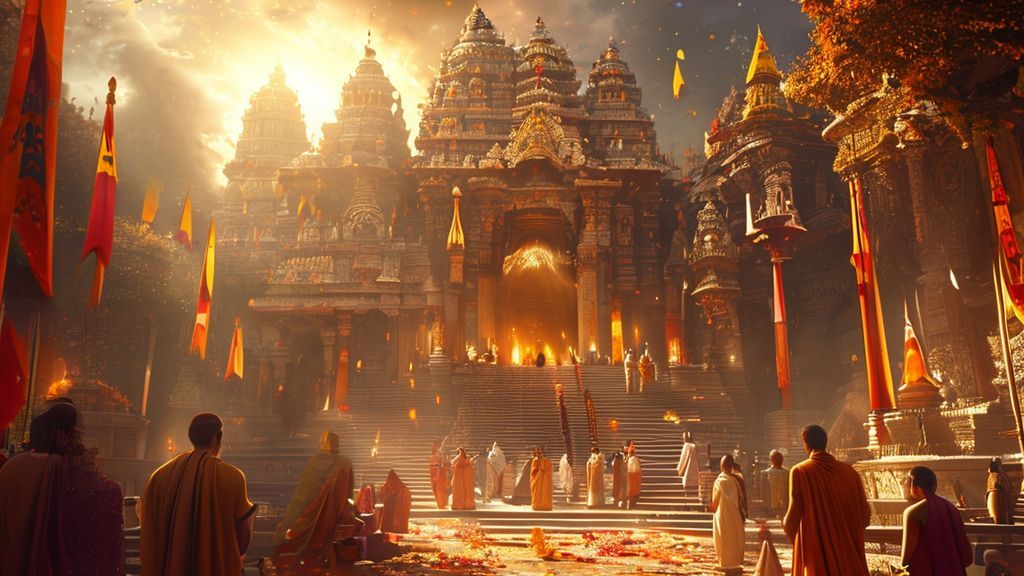
The Puranas are ancient Hindu scriptures, encyclopedic in nature, dealing with myths, legends, genealogy of gods and sages, cosmology, dharma, and spiritual wisdom. Primarily focused on the manifestations of the Trimurti, these sacred texts traditionally number eighteen Mahapuranas and numerous Upapuranas, serving as a cornerstone for understanding Sanatan Dharma’s rich tapestry of devotion and philosophy.
| Attribute | Details |
|---|---|
| Number of Mahapuranas | Eighteen (अष्टादश महापुराणानि) |
| Traditional Author | Vyasa (वेदव्यास), compiler of the Vedas and Mahabharata |
| Core Themes (Pancha-Lakshana) | Sarga (creation), Pratisarga (re-creation/dissolution), Vamsha (divine genealogies), Manvantara (epochs of Manus), Vamshanucharita (genealogies of kings and sages) |
| Primary Deities | Vishnu, Shiva, Brahma, Surya, Devi (Shakti) |
| Key Scripture Reference | Vayu Purana, Brahma Purana, Matsya Purana describe the nature and enumeration of Puranas. The Padma Purana categorizes them by Gunas. |
The Eternal Narratives of Sanatan Dharma
The Puranas, a vast collection of ancient sacred texts, are the vibrant heart of Hindu spiritual life, offering profound insights into the cosmic dance of creation, preservation, and dissolution. More than mere mythological tales, they serve as accessible guides to the complex philosophical truths embedded in the Vedas, translating abstract concepts into captivating narratives, vivid imagery, and devotional practices. They are the living memory of our ancestors, chronicling the deeds of gods and goddesses, sages and kings, and establishing the moral and ethical frameworks that underpin Sanatan Dharma. Through their stories, devotees find solace, inspiration, and a clear path to righteous living (Dharma), prosperity (Artha), desire fulfillment (Kama), and ultimate liberation (Moksha).
Origin, Classification, and the Vision of Vyasadeva
Tradition attributes the compilation of the Puranas to the venerable sage Vyasadeva (वेदव्यास), the same divine intellect credited with arranging the Vedas and composing the Mahabharata. Recognizing that the profound wisdom of the Vedas might be inaccessible to the common person in the Kali Yuga, Vyasadeva meticulously gathered and organized these ancient narratives, ensuring the preservation of Dharma for future generations. The Puranas are characterized by their “Pancha-Lakshana” (पञ्चलक्षण), five defining characteristics as mentioned in texts like the Matsya Purana (Chapter 53):
- Sarga (सर्ग): The primeval creation of the universe.
- Pratisarga (प्रतिसर्ग): Re-creation after dissolution, including secondary creations.
- Vamsha (वंश): Genealogies of deities, patriarchs, and sages.
- Manvantara (मन्वन्तर): The periods of various Manus, marking cosmic epochs.
- Vamshanucharita (वंशानुचरित): Dynastic histories of solar and lunar kings.
While all Puranas share these common threads, they each emphasize particular deities or aspects of Dharma. The Padma Purana (Uttara Khanda, Chapter 263) famously categorizes the eighteen Mahapuranas based on the predominant Guna (quality) of the deity they extol:
- Sattvic Puranas (सात्त्विक): Glorify Vishnu and promote purity, knowledge, and virtue.
- Rajasic Puranas (राजसिक): Focus on Brahma and emphasize action, creation, and passion.
- Tamasic Puranas (तामसिक): Extol Shiva and Devi, often dealing with destruction, transformation, and esoteric practices, albeit still leading to liberation.
The Eighteen Mahapuranas and Their Illuminating Topics
Each of the eighteen Mahapuranas offers a unique lens through which to perceive the vastness of Sanatan Dharma. They are not contradictory but complementary, like different facets of a brilliant gem.
Vishnu Puranas (Sattvic – Vishnu-focused)
These Puranas illuminate the glory of Lord Vishnu, the preserver of the universe, and his numerous Avatars.
- Vishnu Purana (विष्णु पुराण): One of the most authoritative and often cited Puranas, detailing the creation, preservation, and dissolution of the universe, the lives of various kings and Rishis, and the Avatars of Vishnu, particularly the life of Krishna. It emphasizes Bhakti Yoga.
- Naradiya Purana (नारदीय पुराण): Also known as Brihan-Naradiya, it primarily focuses on the greatness of devotional service to Vishnu, describes various holy places (Tirthas), and outlines rituals and observances. It also contains an enumeration of other Puranas and Upapuranas.
- Bhagavata Purana (श्रीमद् भागवत पुराण): Revered as the “crown jewel” of the Puranas, it is quintessential Vaishnava literature, deeply devotional, recounting the complete life and pastimes of Lord Krishna (Krishna Lila) and the history of various Avatars, culminating in the ultimate supremacy of Krishna as Svayam Bhagavan.
- Garuda Purana (गरुड़ पुराण): Primarily an eschatological text, it describes the journey of the soul after death, funeral rites (Shraddha Vidhi), karmic consequences, hellish planets (Naraka), and the importance of righteousness. It also contains encyclopedic knowledge on various subjects like medicine and astrology.
- Padma Purana (पद्म पुराण): Named after the lotus (Padma) that arose from Vishnu’s navel, it is one of the largest Puranas. It contains elaborate descriptions of Tirthas (holy places) and their associated legends, including Pushkar, and details the glories of Vishnu in various forms. This Purana is notable for its classification of the Puranas by Gunas.
- Varaha Purana (वराह पुराण): Focuses on the Varaha Avatar of Vishnu, who rescued the Earth from the demon Hiranyaksha. It contains detailed descriptions of holy places, particularly Mathura, and emphasizes Bhakti, rituals, and righteous conduct.
Shiva Puranas (Tamasic – Shiva/Devi-focused)
These Puranas primarily glorify Lord Shiva, the destroyer and transformer, and his consort Devi (Shakti).
- Matsya Purana (मत्स्य पुराण): Named after the Matsya Avatar of Vishnu, it contains the narrative of the great flood (Pralaya) and the story of Manu. It provides extensive information on ancient Indian history, genealogies, and the characteristics of Puranas, while still giving prominence to Shiva-related lore.
- Kurma Purana (कूर्म पुराण): Narrated by Lord Vishnu in his Kurma (tortoise) Avatar, it focuses on the glory of Lord Shiva, Varanasi (Kashi), and the sacredness of the Shiva Linga. It also contains a mix of Vedic and Puranic traditions, including philosophical discussions.
- Linga Purana (लिंग पुराण): Exclusively dedicated to the worship and glorification of the Linga, the aniconic representation of Shiva. It details the origin of the Linga, its worship, and various manifestations of Shiva, emphasizing Shiva as the ultimate reality.
- Shiva Purana (शिव पुराण): A comprehensive text on Lord Shiva, his various forms, his divine exploits (Lilā), the importance of Rudraksha, Bhasma (sacred ash), and Shivaratri. It details the stories of Parvati, Ganesha, and Kartikeya, and extols devotion to Shiva.
- Skanda Purana (स्कन्द पुराण): The largest of all Puranas, dedicated to Kartikeya (Skanda), the son of Shiva. It is a vast compendium of Tirthas, holy places, temples, and their associated legends, particularly those in South India and the Himalayas. As mentioned in the Kashi Khanda of the Skanda Purana, the glory of Varanasi is unparalleled.
- Agni Purana (अग्नि पुराण): Often described as an encyclopedia of Hindu knowledge, narrated by Agni to Vasishtha. It covers a vast array of topics including Dharma, Jyotisha (astrology), Ayurveda (medicine), Vastu Shastra (architecture), Rāmāyana, Mahābhārata, and various Agni worship rituals.
Brahma Puranas (Rajasic – Brahma, Surya, Dharma-focused)
These Puranas often focus on Lord Brahma, the creator, or other prominent deities and broader aspects of Dharma.
- Brahma Purana (ब्रह्म पुराण): Considered one of the earliest Puranas, it is also known as Adi Purana. It describes creation, the genealogies of various deities, the legends of Surya (Sun god), and details holy places like Puri (Odisha) and Konark.
- Brahmanda Purana (ब्रह्माण्ड पुराण): Literally “the Purana of the Cosmic Egg,” it details the origin of the universe, cosmology, geology, and genealogies. It includes the Adhyatma Ramayana, a philosophical retelling of the Rama story, and a significant section on Lalita Sahasranama, glorifying Devi.
- Brahma Vaivarta Purana (ब्रह्मवैवर्त पुराण): Emphasizes the greatness of Krishna as the supreme reality, even over Vishnu. It focuses on the Radha-Krishna divine relationship and narrates stories of Brahma, Ganesha, and Devi, particularly Durga and Saraswati.
- Markandeya Purana (मार्कण्डेय पुराण): Uniquely structured as a dialogue between sage Markandeya and others, it contains some of the oldest parts of the Puranic corpus. It famously includes the Devi Mahatmyam (Chandi Path), glorifying the Goddess as the supreme power, a foundational text for Shaktism.
- Vamana Purana (वामन पुराण): Dedicated to the Vamana Avatar of Vishnu, who appeared as a dwarf to subdue King Bali. It describes various Tirthas, Shiva-Parvati legends, and the greatness of Devi, particularly in her aspects as Durga and Kali.
- Bhavishya Purana (भविष्य पुराण): “The Purana of the Future,” it contains prophecies (though much of its current text is believed to be later additions), descriptions of future rulers, and genealogies. It also includes sections on rituals, festivals, and the importance of various Vratas (vows).
The Puranas as Encyclopedic Repositories of Ancient Wisdom
Beyond their devotional narratives, the Puranas stand as remarkable encyclopedic works, preserving a wide array of secular knowledge vital to ancient Indian society. They contain intricate details on subjects ranging from astronomy and cosmography (the structure of the universe, planetary motions), to the principles of medicine (Ayurvedic insights into health and disease, as seen in Agni Purana), statecraft (Dharma Shastra principles of governance, justice, and ethics), and social customs. Their descriptions of geography, including the seven continents (Sapta-dvipa) and various holy rivers and mountains, offer invaluable glimpses into the worldview of ancient Bharatavarsha. This synthesis of spiritual and practical knowledge underscores their role as holistic guides for human civilization, much like a grand library of perennial truths.
Embracing Puranic Wisdom: Rituals and Practices
The Puranas are not meant to be mere academic texts but living traditions that actively shape Hindu devotional life. Their stories and teachings are integral to daily prayers, festivals, and life-cycle rituals.
- Purana Shravan (पुराण श्रवण): Listening to the recitation of Puranas is considered a highly meritorious act, particularly during festivals or special occasions like Katha (storytelling) events. This is a traditional method of knowledge transmission.
- Patha (पाठ) and Swadhyaya (स्वाध्याय): Regular reading and self-study of Puranic texts, especially those relevant to one’s chosen deity (Ishta Devata), helps deepen understanding and devotion.
- Vrata (व्रत) and Utsava (उत्सव): Many Puranas describe specific fasts, vows, and festivals associated with particular deities. Observing these rituals as prescribed in the Puranas fosters spiritual discipline and earns divine grace.
- Tirtha Yatra (तीर्थ यात्रा): Visiting holy places (Tirthas) described in the Puranas, such as Kashi mentioned in Skanda Purana, or Mathura in Varaha Purana, is a revered practice, believed to cleanse sins and bestow blessings.
Mantras for Puranic Devotion and Wisdom
Chanting relevant mantras can enhance the spiritual benefits of engaging with the Puranas. A universal mantra for wisdom and reverence to the compiler of these texts is:
व्यासराय विष्णुरूपाय व्यास रूपाय विष्णवे ।
नमो वै ब्रह्मनिधये वासिष्ठाय नमो नमः ॥
Om Vyasaya Vishnu-rupaya, Vyasa-rupaya Vishnave.
Namo Vai Brahmanidhaye, Vasishthaya Namo Namah.
(Salutations to Vyasa, who is a form of Vishnu; Salutations to Vishnu, who is in the form of Vyasa. Salutations again and again to the treasure of Brahman, the descendant of Vasishtha.)
Dos and Don’ts for Engaging with the Puranas
- Do: Approach with reverence and an open heart, seeking spiritual wisdom and moral guidance.
- Do: Study under the guidance of a knowledgeable Guru or scholar to correctly interpret complex narratives.
- Do: Apply the ethical and devotional teachings in your daily life to cultivate virtues.
- Don’t: Dismiss Puranic stories as mere mythology without understanding their symbolic and philosophical depth.
- Don’t: Engage in debates or criticisms based on superficial readings; seek deeper meanings.
- Don’t: Use Puranic narratives to promote division or hatred, as their core message is of universal Dharma.
What is the difference between Shruti and Smriti?
Shruti (श्रुति), meaning “that which is heard,” refers to the Vedas—Rigveda, Samaveda, Yajurveda, and Atharvaveda—considered to be divinely revealed, eternal truths. Smriti (स्मृति), meaning “that which is remembered,” encompasses all other sacred texts, including the Puranas, Itihasas (Ramayana, Mahabharata), Dharma Shastras, and Agamas. Smriti texts are derived from and elaborate upon the principles of Shruti, making them accessible and relatable for common devotees, and thus are not considered to be of direct divine revelation in the same manner as the Vedas.
Are Upapuranas as important as Mahapuranas?
The Upapuranas (उपपुराणानि), or “minor Puranas,” are numerous texts that elaborate on or provide alternative versions of narratives found in the Mahapuranas. While not traditionally counted among the eighteen “major” Puranas, they are nevertheless significant. Many Upapuranas are highly revered within specific traditions (e.g., Devi Bhagavata Purana for Shaktas) and contain valuable spiritual insights, regional histories, and devotional practices. Their importance lies in their specificity and popular appeal to various local cults and sects, making them vital for understanding the diverse fabric of Hindu worship.
How should a modern Hindu approach the Puranas?
A modern Hindu should approach the Puranas with a blend of intellectual curiosity, spiritual reverence, and a desire for practical application. Understand their historical and cultural context, appreciate their symbolic language, and discern the eternal Dharmic principles embedded within their narratives. Focus on the core messages of devotion, righteousness, cosmic order, and self-realization. These texts offer a rich resource for moral education, devotional inspiration, and connecting with the profound spiritual heritage of Sanatan Dharma.
The Enduring Dharmic Significance of the Puranas
The Puranas are far more than ancient chronicles; they are the perennial wellsprings of Sanatan Dharma, nourishing the spiritual landscape of Bharatavarsha. They are the primary means by which the profound, often abstract, truths of the Vedas were made comprehensible and relatable to the masses across generations. Through their captivating narratives, ethical injunctions, and devotional hymns, the Puranas have successfully preserved and propagated Hindu culture, values, and traditions. They foster a deep sense of identity, connecting individuals to a grand spiritual lineage and a timeless wisdom that continues to guide humanity. For any sincere seeker on Hindutva.online, understanding the Puranas is essential for grasping the living essence of our eternal faith.