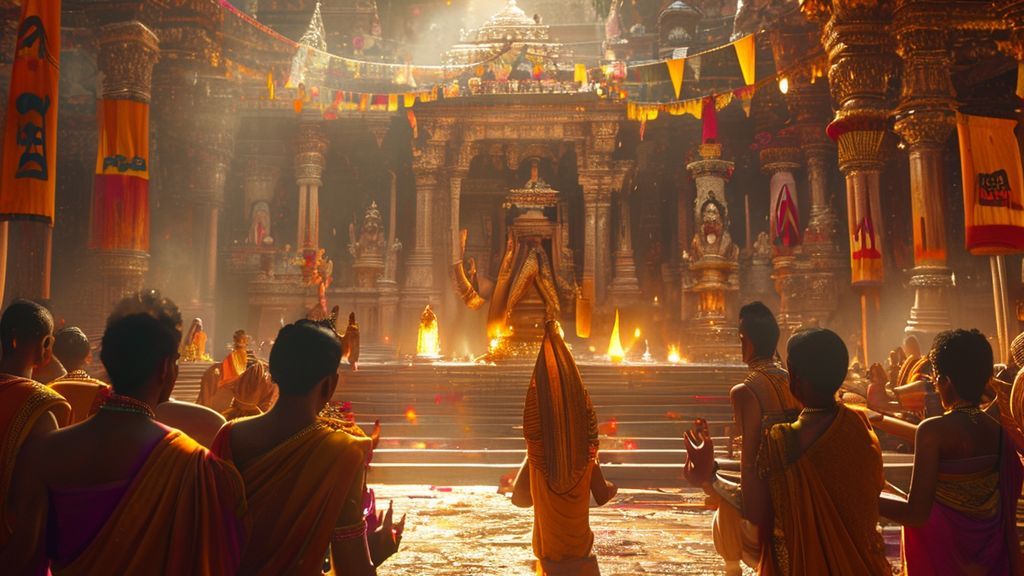
Mudras in Indian Dance are a profound, codified system of symbolic hand gestures, forming a vital visual language to express complex emotions, narratives, and spiritual concepts. Rooted in ancient scriptures like the Natya Shastra, these sacred hastas are indispensable for conveying *bhava* (mood) and *rasa* (aesthetic delight), elevating dance from mere movement to a divine communication.
| Attribute | Details |
|---|---|
| Origin Text | Bharata Muni’s Natya Shastra (specifically Chapter 9: Hastabhinaya) |
| Primary Purpose in Dance | Conveying *Artha* (meaning), *Bhava* (emotion), and *Rasa* (aesthetic experience) |
| Main Categories | Asamyuta Hastas (single hand gestures), Samyuta Hastas (double hand gestures) |
| Key Ancient Scholars | Bharata Muni, Nandikeshvara (author of Abhinaya Darpana) |
| Associated Art Forms | Indian Classical Dance, Yoga, Tantric Rituals (Pujas), Iconography |
The Divine Language of Mudras: Unlocking Sanatan Dharma’s Visual Poetry
In the vast tapestry of Sanatan Dharma, where every art form is an offering to the Divine, Mudras stand as a quintessential expression of spiritual profundity and aesthetic grace. More than mere hand gestures, Mudras are a sophisticated lexicon, a sacred alphabet through which the inner world of the artist and the cosmic drama of the Devas are unveiled. From the intricate narratives of Bharatanatyam to the meditative postures of a Yogi, Mudras serve as a bridge between the manifest and the unmanifest, embodying the very essence of *Abhinaya* (expression) that defines India’s performing arts.
This profound visual vocabulary is not limited to dance stages; it permeates temple sculpture, painting, and the ritualistic worship that animates daily Hindu life. For the sincere seeker, understanding Mudras is akin to deciphering a sacred scripture written in the language of the body, offering a deeper connection to the stories, philosophies, and spiritual truths embedded within our ancient traditions.
Puranic Origins and Scriptural Codification
The genesis of Mudras, like all classical Indian arts, is attributed to divine inspiration. As detailed in the Natya Shastra by Bharata Muni, the foundational treatise on performing arts, Lord Brahma Himself conceived the Natya Veda (the science of dramaturgy) by drawing elements from the four existing Vedas: *Pathya* (words) from the Rig Veda, *Geeta* (music) from the Sama Veda, *Abhinaya* (expression) from the Yajur Veda, and *Rasa* (aesthetic experience) from the Atharva Veda. The Natya Shastra, specifically its ninth chapter, Hastabhinaya, meticulously codifies the various hand gestures, their origins, and their applications.
Further elaboration is found in Nandikeshvara’s Abhinaya Darpana (Mirror of Gesture), which categorizes Mudras into two primary groups: Asamyuta Hastas (single-hand gestures) and Samyuta Hastas (double-hand gestures). These texts provide not just definitions but also the manifold meanings and uses for each Mudra, enabling a dancer to weave complex narratives without uttering a single word. For instance, the Devatamudras, or gestures associated with specific deities, are found in various Agama and Tantric texts, used in temple rituals to invoke and honor the divine forms. The very iconography of our Devas in temples, from Lord Shiva’s Abhaya Mudra (fearlessness) to Lord Vishnu’s Varada Mudra (boon-giving), reflects the eternal language of Mudras, making them a tangible link between the devotee and the divine.
The Science and Aesthetics of Mudras: A Symphony of Body and Spirit
Beyond their artistic function, Mudras embody a profound understanding of human physiology, psychology, and spiritual energy, often referred to as a “microcosm of the universe” in the hands. The intricate positioning of fingers and palms is not arbitrary; it is believed to stimulate specific neural pathways and energetic channels (nadis) within the body, influencing one’s physical and mental well-being. In Yogic and Ayurvedic traditions, distinct Mudras are prescribed for balancing the five elements (Pancha Mahabhutas) and aligning the chakras.
Aesthetically, Mudras are paramount to abhinaya, the art of conveying meaning and emotion. Each gesture is imbued with multiple layers of interpretation, allowing for nuanced expression. For example, the Pataka Mudra (flag gesture), where all fingers are extended and joined, and the thumb bent, can signify a flag, forest, river, moon, sun, or the beginning of a dance. The dancer, through subtle shifts in wrist, elbow, and shoulder, brings forth the precise bhava for the audience. The rigorous training in Mudras ensures fluidity, precision, and grace, transforming the dancer’s hands into instruments of divine storytelling. This systematic integration of art and science is a hallmark of Sanatan Dharma’s holistic approach to existence, a tradition proudly showcased on Hindutva.online.
Application in Dance, Ritual, and Meditation
In Indian classical dance forms such as Bharatanatyam, Kathakali, Odissi, and Kuchipudi, Mudras are the bedrock of narrative and emotional expression. During a performance, the dancer masterfully combines Mudras with facial expressions (mukhaja abhinaya), body postures (angika abhinaya), and vocal cues (vachika abhinaya) to enact mythological tales, devotional hymns, and philosophical concepts. For instance, the Alapadma Mudra (blooming lotus) beautifully depicts a lotus, beauty, or a circle, while Mayura Mudra (peacock) portrays a peacock, a creeper, or auspiciousness. The precision and evocative power of these gestures transport the audience into the story.
Mudras also play a crucial role in Hindu rituals (pujas) and meditation. During a puja, specific Hastamudras are used to invoke deities, offer oblations, purify oneself, or bid farewell to the divine presence. For example, the Avahana Mudra is used to invite the deity, while the Dhenu Mudra (cow gesture) is used to offer ambrosia. In meditation, Mudras like Gyan Mudra (thumb and index finger joined) or Dhyana Mudra (palms resting on each other) are believed to facilitate concentration, quiet the mind, and direct vital energy (prana) within the body, leading to deeper states of awareness and spiritual realization.
Mantras and Mudras: Sacred Synergies
While Mudras in dance primarily convey narrative and emotion, they often form a powerful synergy with mantras, particularly in devotional practices and spiritual disciplines. Many deities are associated with specific Mudras in their iconography, which are also employed during their corresponding mantra japa or worship. For example:
- Anjali Mudra (Namaskara Mudra): This gesture of pressing palms together, fingers pointing upwards, is universally recognized as a sign of respect and reverence. It is often performed while chanting the sacred syllable Om (ॐ) or any devotional mantra such as Om Namah Shivaya (ॐ नमः शिवाय) or Hare Krishna Hare Krishna, Krishna Krishna Hare Hare, Hare Rama Hare Rama, Rama Rama Hare Hare (हरे कृष्ण हरे कृष्ण कृष्ण कृष्ण हरे हरे हरे राम हरे राम राम राम हरे हरे). It symbolizes the union of the individual soul with the universal soul.
- Varada Mudra: The boon-granting gesture, typically with the palm open and fingers pointing downwards, is seen in icons of Vishnu, Lakshmi, and Buddha. While chanting mantras seeking blessings or abundance, such as those dedicated to Goddess Lakshmi (e.g., Om Hreem Shreem Lakshmībhayo Namah ॐ ह्रीं श्रीं लक्ष्मीभ्यो नमः), this Mudra embodies the act of divine bestowal.
- Abhaya Mudra: The gesture of fearlessness and protection, where the palm faces outwards and fingers point upwards, is characteristic of Durga, Shiva, and various Bodhisattvas. When chanting protection mantras like the Durga Saptashati or Mahamrityunjaya Mantra (Om Tryambakam Yajamahe Sugandhim Pushtivardhanam, Urvarukamiva Bandhanan Mrityor Mukshīya Maamritat ॐ त्र्यम्बकं यजामहे सुगन्धिं पुष्टिवर्धनम्। उर्वारुकमिव बन्धनान् मृत्योर्मुक्षीय मामृतात्॥), the Abhaya Mudra fortifies the practitioner’s resolve and trust in divine protection.
In classical dance, while performing an item dedicated to a particular deity, the dancer will often employ the specific Devatamudras to evoke the deity’s presence and characteristics, simultaneously expressing the accompanying stuti (prayer) or bhajan through their entire being. The confluence of sound (mantra) and form (mudra) amplifies the spiritual experience.
Dos and Don’ts for Practicing Mudras and Engaging with Indian Dance
To truly appreciate and engage with the sacred art of Mudras, especially in the context of Indian dance and spiritual practice, certain etiquettes and principles must be observed:
- DO approach Mudras with reverence and sincerity, understanding their spiritual and cultural significance.
- DO study under a qualified Guru or teacher, as the nuances of Mudras are best learned through direct instruction and practice.
- DO maintain cleanliness and purity when practicing Mudras, particularly in a ritualistic context.
- DO focus on the intended meaning and emotion (bhava) of each Mudra to convey authenticity.
- DO NOT use Mudras flippantly or out of context, disrespecting their ancient lineage and sacred purpose.
- DO NOT attempt to modify or invent Mudras without deep scriptural knowledge and guidance.
- DO NOT neglect the accompanying facial expressions and body language, as Mudras are part of a holistic expression.
- DO NOT perform Mudras purely for aesthetic pleasure without acknowledging their deeper spiritual roots.
Frequently Asked Questions About Mudras
What is the difference between a Mudra and a Hasta?
In the context of Indian classical dance, the terms Mudra and Hasta are often used interchangeably, particularly in popular discourse. However, technically, ‘Hasta’ literally means ‘hand’, referring to the physical gesture itself. ‘Mudra’ implies a deeper significance; it is a Hasta imbued with specific meaning, emotion, or spiritual power. All Mudras are Hastas, but not all Hastas are necessarily Mudras in the profound, symbolic sense.
How many Mudras are there in Indian Classical Dance?
The number of Mudras can vary slightly depending on the specific classical dance form and the source text. As per Nandikeshvara’s Abhinaya Darpana, there are 28 Asamyuta Hastas (single-hand gestures) and 23 Samyuta Hastas (double-hand gestures). Other texts or traditions may list additional functional, devotional, or folk Mudras, making the total count well over a hundred, each with multiple layers of meaning and application.
Are Mudras only for dance, or do they have other uses?
No, Mudras extend far beyond the realm of dance. They are integral to various aspects of Sanatan Dharma. In Yoga, they are used to channel energy and aid meditation (e.g., Gyan Mudra). In Temple rituals and Pujas, specific Mudras are essential for invoking deities and performing offerings. They are also prominently featured in Hindu iconography, where deities are depicted with Mudras conveying their attributes and blessings. This multifaceted utility underscores their deep spiritual and cultural significance.
Can anyone practice Mudras for spiritual benefit?
Yes, many Mudras, particularly those used in Yoga and meditation, can be practiced by anyone seeking spiritual, mental, or physical benefits. For instance, the Anjali Mudra (prayer gesture) is a simple yet powerful Mudra for respect and mindfulness. However, for the intricate Mudras of classical dance or advanced ritualistic practices, proper guidance from a Guru is essential to ensure correct form, understanding, and respectful application. Further insights into these practices can be found at Hindutva.online.
Preserving Sanatan Dharma: Why Mudras Matter for Every Hindu
Mudras are more than historical artifacts or artistic conventions; they are living testaments to the continuous spiritual and cultural heritage of Sanatan Dharma. They embody a holistic philosophy where the body becomes a conduit for divine expression, a means to connect with the cosmic truths that define our existence. By understanding and appreciating Mudras, we not only preserve a beautiful art form but also reconnect with a profound visual language that speaks of devotion, wisdom, and the interconnectedness of all life. They are a tangible link to our Rishis and Sages, whose deep insights into human expression and spiritual evolution continue to inspire and guide us. Embracing Mudras is embracing a timeless dimension of our Dharma, ensuring its vibrant continuity for generations to come.
