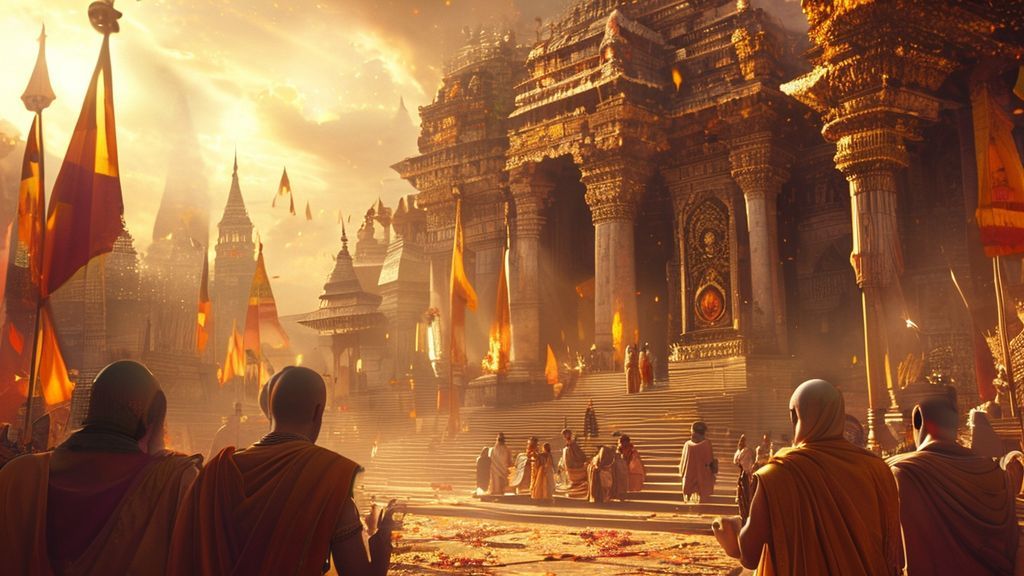
Bajrang Dal represents a vigilant arm of Sanatan Dharma, dedicated to the protection of Hindu culture, values, and identity, drawing profound inspiration from the unparalleled devotion, strength, and courage of Lord Hanuman, also known as Bajrangbali. It acts as a shield against forces perceived to threaten the ancient spiritual heritage.
| Attribute | Details |
|---|---|
| Deity of Inspiration | Bhagwan Hanuman (Bajrangbali), the epitome of strength, devotion, and unwavering commitment to Dharma. |
| Location/Origin | Founded in Uttar Pradesh, Bharat, in 1984, as the youth wing of the Vishva Hindu Parishad (VHP). |
| Key Festival | Hanuman Jayanti, the auspicious appearance day of Lord Hanuman, celebrated with great fervor and resolve. |
| Core Mission | Dharma Raksha (Protection of Dharma), Go Raksha (Cow Protection), Sanskriti Raksha (Cultural Preservation), Seva (Selfless Service). |
| Scripture Reference for Inspiration | Valmiki Ramayana, Ramcharitmanas, various Puranas highlighting Hanuman’s devotion and strength. |
Introduction: The Clarion Call for Dharma Raksha
In the vast and eternal tapestry of Sanatan Dharma, the principle of Dharma Raksha, the protection of righteousness, stands as a paramount duty for every sincere seeker and devotee. Throughout history, whenever Adharma (unrighteousness) has threatened to overshadow Dharma, divine forces and devoted souls have risen to safeguard the sacred tenets. The Bajrang Dal emerges from this timeless tradition, envisioned as a collective embodiment of courage and commitment, inspired by the mighty Bajrangbali, Lord Hanuman himself. This spiritual and cultural organization dedicates itself to preserving the integrity of Hindu society, its traditions, and its ancient wisdom, ensuring that the light of Sanatan Dharma continues to shine brightly for generations to come. Their work is a testament to the living spirit of proactive faith and cultural vigilance, echoing the eternal call for self-preservation and spiritual resilience within the Hindu ethos.
Puranic History & Legend: The Divine Inspiration of Bajrangbali
The very name “Bajrang Dal” invokes the formidable presence of Lord Hanuman, revered across all Hindu traditions as Bajrangbali, the ‘one with a thunderbolt-like body’ (Vajra-anga). His life, chronicled in the sacred Valmiki Ramayana and later retold with devotional fervor in Goswami Tulsidas’s Ramcharitmanas, is the ultimate saga of selfless service, unwavering devotion, and indomitable strength in the service of Dharma. Hanuman, the son of Vayu (the Wind God) and Anjana, embodies the perfect blend of physical prowess and spiritual wisdom. He is the eleventh incarnation of Bhagwan Shiva, born with extraordinary powers to assist Bhagwan Rama in His divine mission.
His legendary feats include leaping across the vast ocean to Lanka in search of Sita Devi, setting Lanka ablaze with his tail (Lanka Dahan), bringing the Sanjeevani Booti to revive Lakshmana, and ultimately playing a pivotal role in the triumph of Rama over Ravana. The Skanda Purana and Agni Purana also recount his glories, emphasizing his unshakeable loyalty and immense power derived from his devotion to Rama. Hanuman is described as Chiranjeevi, an immortal being, forever present to protect Dharma and devotees. His qualities of Buddhi (intellect), Shakti (strength), Yash (fame), Dhairya (courage), Nirbhayatva (fearlessness), Arogata (freedom from illness), and Vakpatutva (eloquence) are the very ideals that inspire the members of Bajrang Dal. They see in Hanuman the prototype of a perfect Dharmic warrior, ever ready to face challenges with steadfast resolve and a pure heart, ensuring the protection of the innocent and the re-establishment of righteousness, much like Hanuman stood as the unwavering protector of Rama’s cause.
The Spiritual Architecture of Dharma Raksha: Principles of Service and Protection
While Bajrang Dal is not a physical temple or a monument in the traditional sense, its ideological framework and operational principles can be understood as a spiritual architecture designed to fortify Sanatan Dharma. Just as ancient temples like the Brihadeeswarar Temple or the Konark Sun Temple are marvels of engineering built to withstand the test of time and embody cosmic principles, the Bajrang Dal strives to be a living, breathing structure of protection for Hindu society. Its foundation is laid on the immutable principles of Seva (selfless service), Suraksha (protection), and Sanskriti Samrakshan (cultural preservation).
This “architecture” is built upon the following pillars:
- Dharma-centric Vigilance: A proactive stance against any perceived threat to Hindu values, whether from external influences or internal erosion, drawing inspiration from Hanuman’s constant vigilance.
- Community Empowerment: Fostering a sense of unity and strength among Hindus, akin to a well-constructed fort protecting its inhabitants. This includes promoting physical fitness and mental resilience.
- Cultural Reclamation: Engaging in activities that revive and celebrate Hindu festivals, traditions, and sacred sites, ensuring that the vibrant heritage is not forgotten.
- Go Raksha (Cow Protection): Upholding the sacred status of the cow, revered as Gau Mata, and advocating for its protection as a cornerstone of Hindu ethics and agrarian economy, as mentioned in the Atharva Veda (3.14.3) which extols the cow.
- Moral Upbringing: Instilling strong moral values, discipline, and patriotism in Hindu youth, nurturing them to become responsible torchbearers of Dharma.
This conceptual framework is a continuous project, much like the renovation and maintenance of a grand temple, requiring constant dedication and effort to maintain its strength and relevance. It’s a testament to the belief that the defense of Dharma is not merely a physical act but a spiritual and ideological fortification.
Rituals & Puja Vidhi: Invoking Hanuman’s Blessings
For members and sympathizers of the Bajrang Dal, rituals and worship practices are deeply intertwined with the veneration of Lord Hanuman. The primary mode of spiritual engagement is through Hanuman Puja, performed to invoke his immense strength, courage, and protective energies. These rituals are not unique to Bajrang Dal but are integral to the wider Hindu tradition of worshipping Hanuman, for strength, wisdom, and protection in the face of adversity. The spiritual discipline reinforces their commitment to Dharma Raksha.
- Morning Snan and Sankalpa: The devotee rises early, performs a purifying bath (Snan), and takes a solemn vow (Sankalpa) to worship Hanuman for strength and Dharma protection.
- Asana and Deep Prajwalan: The devotee sits on a clean mat (Asana) facing the east or north, lights a lamp (Deep Prajwalan), and offers incense.
- Ganapati Puja: As per tradition, Bhagwan Ganesha is worshipped first to remove obstacles.
- Hanuman Avahan: Invocation of Lord Hanuman, often with the chant “Om Sri Hanumate Namah.”
- Abhishekam (Optional): Lord Hanuman’s idol or picture may be bathed with water, milk, or Panchamrita.
- Shodashopachara Puja: Offerings of flowers (especially red hibiscus or marigolds), vermillion (sindoor), sweet ladoos (especially motichoor ladoos), fruits, and camphor are made. The application of sindoor is particularly significant, as Hanuman is said to have applied it all over his body out of devotion for Rama.
- Hanuman Chalisa Path: Recitation of the Hanuman Chalisa, a powerful devotional hymn of 40 verses, is central to the puja. This hymn, composed by Tulsidas, enumerates Hanuman’s virtues and deeds.
- Bajrang Baan Path: For specific protection against evil forces or challenges, the powerful Bajrang Baan mantra is recited, known for its ability to destroy negative energies.
- Aarti: Concluding the puja with the waving of a lamp (Aarti) while singing Hanuman Aarti.
- Pranam and Prasad Vitaran: Offering prostrations and distributing the consecrated food (Prasad) to devotees.
These rituals instill discipline, foster devotion, and imbue the participants with the spiritual energy required for their dedicated service to Hindutva.online and Sanatan Dharma.
Mantras & Chants: Invoking Bajrangbali’s Power
Chanting sacred mantras dedicated to Lord Hanuman is a core practice for those seeking strength, courage, and protection. These powerful vibrations connect the devotee directly with the divine energy of Bajrangbali, inspiring them in their commitment to Dharma.
- Mool Mantra:
ॐ हनुमते नमः
Om Hanumate Namah (Salutations to Hanuman)
- Hanuman Gayatri Mantra:
ॐ आञ्जनेयाय विद्महे वायुपुत्राय धीमहि। तन्नो हनुमान् प्रचोदयात्॥
Om Anjaneyaya Vidmahe Vayuputraya Dhimahi, Tanno Hanuman Prachodayat. (May we know the son of Anjana, meditate on the son of Vayu. May Hanuman inspire us.)
- The Bajrang Baan: This potent mantra is recited for specific protection against adversaries, fear, and negativity. Its verses affirm Hanuman’s invincible power and his role as a protector. It begins:
दोहा: निश्चय प्रेम प्रतीति ते, विनय करैं सनमान। तेहि के कारज सकल शुभ, सिद्ध करैं हनुमान॥
Nischaya Prema Prateeti Te, Vinaya Karein Sanmana. Tehi Ke Karaja Sakala Shubha, Siddha Karein Hanuman. (With certain love and faith, whoever respectfully prays, Hanuman accomplishes all their auspicious tasks.)
The complete Bajrang Baan is a profound and lengthy chant that devotees learn and recite with deep reverence.
- Ram Raksha Stotra (relevant sections): While primarily for Lord Rama, sections of this powerful hymn, particularly those invoking Hanuman’s protection, are also cherished.
These chants are not merely words; they are tools for spiritual transformation, designed to awaken the inner strength and unwavering devotion akin to Hanuman’s own.
Dos and Don’ts: Dharmic Conduct for a Protector of Sanatan Dharma
For those who commit to the path of Dharma Raksha, inspired by Bajrangbali, certain ethical and behavioral guidelines are paramount. These ensure that actions align with the spiritual principles of Sanatan Dharma:
- DO Cultivate Physical & Mental Strength: Just as Hanuman possessed immense physical and mental fortitude, individuals should strive for a healthy body and a disciplined mind through practices like Yoga, Surya Namaskar, and meditation.
- DO Practice Brahmacharya: Where possible and appropriate to one’s Ashrama, practicing celibacy or disciplined marital life is encouraged to conserve vital energy, as Hanuman is the ultimate Brahmachari.
- DO Adhere to Satya (Truth) & Ahimsa (Non-violence): While protecting Dharma may require assertive action, it must always be rooted in truth and a commitment to righteous conduct, avoiding gratuitous violence. The protection of Dharma is about upholding justice, not mere aggression.
- DO Respect All Dharmic Traditions: Sanatan Dharma is vast and diverse. Respecting all sampradayas (traditions) and their practices is crucial for Hindu unity.
- DO Engage in Seva (Selfless Service): Actively participate in community service, helping those in need, protecting the vulnerable, and contributing positively to society.
- DON’T Indulge in Tamasic Activities: Avoid consumption of alcohol, tobacco, and non-vegetarian food, especially during periods of spiritual endeavor, to maintain purity of body and mind.
- DON’T Engage in Divisive Talk or Actions: Avoid creating divisions within Hindu society or speaking ill of other Dharmic groups. Unity is strength.
- DON’T Act Out of Personal Vendetta: All actions should be motivated by the larger good of Dharma and society, not personal gain, anger, or animosity.
Frequently Asked Questions
What is the primary objective of Bajrang Dal?
The primary objective of Bajrang Dal is Dharma Raksha – the protection and preservation of Sanatan Dharma, its cultural values, traditions, and the Hindu way of life, drawing strength and inspiration from Lord Hanuman’s unwavering devotion and courage.
How does Bajrang Dal relate to Lord Hanuman?
Bajrang Dal is named after Bajrangbali (Lord Hanuman), who serves as their ultimate role model. They emulate his qualities of strength, devotion, selfless service (Seva), vigilance, and unwavering commitment to righteousness, making him the divine inspiration for their activities.
What kind of activities does Bajrang Dal typically undertake?
Bajrang Dal engages in a range of activities including promoting Hindu cultural festivals, organizing youth camps for physical and moral development, advocating for cow protection (Go Raksha), participating in community service, and taking proactive steps to counter perceived threats to Hindu society and traditions. More information can be found on Hindutva.online.
Is Bajrang Dal a religious or social organization?
Bajrang Dal is fundamentally a socio-religious organization. While its inspiration and mission are deeply rooted in Sanatan Dharma and Hindu spiritual values, its activities extend into the social sphere, aiming to influence and protect Hindu society and culture as a whole.
Why This Matters for Every Hindu: Upholding the Vigil of Dharma
The existence and ethos of organizations like Bajrang Dal underscore a profound truth within Sanatan Dharma: Dharma is not merely a static set of scriptures or a passive belief system; it is a living, dynamic force that requires active preservation and vigilant protection. For every Hindu, understanding this principle is crucial. The stories of our Itihasas, from the Ramayana to the Mahabharata, are replete with instances where righteous warriors (Dharma-yoddhas) rose to defend truth against falsehood, order against chaos. Lord Hanuman, the eternal protector, exemplifies this spirit of unwavering commitment.
The call to Dharma Raksha is not an invitation to aggression but a solemn duty to safeguard our spiritual heritage, cultural identity, and societal harmony. It is about ensuring that the sacred wisdom passed down through millennia remains accessible and vibrant for future generations. When individuals and collectives commit to embodying the strength, devotion, and courage of Bajrangbali, they contribute to the collective resilience of Sanatan Dharma, becoming living instruments for the continuation of righteousness in a world often beset by challenges. This active participation in upholding Dharma is, in itself, a form of profound devotion and a testament to the eternal vitality of our faith.