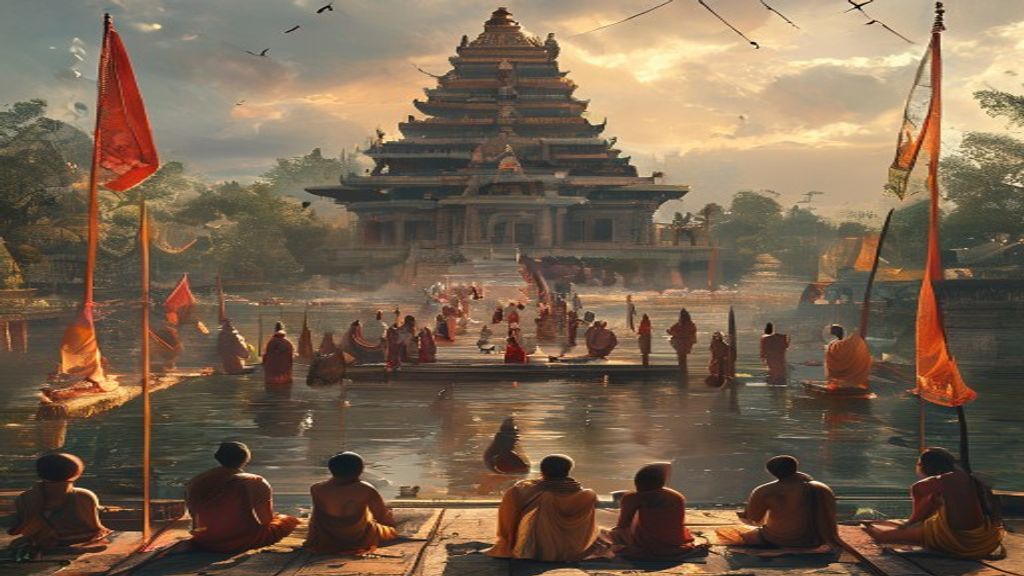
The Brahmaputra River, unique among India’s major rivers as a ‘Nada’ (male river), is revered as the divine son of Lord Brahma, the creator deity. Its sacred origin story, deeply embedded in Puranic lore, describes its birth from Brahma’s spiritual essence, embodying purity, power, and life-giving energy across its majestic course.
| Attribute | Details |
|---|---|
| Deity/Origin | Son of Lord Brahma (Brahmāputra), born from Brahma’s seed/essence in the Puranic narrative. |
| Geographical Origin | Chemayungdung Glacier, Kailash Range, Tibet (as Yarlung Tsangpo). Enters India via Arunachal Pradesh. |
| Key Observances | Holy Snan (ritual bathing) during auspicious periods like Magh Bihu, Ashokastami Mela. Revered for purification. |
| Scripture Reference | Kalika Purana, Yogini Tantra, Mahabharata, Srimad Bhagavatam (describing rivers, though specific Brahmaputra myth is strong in regional Puranas). |
Introduction: The Divine Nada – Brahmaputra, The Lifeblood of the East
In the vast tapestry of Sanatan Dharma, rivers are not mere geographical features but vibrant, living deities, conduits of divine grace and spiritual purification. Among them, the Brahmaputra River holds a singularly exalted position. Unlike the numerous other sacred rivers revered as ‘Nadi’ – feminine goddesses like Ganga, Yamuna, and Saraswati – the Brahmaputra is a ‘Nada,’ a majestic male river. This unique distinction underscores its profound spiritual significance, revered as Brahmāputra (ब्रह्मपुत्र), the very son of Lord Brahma, the architect of the cosmos. Its waters, originating from the sacred Kailash range, carry the essence of creation, bestowing prosperity, fertility, and spiritual merit upon the lands it nourishes and the devotees who seek solace in its embrace. For millions across Bharatvarsha, particularly in the northeastern regions, the Brahmaputra is not just a river; it is a manifestation of divine power, a perpetual reminder of Brahma’s ongoing creation.
Puranic History & Legend: The Genesis of Brahmāputra
The sublime narrative of the Brahmaputra’s birth is beautifully chronicled in various Puranas, most notably the Kalika Purana and the Yogini Tantra, texts central to the spiritual heritage of Assam and the northeastern regions. The legend speaks of Lord Brahma’s profound meditation, from which emerged a transcendental spring, a divine water body representing his spiritual potency. This celestial water, imbued with Brahma’s creative energy, was known as Brahmakunda (ब्रह्मकुण्ड).
The saga takes a significant turn with the revered Sage Amogha, the virtuous wife of Sage Shantanu (or Shamtanu, as sometimes referenced). It is said that Sage Amogha, with unparalleled devotion, collected this sacred water from Brahmakunda in a vessel, carrying its divine essence. Her unwavering piety and reverence were instrumental in preserving this sacred fluid. For a considerable time, the divine waters remained confined to the Kunda.
The pivotal moment in the Brahmaputra’s manifestation as a flowing river is attributed to Bhagwan Parashurama, the sixth incarnation of Vishnu. After his fierce campaign to rid the Earth of tyrannical Kshatriyas, Parashurama sought purification from the sin of slaying. Guided by divine wisdom, he arrived at Brahmakunda. With a stroke of his mighty axe, he is said to have cleaved a path for the accumulated waters of the Kunda to flow forth. This act released the mighty Brahmaputra, allowing it to cascade down the mountains and carve its magnificent journey through plains, ultimately merging with the ocean. This event purified Parashurama and simultaneously blessed the land with the life-giving flow of Brahma’s son. The site where Parashurama opened the Kunda is still revered, attracting pilgrims seeking purification and spiritual merit. This profound connection to both Brahma and Vishnu’s avatar signifies the Brahmaputra’s immense sanctity and its role in the cosmic drama of dharma and purification.
Geographical & Spiritual Marvels: The Divine Engineer’s Hand
While the Brahmaputra may not boast architectural temples *within* its flow, its very existence is a testament to divine engineering, a natural marvel that reflects the grandeur of Sanatan Dharma. The river’s origin high in the Kailash Range, a realm perpetually associated with Lord Shiva, imbues its nascent waters with a unique spiritual charge. As the Yarlung Tsangpo in Tibet, it carves the deepest canyon in the world, a colossal feat of nature that speaks to its immense power and ancient genesis. Upon entering India as the Siang, and subsequently becoming the Brahmaputra in Assam, it transforms into one of the largest rivers globally in terms of discharge, especially during the monsoon.
The sheer scale and dynamism of the Brahmaputra are awe-inspiring. Its vast braided channels, shifting sandbars, and the annual cycle of devastating floods followed by rejuvenating silt deposition are a powerful metaphor for life’s cyclical nature – destruction and creation, central tenets of Hindu philosophy. The river sustains a unique ecosystem, fostering biodiversity that is revered as part of the divine creation. Along its banks lie numerous sacred sites and ancient temple towns, subtly hinting at its historical and spiritual influence. While not explicitly a temple, the river itself is considered a living temple, its ghats serving as altars for countless rituals. For instance, the renowned Kamakhya Temple in Guwahati, Assam, a potent Shakti Peeth, stands majestically overlooking the Brahmaputra, its very presence amplified by the river’s powerful spiritual currents. The engineering marvel here is not man-made, but the divine hand that shaped the land, carved the valleys, and delivered this colossal waterway to sustain civilization. Visiting these sites and understanding the river’s impact deeply enriches one’s appreciation for the natural world as a manifestation of the divine, a concept central to Hindutva.online‘s mission.
Rituals & Puja Vidhi: Honoring the Divine Son
Devotion to the Brahmaputra primarily manifests through ritualistic bathing (Snan) and offering of oblations. The purity of its waters is believed to cleanse not just the body but also the soul, absolving sins and bestowing spiritual merit. Here is a general guide for devotees:
- Preparation: Approach the river with a pure heart and clean body. It is customary to wear simple, clean attire suitable for bathing.
- Sankalpa (Intention): Before entering the water, mentally or verbally declare your intention for the Snan – be it for purification, offering gratitude, or seeking blessings for ancestors (Pitru Tarpan).
- Ritual Bathing: Gently enter the sacred waters. Take three dips, immersing yourself fully. While dipping, one can chant mantras or simply meditate on the river’s divine form as Brahma’s son.
- Arghyam (Water Offering): After bathing, face the rising sun (if morning) or the direction of the river’s flow. Cup your hands, fill them with water, and offer it back to the river three times, letting the water flow through your fingers, symbolizing respect and gratitude.
- Pushpanjali & Deep Daan (Flower and Lamp Offering): Offer fresh flowers (Pushpanjali) and light a lamp (Deep Daan) on a leaf or small raft, allowing it to float downstream. This symbolizes offering one’s devotion and light to the divine.
- Pranam (Prostration): Conclude by offering a Pranam to the river, either by bowing down at the bank or joining hands in reverence.
- Meditation & Prayer: Spend a few moments in quiet contemplation or prayer on the banks, soaking in the spiritual energy of the sacred site.
During festivals like Ashokastami Mela or specific lunar conjunctions, these rituals are performed with even greater fervor, drawing thousands of devotees to the Brahmaputra’s banks for collective spiritual awakening.
Mantras & Chants: Invoking Brahma’s Grace
Chanting mantras while performing rituals or simply meditating by the Brahmaputra amplifies the spiritual experience, connecting the devotee directly with the river’s divine essence. While specific Vedic mantras for the Brahmaputra are less common than for goddesses like Ganga, one can invoke Lord Brahma or use general river mantras. Here are some powerful chants:
- General River Mantra:
गंगे च यमुने चैव गोदावरी सरस्वती।
नर्मदे सिन्धु कावेरी जलेऽस्मिन् सन्निधिं कुरु॥“Gange ca Yamune caiva Godavari Sarasvati,
Narmade Sindhu Kaveri jale’smin sannidhim kuru.”
(O Ganga, Yamuna, Godavari, Saraswati, Narmada, Sindhu, Kaveri, be present in this water.)
While this mantra primarily invokes the seven great rivers (Saptasindhu), it can be adapted by meditating on the Brahmaputra, inviting its sacred presence into the ritual water or invoking its spiritual energy directly. - Mantra for Lord Brahma:
ॐ नमो ब्रह्मणे नमः
“Om Namo Brahmaṇe Namah”
(Salutations to Lord Brahma.)
This mantra directly invokes the divine father of the Brahmaputra, seeking his creative blessings and connecting with the river’s source. - Simple Prayer:
हे ब्रह्मपुत्र देव, मम पापं हर, पुण्यं देहि।
“He Brahmaputra Deva, mama papam hara, punyam dehi.”
(O Divine Brahmaputra, remove my sins, bestow merit.)
A direct invocation seeking purification and blessings from the river god.
Dos and Don’ts: Reverence for the Divine Flow
- DO approach the river with utmost reverence and a pure heart.
- DO maintain silence or chant mantras quietly while at the ghats to preserve the sanctity.
- DO offer clean flowers, fruits, or traditional offerings like milk and incense.
- DO ensure your attire is modest and respectful, especially when bathing or performing puja.
- DO NOT litter the river or its banks with plastic, wrappers, or any non-biodegradable waste.
- DO NOT wash clothes with soap directly in the river or discharge detergents.
- DO NOT engage in loud chatter, arguments, or disrespectful behavior near the sacred waters.
- DO NOT consume intoxicants or non-vegetarian food near the riverbanks, as it is considered a sacred space.
- DO NOT dispose of toxic materials or industrial waste into the river.
Frequently Asked Questions About the Brahmaputra River
Why is the Brahmaputra considered a ‘male’ river (Nada) in Sanatan Dharma?
The Brahmaputra is uniquely revered as a ‘Nada’ or male river, primarily because of its Puranic origin story. It is considered the literal son (putra) of Lord Brahma, embodying masculine energy and power. While most rivers are seen as manifestations of goddesses (Nadi), the Brahmaputra’s genesis from Brahma’s spiritual essence gives it this distinctive male identity, emphasizing its strength, vastness, and often turbulent nature.
What is the spiritual significance of bathing in the Brahmaputra?
Bathing in the Brahmaputra is considered highly meritorious. Devotees believe its waters, originating from the divine Brahmakunda and sanctified by Parashurama, possess the power to cleanse sins, purify the soul, and grant spiritual liberation. It is also believed to bestow health, prosperity, and blessings for ancestors, particularly during auspicious times and festivals like Ashokastami, enhancing one’s spiritual journey as discussed on Hindutva.online.
Which scriptures provide details about the Brahmaputra’s divine origin?
The primary scriptural sources detailing the Brahmaputra’s divine origin as the son of Brahma and its connection to Parashurama are the Kalika Purana and the Yogini Tantra. These regional Puranas, deeply influential in the spiritual traditions of Northeast India, offer extensive narratives on the river’s sacred history, its various names, and its profound spiritual significance.
Dharmic Significance: The Enduring Legacy of Brahmāputra
The Brahmaputra River stands as a vibrant testament to the profound connection between nature, divinity, and human spiritual aspiration in Sanatan Dharma. It embodies the very principle of creation (Brahma Tatva) – constantly flowing, nourishing, destroying, and recreating. Its sacred narrative reinforces the Hindu belief that the divine is immanent in all aspects of creation, particularly in life-sustaining elements like water. By revering the Brahmaputra, we honor the cosmic dance of creation and dissolution, acknowledge the life-giving force that sustains civilization, and reaffirm our responsibility to protect and preserve these sacred manifestations of God. The enduring devotion to Brahmāputra ensures that future generations will also recognize the profound spiritual wealth embedded in Bharat’s natural heritage, perpetuating a dharma that sees divinity in every ripple and every current.
