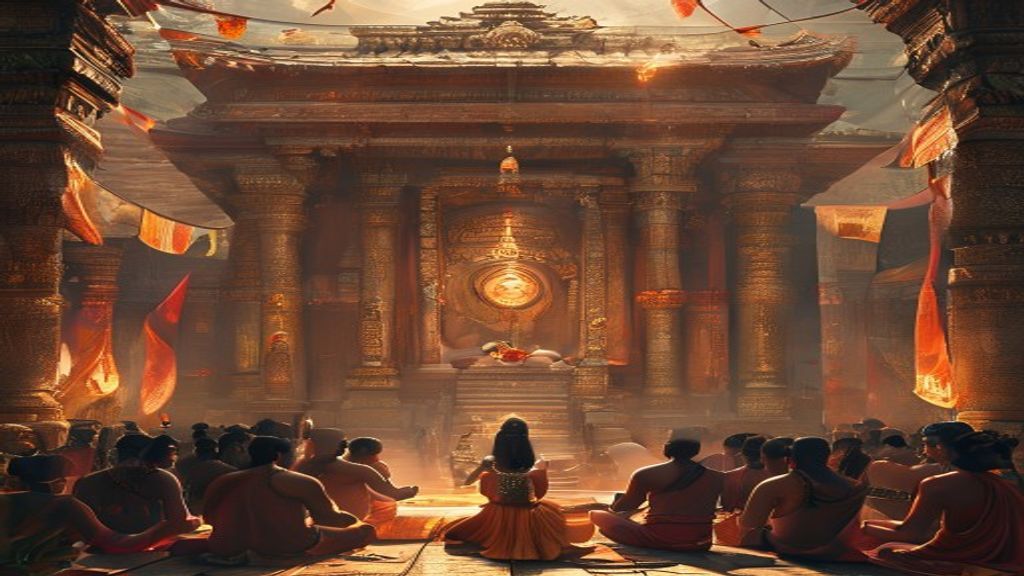
Hanuman worship for Saturn (Shani) relief is a profound spiritual practice rooted in Sanatan Dharma, offering powerful protection and mitigation from the malefic effects of Shani Dev. Devotion to Bajrangbali, the mighty son of Vayu, appeases the formidable planet, transforming its challenging influences into opportunities for growth and spiritual discipline, as affirmed in ancient texts.
| Attribute | Details |
|---|---|
| Deity for Worship | Lord Hanuman (Bajrangbali, Anjaneya, Maruti) |
| Associated Planetary Deity | Shani Dev (Saturn) |
| Key Festivals | Hanuman Jayanti, Shani Amavasya, Tuesdays, and Saturdays. |
| Scripture Reference | Ramayana, Skanda Purana (Kashi Khanda), Brahmavaivarta Purana, Hanuman Chalisa. |
| Primary Benefit | Mitigation of Shani Dosha (Sade Sati, Dhaiya), courage, protection from adversity, spiritual strength. |
Introduction: The Unwavering Shield of Bajrangbali Against Shani’s Gaze
In the vast cosmos governed by the divine energies, the planets, or Grahas, exert profound influences on human destiny. Among them, Shani Dev, the son of Surya Dev, is revered and sometimes feared as the dispenser of karma, the stern teacher who brings justice and discipline. His periods, such as Sade Sati and Dhaiya, are known to test an individual’s fortitude, forcing them to confront their deepest karmic patterns. However, Sanatan Dharma, in its infinite wisdom, provides powerful remedies and protections. Foremost among these is the devout worship of Lord Hanuman, the embodiment of strength, devotion, and selfless service. The unique relationship between Hanuman and Shani offers a beacon of hope and a profound path to alleviate the challenging transits of Saturn. This guide from Hindutva.online delves into the scriptural basis, historical legends, and practical observances that make Hanuman worship an unyielding shield against the formidable gaze of Shani.
Puranic History & Legend: Hanuman’s Triumph Over Shani Dev
The profound connection between Lord Hanuman and Shani Dev is not a mere coincidence but is deeply embedded in our sacred Itihasas and Puranas, providing the foundation for this powerful remedial practice. The most celebrated legend illustrates Hanuman’s unparalleled strength and Shani Dev’s subsequent promise to him.
As narrated in various Puranas, including the Brahmavaivarta Purana and the Skanda Purana (Kashi Khanda), during the epic battle of Lanka, Lord Hanuman was in hot pursuit of the demon Ahiravan to rescue Lord Rama and Lakshmana from the underworld. It was during this quest that he encountered Shani Dev, who was held captive by Ravana due to the astrologer’s insistence to keep all malefic planets under control. Ravana, in his arrogance, had imprisoned not only Shani but also other powerful Grahas.
Upon seeing Shani Dev, Hanuman, with his boundless strength and singular focus on his Lord’s mission, lifted Shani Dev on his shoulder to free him. Another popular variation recounts that Shani Dev, in his cosmic duty, attempted to afflict Hanuman. Hanuman, whose body is harder than a vajra, remained unaffected. In fact, due to Hanuman’s immense power, Shani Dev felt the immense pressure and pain of Hanuman’s colossal form.
Overwhelmed by Hanuman’s might and unflinching devotion to Lord Rama, Shani Dev recognized Hanuman’s unparalleled divine power. Shani Dev then bowed to Hanuman and made a solemn promise: “O Mighty Son of Vayu, I shall never trouble anyone who worships you with devotion, especially on Saturdays. Those who remember your name and serve you shall be free from my malefic effects.” This divine boon from Shani Dev himself is the bedrock of Hanuman worship for Shani relief.
Another account from the Ramayana highlights Hanuman’s selfless service, courage, and dedication, qualities that inherently appease Shani Dev, who values discipline, integrity, and righteousness. Hanuman’s unwavering adherence to Dharma makes him immune to the negative aspects of Shani, embodying the very principles that Shani seeks to instill in beings.
Architectural & Spiritual Marvels: Sanctuaries for Shani Mitigation
While Hanuman worship for Shani relief is primarily a devotional practice, many sacred temples across Bharatavarsha serve as potent centers for devotees seeking solace. These temples, often dedicated singularly to Hanuman or housing shrines for both Hanuman and Shani Dev, are designed to facilitate profound spiritual experiences and karmic mitigation.
Architecturally, these Hanuman temples often feature styles reflecting their regional origins—from the elaborate Dravidian architecture of South India with towering gopurams and intricate carvings (such as the Ranganathaswamy Temple where Hanuman is prominently worshipped) to the more restrained yet powerful Nagara style prevalent in the North, characterized by curvilinear shikhara (like the Salasar Balaji Temple, though not exclusively for Shani, it is a significant Hanuman abode). What is scientifically marvelous is not just the engineering prowess but the precise alignment of these sacred spaces with cosmic energies, enhancing the efficacy of prayers and rituals.
Many Hanuman temples dedicate specific altars or periods for Shani Shanti Puja. For instance, in some temples, an idol of Shani Dev is placed near Hanuman, signifying Shani’s subordinate position to the Vayuputra. The practice of offering mustard oil and black sesame seeds to Shani, followed by offerings of sindoor and sweet to Hanuman, is a common sight in such integrated temple complexes, reinforcing the puranic legend.
These architectural embodiments serve as conduits for divine grace, creating an environment where the devotee can perform their Sadhana with enhanced focus and faith, drawing upon the concentrated spiritual energy of the sacred precinct to alleviate planetary afflictions.
Rituals & Puja Vidhi: A Step-by-Step Guide to Appease Shani Through Hanuman
Performing Hanuman Puja specifically for Shani relief requires sincerity, devotion, and adherence to certain traditional observances. The most potent day for this worship is Saturday, as it is the day consecrated to Shani Dev, and also a day Hanuman is often invoked.
- Purification (Shuddhi): Begin with a purifying bath. Wear clean, preferably red or saffron-colored clothes, as these are dear to Lord Hanuman.
- Setup the Altar: Choose a clean space, preferably facing East or North. Place an idol or image of Lord Hanuman. You may also place a small idol or image of Shani Dev if available.
- Lighting the Lamp (Deepam): Light a lamp (Deepam) with pure Ghee or mustard oil. Mustard oil is particularly sacred to Shani Dev.
- Offerings to Hanuman:
- Offer fresh flowers, especially red hibiscus or marigolds.
- Apply Sindoor (vermilion) to Hanuman’s idol, mixing it with jasmine oil. This is known as “Chola Chadana.”
- Offer Prasad (sacred food) that is pleasing to Hanuman, such as Jaggery (Gud), roasted gram (Chana), Ladoo, or Churma. Bananas are also favored.
- Light incense sticks (Dhupa) and offer camphor (Arati).
- Offerings to Shani Dev (if separate idol):
- Offer mustard oil to Shani Dev. Some traditions pour oil over the idol.
- Offer black sesame seeds (Til) and black urad dal.
- Light a separate mustard oil lamp for Shani Dev.
- Mantra Recitation (Japa): With deep devotion, recite the powerful mantras and Stotras dedicated to Hanuman and Shani. (See next section for specific chants).
- Circumambulation (Parikrama): Perform 7, 11, 21, or 108 circumambulations around the altar or temple.
- Pranama (Prostration): Humbly prostrate before Lord Hanuman and Shani Dev, seeking their blessings and forgiveness for any karmic transgressions.
- Prasad Distribution: Distribute the consecrated Prasad among family members and others. Serving food to the needy, especially on Saturdays, multiplies the merit.
This systematic worship, performed with unwavering faith, invokes the divine grace of Bajrangbali to pacify the rigorous influences of Shani.
Mantras & Chants: Invoking Divine Protection
The chanting of sacred Mantras is a cornerstone of Hindu worship, acting as a direct conduit to the divine. For Shani relief through Hanuman worship, specific chants are particularly potent:
- Hanuman Chalisa: This 40-verse hymn by Goswami Tulsidas is perhaps the most powerful and widely recited prayer to Lord Hanuman. Reciting it daily, especially on Tuesdays and Saturdays, provides immense protection and strength.
Example Verse:
बुद्धिहीन तनु जानिके सुमिरौ पवन कुमार |
बल बुद्धि विद्या देहु मोहि हरहु कलेश विकार ||
(Buddhiheen Tanu Jaanike Sumirau Pavan Kumar |
Bal Buddhi Vidya Dehu Mohi Harahu Kalesh Vikaar ||) - Bajrang Baan: A highly effective prayer for protection from negative forces, enemies, and planetary afflictions. Regular recitation is believed to create a protective shield.
- Hanuman Moola Mantra:
ॐ हं हनुमते रुद्रात्मकाय हुं फट |
(Om Hum Hanumate Rudratmakaya Hum Phat)
This powerful mantra invokes Hanuman’s formidable Rudra aspect. - Anjaneya Mantra:
ॐ श्री हनुमते नमः |
(Om Sri Hanumate Namah)
A simple yet potent mantra for general devotion and invoking Hanuman’s blessings. - Shani Moola Mantra (for combined worship):
ॐ प्रां प्रीं प्रौं सः शनैश्चराय नमः |
(Om Pram Preem Proum Sah Shanaishcharaya Namah)
Chanting this mantra can help appease Shani Dev directly, complementing Hanuman worship.
Recite these mantras with a Rudraksha mala (rosary beads) for specified counts (108, 1008 times) to amplify their effect. Consistency and devotion are key.
Dos and Don’ts: Ethical Observances for Effective Worship
To maximize the efficacy of Hanuman worship for Shani relief, certain ethical and ritualistic guidelines must be adhered to:
Dos:
- Observe Purity: Maintain physical and mental purity throughout the day of worship.
- Fast (Optional): Observe a partial or full fast on Saturdays. Consume only fruits, milk, or Sattvic food.
- Serve the Needy: Offer food, clothes, or assistance to the poor and downtrodden, especially on Saturdays. This act of selfless service is highly pleasing to both Hanuman and Shani.
- Recite Hanuman Chalisa: Make it a daily practice, particularly beneficial on Tuesdays and Saturdays.
- Offer Specific Items: Ensure offerings like mustard oil, black sesame seeds (for Shani), sindoor, jaggery, and red flowers (for Hanuman) are made.
- Practice Celibacy: Maintain celibacy on the day of worship for enhanced spiritual benefits.
Don’ts:
- Avoid Non-Vegetarian Food & Alcohol: Strictly refrain from consuming meat, eggs, and alcohol, especially on Tuesdays and Saturdays.
- Avoid Deceit & Lies: Shani Dev is the lord of justice; unrighteous conduct will negate the benefits of worship.
- Do Not Disrespect Elders: Lord Hanuman is the epitome of respect and humility. Disrespecting parents, teachers, or elders is an affront to these virtues.
- Do Not Engage in Arguments: Maintain a peaceful demeanor. Avoid quarrels or harsh speech.
- Avoid Wearing Black for Hanuman Worship: While black is associated with Shani, for Hanuman worship specifically, red or saffron is preferred. If performing combined worship, one may wear neutral colors.
Frequently Asked Questions
When is the best time to worship Hanuman for Shani relief?
The most auspicious days are Saturdays, as they are dedicated to Shani Dev, and Tuesdays, which are sacred to Lord Hanuman. Worship performed during the Brahma Muhurta (early morning before sunrise) or during the evening twilight hours is considered highly potent. Observing specific periods like Shani Amavasya (new moon coinciding with a Saturday) or Hanuman Jayanti is also greatly beneficial.
What specific offerings are most effective for this particular worship?
For Lord Hanuman, key offerings include Sindoor mixed with jasmine oil, red flowers (especially hibiscus), Jaggery (Gud), roasted gram (Chana), and sweets like Ladoo. For Shani Dev, offerings of mustard oil, black sesame seeds (Til), black urad dal, and black cloth are considered most effective in mitigating his malefic effects.
Is fasting necessary for Hanuman worship for Shani relief?
While not strictly mandatory, observing a fast (partial or full) on Saturdays is highly recommended and adds to the spiritual merit. Fasting signifies self-discipline and dedication, qualities that are pleasing to both Hanuman and Shani Dev. However, sincerity of devotion and adherence to righteous conduct are more critical than the act of fasting itself.
Can women worship Lord Hanuman for Shani relief?
Yes, absolutely. Women can and should worship Lord Hanuman with full devotion and purity to seek relief from Shani Dosha. Sanatan Dharma emphasizes devotion and intent above all. While some cultural practices may suggest certain restrictions during specific periods, the core principle is that anyone, irrespective of gender, can connect with the divine through sincere Bhakti. Lord Hanuman is a protector for all his devotees.
Dharmic Significance: Why This Matters for Every Hindu
The practice of worshipping Lord Hanuman for Shani relief transcends mere astrological remedy; it is a profound journey into the heart of Sanatan Dharma. It teaches us that even the most formidable challenges, personified by Shani Dev, can be transformed through unwavering faith (Shraddha), selfless service (Seva), and absolute surrender (Sharanagati), qualities supremely embodied by Hanuman. Shani Dev, in his essence, is a benefactor of discipline and justice, forcing us to face our karmic truths and refine our character. By invoking Hanuman, we gain the courage and wisdom to navigate these periods of trial, not with fear, but with strength and spiritual fortitude.
This practice reinforces the timeless truth that Dharma protects those who protect Dharma. It reminds us that our actions (karma), devotion (Bhakti), and adherence to righteous living are our most potent allies against any adversity, planetary or otherwise. In a world increasingly prone to anxiety and uncertainty, the devotion to Bajrangbali provides an anchor, a source of indomitable strength and boundless compassion. Engaging in this sacred worship not only alleviates personal suffering but also fortifies our collective spiritual fabric, ensuring the continuity and vibrancy of our ancient traditions for generations to come. Explore more such insights on spiritual living and Sanatan Dharma at Hindutva.online.