Hindu Feminism, an intrinsic aspect of Sanatan Dharma, embodies the profound reverence for the Divine Feminine through Goddess worship, fostering women’s empowerment by recognizing their inherent spiritual power, strength (Shakti), knowledge (Saraswati), and prosperity (Lakshmi) as foundational to cosmic order and societal well-being, deeply rooted in Vedic and Puranic traditions.
| Attribute | Details |
|---|---|
| Primary Deities | Devi (Durga, Lakshmi, Saraswati, Parvati), Saptamatrikas, Mahavidyas |
| Origin of Concept | Rig Veda (Devi Suktam), Upanishads (Kena Upanishad), Puranas (Devi Mahatmya, Srimad Bhagavatam), Tantras |
| Key Festivals | Navaratri, Diwali (Lakshmi Puja), Vasant Panchami (Saraswati Puja), Karva Chauth, Gauri Vrata |
| Scripture Reference | Devi Mahatmya (Markandeya Purana), Srimad Bhagavatam, Rig Veda Mandala 10, Atharva Veda, Various Dharma Shastras |
The Inherent Divinity of the Feminine Principle
Sanatan Dharma offers a unique worldview where the feminine is not merely an auxiliary force but the very bedrock of existence. Unlike many world religions, Hindu traditions elevate women and the feminine principle to an unparalleled position of divinity, power, and sacredness. This profound reverence, often misconstrued or overlooked in modern discourse, is the essence of Hindu Feminism – a framework that inherently recognizes and celebrates the spiritual equality and often superiority of the feminine, promoting women’s empowerment through direct worship of the Goddess (Devi) in her myriad forms. It is a philosophy that sees the universe as an emanation of Shakti, the divine feminine cosmic energy, without which even the male deities (Brahma, Vishnu, Shiva) are inert.
The scriptures consistently portray women as embodiments of Goddesses, capable of immense spiritual realization, intellectual prowess, and societal leadership. This profound understanding of the feminine as Ardhanarishvara (half-man, half-woman) or as the source of all creative and destructive power (Adi Shakti) forms the foundational ethos for the empowerment of women within the Hindu paradigm. For a deeper understanding of these intricate concepts, visit Hindutva.online.
Puranic Narratives of Stree Shakti and Empowerment
The Itihasas and Puranas abound with countless narratives illustrating the supreme power and indispensable role of the divine feminine. The most iconic example is found in the Devi Mahatmya (part of the Markandeya Purana), which glorifies the Goddess Durga as the ultimate cosmic power, the slayer of formidable demons like Mahishasura, Shumbha, and Nishumbha, whom even the Devas could not defeat. Here, Devi is not a consort but the independent, all-powerful Supreme Being, the source of creation, sustenance, and dissolution. Her emergence from the collective energies of all male gods symbolizes that all divine powers coalesce within the feminine, demonstrating that Stree Shakti is paramount.
Furthermore, Saraswati, the Goddess of knowledge, arts, and wisdom, is revered as the consort of Brahma, but more importantly, as the independent source of all learning and creative expression. Without her, creation itself would be bereft of meaning. Lakshmi, the Goddess of prosperity, wealth, and auspiciousness, is invoked for all material and spiritual abundance. The Srimad Bhagavatam extols the virtues of exemplary women like Devahuti, who received profound spiritual instruction from her son Kapila Muni, and figures like Sita and Draupadi from the Epics who displayed unwavering dharma, courage, and resilience in the face of immense adversity. These narratives are not mere stories; they are blueprints for understanding the multifaceted strength and agency of women.
Iconographic & Philosophical Foundations of Stree Shakti
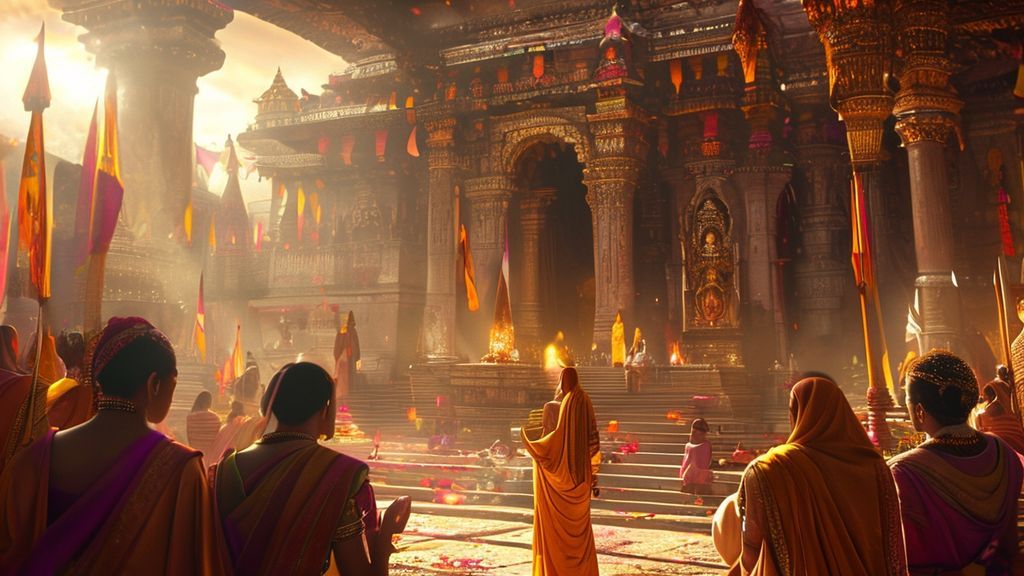
While “Hindu Feminism” is a conceptual framework rather than a physical structure, its principles are profoundly embedded in temple iconography, philosophical treatises, and daily ritual. The very architecture of many Hindu temples, particularly those dedicated to Devi, reflects the cosmic mother. The Garbagriha (sanctum sanctorum) often houses the female deity as the central energy source. Sculptural representations of goddesses are vibrant and dynamic, depicting them wielding weapons, riding powerful vahanas (vehicles), bestowing boons, and radiating immense power and compassion. These are not passive figures but active agents of cosmic will.
Philosophically, the concept of Shakti is the cornerstone. The Shakta tradition posits Devi as the Supreme Brahman, the ultimate reality. The Tantras, a vast body of scriptures, place immense emphasis on the feminine principle, seeing women as living embodiments of the Goddess and advocating for their respect and active participation in spiritual practices. The Kena Upanishad features Uma Haimavati, Devi Parvati, as the one who imparts knowledge of Brahman to Indra, demonstrating her role as the ultimate dispeller of ignorance and bestower of supreme wisdom. This philosophical elevation provides a robust basis for recognizing women’s intellectual and spiritual authority, making it a unique “scientific” marvel of spiritual engineering.
Rituals and Puja Vidhi for Goddess Worship
The worship of the Goddess is central to Hindu practice and a direct pathway to recognizing and invoking feminine power. The most prominent ritual is Navaratri, a nine-night festival dedicated to Devi in her forms of Durga, Lakshmi, and Saraswati, symbolizing the three aspects of creation, sustenance, and destruction, culminating in Vijayadashami, the victory of good over evil. During this period, devotees perform elaborate pujas, fasting, chanting, and self-purification.
A typical Devi Puja involves:
- Sankalpa: Taking a vow with intention and purpose.
- Avahana: Invoking the Goddess into an idol, image, or kalasha.
- Asana: Offering a seat to the deity.
- Padya & Arghya: Offering water for feet and hands.
- Snana: Ritual bathing with water, milk, curd, ghee, honey, sugar (Panchamrita).
- Vastra & Abhushana: Offering new clothes and ornaments.
- Gandha & Pushpa: Offering perfumes and flowers.
- Dhupa & Deepa: Lighting incense and lamps.
- Naivedya: Offering sacred food.
- Tambula & Dakshina: Offering betel leaves and gifts.
- Arati: Waving a lamp before the deity.
- Mantra Japa: Chanting specific mantras.
- Pradakshina & Kshama Prarthana: Circumambulating the deity and seeking forgiveness.
The practice of Kanya Puja (worship of young girls) during Navaratri symbolizes the reverence for the living Goddess, where young girls are treated as embodiments of Devi and offered food, gifts, and respect, reinforcing the idea of inherent divine potential in every female child.
Potent Mantras and Chants for Devi
Chanting the sacred names and mantras of the Goddess is a powerful way to connect with the divine feminine energy and invoke her blessings for empowerment, protection, and wisdom. Some fundamental mantras include:
- Om Aim Hrim Klim Chamundaye Vichche (Navarna Mantra, for Durga)
- Om Sri Mahalakshmyai Namah (for Lakshmi, wealth and prosperity)
- Om Aim Saraswatyai Namah (for Saraswati, knowledge and wisdom)
- Sarva Mangala Mangalye Shive Sarvartha Sadhike Sharanye Tryambake Gauri Narayani Namostute (A Devi Stuti from Devi Mahatmya, for auspiciousness)
- Ya Devi Sarvabhuteshu Shakti Rupena Samsthita Namastasyai Namastasyai Namastasyai Namo Namah (From Devi Mahatmya, salutation to the Goddess as Shakti)
- The Devi Suktam (Rig Veda, Mandala 10, Hymn 125), sung by Vak Ambhrini, is a profound declaration of the feminine as the ultimate reality: “अहं रुद्रेभिर्वसुभिश्चराम्यहमादित्यैरुत विश्वदेवैः।” (I move with the Rudras and Vasus, with the Adityas and All-Gods.) This hymn unequivocally asserts the Goddess as the supreme cosmic power.
Dos and Don’ts in Embracing Hindu Feminism
- Do: Treat all women with respect, recognizing the divine feminine (Devi) within them.
- Do: Educate daughters and provide them with equal opportunities for growth and spiritual development.
- Do: Support women’s leadership roles in family, community, and religious institutions.
- Do: Engage in Goddess worship and understand the philosophical depth of Shakti.
- Do: Uphold the values of modesty, chastity, and dignity as prescribed for women in Dharma Shastras, understanding them as protective and empowering, not restrictive.
- Don’t: Engage in or tolerate any form of violence, abuse, or discrimination against women.
- Don’t: Promote dowry, female infanticide, or gender-selective practices, as these are grave distortions of Dharmic principles.
- Don’t: Relegate women to secondary roles in religious rituals where they have traditionally been co-worshippers (Dharmapatni).
Is Hindu Feminism different from Western Feminism?
Yes, fundamentally. While both advocate for women’s rights and equality, Hindu Feminism is rooted in a spiritual framework where the feminine principle is inherently divine and powerful (Shakti), predating and transcending societal constructs of gender. Western Feminism often emerged as a reaction to patriarchal religious and societal structures that historically suppressed women, seeking equality through social, political, and economic reforms. Hindu Feminism builds on an existing scriptural recognition of feminine divinity, seeking to restore and re-emphasize that inherent sacredness and power.
How does Goddess worship empower women in daily life?
Goddess worship provides a powerful psychological and spiritual framework. By venerating forms like Durga (strength), Lakshmi (prosperity), and Saraswati (knowledge), women are taught to recognize and cultivate these qualities within themselves. It inspires self-worth, courage, and resilience, reminding them that they are not mere objects but embodiments of divine energy capable of shaping their destinies and contributing significantly to society and family.
What role did women play in ancient Vedic society?
Ancient Vedic society, as depicted in the Vedas and Upanishads, afforded women significant respect and intellectual freedom. There were female seers (Rishikas) like Lopamudra, Gargi, and Maitreyi, who composed hymns and engaged in profound philosophical debates. Women participated in rituals, received education, and had agency in selecting their partners. While societal roles evolved over time, the foundational texts attest to an era of substantial female empowerment and intellectual contribution.
Preserving Sanatan Dharma through the Divine Feminine
The concept of Hindu Feminism, grounded in the worship of the Goddess and the profound respect for women, is not a modern imposition but an eternal truth embedded in the very fabric of Sanatan Dharma. Recognizing the divine feminine as Adi Shakti, the primordial cosmic energy, is crucial for maintaining the balance and harmony of the universe. To truly live by Dharmic principles means to honor, protect, and empower women in all spheres of life, acknowledging their inherent divinity as expressions of Devi herself. This revitalization of traditional understanding is vital for the spiritual health of our society and for propagating the timeless wisdom available on platforms like Hindutva.online. By upholding the dignity and power of the feminine, we uphold Dharma and ensure the continuity of our sacred traditions.