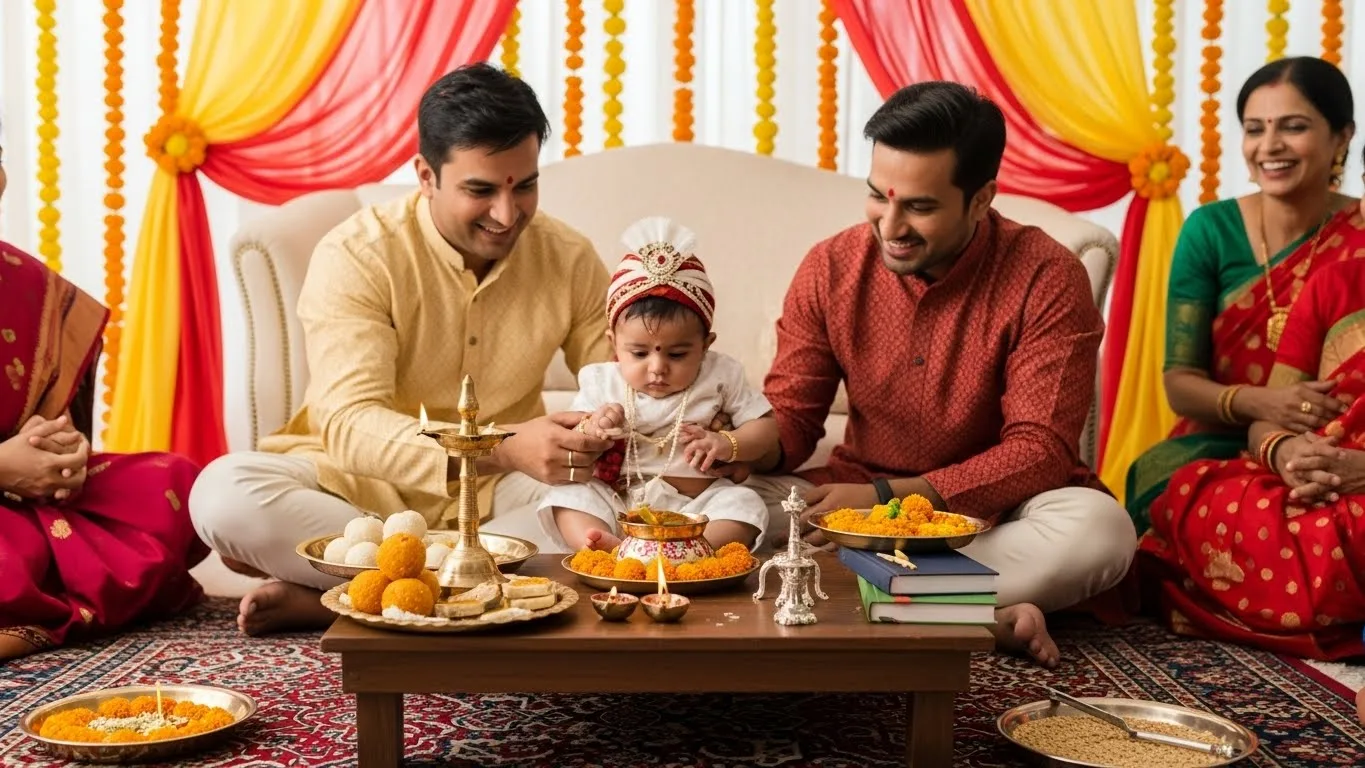
How to Perform Annaprashan ceremony Baby’s First Rice Eating Ritual – literally meaning “grain initiation” from Sanskrit anna (food/grain) and prashana (feeding) – represents one of Hindu tradition’s sixteen sacred Samskaras (sacraments), marking an infant’s momentous transition from exclusive liquid diet to the broader world of solid foods that will nourish physical growth, mental development, and spiritual consciousness throughout life. This beautiful ritual, typically performed when babies reach five to seven months of age, involves far more than simply introducing rice into an infant’s diet; it encompasses elaborate puja ceremonies invoking divine blessings for health and intelligence, careful selection of auspicious timing (muhurat) according to Vedic astrology, preparation of sanctified first food usually sweet rice pudding (kheer) offered
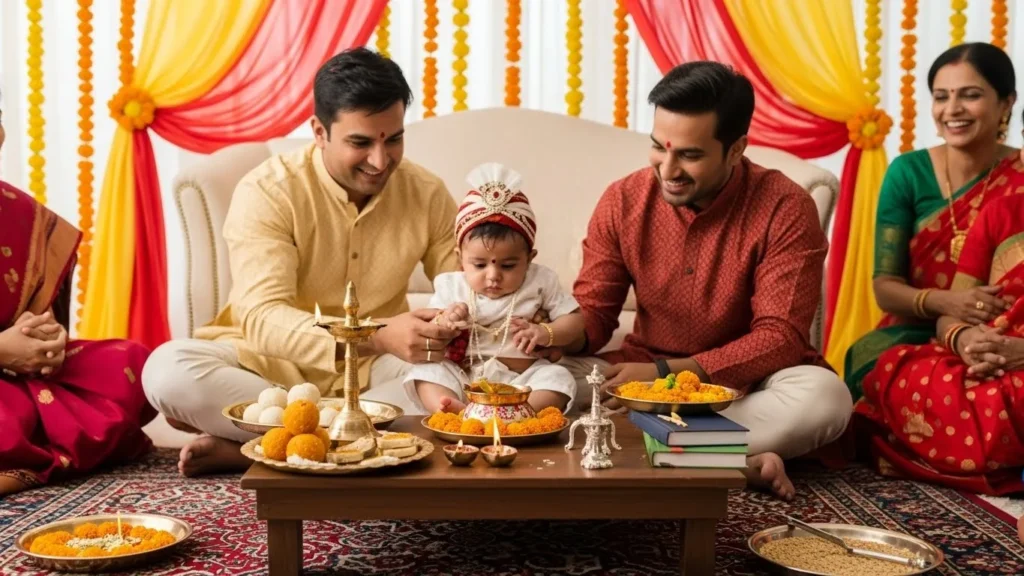
first to deities then fed to the baby by respected elders, and often includes the charming tradition of placing symbolic objects – books, money, jewelry, tools – before the child whose spontaneous choice supposedly indicates future talents and career inclinations.
The ceremony’s profound significance extends beyond nutritional transition to represent the child’s initiation into humanity’s most fundamental relationship with Annapurna – the goddess who ensures that food sustains not merely bodies but minds, intellects, and spiritual capacities, as ancient Vedic texts teach that what we eat literally becomes our thoughts, emotions, and consciousness through actual biological-spiritual transformation.
For Hindu families in 2025, whether maintaining ancestral traditions in India or adapting practices within global diaspora communities, understanding how to properly conduct Annaprashan proves essential for honoring this transformative milestone that welcomes infants into fuller participation in human culture through the sacred act of eating solid food, an activity so fundamental yet so profound that every spiritual tradition recognizes meals as communion – with family, with ancestors who cultivated grains across generations, with earth itself yielding nourishment, and ultimately with divine source manifesting as sustenance preserving life and making all human endeavor possible.
This comprehensive guide provides everything parents need for authentic Annaprashan: deep scriptural significance embedded in this practice, precise age guidelines differentiating timing for boys versus girls, complete step-by-step puja procedures with Sanskrit mantras, regional variations across India’s cultural landscape, modern adaptations balancing tradition with pediatric nutrition science, and practical guidance ensuring this sacred ceremony proves both spiritually meaningful and joyfully memorable for families celebrating baby’s developmental milestone.
Spiritual Significance and Vedic Foundation
Understanding why Annaprashan holds such importance in Hindu tradition transforms the ceremony from mechanical ritual into conscious spiritual practice honoring profound truths about food’s role transcending mere biological nutrition to shape consciousness itself.
The Vedic Teaching on Food:
Ancient Vedic texts recognize food as far more than fuel. The Taittiriya Upanishad declares “annam brahma” – food is Brahman (ultimate reality), elevating consumption from mundane necessity to sacred act. The Chandogya Upanishad systematically explains that consumed food divides into three parts: the grossest becomes waste, the middle portion becomes flesh (body tissue), and the subtlest part becomes mind (manas). This teaching makes explicit that what we eat literally becomes our thoughts, emotions, and consciousness – not metaphor but actual biological-spiritual transformation.
The Bhagavad Gita’s seventeenth chapter categorizes foods according to their consciousness-effect:
Sattvic Foods (Pure): Increase lifespan, purify existence, give strength, health, happiness. Include grains, fruits, vegetables, milk, ghee, honey.
Rajasic Foods (Stimulating): Too bitter, sour, salty, hot, pungent, dry, burning. Create misery by producing passion, competition, restlessness.
Tamasic Foods (Degraded): Impure, putrid, stale, leftover. Produce darkness, inertia, disease.
The Annaprashan ceremony’s emphasis on feeding pure, fresh, sattvic first food (sweetened rice kheer) reflects understanding that initiating solid food with proper substances establishes healthy patterns influencing the child’s entire life relationship with eating and consciousness.
The Samskara System:
Annaprashan constitutes the seventh of sixteen Samskaras – purificatory rites sanctifying life stages from conception through death. These transformative rituals recognize that humans aren’t born complete but require systematic refinement through:
- Pre-birth samskaras (conception, pregnancy protection)
- Infancy samskaras (birth, naming, first outing, Annaprashan, first haircut)
- Childhood samskaras (initiation, education)
- Adult samskaras (marriage)
- Final samskaras (death rites)
Each samskara imprints positive sanskaras (mental impressions) that shape character, values, and spiritual orientation. Annaprashan specifically addresses the food-consciousness relationship, establishing sacred awareness around eating that prevents gluttony, waste, and unconscious consumption while cultivating gratitude, mindful eating, and recognition that all nourishment ultimately flows from divine source.
Goddess Annapurna:
The ceremony invokes Annapurna – literally “full of food” – a manifestation of Divine Mother who ensures abundance and proper distribution of nourishment. According to mythology, when Lord Shiva declared material world as illusion (maya), Goddess Parvati withdrew, causing severe famine proving that the material dimension, while impermanent, serves essential purpose in divine plan. When Shiva finally acknowledged food’s sacred importance, Parvati returned as Annapurna, establishing kitchen in Kashi (Varanasi) where she feeds all beings. The Annaprashan ceremony recognizes this teaching: spiritual life doesn’t deny physical needs but sanctifies them, transforming eating from mere animal function into spiritual practice expressing gratitude and devotion.
Why Rice Specifically:
Rice (chawal) holds special significance in Hindu culture as:
- Completeness Symbol: White rice represents purity, while its ability to sustain life demonstrates completeness
- Universal Grain: Available throughout India, eaten by all classes, transcending regional/economic divisions
- Sacred Association: Used in virtually all Hindu rituals, offered to deities, thrown at weddings
- Digestibility: Easily digestible for infants beginning solid food journey
- Cultural Centrality: Forms staple food for majority of Indian population
Initiating solid food with rice connects child to broader cultural identity and spiritual heritage embedded in this foundational grain.
Age and Timing Guidelines
Determining when to perform Annaprashan involves balancing traditional scriptural prescriptions with modern pediatric recommendations and individual child’s developmental readiness, creating integrated approach honoring both wisdom and practical health considerations.
Traditional Scriptural Guidelines:
According to ancient Grihya Sutras (household ritual texts), Annaprashan timing differs by gender:
| Gender | Recommended Age Months | Rationale |
|---|---|---|
| Boys | 6, 8, 10, or 12 (even months) | Masculine energy associated with active, expanding forces |
| Girls | 5, 7, 9, or 11 (odd months) | Feminine energy associated with receptive, refining forces |
The even/odd distinction reflects broader Hindu symbolic systems where even numbers represent stability and expansion (appropriate for boys traditionally expected to expand family wealth and lineage) while odd numbers represent transformation and refinement (appropriate for girls traditionally viewed as refining and sanctifying the home).
Most Common Practice:
- Boys: 6 months (most common), alternatively 8 months
- Girls: 5 months (less common), more typically 7 months
Many modern families choose 6-7 months for all children regardless of gender, as this aligns with both traditional wisdom and contemporary pediatric guidelines for introducing solid foods.
Modern Pediatric Recommendations:
The World Health Organization and pediatricians recommend introducing solid foods:
- No earlier than 4 months (17 weeks) – digestive system insufficiently developed
- Ideally at 6 months (26 weeks) – optimal digestive readiness for most infants
- No later than 8 months – nutritional needs exceed what exclusive breastfeeding provides
Signs of Developmental Readiness:
Beyond calendar age, ensure baby demonstrates:
✅ Head control: Can hold head steady without support
✅ Sitting ability: Sits with minimal support
✅ Loss of tongue-thrust reflex: No longer automatically pushes solid food out with tongue
✅ Interest in food: Watches others eat, reaches for food, opens mouth when food approaches
✅ Chewing motions: Makes up-and-down jaw movements
✅ Weight gain: Has doubled birth weight (typically by 6 months)
Integrated Approach:
The ideal timing combines all three considerations:
- Traditional prescription: Follow gender-specific age recommendation
- Pediatric safety: Ensure minimum 6 months age (preferably)
- Individual readiness: Confirm baby shows developmental signs
If these factors conflict (e.g., traditional timing suggests 5 months for girl but pediatrician recommends waiting until 6 months), prioritize child’s health and readiness while honoring tradition by performing ceremony as close to prescribed timing as safely possible.
Selecting Auspicious Muhurat:
Once general age determined, consult Hindu calendar (panchang) or knowledgeable priest to identify auspicious dates and times within that month considering:
Favorable Factors:
- Shukla Paksha (waxing moon fortnight) – represents growth and increase
- Pushya Nakshatra – most auspicious lunar mansion for nourishment
- Thursday (Jupiter’s day – wisdom, expansion)
- Avoid: Rahu Kaal, Yamaghanda, eclipses, inauspicious weekdays for your family
2025 Auspicious Dates:
Families planning Annaprashan in 2025 can consult comprehensive muhurat calendars listing optimal dates month by month. General favorable months include:
- Chaitra (March-April)
- Vaishakha (April-May)
- Kartik (October-November)
- Margashirsha (November-December)
Practical Consideration:
While astrological timing proves ideal, family circumstances matter equally. If perfect muhurat falls when key family members cannot attend, or when baby is sick, choose practical date within general auspicious window. Divine grace responds to sincere devotion more than astrological perfection.
Complete Annaprashan Puja Procedure
The Annaprashan puja ceremony involves systematic steps invoking divine blessings while initiating the child into grain consumption. While regional variations exist, this comprehensive procedure captures essential elements common across Hindu traditions.
Pre-Ceremony Preparations (1-2 Days Before):
Invitation and Planning:
- Invite close family members, particularly grandparents, maternal uncle (mama), and respected elders
- Arrange for priest (purohit) if hiring for elaborate ceremony
- Decide location: home (most common) or temple
- Prepare guest list for feast following ceremony
Puja Space Setup:
- Clean designated area thoroughly
- Arrange raised platform or clean floor space for sitting
- Spread new cloth (red, yellow, or white) on puja area
- Set up altar with deity images (Ganesha, Annapurna, family deities)
Puja Materials Required:
| Category | Items Needed |
|---|---|
| Deities | Ganesha idol/photo, Annapurna photo, family deity |
| Kalash Setup | Copper/brass pot, mango leaves, coconut, betel nut, coin |
| Offerings | Fresh flowers, incense, camphor, cotton wicks, ghee/oil |
| Sacred Substances | Sandalwood paste, kumkum, turmeric, unbroken rice grains |
| Puja Essentials | Bell, plate for aarti, spoons, small bowls, pure water |
| Food Items | Rice, milk, sugar/jaggery, ghee, fruits, dry fruits |
| Symbolic Objects | Book, pen, money/jewelry, soil/clay, musical instrument |
| For Baby | New clothes, small garland, silver/gold jewelry (optional) |
Ceremony Day Morning:
Baby Preparation:
- Give baby gentle bath using warm water with few drops of sandalwood essence
- Dress in new traditional clothes – dhoti/kurta for boys, lehenga/frock for girls
- Apply tiny tilak on forehead using sandalwood paste and kumkum
- Place small flower garland around baby’s neck (ensure safety – no choking hazard)
- Some families dress baby in miniature crown (mukut) for photos
Food Preparation:
Traditional Sweet Rice (Kheer/Payasam) Recipe:
Ingredients:
- 2 tablespoons rice (preferably aged white rice)
- 2 cups milk (cow’s milk traditionally, but any appropriate for baby)
- 1 tablespoon sugar or jaggery (adjust to minimal sweetness)
- Pinch of cardamom powder
- Few strands of saffron (optional)
- Ghee for cooking
Preparation:
- Wash rice thoroughly
- Cook rice in milk on low heat until very soft and creamy (30-40 minutes)
- Add sugar/jaggery and cardamom, cook for 5 more minutes
- Cool to lukewarm temperature
- Ensure consistency is very smooth – mash if needed or blend slightly
- Prepare small quantity for baby (few spoons) and larger batch for prasad distribution
Modern Adaptation: Some parents prepare simple boiled rice mashed with little milk/ghee instead of sweet kheer, aligning with pediatric recommendations for minimal sugar introduction. This proves acceptable if family tradition permits.
The Puja Ceremony (Step-by-Step):
Step 1: Purification and Invocation (5-10 minutes)
All participants sit around puja area. Priest (or family elder conducting ceremony) begins:
Achamana (Purification):
Take water in right palm, sip while chanting:
ॐ केशवाय नमः। ॐ नारायणाय नमः। ॐ माधवाय नमः॥
How to Perform Annaprashan Ceremony
Pranayama (Breath Control):
Brief breath control establishing mental focus
Sankalpa (Sacred Resolution):
Priest takes water with flower and betel leaf in right palm, states intention:
[श्री गणेशाय नमः। अद्य date, nakshatra, tithi शुभ दिने, [child’s name] स्य अन्नप्राशन संस्कारं करिष्ये।]
“Om, salutations to Ganesha. On this auspicious day [state date and astrological details], I shall perform Annaprashan Samskara for [child’s name].”
Sprinkle water on all puja items while chanting ॐ.
Step 2: Ganapati Puja (5-10 minutes)
Always begin by worshipping Lord Ganesha for obstacle removal:
Installation:
Place Ganesha idol/photo on altar
Basic Offerings:
- Apply sandalwood paste on Ganesha
- Offer flowers while chanting: ॐ गं गणपतये नमः
- Light incense and wave before Ganesha
- Offer fruits and sweets
Ganapati Mantra (chant 11 or 21 times):
ॐ गं गणपतये नमः॥
Or elaborate version:
वक्रतुण्ड महाकाय सूर्यकोटि समप्रभ।
निर्विघ्नं कुरु मे देव सर्वकार्येषु सर्वदा॥
“O Lord Ganesha of curved trunk, massive body, and brilliance of million suns, make all my undertakings free of obstacles, always.”
Step 3: Kalash Sthapana (5 minutes)
Establish sacred water vessel representing divine presence:
Fill copper/brass pot 3/4 with water, place mango leaves around opening, top with coconut, place coin and betel nut inside. Position kalash on rice mound.
Chant while installing:
कलशस्य मुखे विष्णुः कण्ठे रुद्रः समाश्रितः।
मूले तत्र स्थितो ब्रह्मा मध्ये मातृगणाः स्मृताः॥
“Vishnu resides in kalash’s mouth, Rudra in neck, Brahma in base, Divine Mothers in middle.”
Step 4: Navagraha Puja (Optional, 10 minutes)
Worship nine planetary deities for beneficial influences on child’s life:
Offer flowers, rice, and specific items for each planet while chanting respective mantras. This elaborate step often performed by priests; families conducting simple ceremony may skip.
Step 5: Annapurna Invocation (5 minutes)
Invoke Goddess Annapurna, the presiding deity for this ceremony:
Place Annapurna photo/image prominently. Light lamp before Her.
Annapurna Stotram (selected verses):
अन्नपूर्णे सदापूर्णे शङ्करप्राणवल्लभे।
ज्ञानवैराग्यसिद्ध्यर्थं भिक्षां देहि च पार्वति॥
“O Annapurna, eternally complete, beloved of Lord Shankara, grant me alms of knowledge and detachment, O Parvati.”
माता च पार्वती देवी पिता देवो महेश्वरः।
बान्धवाः शिवभक्ताश्च स्वदेशो भुवनत्रयम्॥
“Mother is Goddess Parvati, Father is Lord Maheshwara, relatives are Shiva’s devotees, and homeland is the three worlds.”
Step 6: Havan (Fire Ceremony) – Optional (20-30 minutes)
If performing elaborate ceremony, conduct havan (fire ritual):
Establish sacred fire in havan kund, offer ghee, grains, herbs while chanting Vedic mantras. This requires priest’s guidance. Many families skip havan for simple home ceremony.
Step 7: The Rice Feeding Ceremony (10-15 minutes)
This represents the ceremony’s heart – the actual first feeding of solid food:
Preparation:
- Place baby on parent’s lap (mother or father)
- Position small plate/bowl of prepared kheer before baby
- Have all family members gather around
- If using gold/silver spoon or ring for feeding, keep ready
The Feeding Sequence:
First Feeding by Elder:
Traditionally, maternal uncle (mama) or grandfather performs first feeding. If unavailable, father or respected elder does so.
The elder takes small amount of kheer on gold ring, silver spoon, or clean finger, offers brief prayer:
अन्नं ब्रह्मा रसो विष्णुः भोक्ता देवो महेश्वरः।
एवं ध्यात्वा तु भुञ्जीत अन्नदोषो न लिप्यते॥
“Food is Brahma, its essence is Vishnu, the eater is Maheshwara. Meditating thus while eating, one incurs no fault from food.”
Then gently touches kheer to baby’s tongue while chanting:
ॐ प्राणाय स्वाहा। ॐ अपानाय स्वाहा।
ॐ व्यानाय स्वाहा। ॐ उदानाय स्वाहा।
ॐ समानाय स्वाहा॥
“Offering to Prana, Apana, Vyana, Udana, and Samana (five life airs).”
Baby’s Reaction:
Allow baby to taste and react naturally. Don’t force feeding. This first taste may be tiny – few drops on tongue sufficient for ceremonial purposes.
Family Feeding:
After elder’s first feeding, other family members (grandparents, parents, aunts, uncles) may take turns offering tiny amounts of kheer to baby while blessing:
“May you grow healthy, intelligent, and prosperous.”
“May Annapurna bless you with abundant nourishment throughout life.”
“May you become wise and virtuous.”
Step 8: The Career Prediction Ritual (10-15 minutes)
This charming tradition involves placing various symbolic objects before baby and observing which one they spontaneously choose:
Setup:
Place objects on decorated plate or cloth:
- Book/Pen: Indicates scholarly inclination, teacher, writer
- Money/Jewelry: Suggests business acumen, wealth, prosperity
- Soil/Clay: Traditional agriculture, connection to earth
- Musical Instrument: Artistic talent, musician
- Stethoscope/Medical Item: Healer, doctor (modern addition)
- Toy/Ball: Playful nature, sports (modern addition)
Place plate before seated baby at comfortable distance. Allow baby to reach naturally without forcing or guiding.
Interpretation:
Whichever object baby grasps first supposedly indicates future talents or career direction. This represents fun family tradition rather than definitive prediction – take lightheartedly while capturing memorable photos!
Step 9: Blessings and Aarti (5-10 minutes)
Elder’s Blessings:
Each elder present blesses baby by placing hand on head, sprinkling sacred water, or tying protective thread:
Traditional blessing:
आयुष्मान् भव। सौभाग्यवती भव। (Be long-lived. Be fortunate.)
Final Aarti:
Light camphor in aarti plate, wave before baby and deities while singing:
Simple aarti or chanting:
ॐ सर्वे भवन्तु सुखिनः सर्वे सन्तु निरामयाः।
सर्वे भद्राणि पश्यन्तु मा कश्चिद् दुःखभाग्भवेत्॥
“May all be happy, may all be free from disease, may all experience auspiciousness, may none suffer.”
Step 10: Prasad Distribution and Feast (ongoing)
Distribute the sanctified kheer as prasad to all present. Follow with elaborate feast featuring:
- Traditional dishes appropriate for celebration
- Vegetarian sattvic food (generally preferred)
- Special sweets and desserts
- Ensure accommodating dietary restrictions
Regional Variations and Modern Adaptations
The Annaprashan ceremony manifests diversely across India’s regions, demonstrating Hinduism’s beautiful capacity for localized expression while maintaining core spiritual principles.
Bengali Tradition (Mukhe Bhaat):
Bengali families conduct elaborate ceremonies:
- Baby dressed in silk, wearing miniature crown (mukut)
- Maternal uncle (mama) given primary role in feeding
- Rice preparation includes payesh (Bengali sweet rice)
- Grand feast with traditional Bengali dishes
- Professional photography capturing every moment
South Indian Tradition:
- Often performed at temple rather than home
- Emphasis on Annapurna worship with elaborate offerings
- Use of banana leaf for serving baby’s first food
- Regional variations: choroonu (Malayalam), annaprasana (Telugu)
- Traditional music and dance sometimes incorporated
Gujarati Tradition:
- Sweet preparations using jaggery instead of sugar
- Community celebration with neighbors invited
- Emphasis on gifting clothes and jewelry to baby
- Traditional folk songs sung by women
Modern Urban Adaptations:
Contemporary families increasingly blend tradition with modern sensibilities:
Simplified Ceremonies:
- Shorter duration (30-60 minutes vs. 2-3 hours)
- Skip elaborate havan, focus on core feeding ritual
- Smaller guest list due to space constraints
Medical Considerations:
- Consult pediatrician about appropriate first food
- Some use plain boiled rice instead of sweet kheer
- Ensure food temperature and texture safe for infant
- Keep backup formula/breast milk available
Contemporary Inclusions:
- Professional photography/videography
- Themed decorations matching modern aesthetics
- Digital invitations
- Hybrid celebrations (some family online, some in-person)
- Health-conscious menu options
Interfaith Families:
- Adapted ceremonies respecting both traditions
- Focus on universal aspects (blessing child, first solid food)
- Incorporate elements from multiple cultures
Frequently Asked Questions
Is Annaprashan mandatory or can we skip it?
Annaprashan isn’t legally mandatory but holds deep significance in Hindu tradition as one of sixteen Samskaras sanctifying life stages. While some modern families skip formal ceremony, they typically still mark first solid food milestone informally. The ritual’s value lies in consciously initiating baby’s relationship with food through sacred framework, involving family in blessings, and creating cherished memories. If elaborate ceremony proves impractical, perform simplified version at home – brief prayer, family feeding baby with blessings, small gathering. The sincere intention matters more than elaborate execution.
Can we perform Annaprashan without a priest?
Yes, absolutely. While priests bring traditional knowledge, proper Sanskrit pronunciation, and elaborate ritual expertise, family members can conduct ceremony using guidelines provided here. Many families successfully perform beautiful Annaprashan led by grandparents or parents who research procedures. Prepare by reading mantras phonetically, understanding each step’s purpose, and approaching with devotion. For very simple ceremony: invoke Ganesha and Annapurna, prepare kheer with prayer, have elder feed baby while family blesses, distribute prasad. Sincere devotion matters more than professional mediation.
What if baby refuses to eat the kheer during ceremony?
Don’t stress or force feeding! Babies often feel overwhelmed by attention, new environment, or simply aren’t hungry at that moment. If baby refuses: simply touch tiny amount to lips (ceremonial completion), try again gently after few minutes, allow baby to play with food naturally, or accept that ceremonial touching counts even without swallowing. The spiritual significance lies in intention and blessing, not quantity consumed. You’ll continue introducing solid foods naturally in following days according to pediatric guidelines. One mother reported her baby cried through entire ceremony yet became excellent eater later – no correlation!
Can we do Annaprashan for adopted or foster children?
Yes, definitely! Annaprashan celebrates child’s developmental milestone and family’s blessing, regardless of biological connection. Adopted or foster children benefit equally from ceremony’s spiritual sanctification. Perform at appropriate age when beginning solid foods, following same procedures. This beautiful ritual helps adopted children feel welcomed into family’s cultural and spiritual heritage. Some families perform Annaprashan as part of adoption celebration, combining welcome with traditional blessing. The love, devotion, and family bonding created through ceremony transcend biological considerations.
What should we do with leftover kheer and puja materials?
Kheer: Distribute as prasad to all attendees, neighbors, and people in need. Consuming food offered to deities carries spiritual benefit. Refrigerate leftovers and consume within 1-2 days. Don’t waste sacred food – it’s been offered to divine presence.
Flowers: Immerse in flowing water or compost; never trash.
Reusable Items: Clean and store kalash, brass items, cloth for future ceremonies.
Photos: Keep Ganesha and Annapurna images on home altar for continued worship or store respectfully.
Principle: Treat all puja materials with reverence as they’ve been sanctified through ritual.
Is there specific color clothing traditional for baby?
Traditional preferences vary by region:
- General: Bright auspicious colors – red, yellow, orange, gold
- Boys: Often yellow, saffron, white, cream
- Girls: Red, pink, orange, traditional silk with gold thread
- Modern: Any festive new outfit family chooses
Avoid black (traditionally inauspicious) and overly dark colors. Most important: comfortable fabric allowing baby to move freely and not causing irritation. Silk traditional but cotton more practical for baby’s skin. Many parents prepare two outfits – elaborate one for photos, comfortable one for ceremony itself.
Can we combine Annaprashan with other ceremonies?
Yes, families sometimes combine ceremonies for convenience:
- With Mundan (First Haircut): Common combination if timing aligns
- With Namakarana (Naming): If naming delayed, can combine
- With Birthday: Some families perform on first birthday if missed earlier window
However, each ceremony has distinct spiritual purpose deserving individual focus. If combining, ensure both receive adequate attention through proper rituals for each. Traditionally, separate ceremonies preferred allowing full focus on each Samskara’s unique significance. If combining for practical reasons, perform sequential ceremonies on same day rather than merged ritual.
How do we handle Annaprashan during COVID or health concerns?
During pandemic or health concerns:
- Small gathering: Limit to immediate family only
- Virtual participation: Live-stream for distant relatives
- Outdoor ceremony: Garden or open space with ventilation
- Health protocols: Masks, sanitization, social distancing
- Postponement: Delay until safer conditions if preferred
Remember: baby’s health is paramount. While Annaprashan timing traditionally prescribed, child’s safety supersedes ritual perfection. Better to postpone or simplify than create health risk. Divine grace responds to sincere intention, not rigid adherence to timing when genuine obstacles exist.
Conclusion
The Annaprashan ceremony represents far more than introducing solid food into an infant’s diet – it embodies Hindu tradition’s profound recognition that eating transcends mere biological necessity to shape consciousness, character, and connection to divine source manifesting as nourishment sustaining all life. By sanctifying baby’s first solid food through elaborate ritual, family blessings, and conscious prayer, parents initiate their child into humanity’s most fundamental relationship with food while establishing healthy patterns of gratitude, mindfulness, and recognition that all abundance flows from divine grace rather than mere material processes.
Whether performing elaborate multi-hour ceremony with professional priest or simplified home ritual with immediate family, the essence lies in approaching this milestone with reverence, surrounding baby with love and blessings, and consciously acknowledging the sacred dimension of nourishment that will sustain their journey toward full physical, mental, and spiritual development.
As you plan Annaprashan for your child in 2025, remember that while proper procedure, auspicious timing, and traditional elements enhance the ceremony, sincere devotion and family’s loving presence matter most. Adapt tradition to your circumstances while maintaining core elements: invoking divine blessing, feeding child with prayer, gathering family for celebration, and recognizing this beautiful milestone marking baby’s expanding capacity to participate in human culture through the simple yet profound act of eating solid food blessed by ancestors’ wisdom and divine grace. May your child grow healthy, intelligent, virtuous, and ever conscious that the food nourishing body also feeds mind and spirit, creating human being capable of recognizing divine presence in every sustaining morsel.
ॐ अन्नपूर्णायै नमः। ॐ शान्तिः शान्तिः शान्तिः॥
(Om, Salutations to Annapurna. Om Peace, Peace, Peace.)
About the Author
Sandeep Vohra – Vedic Philosophy and Hindu Scriptures Scholar
Sandeep Vohra is a distinguished scholar specializing in Vedic philosophy, Upanishadic teachings, Hindu scriptures, and the practical application of ancient wisdom to contemporary life. Holding advanced degrees in Sanskrit and Religious Studies, his research focuses on the Samskara system, understanding how traditional purificatory rites create psychological and spiritual transformation while maintaining relevance across changing cultural contexts.
Sandeep has extensively studied the philosophical foundations underlying Hindu rituals, demonstrating that ceremonies like Annaprashan aren’t mere superstitions but sophisticated practices addressing human development’s spiritual dimensions. He regularly teaches courses on Vedic lifestyle, Upanishadic metaphysics, the science of Samskaras, and the integration of traditional wisdom with modern knowledge systems. His writings emphasize that authentic Hindu practice combines proper understanding of scriptural teachings with sincere application in daily life, creating complete spiritual path addressing both transcendent goals and practical living requirements including health, relationships, and material wellbeing approached through dharmic framework.
