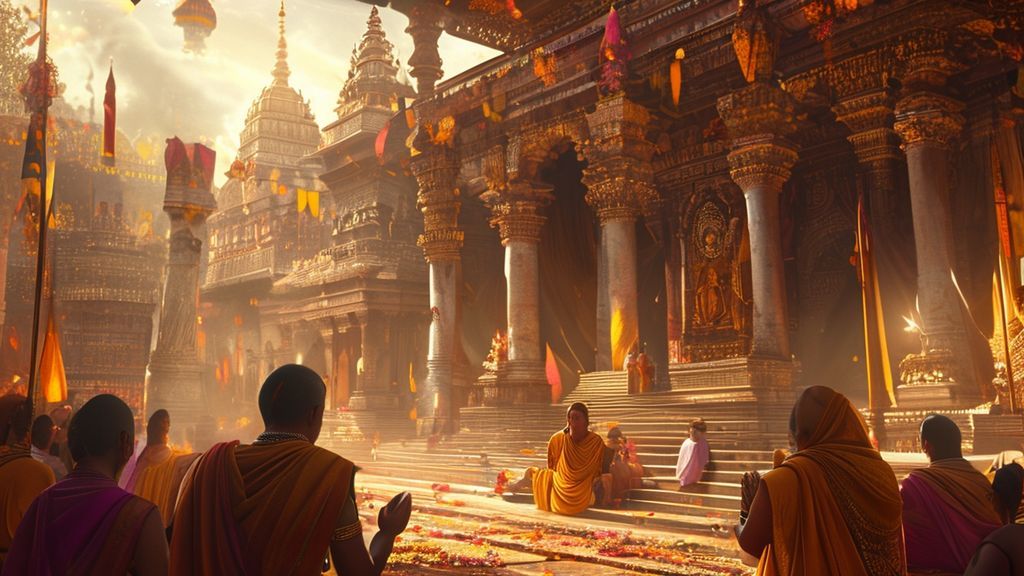
Kanaka Dasa (ಕನಕ ದಾಸ), revered as one of the greatest Haridasas, was a visionary saint, philosopher, and composer from Karnataka in the 16th century, whose devotional *kirtanas* and *ugabhogas* profoundly championed universal love, social equality, and unqualified devotion (Bhakti) to Lord Krishna, transcending caste barriers and societal norms.
| Attribute | Details |
|---|---|
| Deity Worshipped | Lord Krishna (as Sri Keshava, Sri Krishna) |
| Original Name | Thimmappa Nayaka |
| Birthplace/Origin | Kaginele, Byadagi Taluk, Haveri District, Karnataka, India (circa 1509 CE) |
| Key Festival | Kanaka Jayanti (observed on the 18th day of Karthika Masa) |
| Scripture Reference | Haridasa Sahitya, Dvaita Siddhanta (Madhvacharya tradition), Bhakti literature |
| Major Works | Mohanatarangini, Narasimha Stotra, Ramadhyana Charite, Hari Bhakti Sara, hundreds of kirtanas and ugabhogas |
Introduction: The Golden Voice of Devotion
In the illustrious firmament of Sanatan Dharma, where the stars of devotion shine eternally, Kanaka Dasa emerges as a radiant constellation, guiding countless souls towards the divine. Born Thimmappa Nayaka, a warrior by profession, his transformation into Kanaka Dasa—meaning “servant of Kanaka,” or “golden servant,” a reference to a miraculous finding of gold that fueled his spiritual awakening—is a testament to the transformative power of Bhakti. His life and literary legacy, deeply embedded in the Haridasa movement of Karnataka, represent a profound synthesis of spiritual insight, social reform, and poetic brilliance. He was not merely a composer of songs but a profound philosopher who articulated the Advaitic truth of universal consciousness through the accessible path of Dvaita Bhakti, emphasizing surrender to Lord Krishna.
Kanaka Dasa’s compositions are more than just melodic verses; they are spiritual treatises, offering intricate philosophical insights in simple, captivating language, making the profound truths of the Vedas and Puranas accessible to the common person. His relentless pursuit of equality and his unwavering faith in the face of societal prejudice make him an eternal beacon for all seekers on the path of Dharma. His life’s work continues to inspire millions, reinforcing the core Sanatani principle that true devotion knows no bounds of caste, creed, or social standing. For further exploration into the rich tapestry of Hindu spiritual heritage, Hindutva.online offers extensive resources.
Puranic History & Legend: The Transformation of Thimmappa Nayaka
The story of Kanaka Dasa is a vivid narrative of divine grace and human perseverance, echoing the profound transformative tales found in our Itihasas and Puranas. Born into a Kuruba (shepherd) community around 1509 CE, Thimmappa Nayaka initially served as a chieftain and warrior under the ruler of Bankapura. His early life was marked by material pursuits, yet an innate spiritual yearning simmered within him. The turning point arrived when he miraculously survived a battlefield injury, and subsequently, unearthed a pot of gold (kanaka) near his home, which he took as a divine sign to renounce worldly life.
This episode led him to embrace the path of devotion, becoming a disciple of Sri Vyasaraja (Vyasa Tirtha), a prominent Dvaita philosopher and the Raja Guru of the Vijayanagara Empire, who bestowed upon him the name Kanaka Dasa. Sri Vyasaraja, deeply impressed by Thimmappa’s sincerity and poetic talent, recognized his spiritual potential. This period marked the blossoming of Kanaka Dasa’s poetic genius, leading to the creation of hundreds of devotional compositions in Kannada.
Perhaps the most celebrated legend associated with Kanaka Dasa is the “Kanaka Kindi” incident at the Udupi Sri Krishna Temple. As a devout devotee of Lord Krishna, Kanaka Dasa longed to have a *darshan* of the deity at Udupi. However, due to his perceived lower caste, he was denied entry into the temple’s main sanctum. Undeterred, he sat outside, pouring out his heart in fervent prayers and *kirtanas* to Lord Krishna. Legend has it that the idol of Lord Krishna miraculously turned to face him, and a small opening in the temple wall (the “Kanaka Kindi” or Kanaka’s window) appeared, allowing him to behold his beloved deity. This divine intervention, recounted in the oral traditions and hagiographies of the Haridasa movement, stands as a powerful testament to the Lord’s unconditional love for His devotees, irrespective of their social status, a theme deeply resonant with teachings from the Bhagavata Purana regarding the accessibility of Bhakti.
Literary & Philosophical Grandeur: The Architecture of His Bhakti
Kanaka Dasa’s contributions to Sanatan Dharma are not confined to his life story but are eternally enshrined in the literary architecture of his devotional compositions. His works are a unique blend of philosophical depth, social commentary, and poetic beauty, making him a true literary marvel. His poetic genius expressed itself in several forms:
- Kirtanas (ಕೀರ್ತನಗಳು): Hundreds of devotional songs, simple in language yet profound in meaning, expressing his unwavering devotion to Lord Krishna, often criticizing social hypocrisy and emphasizing inner purity over external rituals.
- Ugabhogas (ಉಗಭೋಗಗಳು): Short, spontaneous poetic compositions that articulate philosophical truths or deep spiritual experiences, akin to mystical aphorisms.
- Mundiges (ಮುಂಡಿಗೆಗಳು): Riddles or enigmatic verses that convey spiritual messages, challenging the listener to ponder deeper meanings.
His major narrative works include:
- Mohanatarangini (ಮೋಹನತರಂಗಿಣಿ): A poetic epic (kavya) recounting the love story of Krishna and Rukmini, rich in mythological allusions and descriptive power.
- Narasimha Stotra (ನರಸಿಂಹ ಸ್ತೋತ್ರ): A fervent hymn in praise of Lord Narasimha, demonstrating his multifaceted devotion.
- Ramadhyana Charite (ರಾಮಧಾನ್ಯ ಚರಿತೆ): An allegorical poem that subtly critiques caste discrimination through the story of a debate between ragi (a coarse grain) and rice, highlighting the virtue of humility and universal sustenance.
- Hari Bhakti Sara (ಹರಿ ಭಕ್ತಿ ಸಾರ): A collection of over 100 verses summarizing the essence of devotion and spiritual wisdom.
Kanaka Dasa’s philosophy, rooted in the Dvaita Siddhanta of Sri Madhvacharya, transcends sectarianism, advocating a direct, personal relationship with the Divine. He masterfully used everyday metaphors and Kannada idiom to convey complex Vedanta principles, making enlightenment accessible to all. His compositions frequently questioned the superficiality of ritualistic religion, asserting that true Dharma lies in compassion, humility, and genuine surrender to God, echoing the teachings of the Bhagavad Gita (Chapter 18, Verse 66: *Sarva-dharmān parityajya mām ekaṁ śaraṇaṁ vraja*).
Embodying Kanaka Dasa’s Bhakti: Practices for Devotees
While Kanaka Dasa is not a deity, his life and teachings offer a powerful ‘Vidhi’ for devotees to cultivate profound Bhakti. Embodying his spirit involves:
- Sankeertana and Bhajan: Regularly singing and listening to his *kirtanas*. These devotional songs are a direct path to connect with Lord Krishna, as Kanaka Dasa himself experienced. Learning the meaning of verses like “ನಿನ್ನ ಅರಿವು ನಿನ್ನದಲೆನ್ನದಲೆ” (How can I know You, unless You reveal Yourself?) deepens the spiritual experience.
- Study of His Works: Engage with his major literary contributions—Mohanatarangini, Ramadhyana Charite, and Hari Bhakti Sara. These texts are rich in philosophical insights and moral lessons.
- Cultivation of Humility: Kanaka Dasa’s life exemplifies humility and devotion over pride. Practice surrendering ego and cultivating a sense of service (*dasyam*) to the Divine.
- Social Harmony: Uphold his message of equality and denounce discrimination. Work towards a society where all beings are respected as manifestations of the divine.
- Observance of Kanaka Jayanti: Participate in the celebrations of Kanaka Jayanti, usually held in November/December (18th day of Karthika Masa), which is dedicated to commemorating his life and legacy.
Mantras & Chants: Echoes of Kanaka Dasa’s Heart
Kanaka Dasa’s *kirtanas* are living mantras, potent with devotion and philosophical truth. Chanting excerpts from his works invokes the same spiritual fervor that he experienced. Here are a few poignant lines:
- “ಕಾಗಿನೆಲೆಯಾದಿಕೇಶವ”: This is his *ankita nama* or signature, invoking his cherished deity, Adi Keshava of Kaginele. Chanting this name is a simple yet profound way to connect with his devotion.
- “ಬಾಗಿದ ಕಾಗೆ ಕಲ್ಲ ಹಕ್ಕಿಯ ಕಂಡು ಹಾರಿತು”: (Bāgida kāge kalla hakkiya kaṇḍu hāritu) – This Mundige roughly translates to “A bowed crow saw a stone bird and flew away,” often interpreted as the illusion of the material world (stone bird) and the soul’s liberation (crow flying away). Meditating on such verses can lead to deep introspection.
- “ಕುಲ ಕುಲ ಕುಲವೆಂದು ಹೊಡೆದಾಡದಿರಿ”: (Kula kula kulavendu hoḍedāḍadiri) – “Do not quarrel saying ‘caste, caste, caste!'” This powerful line from his *kirtana* “ನಿಜವಾದ ಕುಲ ಯಾವುದು?” (What is the true caste?) serves as a mantra for social harmony and spiritual equality. It reminds us that true lineage is spiritual, not worldly.
- “ದಾಸನ ಮಾಡಿಕೋ ಎನ್ನ ಸ್ವಾಮಿ ವಿಠ್ಠಲ”: (Dāsana māḍikō enna svāmi Viṭṭhala) – “Make me Your servant, my Lord Vitthala!” This heartfelt plea epitomizes the essence of his *dāsya bhāva* (servant-master devotion) and can be chanted for cultivating humility and surrender to the Divine.
Dos and Don’ts for Devotees and Seekers
- Do:
- Study Kanaka Dasa’s life and philosophy to understand his profound message of Bhakti and equality.
- Actively participate in *bhajans* and *sankeertanas* of his compositions.
- Promote social harmony and challenge discrimination, embodying his courageous stand against caste prejudice.
- Visit places associated with his life, like Kaginele and Udupi, to experience the vibrations of his devotion.
- Cultivate a spirit of humility and selfless devotion (*nishkama karma*), as taught by the Haridasa tradition.
- Don’t:
- Disregard his message of equality; his teachings are antithetical to any form of discrimination.
- Treat his *kirtanas* merely as entertainment without understanding their deep spiritual and philosophical import.
- Engage in superficial rituals without cultivating inner purity and genuine devotion, which Kanaka Dasa himself critiqued.
- Allow sectarian differences to obscure the universal message of love and devotion that he propagated.
Who was Kanaka Dasa?
Kanaka Dasa was a 16th-century saint, philosopher, and poet from Karnataka, India. Born Thimmappa Nayaka, a warrior from the Kuruba community, he renounced worldly life after a divine revelation and became a devout follower of Lord Krishna, a disciple of Sri Vyasaraja, and a leading figure in the Haridasa Bhakti movement. His works championed universal devotion and social equality.
What is the significance of “Kanaka Kindi”?
The “Kanaka Kindi” (Kanaka’s Window) is a miraculous opening in the Udupi Sri Krishna Temple wall through which Lord Krishna is believed to have turned to give *darshan* to Kanaka Dasa, who was denied entry into the main sanctum due to his caste. This incident symbolizes the triumph of pure devotion over man-made barriers and is a cornerstone of Kanaka Dasa’s legacy.
What are Kanaka Dasa’s most famous literary contributions?
Kanaka Dasa’s most celebrated works include the epic poem *Mohanatarangini*, the allegorical *Ramadhyana Charite* (critiquing caste), *Hari Bhakti Sara* (an essence of devotion), and hundreds of profound *kirtanas* and *ugabhogas*. These compositions are treasured for their lyrical beauty, philosophical depth, and social relevance.
Why is Kanaka Dasa important for Sanatan Dharma?
Kanaka Dasa is crucial for Sanatan Dharma because he embodies the universal and inclusive spirit of Bhakti. He demonstrated that devotion transcends all societal divisions, proving that a sincere heart is the only qualification for approaching the Divine. His life and works continue to inspire millions to pursue a path of love, humility, and spiritual equality, reinforcing the core tenets of our ancient tradition.
Why This Matters for Every Hindu: Preserving Sanatan Dharma’s Heart
The legacy of Kanaka Dasa is not merely a historical footnote but a pulsating heart of Sanatan Dharma, vital for its continued vitality and relevance. In a world often fractured by divisions, Kanaka Dasa’s unwavering message of love, equality, and unadulterated devotion offers a timeless antidote. He reminds us that the true essence of Hinduism lies not in external rituals or inherited status, but in the purity of the heart and the intensity of one’s connection to the Divine. His life exemplified the highest ideals of spiritual courage, challenging entrenched prejudices with the soft power of Bhakti and profound spiritual logic. By embracing Kanaka Dasa’s teachings, we not only honor a great saint but actively participate in preserving the inclusive, compassionate, and universal values that are the bedrock of our Dharma. His “golden service” to Lord Krishna and humanity ensures that the path of sincere devotion remains illuminated for generations to come. Explore more such illuminating insights into our rich spiritual heritage at Hindutva.online.
