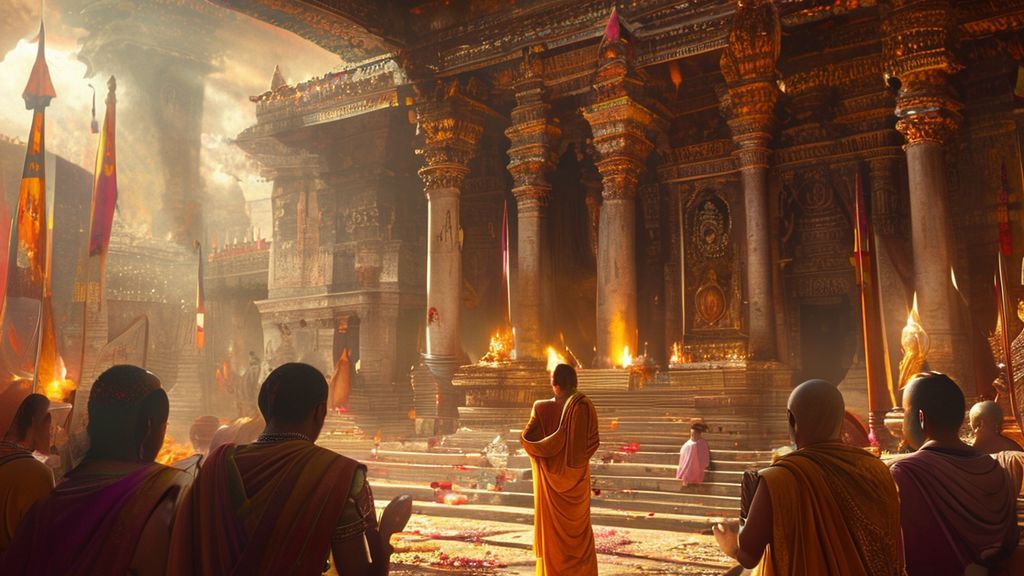
Plastic surgery in Ancient India, epitomized by Acharya Sushruta’s Rhinoplasty, represents a profound zenith of Vedic medical science, a testament to sophisticated surgical techniques developed over two millennia ago. This pioneering reconstructive surgery, meticulously detailed in the Sushruta Samhita, restored facial integrity and quality of life for countless individuals, showcasing a holistic approach to healing that fused spiritual wisdom with unparalleled practical skill.
| Attribute | Details |
|---|---|
| Central Figure | Acharya Sushruta (आचार्य सुश्रुत), revered as the “Father of Surgery” |
| Primary Text | Sushruta Samhita (सुश्रुतसंहिता) |
| Period | Circa 6th Century BCE (dates vary, some scholars suggest earlier) |
| Key Procedure | Rhinoplasty (नासासंधान) – Nose reconstruction using a forehead flap |
| Other Contributions | Cataract surgery, lithotomy, extensive knowledge of surgical instruments, anatomy |
| Scripture Reference | Atharva Veda (foundation of medical knowledge), Puranas (lineage of Dhanvantari) |
Introduction: The Cosmic Dance of Healing and Knowledge
In the illustrious tapestry of Sanatan Dharma, the pursuit of knowledge, or Jnana, has always been intertwined with the welfare of all beings, Sarva Bhuta Hita. Ancient India was not merely a cradle of philosophy and spirituality but also a crucible of scientific innovation, particularly in the realm of medicine. Ayurveda, the “Science of Life,” gifted by the divine, stands as a testament to this holistic understanding. Within its expansive embrace lies Shalya Tantra, the branch of surgery, where the genius of Acharya Sushruta shines brightest. His monumental work, the Sushruta Samhita, is not merely a medical treatise; it is a profound declaration of the human spirit’s capacity for empathy, healing, and reconstructive artistry, reaching unparalleled heights millennia before modern medicine conceived of similar advancements.
The practice of plastic surgery in ancient India was born not of vanity, but of deep compassion for those suffering from disfigurement due to injury, disease, or punitive amputation. The restoration of a person’s face, particularly the nose (a prominent feature and symbol of honor), was considered a vital act of Dharma, restoring dignity and facilitating reintegration into society. This guide delves into the specifics of Sushruta’s revolutionary techniques, firmly grounding them in the sacred traditions and scientific rigor of our ancestors.
Puranic History & The Divine Lineage of Ayurveda
The origins of Ayurveda are recounted in various Puranas and Vedic texts as a divine revelation. According to the Charaka Samhita and the Brahma Vaivarta Purana, the knowledge of Ayurveda originated from Lord Brahma, who imparted it to Prajapati Daksha. Daksha then taught it to the Ashwini Kumaras, the celestial physicians, who in turn transmitted it to Lord Indra. It was from Indra that the knowledge descended to great sages on Earth, including Bharadwaja and ultimately to Dhanvantari, the divine physician and incarnate form of Vishnu, worshipped for his healing powers.
Acharya Sushruta is traditionally revered as a direct descendant in this spiritual and scientific lineage. He is often identified as a pupil of Divodasa, the King of Kashi, who himself was an incarnation of Dhanvantari. This connection elevates Sushruta’s work beyond mere human ingenuity to a sacred transmission of cosmic healing wisdom. As described in the Skanda Purana and other Itihasas, the pursuit of healing was seen as a profound spiritual duty, a means to alleviate suffering and uphold the sanctity of life. Sushruta’s innovative surgical methods, particularly rhinoplasty, emerged from a society where justice, though sometimes harsh (e.g., nose amputation for certain crimes, as mentioned in ancient law codes like the Manusmriti), also sought avenues for rehabilitation and compassion.
Scientific Brilliance & Methodologies: The Sushruta Samhita
The Sushruta Samhita, a foundational text of Ayurveda, is an encyclopedic work detailing not only surgical procedures but also anatomy, pathology, pharmacology, toxicology, and midwifery. Comprising 186 chapters and describing 1,120 illnesses, 700 medicinal plants, 64 preparations from mineral sources, and 57 preparations from animal sources, its sheer scope is breathtaking. The text is meticulously divided into five sections:
- Sutrasthana: General principles, definitions, and basic doctrines.
- Nidanasthana: Etiology and diagnosis of diseases.
- Sharirasthana: Anatomy and embryology – a section of immense importance for a surgeon.
- Chikitsasthana: Therapeutics and treatment, including surgical interventions.
- Kalpasthana: Toxicology and antidotes.
- Uttaratantra (often considered an appendix): Deals with diseases of the eye, ear, nose, throat, and mental illnesses.
Sushruta’s understanding of human anatomy was remarkably advanced for his time, primarily derived from careful observation and dissection of cadavers, a practice astonishingly ahead of its time. He meticulously described marmas (vital points), muscles, bones, joints, and the intricate network of vessels. He classified surgical instruments into 101 blunt (yantra) and 20 sharp (shastra) types, ranging from scalpels and forceps to probes, needles, and catheters, demonstrating a profound understanding of specialized tools for specific tasks. The emphasis on cleanliness and the use of herbal antiseptics indicates an intuitive grasp of what we now call asepsis. For a deeper dive into these ancient practices, visit Hindutva.online.
The Surgical Procedure: Sushruta’s Rhinoplasty (नासासंधान)
Sushruta’s description of rhinoplasty, the reconstruction of the nose, is arguably his most famous contribution and is lauded as the precursor to modern plastic surgery. The procedure, known as Nasasandhana, was detailed with such precision that it can be followed even today:
- Preparation of the Patient: The patient was prepared physically and mentally, often undergoing specific dietary restrictions and prayers. Analgesic or sedative herbs (like sammohini, possibly a type of cannabis or henbane) might have been administered to manage pain and anxiety.
- Measurement of the Defect: A leaf or a suitable object was used to measure the exact size and shape of the portion of the nose to be reconstructed. This template ensured accuracy.
- Flap Harvesting: A flap of skin of the required size was incised from the forehead, leaving a small pedicle (stalk) intact to ensure blood supply. Alternatively, a flap could be taken from the cheek or arm.
- Preparation of the Nasal Area: The remnants of the damaged nose were scarified (roughened) to create a fresh surface for the new tissue to adhere to.
- Attachment of the Flap: The forehead flap was then carefully rotated and placed over the nasal defect. The edges of the flap were meticulously sutured to the edges of the remaining nose using threads made of linen, horsehair, or even ant heads (where the ants were allowed to bite the skin edges together, then decapitated).
- Support and Shaping: Two tubes of castor oil plant stems (or similar materials) were inserted into the nostrils to ensure the patency of the airway and provide structural support. The new nose was then carefully shaped by hand.
- Post-Operative Care: The operated area was sprinkled with powdered licorice, red sandalwood, and Indian barberry, then covered with cotton and a thin dressing. Ghee, honey, and specific herbal oils were applied to promote healing and prevent infection. The patient was advised to consume a specific diet to aid recovery.
This “Indian flap” method of rhinoplasty was documented and practiced for centuries, eventually traveling to Europe in the late 18th century, significantly influencing the development of modern plastic surgery.
Mantras & Chants for Healing
In the Vedic tradition, physical healing is deeply connected to spiritual well-being. Before any significant medical procedure, ancient physicians and patients would invoke divine blessings. Chanting is believed to create a positive vibrational field, aiding recovery and fostering peace. The following mantra to Dhanvantari, the divine physician, is particularly relevant:
ॐ नमो भगवते महासुदर्शनाय वासुदेवाय धन्वन्तरये अमृतकलश हस्ताय सर्वभय विनाशाय सर्वरोग निवारणाय त्रैलोक्यपथाय त्रैलोक्यनिधये श्री महाविष्णु स्वरूपाय श्री धन्वन्तरि स्वरूपाय श्री श्री श्री औषधचक्राय नमः॥
(Om Namo Bhagavate Mahasudarshanaya Vasudevaya Dhanvantaraye Amritakalasha Hastaya Sarvabhaya Vinashaya Sarvaroga Nivaraya Trailokyapathaya Trailokyanidhaye Sri Mahavishnu Swarupaya Sri Dhanvantari Swarupaya Sri Sri Sri Aushadhachakraya Namah.)
This powerful chant invokes Lord Dhanvantari, seeking His blessings for the removal of all fears and diseases, and for the healing touch of the divine.
Dos and Don’ts for the Seeker of Healing
Understanding the ancient approach to medicine also involves appreciating the cultural etiquette and principles that governed patient-physician relationships and the healing process. While direct “rituals” for plastic surgery are not explicitly detailed beyond general healing practices, the following general Dharmic guidelines would apply:
- Do offer respect and gratitude to the Vaidya (physician) as a conduit of divine healing.
- Do adhere strictly to dietary and lifestyle recommendations given by the physician post-surgery.
- Do maintain mental serenity and faith in the healing process and the divine.
- Do engage in personal prayers and meditation for speedy recovery.
- Don’t consume incompatible foods or disregard hygiene practices, which could impede healing.
- Don’t be impatient or harbor negative thoughts, as these can affect the body’s natural healing capacity.
- Don’t question the physician’s expertise without valid reason, as their knowledge is considered sacred.
Frequently Asked Questions
Was plastic surgery common in ancient India?
While not an everyday occurrence, reconstructive surgery, particularly rhinoplasty, was not uncommon for those suffering from disfigurement due to injuries, diseases, or punitive amputations. The demand arose from societal needs, and Sushruta’s detailed accounts confirm its established practice.
How did Sushruta acquire such profound knowledge?
Sushruta’s knowledge is attributed to his rigorous training under Dhanvantari’s incarnation, Divodasa, and extensive personal research. His methodology combined scriptural learning, meticulous observation, practical dissection (of cadavers), and hands-on surgical experience, laying the groundwork for empirical medical science.
Are Sushruta’s techniques still relevant today?
Sushruta’s core principles, especially the use of a pedicled flap for rhinoplasty, are fundamentally recognized and adapted in modern plastic surgery. His emphasis on anatomy, instrumentation, and patient care laid conceptual foundations that continue to influence contemporary surgical practices.
What was the ethical framework for ancient Indian surgeons?
The Sushruta Samhita outlines a strict ethical code for physicians (Vaidyas), emphasizing compassion (karuna), cleanliness, surgical skill, courage, and a commitment to patient welfare above personal gain. Physicians were expected to be of noble character, dedicated to their profession, and free from arrogance. This high moral standard underpinned the practice of surgery, ensuring it remained a noble calling.
Dharmic Significance: The Enduring Legacy of Sanatan Dharma
The story of plastic surgery in ancient India, particularly Sushruta’s rhinoplasty, is far more than a historical medical anecdote; it is a profound testament to the holistic vision of Sanatan Dharma. It demonstrates how ancient Indian civilization excelled not only in spiritual and philosophical pursuits but also in rigorous scientific inquiry, driven by a deep sense of compassion and duty. The integration of healing with spiritual ethics, the emphasis on the physician’s Dharma, and the profound respect for life epitomized by Sushruta’s work, highlight a civilization that balanced material advancement with spiritual wisdom. The insights from the Sushruta Samhita continue to inspire reverence and serve as a powerful reminder of the sophisticated knowledge systems that flourished in ancient India. This rich heritage continues to be a source of pride and intellectual exploration for devotees and scholars alike, illuminating the path of holistic well-being on Hindutva.online and beyond.