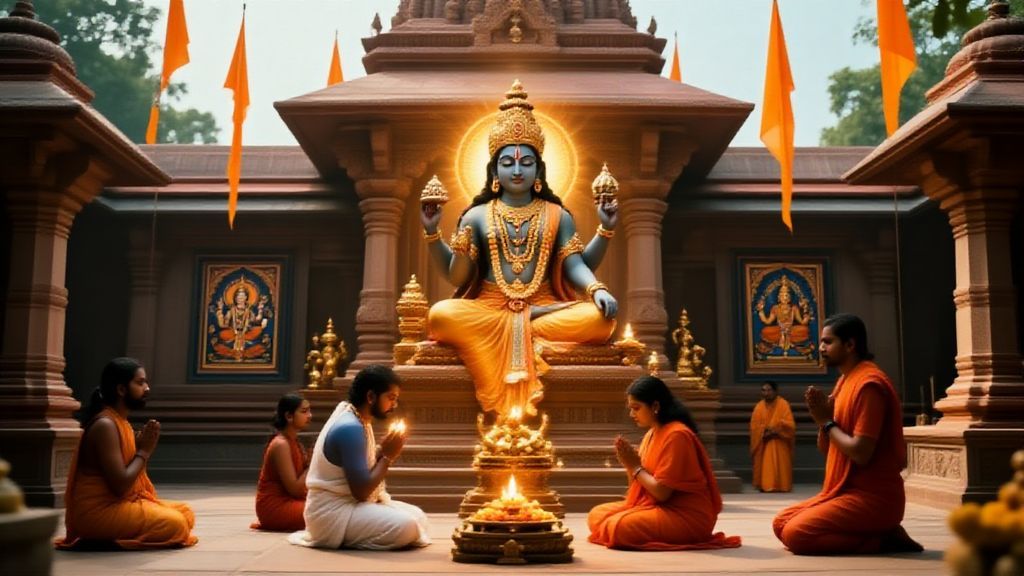
Remedies for Family Problems: Harmony Restoration in Sanatan Dharma are deeply rooted in understanding the spiritual fabric of the household (Grihastha). These solutions emphasize aligning individual actions with Dharmic principles, addressing karmic influences, seeking divine blessings through specific pujas and mantras, and cultivating virtues like selfless service and forgiveness to re-establish peace, understanding, and divine grace within the family unit.
| Attribute | Details |
|---|---|
| Primary Deities for Harmony | Lord Rama and Sita (epitome of ideal family), Lord Shiva and Parvati (ideal householders), Lord Ganesha (remover of obstacles), Vishnu (preserver of cosmic order). |
| Core Principles for Resolution | Dharma (righteous conduct), Karma Yoga (selfless action), Seva (service), Kshama (forgiveness), Shraddha (faith). |
| Key Rituals & Practices | Griha Shanti Puja, Satyanarayan Puja, Pitri Dosha Nivaran, daily prayers, meditation, ancestral offerings. |
| Scripture References | Ramayana (ideal family dynamics), Mahabharata (Dharma in conflict), Puranas (stories of exemplary householders), Atharva Veda (chants for domestic peace). |
The Sanctity of Kutumba: Restoring the Sacred Family Unit
In Sanatan Dharma, the family, or Kutumba, is not merely a social construct but a sacred institution, the very crucible where individual souls evolve and contribute to universal harmony. It is the fundamental unit for upholding Dharma, transmitting values, and ensuring the continuity of spiritual traditions. When disharmony afflicts a family, it creates ripples not only in the immediate household but also in the larger societal and cosmic order, affecting the well-being of ancestors (Pitri) and descendants alike. The ancient Rishis, with their profound insight into human nature and divine laws, prescribed various remedies to restore peace, understanding, and love within the family framework. These solutions are not superficial quick-fixes but deep, transformative practices rooted in spiritual wisdom, addressing the problem at its karmic and energetic source. They serve as a beacon for sincere seekers on Hindutva.online, guiding them back to the path of familial bliss and collective spiritual growth.
Puranic Narratives: Lessons in Familial Dharma
Our sacred Itihasas and Puranas are replete with profound narratives illustrating the intricate dynamics of family life, the trials of discord, and the ultimate triumph of Dharma. The epic Ramayana, in particular, stands as the paramount guide to ideal family conduct (Kutumba Dharma). The unparalleled devotion of Lord Rama to His father Dasaratha, His unwavering commitment to His wife Sita amidst unimaginable hardship, and the selfless service of Lakshmana and Bharata exemplify the highest ideals of familial harmony. Even in separation and adversity, their adherence to Dharma ensured their eventual reunion and the establishment of Rama Rajya – a kingdom of perfect righteousness and peace, both external and internal. Conversely, the Mahabharata serves as a stark reminder of how ego, greed, and lack of Dharma can lead to devastating family strife, culminating in the Kurukshetra War. Yet, even within its tragic narrative, it presents profound lessons on reconciliation, forgiveness, and the ultimate triumph of truth. For instance, after the war, Krishna’s counsel to the Pandavas often centered on healing the wounds of the past and establishing a just and harmonious society, emphasizing the importance of ancestral rites and selfless actions for cleansing karmic imbalances. These stories from texts like the Skanda Purana and Padma Purana reinforce that family harmony is a spiritual endeavor, demanding constant vigilance, sacrifice, and adherence to righteous principles.
The Architecture of Harmony: Vastu Shastra for the Home
While this topic does not concern temple architecture directly, Sanatan Dharma offers a profound “architectural science” for the home that directly impacts family harmony: Vastu Shastra. This ancient Vedic discipline, mentioned in texts like the Matsya Purana and the Brihat Samhita, is the science of integrating architecture with nature, ensuring a positive flow of cosmic energy (prana shakti) within a living space. A home built or arranged according to Vastu principles acts as a spiritual sanctuary, promoting health, prosperity, and peace among its inhabitants. Discord, illness, and financial troubles can often be traced to Vastu defects. For instance, incorrect placement of the kitchen (fire element), bedrooms (rest and relationships), or even the main entrance can create energetic imbalances that manifest as arguments, misunderstandings, or emotional distance within the family. Rectification might involve simple shifts in furniture, strategic placement of mirrors, or more significant structural changes. The scientific efficacy lies in balancing the five elements (Pancha Bhoota – earth, water, fire, air, space) and directing beneficial planetary influences. This thoughtful design of living spaces is akin to creating an architectural marvel for internal peace and serves as a silent, yet powerful, remedy for family problems by harmonizing the environment itself.
Rituals & Puja Vidhi for Familial Bliss
Performing specific Vedic rituals and pujas is a potent way to invoke divine blessings and cleanse negative energies contributing to family discord. These ceremonies are not mere superstitions but carefully codified acts designed to align individual and collective consciousness with higher spiritual forces, thereby transforming circumstances.
Step-by-Step: The Griha Shanti Puja
The Griha Shanti Puja (गृह शान्ति पूजा), or Home Peace Ceremony, is specifically performed to remove obstacles, negative energies, and planetary afflictions (Graha Dosha) that cause strife and suffering within a household. It invokes the blessings of various deities to ensure peace, prosperity, and harmony.
- Sankalpa (Intention): The family members collectively take a vow, stating the purpose of the puja (e.g., for peace, love, and resolution of conflicts within the family) and the date, time, and place.
- Ganesha Puja: Begin by invoking Lord Ganesha (गणेश) to remove all impediments. Offer His favorite sweets, flowers, and chant “Om Gam Ganapataye Namaha” (ॐ गं गणपतये नमः).
- Navagraha Puja: Worship the nine planets (Navagrahas) to neutralize malefic planetary influences affecting family members. This involves chanting specific planetary mantras and offering associated items.
- Kalasha Sthapana: A pot (Kalasha) filled with water, mango leaves, and a coconut is established, representing the invocation of deities and the sacred essence of the universe.
- Homa (Fire Ritual): A sacred fire is lit, and oblations of ghee, grains, and specific herbs are offered while chanting Vedic mantras. This acts as a direct communication channel with the divine, purifying the environment and invoking blessings. Specific mantras for family welfare from the Atharva Veda might be chanted here.
- Purnahuti & Aarti: The ritual concludes with a final offering (Purnahuti) to the fire, followed by an Aarti (waving of lamps) to the deities, signifying gratitude and devotion.
- Prasad Distribution: Sacred food offerings are distributed among family members and guests, signifying unity and shared blessings.
Other powerful pujas include the Satyanarayan Puja for overall well-being and problem resolution, and Pitri Dosha Nivaran Puja for ancestral peace, as unresolved ancestral issues can often manifest as family discord.
Mantras & Chants for Divine Intervention
Mantras are not mere sounds; they are potent vibrations that resonate with cosmic energies, capable of transforming consciousness and circumstances. Chanting them with faith (Shraddha) and devotion can bring profound peace and resolution to family problems.
- Universal Peace Mantra:
ॐ सर्वेषां स्वस्ति भवतु ।
सर्वेषां शान्तिर्भवतु ।
सर्वेषां पूर्णं भवतु ।
सर्वेषां मङ्गलं भवतु ।Om Sarvesham Svastir Bhavatu.
Sarvesham Shantir Bhavatu.
Sarvesham Purnam Bhavatu.
Sarvesham Mangalam Bhavatu.
(May auspiciousness be unto all. May peace be unto all. May completeness be unto all. May prosperity be unto all.) This mantra, regularly chanted, invokes universal harmony, which naturally extends to the family. - Gayatri Mantra:
ॐ भूर्भुवः स्वः तत्सवितुर्वरेण्यं भर्गो देवस्य धीमहि धियो यो नः प्रचोदयात् ॥
Om Bhur Bhuvah Svah Tat Savitur Varenyam Bhargo Devasya Dhimahi Dhiyo Yo Nah Prachodayat.
(We meditate on the adorable glory of the Divine Light. May He inspire our intellect.) Regular chanting purifies the mind, brings clarity, and helps resolve misunderstandings through wisdom. - Mahamrityunjaya Mantra:
ॐ त्र्यम्बकं यजामहे सुगन्धिं पुष्टिवर्धनम् ।
उर्वारुकमिव बन्धनान् मृत्योर्मुक्षीय माऽमृतात् ॥Om Tryambakam Yajamahe Sugandhim Pushtivardhanam.
Urvarukamiva Bandhanan Mrityor Mukshiya Maamritat.
(We worship the three-eyed Lord Shiva, who is fragrant and nourishes all beings. May He liberate us from death for the sake of immortality, just as the cucumber is severed from its bondage to the creeper.) While often associated with health and longevity, this mantra also offers protection, healing, and well-being for all family members, ensuring collective vitality and freedom from strife.
Dharmic Dos and Don’ts for Harmonious Living
Beyond rituals and chants, daily conduct forms the bedrock of family harmony. Adherence to these principles is essential for lasting peace.
- Dos:
- Practice Forgiveness (क्षमा): Release grudges and cultivate compassion.
- Respect Elders (पितृ देवो भव): Show reverence and seek their blessings, as they embody wisdom and familial lineage.
- Communicate with Love & Honesty (सत्यं वद धर्मं चर): Express thoughts and feelings respectfully and truthfully.
- Perform Seva (सेवा): Engage in selfless service within the family, fulfilling duties without expectation.
- Daily Sadhana (साधना): Regular prayers, meditation, or scripture study together strengthens spiritual bonds.
- Uphold Dharma: Act righteously in all interactions, prioritizing truth and justice.
- Don’ts:
- Avoid Ego (अहंकार): Let go of pride and the need to always be right.
- Refrain from Gossip & Slander (परनिन्दा): Do not speak ill of others, especially family members.
- Control Anger (क्रोध): Practice patience and self-control, particularly during disagreements.
- Shun Excessive Materialism: Prioritize relationships and spiritual values over worldly possessions.
- Disrespect Privacy: Honor individual boundaries and personal space within the family.
Frequently Asked Questions on Family Harmony
How does Karma relate to family problems?
In Sanatan Dharma, family problems are often viewed through the lens of Karma. Past actions (prarabdha karma) of individuals or even collective family karma can manifest as current challenges. Disharmony might stem from unresolved karmic debts, ancestral issues (Pitri Dosha), or the fruits of actions from previous lives. Understanding this encourages acceptance, accountability, and the performance of remedial actions (karmic cleansing) like specific pujas, selfless service, and righteous living to mitigate negative karmic effects.
Can Vastu Shastra truly resolve deep-rooted family conflicts?
While Vastu Shastra primarily addresses the energetic balance of a living space, its influence is profound. An imbalanced environment can exacerbate existing tensions, create lethargy, or foster negative emotions. By correcting Vastu defects, one can create a more positive, harmonious, and supportive atmosphere, which then makes it easier for family members to resolve deep-rooted conflicts through improved communication and a more peaceful mindset. It provides a foundation for spiritual and emotional healing, as explored on Hindutva.online.
What is the role of ancestors (Pitri) in family harmony?
Ancestors play a significant role in family harmony. According to Hindu beliefs, unfulfilled desires or negative karma of deceased ancestors can sometimes manifest as difficulties in the living generations, known as Pitri Dosha. Performing ancestral rites like Shraddha or Tarpanam, and specific pujas for ancestral peace, is believed to appease the ancestors, alleviate their suffering, and secure their blessings, thereby removing obstacles and restoring harmony in the family.
Why This Matters for Every Hindu: Preserving Sanatan Dharma
The restoration of family harmony is not merely a personal pursuit; it is a vital pillar for the preservation and flourishing of Sanatan Dharma. The family is the first school of Dharma, where children learn values, rituals, and the importance of righteous living. A harmonious family raises responsible, compassionate, and Dharmic individuals who then contribute positively to society, embodying the principle of Vasudhaiva Kutumbakam – “the world is one family.” When our homes are peaceful, our minds are clear, and our hearts are filled with love, we create an energetic field that radiates positivity, contributing to universal welfare. By consciously applying these Vedic remedies, every Hindu actively participates in upholding timeless traditions, ensuring spiritual continuity, and fostering a world rooted in peace, love, and righteousness, starting from the sacred unit of their own family.