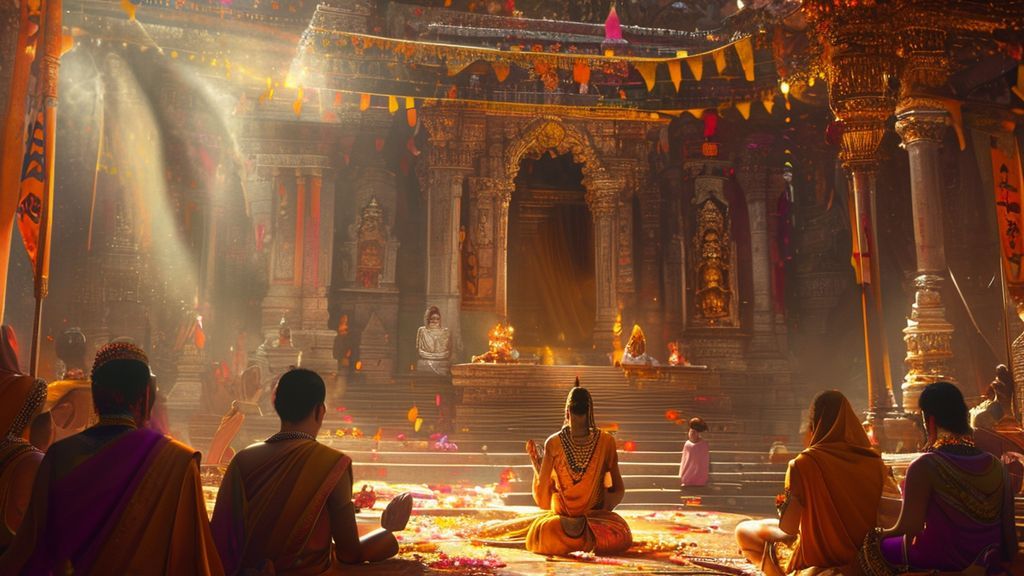
Saraswati Vandana is a profound Hindu prayer dedicated to Devi Saraswati, the divine embodiment of knowledge, wisdom, arts, music, and eloquence. Students and seekers chant this sacred hymn to invoke her blessings for academic excellence, intellectual clarity, creative inspiration, and spiritual insight, ensuring a harmonious journey towards enlightenment and self-realization.
| Attribute | Details |
|---|---|
| **Deity** | Devi Saraswati, Goddess of Knowledge, Music, Arts, and Wisdom |
| **Key Mantra (Beej)** | Om Aim Hrim Klim Maha Saraswati Devyai Namaha (ॐ ऐं ह्रीं क्लीं महासरस्वती देव्यै नमः) |
| **Associated Scriptures** | Rig Veda (Vac Sukta), Kena Upanishad, Shukla Yajur Veda, Brahma Vaivarta Purana, Skanda Purana |
| **Primary Purpose** | Acquisition of knowledge, wisdom, eloquence, creativity, artistic skill, removal of ignorance |
| **Key Festival** | Vasant Panchami (Saraswati Puja), also known as Shri Panchami |
The Universal Call for Illumination: Understanding Saraswati Vandana
In the vast ocean of Sanatan Dharma, the pursuit of knowledge (Jnana) is paramount, considered a direct path to Moksha. The Saraswati Vandana stands as a timeless beacon for this sacred quest, a devotional invocation to the Divine Mother Saraswati, who personifies the very essence of learning and articulate expression. For every student, scholar, artist, or anyone aspiring to deepen their understanding, this prayer is not merely a ritual but a profound communion with the source of all intelligence.
Devi Saraswati, whose name originates from “saras” (flow) and “wati” (one who has), symbolizes the flowing essence of knowledge, consciousness, and speech. Her worship transcends academic success, fostering inner purity, mental clarity, and the ability to discern truth from illusion. By engaging in Saraswati Vandana, a devotee aligns their intellect with the cosmic intelligence, inviting a cascade of blessings that illuminate the mind and refine the spirit. This ancient practice, upheld across millennia, underscores the Hindu reverence for education as a spiritual discipline, vital for personal growth and societal harmony, a truth beautifully elaborated on Hindutva.online.
The Divine Genesis: Puranic History & Legend of Devi Saraswati
The origins of Devi Saraswati are interwoven with the creation myths of the Hindu cosmos, primarily elaborated in various Puranas. According to the revered Brahma Vaivarta Purana and the Skanda Purana, Saraswati emerged from the divine consciousness of Bhagavan Brahma, the creator. She is depicted as his consort, symbolizing that creation itself is impossible without knowledge and wisdom.
One prominent legend describes how Brahma, wishing to create the universe, felt a profound emptiness. From his mouth, Saraswati manifested, radiant and effulgent, bearing a Veena, a book, a rosary, and a water pot. Her arrival filled the cosmos with the vibrations of sound (Shabda Brahma) and the light of knowledge. She granted Brahma the power of speech and the understanding necessary to bring forth the various forms of creation. Thus, she is Vac Devi (वच देवी), the Goddess of Speech, whose hymns are found in the Rig Veda, particularly in the Vac Sukta (RV 10.125), where she identifies herself as the controller of all forms of power and knowledge.
Her iconography is deeply symbolic:
- Her **white attire** signifies purity and knowledge.
- The **Veena** represents harmony, music, and the arts, symbolizing the importance of creative expression and the melody of life.
- The **book (Pustaka)** held in her hand embodies all forms of learning, scriptures, and secular knowledge.
- The **rosary (Mala)** denotes concentration, meditation, and the eternal nature of spiritual practice.
- The **water pot (Kumbha)** symbolizes the purifying power of knowledge and the nectar of divine wisdom.
- Her **vahana, the swan (Hamsa)**, represents the power of discrimination (Viveka), the ability to discern good from evil, truth from untruth, just as a swan is believed to be able to separate milk from water.
These attributes collectively reveal Saraswati as the embodiment of wisdom that purifies, harmonizes, and leads to ultimate liberation.
The Architecture of Thought: Structural and Efficacy Marvels of Vandana
While Saraswati Vandana is not a physical temple, it represents a marvel of spiritual engineering—an architectural blueprint for the mind. The “design” of this prayer is meticulously structured to optimize mental faculties and cultivate inner peace. Just as a temple is built with precise geometry and orientation to channel cosmic energy, a Vandana is constructed with specific syllables, rhythm, and intent to align the individual consciousness with the divine source of knowledge.
The structured nature of the Vandana, particularly the Sanskrit slokas, acts as a sophisticated cognitive tool. Sanskrit, with its precise phonetics, resonates deeply within the mind. The chanting of mantras, such as “Om Aim Hrim Klim Saraswatyai Namaha” (ॐ ऐं ह्रीं क्लीं सरस्वत्यै नमः), creates specific brainwave patterns, often shifting from beta to alpha states, conducive to focus, learning, and memory retention. This isn’t merely superstition; modern neuroscience is beginning to explore the measurable effects of chanting and meditation on neural pathways, stress reduction, and cognitive performance. The repetitive, rhythmic articulation of sacred sounds is a “scientific” method for training the mind, improving concentration, and fostering an environment for deep learning.
Furthermore, the devotional aspect of Vandana involves visualization and introspection. Meditating on Devi Saraswati’s form and attributes helps in internalizing the qualities she represents: purity, creativity, and wisdom. This mental “architecture” prepares the devotee not just for rote learning but for grasping deeper truths and expressing them eloquently. The very act of sincere devotion creates a psychological framework for positive reinforcement, enhancing self-belief and perseverance in academic and artistic endeavors.
The Path of Illumination: Rituals & Puja Vidhi for Saraswati Vandana
Performing Saraswati Vandana with devotion and understanding amplifies its benefits. Here is a step-by-step guide for students and devotees:
- Purification (Shuddhi): Begin by purifying the body through a bath. Wear clean, preferably white or light-colored, clothes.
- Preparation of Altar: Set up a clean space. Place an image or idol of Devi Saraswati. Arrange puja items: a clean cloth, lamp (diya), incense (dhoop), sandalwood paste (chandan), vermilion (kumkum), flowers (especially white or yellow), fruits, sweets (especially milk-based or boondi ladoos), rice grains (akshata), water in a kalash, a pen/pencil, books, musical instruments (if applicable), and a bell.
- Sankalpa (Intention): With folded hands, declare your intention for performing the puja, seeking Devi Saraswati’s blessings for knowledge, wisdom, and success.
- Ganesha Invocation: Offer a simple prayer to Bhagavan Ganesha, the remover of obstacles, to ensure the smooth completion of the ritual. Chant “Om Gam Ganapataye Namaha” (ॐ गं गणपतये नमः).
- Dhyanam (Meditation & Invocation): Light the lamp and incense. Meditate on Devi Saraswati’s form, visualizing her serene presence. Chant the Dhyana Mantra:
“Ya Kundendu Tushar Hara Dhavala, Ya Shubhra Vastravrita,
Ya Veena Vara Danda Mandita Kara, Ya Shveta Padmasana.
Ya Brahmachyuta Shankara Prabhritibhir Devai Sada Vandita,
Sa Mam Patu Saraswati Bhagavati Nihshesha Jadyapaha.”
(या कुन्देन्दु तुषारहार धवला, या शुभ्र वस्त्रावृता।
या वीणावरदण्डमण्डितकरा, या श्वेतपद्मासना।।
या ब्रह्माच्युत शंकर प्रभृतिभिर्देवैः सदा वन्दिता।
सा मां पातु सरस्वती भगवती निःशेषजाड्यापहा।।)
Offer flowers while chanting. - Panchopachara Puja: Offer the following:
- Gandham: Offer sandalwood paste to the idol/image.
- Pushpam: Offer flowers, especially white and yellow.
- Dhoopam: Light incense and offer it.
- Deepam: Show the lighted lamp (diya).
- Naivedyam: Offer fruits, sweets, and milk.
- Mantra Japa: Chant the main Saraswati Mantras (see next section) 108 times using a rosary or simply with devotion.
- Aarti: Conclude with Aarti, circulating the lighted lamp before the deity while singing devotional songs.
- Pranama (Prostration): Offer humble prostrations, seeking forgiveness for any errors and expressing gratitude.
- Prasad Distribution: Distribute the offered sweets and fruits as Prasad to family members and friends.
Students should especially place their books, pens, and study materials before the deity during the puja.
Vibrations of Wisdom: Mantras & Chants for Saraswati Vandana
The core of Saraswati Vandana lies in its powerful mantras and slokas, which are conduits for divine energy and focus. Reciting them with devotion enhances memory, concentration, and clarity of thought. Here are some essential chants:
The Saraswati Beej Mantra
This is a foundational and potent mantra for invoking Devi Saraswati. Its brevity makes it ideal for regular practice.
ॐ ऐं सरस्वत्यै नमः (Om Aim Saraswatyai Namaha)
Meaning: Salutations to Devi Saraswati, represented by the “Aim” sound, which is the Beej (seed) mantra for knowledge and wisdom.
The Saraswati Gayatri Mantra
The Gayatri Mantras are highly revered and are believed to purify the intellect.
ॐ वाग्देव्यै च विद्महे कामराजाय धीमहि। तन्नो देवी प्रचोदयात्॥
(Om Vagdevyai Cha Vidmahe Kamarajaya Dhimahi. Tanno Devi Prachodayat.)
Meaning: We meditate on the Goddess of Speech and seek wisdom from Kamaraja (one who bestows desires). May that Devi inspire and enlighten our intellect.
The Popular Saraswati Vandana Sloka
This sloka, often used for Dhyanam, eloquently describes Devi Saraswati’s attributes and invokes her blessings.
या कुन्देन्दु तुषारहार धवला, या शुभ्र वस्त्रावृता।
या वीणावरदण्डमण्डितकरा, या श्वेतपद्मासना।।
या ब्रह्माच्युत शंकर प्रभृतिभिर्देवैः सदा वन्दिता।
सा मां पातु सरस्वती भगवती निःशेषजाड्यापहा।।
(Ya Kundendu Tushar Hara Dhavala, Ya Shubhra Vastravrita,
Ya Veena Vara Danda Mandita Kara, Ya Shveta Padmasana.
Ya Brahmachyuta Shankara Prabhritibhir Devai Sada Vandita,
Sa Mam Patu Saraswati Bhagavati Nihshesha Jadyapaha.)
Meaning: May Goddess Saraswati protect me, who is fair as the jasmine flower, the moon, or a snow-white garland; who is adorned in white garments; whose hands are beautified by the Veena; who is seated on a white lotus; who is ever worshipped by Brahma, Vishnu, Shiva, and other gods; may she completely remove my dullness and inertia.
Dharmic Etiquette: Dos and Don’ts for Saraswati Vandana
Observing proper etiquette enhances the spiritual efficacy of any ritual. For Saraswati Vandana, these guidelines foster respect and ensure a focused environment:
- Do maintain physical and mental purity before and during the Vandana.
- Do offer fresh flowers, especially white and yellow, as they are Devi Saraswati’s favorites.
- Do keep your study materials, pens, and musical instruments near the idol/picture during the puja, seeking blessings for them.
- Do practice regular chanting, even for short durations, to maintain a continuous connection with the divine energy.
- Do offer fruits, sweets, and milk products as Naivedyam (food offering).
- Do perform the Vandana with a sincere heart and unwavering faith.
- Don’t perform the puja with an unclean body or mind.
- Don’t offer non-vegetarian food or consume it before the puja.
- Don’t engage in idle talk or distractions during the puja.
- Don’t approach the worship with a casual or irreverent attitude.
- Don’t perform the puja when feeling restless or angry; seek a calm mind.
Frequently Asked Questions About Saraswati Vandana
When is the best time to chant Saraswati Vandana?
While Saraswati Vandana can be chanted daily, especially by students, the most auspicious time is during Brahma Muhurta (approximately 90 minutes before sunrise) or in the morning after bathing. The festival of Vasant Panchami, which marks the appearance day of Devi Saraswati, is considered the most significant day for her worship and Vandana. Regular practice during exam periods is highly recommended.
Can anyone chant Saraswati Vandana, regardless of their background?
Absolutely. Sanatan Dharma emphasizes universal access to spiritual practices. Anyone, irrespective of caste, creed, gender, or nationality, can chant Saraswati Vandana with devotion and sincerity. Devi Saraswati is the goddess of knowledge for all, and her blessings are accessible to every earnest seeker.
What are the benefits beyond academic success from performing Saraswati Vandana?
Beyond academic excellence, Saraswati Vandana bestows numerous profound benefits. It enhances creativity, improves communication skills (Vak Siddhi), fosters artistic talents, sharpens memory, cultivates clarity of thought, removes mental inertia (Jadya), and instills inner peace. It also aids in spiritual insight, helping individuals comprehend deeper philosophical truths and leading to a more virtuous and purposeful life. For more insights on the spiritual aspects, visit Hindutva.online.
How often should one perform Saraswati Vandana for optimal results?
Daily recitation, even if for a few minutes, is ideal for maintaining consistency and deepening one’s connection. Chanting at least 108 times daily (one mala) of a chosen Saraswati mantra is highly recommended for students during their academic journey. During examinations or significant artistic endeavors, increasing the frequency or duration of chanting can be particularly beneficial.
The Eternal Light: Why Saraswati Vandana Matters for Every Hindu
Saraswati Vandana is far more than a prayer for good grades; it is a foundational pillar for preserving and propagating Sanatan Dharma. In an era deluged by information, the Vandana teaches us discrimination (Viveka), enabling us to distinguish truth from falsehood, wisdom from mere data. It reminds us that true education is not just about accumulating facts, but about cultivating character, fostering creativity, and developing a profound understanding of the interconnectedness of all existence.
By regularly invoking Devi Saraswati, we honor the spiritual dimension of knowledge, recognizing it as a divine gift. This practice ensures that Hindu traditions, which place immense value on learning, arts, and eloquent expression, continue to thrive. It inspires new generations to seek wisdom not for material gain alone, but for spiritual liberation and for the betterment of society. Saraswati Vandana, therefore, stands as a testament to the timeless wisdom of our ancestors, a sacred key to unlocking the infinite potential of the human mind and soul, guiding us toward a future illuminated by truth and understanding.