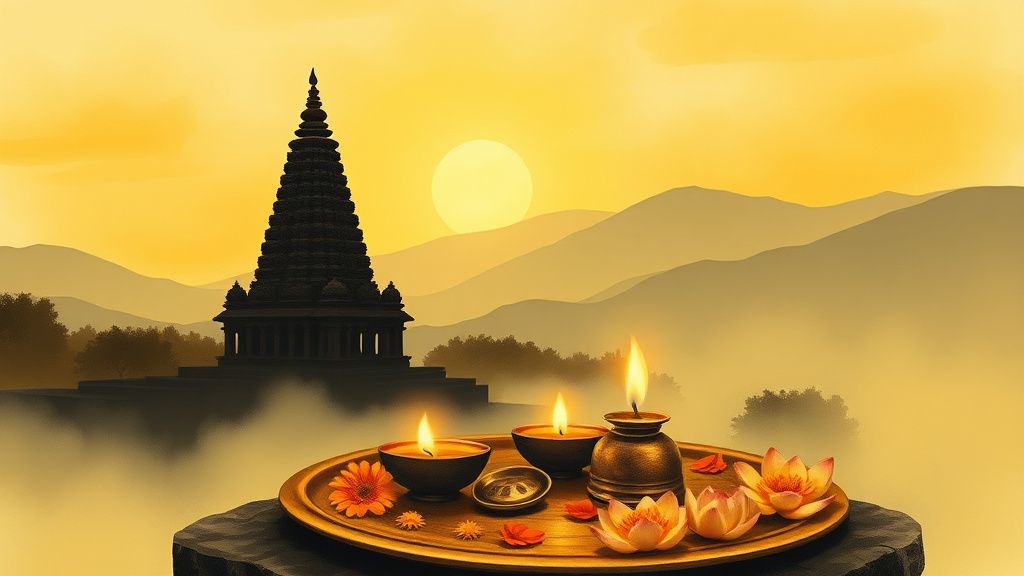
Sri Lakshmi Narasimha Swamy Temple at Dharmapuri, in Jagtial district of Telangana on the southern bank of the Godavari river about 215 km north of Hyderabad, is one of the principal Narasimha shrines of Telangana. The sanctum is open daily from 5:00 AM to 2:30 PM and from 4:00 PM to 8:00 PM, with general darshan free; the temple is administered by the Telangana Endowments department. The temple’s annual 11-day Brahmotsavam in March and April (the Lakshmi Narasimha Swamy Aalaya Jathara) is the largest single event, drawing devotees from across Telangana. The Dharmapuri tradition associates the temple with Yama Dharma, the god of death and dharma; the village name derives from this association, and the temple is one of the few major sites in southern India with a Yama Dharma sannidhi. This article covers timings, the seva schedule, the Yama Dharma tradition and reaching Dharmapuri.
Daily timings
- Morning: 5:00 AM to 2:30 PM
- Evening: 4:00 PM to 8:00 PM
- Afternoon ritual break: 2:30 PM to 4:00 PM
The temple is open all seven days. Sundays and Mondays see larger weekday crowds; the Karthika Masam observances (November–December) draw daily extra footfall. During the Brahmotsavam in March or April, all timings are revised and the temple stays open continuously for the major festival days.
The principal sevas
- Suprabhata Seva: at opening, 5:00 AM
- Abhishekam: morning ritual bathing of the murti
- Archana, Sahasranama Archana: with the devotee’s name and gotra
- Kalyanotsavam: the divine wedding ritual, the principal reserved seva
- Tirumanjanam: the full Vaishnava abhishekam
The temple operates the standard Telangana Endowments sevas; booking is at the temple counter and at the Endowments department office. The seva fee schedule is published at the counter.
The Yama Dharma association and the village name
Dharmapuri’s tradition holds that Yama Dharma, the god of death and the upholder of cosmic law (dharma), performed penance at this site to be relieved of the sin of having sent a Brahmin to hell in error. Vishnu in his Narasimha form appeared at this location to grant the boon, and Yama Dharma installed himself at the temple in a subsidiary sannidhi. The village takes its name from Yama Dharma’s presence: Dharma-puri, “the place of Dharma”.
The Yama sannidhi at Dharmapuri is one of the very few public Yama Dharma shrines in southern India; the deity is otherwise venerated almost entirely through Pitru rituals at the home and in remote ancestral sites. Devotees who visit Dharmapuri include those performing pitru-paksha rituals and Shraddha observances; the Godavari riverside ghats here are used for these rituals.
The Godavari setting
The temple sits on the southern bank of the Godavari, the second longest river in India and the principal sacred river of the southern peninsula. The river ghats below the temple are used for ritual bathing, particularly during the Pushkaralu festival, which occurs every 12 years (the next is in 2027). The Godavari at Dharmapuri is broad and slow-moving, and the riverside walks are part of the principal pilgrim experience.
For what it’s worth, Dharmapuri is the more overlooked of the major Telangana Narasimha temples, less crowded than Yadagirigutta and the Lakshmi Narasimha at Yadagiri. The combination of the Yama sannidhi, the Godavari setting, and the manageable distance from Karimnagar makes it a worthwhile add-on for pilgrims doing a Telangana Vaishnava circuit. Allow a half-day for the temple and the riverside.
Reaching Dharmapuri
- From Karimnagar: about 75 km north. 90 minutes by car.
- From Jagtial: 35 km. 45 minutes.
- From Hyderabad: about 215 km north. 4 hours by car.
- From Warangal: about 145 km. 3 hours.
- By rail: Karimnagar is the nearest mainline station; Jagtial has a smaller station.
- By bus: TSRTC buses run from Hyderabad (Mahatma Gandhi Bus Station), Karimnagar and Jagtial.
Major festivals
- Brahmotsavam (March–April, the Lakshmi Narasimha Swamy Aalaya Jathara): 11-day annual festival, the temple’s largest observance.
- Narasimha Jayanti (May, Vaishakha Shukla Chaturdashi): the deity’s birth festival.
- Karthika Masam (November–December): daily deepam offerings.
- Godavari Pushkaralu (every 12 years, next in 2027): the river festival, with mass ritual bathing at the ghats.
- Mahalaya Amavasya (September–October): the principal Shraddha day, with rituals on the riverbank.
Common questions
Is there an entry fee?
There is no entry fee for general darshan. Reserved sevas are paid at the temple counter at the published rates. Kalyanotsavam and Tirumanjanam are the principal paid sevas. The temple’s contact numbers are available at the counter for those wishing to book ahead.
Can I perform a Shraddha ritual at Dharmapuri?
Yes. The Godavari ghats at Dharmapuri are recognised for pitru rituals, and local purohits perform the standard Shraddha and Pind Daan ceremonies for visiting families. The principal days for these are Mahalaya Amavasya (late September or October) and the death anniversaries (tithi) of departed family members. Booking a purohit through the temple office in advance is recommended.
Where to stay overnight?
The Sri Laxminarasimha Sadan (the temple’s pilgrim accommodation) and the TTD Chowltry operate at Dharmapuri. Karimnagar (75 km) has a wider range of hotels for those wanting commercial accommodation. The temple guesthouses are basic and oriented toward devotee families.
One limitation worth noting
Specific seva fees and the Brahmotsavam dates are revised each year. The figures and schedule above reflect the temple’s currently published practice. The Godavari Pushkaralu, in particular, is a 12-year cycle event with heavily revised access protocols on its dates. For a planned visit, the temple counter on arrival is the authoritative source.
For background, see the Telangana Tourism portal for Dharmapuri.
