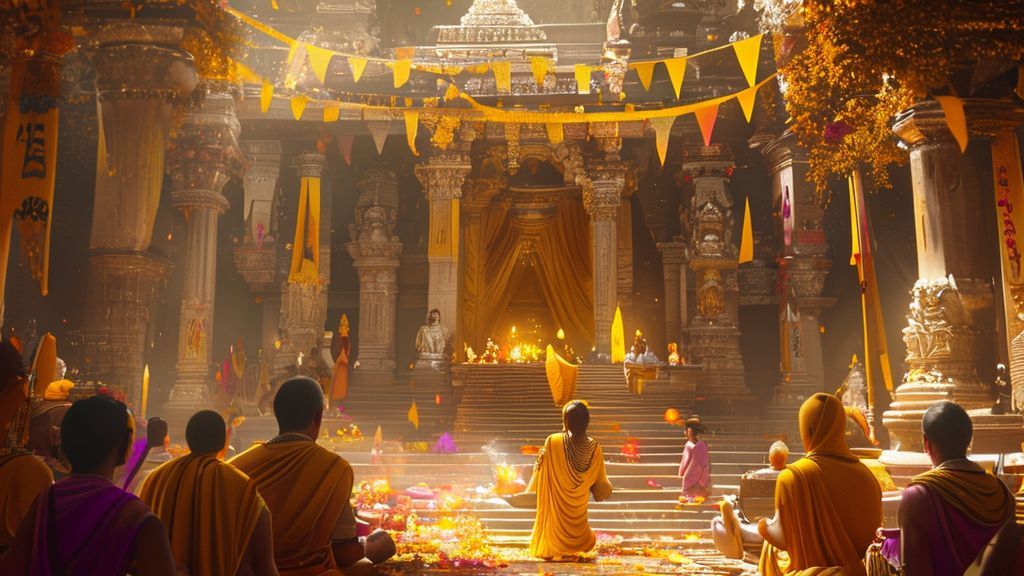
Thursday Vishnu Puja, centered on Bhagavan Vishnu and Brihaspati Dev, signifies spiritual purification, prosperity, and wisdom. Worshipping with yellow elements—flowers, clothes, and sweets—symbolizes light, auspiciousness, and the golden effulgence associated with the Preserver of the Universe, invoking divine grace and harmony in a devotee’s life.
| Attribute | Details |
|---|---|
| Deities Worshipped | Bhagavan Vishnu, Brihaspati Dev (Guru) |
| Associated Planet | Guru (Jupiter) |
| Primary Color | Yellow (पीला) |
| Key Day | Thursday (गुरुवार) |
| Scripture References | Vishnu Purana, Brihaspati Purana, Padma Purana, Skanda Purana |
| Key Mantra | Om Namo Bhagavate Vasudevaya (ॐ नमो भगवते वासुदेवाय) |
The Auspiciousness of Thursday Vishnu Puja and Yellow Worship
In the vast tapestry of Sanatan Dharma, every day of the week holds a unique spiritual significance, aligning with specific deities and planetary influences. Thursday, known as Guruvar, is preeminently dedicated to Bhagavan Vishnu, the Preserver of the Universe, and to Brihaspati Dev, the Guru (teacher) of the Devas and the presiding deity of the planet Jupiter. This day is revered for its immense potential to bestow wisdom, prosperity, spiritual growth, and familial harmony.
The practice of worshipping Bhagavan Vishnu with the color yellow is not merely a custom but a profound symbolic act deeply rooted in our scriptures. Yellow is the color of light, knowledge, auspiciousness, and the golden effulgence that emanates from the divine. It represents the brilliance of the sun, the ripeness of harvest, and the purity of spiritual aspiration. Devotees who perform Thursday Vishnu Puja with sincere devotion and adherence to its specific rituals invite the blessings of both Vishnu and Brihaspati, thereby seeking liberation from difficulties, enhanced wisdom, and material well-being.
Puranic History and Legend: The Divine Yellow Connection
The association of Bhagavan Vishnu with the color yellow is profound and ancient. He is often depicted wearing Peetambar (पीताम्बर), a resplendent yellow garment, symbolizing His supreme purity, sovereignty, and the golden light of cosmic consciousness that pervades all existence. As described in the Vishnu Purana (Book I, Chapter IX), Vishnu is the embodiment of Sattva Guna, the quality of purity and goodness, which yellow vividly represents.
Brihaspati, identified with the planet Jupiter (Guru), is often depicted with a golden body, holding a golden staff, and wearing yellow clothes. The Brihaspati Purana elaborates on his divine birth from Angiras Rishi and Surupa, and his role as the preceptor of the gods. His wisdom is unparalleled, and his blessings are sought for dispelling ignorance, attaining knowledge, and ensuring success in all righteous endeavors. Worship on Thursday directly propitiates Guru Brihaspati, whose benign influence can mitigate planetary afflictions and enhance one’s destiny.
Furthermore, several avatars of Vishnu, such as Vamana and Narasimha, also radiate a golden or yellowish aura, signifying their divine power and capacity to restore Dharma. The story of Vamana, the dwarf Brahmin who covered the three worlds, embodies the idea of light overcoming darkness and the infinite wisdom hidden within humility, a theme powerfully resonated by the color yellow. The sacredness of this color is also reiterated in the Padma Purana, where offerings of yellow flowers are mentioned as particularly pleasing to Vishnu.
The Science of Color and Planetary Resonance in Sanatan Dharma
While modern science grapples with the subtle energies, Sanatan Dharma, through the ancient science of Jyotisha (Vedic Astrology) and Tantra, has long understood the profound energetic resonance of colors and their connection to celestial bodies and internal states. The vibrant yellow color, meticulously chosen for Thursday Vishnu Puja, is not arbitrary but a deliberate alignment with cosmic principles.
Jupiter, or Guru, is considered the most benevolent of planets in Jyotisha. Its energy is expansive, nurturing, and associated with higher wisdom, spirituality, wealth, and good fortune. Yellow, as Jupiter’s primary color, directly channels these beneficial energies. When a devotee surrounds themselves with yellow — through garments, flowers, and offerings — they create a resonant field that amplifies Jupiter’s positive vibrations. This practice helps to balance the Sahasrara Chakra (Crown Chakra), linked to divine wisdom and spiritual connection, and the Manipura Chakra (Solar Plexus), associated with vitality, willpower, and self-esteem. The ‘architecture’ of the puja, therefore, is an intricate design of aligning inner and outer energies for spiritual upliftment.
The use of specific yellow items, such as turmeric (Haridra), saffron, and yellow fruits, in the puja ritual further enhances this energetic connection. Turmeric, revered for its purifying and auspicious qualities, is directly linked to prosperity and good health in Ayurvedic texts. By consciously engaging with these elements, devotees are not merely performing a ritual but actively participating in a sophisticated system of energy management and spiritual alignment, fostering a deeper connection with the divine and purifying their subtle bodies. To learn more about Vedic planetary influences, explore Hindutva.online.
Rituals and Puja Vidhi for Thursday Vishnu Puja
Performing Thursday Vishnu Puja with devotion and adherence to tradition can bring immense spiritual benefits. Here is a step-by-step guide:
- Purification (Shuddhi): Wake up early, preferably during Brahma Muhurta. Bathe and wear clean, preferably yellow, clothes. Cleanse the puja area thoroughly.
- Sankalpa (Intention): Sit facing East or North. Light a ghee lamp (Deepa) and incense (Dhupa). Take a small amount of water in your right palm, declare your intention for the puja, and then let the water fall back into the puja plate.
- Altar Setup: Place an idol or picture of Bhagavan Vishnu. Decorate the altar with fresh yellow flowers, especially marigolds (Genda Phool), Champak, or yellow roses.
- Pranayama and Dhyana: Perform a few rounds of breath control, then meditate on the form of Bhagavan Vishnu, His gentle smile, four arms holding Shankha (conch), Chakra (discus), Gada (mace), and Padma (lotus), and His resplendent yellow attire.
- Avahana (Invocation): Invoke the presence of Bhagavan Vishnu and Brihaspati Dev.
- Panchopachara or Shodashopachara Puja:
- Gandha: Offer sandalwood paste or haldi (turmeric).
- Pushpa: Offer yellow flowers.
- Dhupa: Light incense sticks.
- Deepa: Wave the ghee lamp before the deity.
- Naivedya: Offer yellow sweets like besan ladoo, boondi, or halwa. Offer yellow fruits such as bananas, mangoes, or chikkos. Offer Panchamrita (mixture of milk, curd, ghee, honey, sugar).
- Tamboolam: Offer betel leaves with betel nut.
- Mantra Japa: Chant the mantras dedicated to Vishnu and Brihaspati.
- Path (Recitation): Read Vishnu Sahasranama, Bhagavad Gita (especially Chapter 10, Vibhuti Yoga), or stories from the Vishnu Purana.
- Aarti: Conclude the puja by performing Aarti with camphor or a ghee lamp, singing devotional hymns.
- Pradakshina (Circumambulation): Perform three circumambulations around the altar.
- Kshama Pranam (Apology and Salutations): Seek forgiveness for any errors committed during the puja and offer final salutations.
Mantras and Chants for Vishnu and Brihaspati Dev
Chanting these sacred mantras with devotion purifies the mind and invokes divine blessings:
- Dwadasakshari Mantra (Twelve-Syllable Mantra for Vishnu):
ॐ नमो भगवते वासुदेवाय
Om Namo Bhagavate Vasudevaya
(Meaning: Salutations to Bhagavan Vasudeva) - Vishnu Gayatri Mantra:
ॐ नारायणाय विद्महे वासुदेवाय धीमहि तन्नो विष्णु प्रचोदयात्
Om Narayanaya Vidmahe Vasudevaya Dhimahi Tanno Vishnu Prachodayat
(Meaning: We meditate on Narayana, the supreme God. May Lord Vasudeva enlighten our intellect.) - Brihaspati Mantra (Guru Mantra):
ॐ बृं बृहस्पतये नमः
Om Brim Brihaspataye Namaha
(Meaning: Salutations to Brihaspati, the dispeller of darkness and bestower of wisdom) - Guru Beej Mantra:
ॐ ग्रां ग्रीं ग्रौं सः गुरवे नमः
Om Gram Grim Graum Sah Gurave Namaha
- For profound benefits, devotees may also chant the entire Vishnu Sahasranama, the thousand names of Vishnu, which enumerates His glorious attributes and forms.
Dos and Don’ts for Thursday Vishnu Puja
Observing these guidelines ensures the sanctity and effectiveness of the puja:
Dos:
- Maintain utmost physical and mental purity throughout the day.
- Wear clean, yellow clothes during the puja.
- Offer only yellow flowers, fruits, and sweets to Bhagavan Vishnu and Brihaspati Dev.
- Observe a fast (Vrat) if possible, consuming only milk, fruits, or a single meal without salt or onion/garlic.
- Donate yellow items like turmeric, yellow cloth, besan ladoo, or bananas to Brahmins or the needy.
- Recite Vishnu mantras and stotras throughout the day.
Don’ts:
- Do not consume non-vegetarian food, alcohol, or tobacco on Thursday.
- Avoid washing hair or cutting nails on this day, as per traditional beliefs associated with Brihaspati’s influence on prosperity.
- Refrain from engaging in arguments, anger, or negative thoughts.
- Do not use dark or black colored clothes during the puja.
- Avoid lending or borrowing money on Thursday, as it is believed to deplete wealth.
Why is Thursday dedicated to Vishnu and Brihaspati?
Thursday, or Guruvar, derives its name from Guru (Jupiter), whose presiding deity is Brihaspati. Brihaspati is the divine preceptor, representing wisdom, knowledge, and prosperity. Bhagavan Vishnu, as the maintainer of cosmic order and the ultimate source of knowledge, is intimately connected with these attributes. Therefore, dedicating Thursday to both deities amplifies the blessings of wisdom, spiritual growth, and material well-being.
What is the significance of the yellow color in Vishnu Puja?
Yellow is profoundly symbolic in Sanatan Dharma. It represents light, knowledge, auspiciousness, and spiritual purity. Bhagavan Vishnu is often depicted in yellow garments (Peetambar), signifying His golden effulgence and sovereignty. Offering yellow items in puja invokes the radiant, purifying, and benevolent energies associated with Vishnu and Brihaspati, fostering clarity, prosperity, and divine grace.
Can women perform Thursday Vishnu Puja?
Absolutely. Devotion knows no gender. Women are encouraged to perform Thursday Vishnu Puja with the same sincerity and adherence to rituals as men. Many women observe the Brihaspativar Vrat (Thursday fast) for familial harmony, prosperity, and a good spouse, seeking the blessings of both Vishnu and Brihaspati Dev.
What benefits can one expect from performing this puja?
Devotees performing Thursday Vishnu Puja with faith can expect a multitude of benefits, including enhanced wisdom, clarity of thought, prosperity, removal of obstacles, mitigation of malefic planetary effects (especially Jupiter’s), marital harmony, and overall spiritual growth. It is believed to bring peace, happiness, and success in endeavors aligned with Dharma. For further spiritual guidance, visit Hindutva.online.
Why This Matters for Every Hindu
The practice of Thursday Vishnu Puja, centered on the auspicious yellow color, transcends mere ritual; it is a profound expression of Sanatan Dharma’s timeless wisdom. By consciously engaging in this worship, devotees not only seek individual blessings but also contribute to the preservation of ancient traditions and the propagation of Dharmic values. This puja reinforces the vital connection between man, the divine, and the cosmic forces, reminding us of the intricate balance of the universe and our role within it. It fosters discipline, devotion, and an unwavering faith in the benevolent protection of Bhagavan Vishnu, guiding us towards a life imbued with wisdom, prosperity, and spiritual fulfillment.