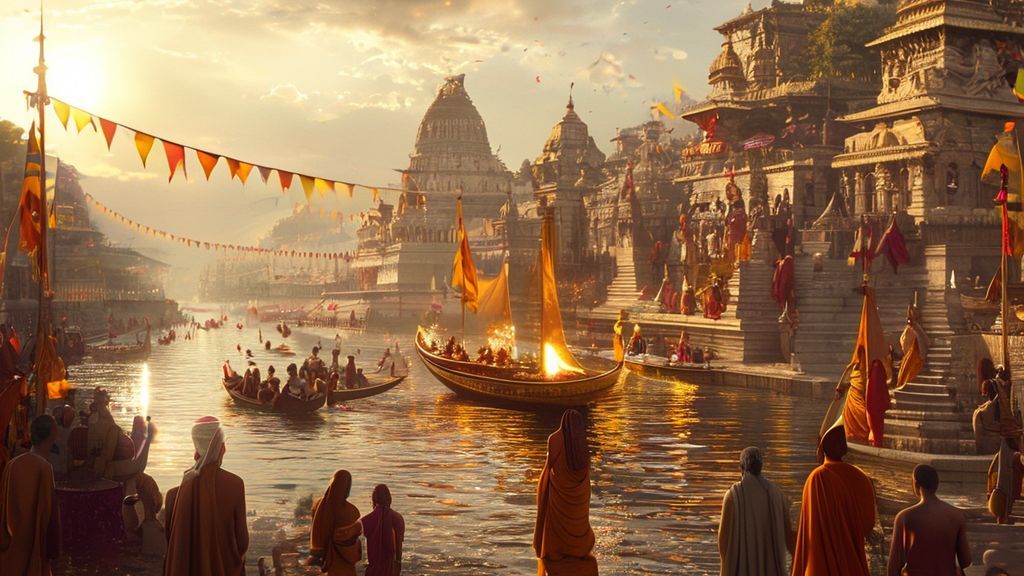
Ujjain Kumbh Mela, also known as Simhastha, is a monumental pilgrimage occurring every twelve years in Ujjain, Madhya Pradesh, where millions of devotees converge to take a holy dip in the sacred Shipra River. This bathing ritual, particularly during specific astrological configurations, is believed to cleanse sins and bestow immense spiritual merit, deeply rooted in ancient Vedic and Puranic traditions for liberation.
| Attribute | Details |
|---|---|
| Presiding Deity | Bhagwan Mahakaleshwar (Lord Shiva) |
| Location & Significance | Ujjain, Madhya Pradesh, India; one of the Sapta Mokshapuri (seven cities granting liberation), host to a Jyotirlinga. |
| Key Festival | Simhastha Kumbh Mela, occurring every twelve years when Brihaspati (Jupiter) is in Simha Rashi (Leo) and Surya (Sun) is in Mesha (Aries) or Simha (Leo). |
| Sacred River | Shipra River (Kshipra), believed to carry the essence of celestial Ganga. |
| Scripture References | Skanda Purana (Avantya Khanda), Padma Purana (Uttara Khanda), Devi Bhagavata Purana, Bhagavata Purana. |
Introduction: The Confluence of Divinity and Dharma
The Ujjain Kumbh Mela, Simhastha, represents a profound spiritual phenomenon—a sacred convergence of astrological forces, ancient traditions, and unwavering faith, culminating in the sanctifying waters of the Shipra River. Ujjain, historically Ujjayini, is one of the seven holy cities (Sapta Mokshapuri) promising liberation (Moksha), and the abode of Bhagwan Mahakaleshwar, one of the twelve Jyotirlingas, whose presence imbues unparalleled spiritual energy. Occurring when Jupiter is in Leo and the Sun in Aries or Leo, Simhastha activates a potent spiritual window. During this period, Shipra’s waters are believed to purify the soul, absolve karmic debts, and accelerate the journey towards self-realization, connecting devotees with cosmic rhythm and the profound depth of Hindu spirituality.
Puranic History & Legend: The Nectar of Immortality and Shipra’s Sanctity
The Kumbh Mela’s origins are deeply etched in Hindu mythology, primarily in the Bhagavata Purana (Canto 8, Chapters 6-8) and Vishnu Purana. The legend recounts the monumental Samudra Manthan, the cosmic ocean churning by Devas and Asuras for Amrita, the nectar of immortality. Mount Mandara was the churning rod, Vasuki the rope. As Amrita emerged, a battle ensued, and Bhagwan Vishnu (as Mohini) intervened. Drops of Amrita spilled at four sacred locations: Haridwar, Prayagraj, Nashik, and Ujjain. The Skanda Purana (Avantya Khanda) details Ujjain’s preeminence and Shipra River’s sanctity from these celestial drops, granting it unparalleled purifying essence—a direct link to the cosmic Amrita. The name Shipra (Kshipra), meaning “swift,” also has Puranic connections to Lord Shiva, further sanctifying its waters. Hindutva.online archives highlight how Shipra is often invoked alongside Ganga, Yamuna, and Saraswati, signifying its equal potency in spiritual cleansing.
Architectural & Scientific Marvels: Ujjain’s Ancient Grandeur
Ujjain embodies a convergence of history, architecture, and ancient science. As the legendary prime meridian for Hindu astronomy, Ujjayini was central for time calculation and celestial charting, documented in texts like the Surya Siddhanta. This astronomical precision dictates Kumbh Mela timings. The Shipra River ghats, especially Ram Ghat, are magnificent examples of traditional Hindu riverfront architecture. Built over centuries, these stone steps provide safe access and platforms for elaborate rituals, reflecting immense devotion. The architecture typically follows the Nagara style, with curvilinear shikhara and intricate carvings. Adjacent lies the majestic Mahakaleshwar Temple, a testament to ancient Indian engineering and devotion. Its unique position as a Dakshinamukhi Jyotirlinga (south-facing) is particularly potent. The complex, with shrines, courtyards, and the ‘Koti Teertha’ tank, showcases sophisticated hydraulic systems and resilient construction. Ujjain’s seamless integration of Shipra with its sacred landscape is a marvel of ancient town planning.
Rituals & Puja Vidhi: Embracing the Shipra’s Grace
The core ritual of Ujjain Simhastha is the holy bath, or Snan, in the Shipra River, performed with reverence for spiritual benefit.
- Sankalpa (Intention): Devotees take a Sankalpa, affirming the bath’s purpose for purification, desires, or liberation.
- Holy Dip (Snan): At auspicious Muhurats, devotees immerse fully, typically three or seven times. Planetary alignments during Kumbh amplify efficacy.
- Surya Arghya (Offering to the Sun God): After the bath, devotees face the rising sun and offer water (Arghya), chanting prayers to Surya Deva.
- Pitru Tarpan (Offertngs to Ancestors): Many perform Tarpan, offering water and sesame seeds to ancestors, seeking blessings.
- Shipra Puja: A small puja is performed to Shipra Maiya on the ghats, offering flowers, incense, and lamps, expressing gratitude.
- Darshan of Mahakaleshwar: Following the bath, it’s highly meritorious to visit Mahakaleshwar Temple for Lord Shiva’s Darshan, completing the pilgrimage. Other significant temples are also visited.
The most revered are Shahi Snans (Royal Baths), where various Akharas (sects of Sadhus) parade in grand procession before their dips. These mark the Mela’s peak auspiciousness.
Mantras & Chants: Invoking Divine Energy
Chanting during the Kumbh Mela amplifies the spiritual vibrations and connects the devotee to the divine. While immersed in the Shipra or afterwards, these mantras are highly recommended:
- General River Bathing Mantra:
“Gange cha Yamune chaiva Godavari Saraswati,
Narmade Sindhu Kaveri jale’smin Sannidhim kuru.”
(O Ganga, Yamuna, Godavari, Saraswati, Narmada, Sindhu, Kaveri, may you all be present in this water.)
This mantra invokes the presence of all sacred rivers in the Shipra’s waters. - Mahamrityunjaya Mantra (for Lord Shiva, especially after Mahakaleshwar Darshan):
“Om Tryambakam Yajamahe Sugandhim Pushtivardhanam,
Urvarukamiva Bandhanan Mrityor Mukshiya Maamritat.”
(We worship the three-eyed Lord Shiva, who is fragrant and nourishes all beings. May He liberate us from death for the sake of immortality, just as a cucumber is severed from its bondage.) - Gayatri Mantra (for purification and wisdom):
“Om Bhur Bhuvah Svah,
Tat Savitur Varenyam,
Bhargo Devasya Dhimahi,
Dhiyo Yo Nah Prachodayat.”
(We meditate on the adorable, excellent, and radiant splendor of the divine Vivifier. May He stimulate our intellects.) - Har Har Mahadev: A powerful chant revering Lord Shiva, commonly heard throughout Ujjain.
Dos and Don’ts: Upholding Dharmic Etiquette
To ensure a spiritually enriching experience and respect the sanctity of the Kumbh Mela and the Shipra River, devotees should adhere to certain guidelines:
- DO maintain physical and mental purity (Shaucha) throughout your pilgrimage.
- DO show reverence to Sadhus, Sannyasis, and all fellow pilgrims.
- DO take a sincere dip at the prescribed auspicious times (Muhurat), focusing on spiritual purification.
- DO offer donations (Daan) to temples, Sadhus, and the needy, as acts of charity are highly meritorious.
- DO keep the ghats and the river clean; dispose of waste responsibly.
- DO engage in meditation, chanting, and listening to discourses for spiritual upliftment.
- DON’T litter or pollute the sacred Shipra River or its banks.
- DON’T engage in excessive bargaining or commercial activities near the holy bathing areas.
- DON’T consume intoxicants, meat, or engage in unrighteous acts during the pilgrimage.
- DON’T disrespect local customs or traditions, or interrupt others’ worship.
- DON’T take photos of Sadhus without permission, especially during their personal rituals.
Frequently Asked Questions About Ujjain Kumbh Mela
Why is Ujjain one of the four Kumbh Mela sites?
Ujjain is one of four Punya Kshetras where drops of sacred Amrita (nectar of immortality) reportedly fell during the Samudra Manthan. As detailed in Puranas, this celestial event sanctified these locations, making them uniquely potent for spiritual liberation during the Kumbh’s astrological alignment.
What is the unique spiritual significance of the Shipra River during Simhastha?
The Shipra River in Ujjain is a manifestation of divine energy, especially potent during Simhastha. Its waters, believed to carry the essence of the fallen Amrita, grant immense purification and freedom from karmic bonds. Bathing in Shipra during the Mela promises salvation.
What exactly is a “Shahi Snan” and why is it important?
A “Shahi Snan,” or Royal Bath, is the most revered bathing ritual during Kumbh Mela, where various Akharas (sects of ascetics, Sadhus, and Nagas) take their holy dip in grand procession. Occurring at astrologically determined Muhurats, these are believed to harness the Mela’s peak spiritual energies, offering profound benefits.
Can anyone participate in the Ujjain Kumbh Mela, or is it only for ascetics?
The Ujjain Kumbh Mela is a universal pilgrimage open to all devotees. While ascetics play a central role, millions of householders, families, and individuals participate to seek spiritual merit, purification, and blessings. Everyone is welcome to take a holy dip in the Shipra River and partake in the sacred atmosphere.
Why This Matters for Every Hindu: Preserving Sanatan Dharma’s Living Legacy
The Ujjain Simhastha Kumbh Mela, with its Shipra River traditions, is a vital pillar of Sanatan Dharma’s enduring legacy. It represents the unbroken chain of spiritual knowledge (Parampara) and Vedic wisdom. Engaging with such traditions preserves our collective spiritual heritage, reminding us of cosmic laws and opportunities for self-transcendence through sincere faith and adherence to Dharma. The Kumbh Mela unites diverse spiritual paths, fostering collective identity and the eternal quest for Moksha. We honor Rishis and Sages who safeguarded these traditions. As a beacon of Hindu knowledge, Hindutva.online strives to illuminate such profound aspects of our Dharma, ensuring the wisdom of Ujjain and the Shipra continues to inspire generations.