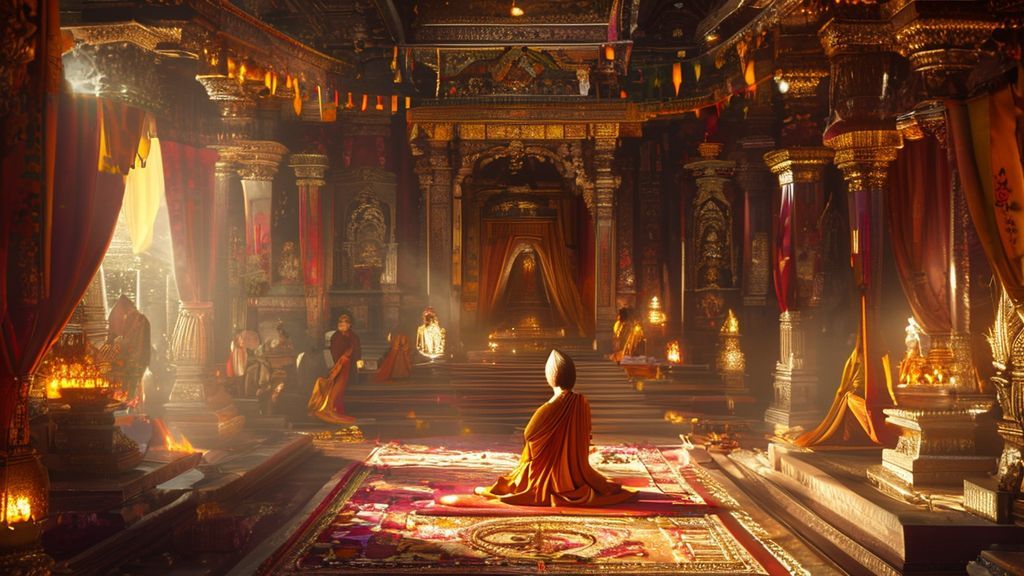
Vastu for Pooja Room is a sacred science guiding the optimal placement and design of a home’s devotional space to invite divine energies, foster spiritual growth, and ensure harmony. Adhering to Vastu principles, such as ideal directions and prescribed layouts, transforms the pooja room into a powerful spiritual conduit, aligning the microcosm of the home with cosmic forces for prosperity and peace.
| Attribute | Details |
|---|---|
| Ideal Direction for Deities | North-East (Ishana Kona) |
| Secondary Ideal Directions | East, North |
| Avoided Directions for Pooja Room | South, West, South-West (Nairuti Kona), Centre (Brahmasthan) |
| Ideal Location within Home | Ground floor, away from toilets/bathrooms, separate room preferred. |
| Recommended Materials | Wood, marble, natural stone; light, auspicious colors. |
| Scripture Reference | Vishwakarma Prakash, Mayamatam, Manasara, Brihat Samhita (Vastu Khanda) |
The Sanctity of the Pooja Griha: Inviting Divine Presence
In every Hindu household, the Pooja Griha (Pooja Room) serves as the vibrant heart of spiritual life, a sacred space where the divine is invoked, worshipped, and experienced. It is not merely a designated corner but a consecrated precinct, meticulously arranged to facilitate an uninterrupted flow of cosmic energy and spiritual vibration. The ancient science of Vastu Shastra provides the immutable principles for designing and placing this vital space, ensuring that our humble abodes become temples mirroring the cosmic order. By aligning our devotional space according to Vastu, we invite prosperity, health, and profound spiritual peace into our lives, transforming daily living into a sacred offering.
The wisdom embedded in Vastu for Pooja Room transcends mere architectural guidelines; it is a profound understanding of how directional energies, elemental forces, and subtle vibrations interact with human consciousness. A correctly placed and designed pooja room amplifies our prayers, deepens our meditation, and creates an environment conducive to spiritual growth (Dharmic Unnati). This authoritative guide delves into the scriptural foundations and practical applications of Vastu for your sacred space.
Puranic History & The Cosmic Architect
The genesis of Vastu Shastra, the science of architecture, is deeply rooted in our Vedic and Puranic traditions. The foundational texts, such as the Vishwakarma Prakash, Mayamatam, and Manasara, attribute its divine origin to Lord Brahma, who imparted this knowledge to Vishwakarma, the celestial architect. The most prominent legend describes the manifestation of the Vastu Purusha, a cosmic being. According to the Matsya Purana and the Brihat Samhita (Vastu Khanda), the Vastu Purusha was born from the sweat of Lord Shiva and grew so vast that he eclipsed the three worlds. The Devas, fearing his immense power, appealed to Brahma, who commanded them to hold the Vastu Purusha down, each deity occupying a specific part of his body. Lord Brahma then blessed him, decreeing that anyone building on Earth must first worship the Vastu Purusha, or suffer his wrath. This narrative highlights that every piece of land is imbued with conscious energy, and proper construction (Vastu) respects and harmonizes with this inherent sentience.
For the Pooja Room, this means understanding that specific directions correspond to specific deities and energies. The placement of the pooja room is not arbitrary but a conscious act of invoking the presiding deities of those directions for auspiciousness and protection. This ancient wisdom, passed down through millennia, forms the bedrock of creating truly sacred spaces within our homes, ensuring a constant flow of divine grace.
Architectural & Scientific Marvels: The Wisdom of Directions
The placement of the Pooja Griha is paramount in Vastu. The most auspicious direction is undeniably the North-East (Ishana Kona). This corner is governed by Ishana, a form of Lord Shiva, and is considered the purest and most sacred quadrant. It is the direction where the magnetic energies of the Earth and the cosmic energies from the North Pole meet. The North-East is also associated with the water element, facilitating mental clarity, spiritual insight, and peace. Placing deities here ensures their faces are towards the West or South, allowing the devotee to face East or North during worship, aligning with the beneficial solar energies and Earth’s magnetic field.
Secondary ideal directions include the East and North. The East is the direction of the rising sun, symbolizing new beginnings, enlightenment, and positive energy. Worship facing East is highly recommended for spiritual growth. The North is associated with Kubera, the god of wealth, and beneficial for concentration. Placing your pooja room in these directions invites prosperity, wisdom, and tranquility.
It is critically important to avoid the South, West, South-West (Nairuti Kona), and the exact center (Brahmasthan) of the house for the pooja room. The South-West is ruled by Nairuti, associated with ancestors and negative energies, making it unsuitable for direct divine worship. The South is governed by Yama, the lord of death, and the West by Varuna, associated with stability but not ideal for active spiritual invocation. The Brahmasthan, being the energetic core, should remain open and uncluttered, not housing a dense structure like a pooja room. Constructing a pooja room in these inauspicious directions can lead to disharmony, obstacles, and a reduction in spiritual efficacy.
From an architectural perspective, Vastu emphasizes creating a space that is clean, well-lit, and ventilated. The flow of air and natural light enhances the energetic purity of the pooja room. The ideal location is on the ground floor, as elevating the deities to upper floors without proper Vastu can disrupt the energy flow of the entire home. Furthermore, the pooja room should ideally not share a wall with a toilet or bathroom, nor should it be directly beneath one, as these spaces generate negative energies incompatible with the sanctity of the divine altar. These meticulous guidelines are not mere superstitions but reflections of a profound understanding of energy dynamics and their impact on human well-being, designed to elevate the spiritual quotient of the home, as detailed further on Hindutva.online.
Rituals & Puja Vidhi: Consecrating Your Sacred Space
Establishing a pooja room according to Vastu involves specific rituals and practices to invoke and maintain its sanctity:
- Shuddhikaran (Purification): Before placing deities, thoroughly cleanse the room. Sprinkling Ganga Jal (holy water) or water mixed with turmeric, rock salt, and camphor purifies the space. Reciting a simple purification mantra like “Om Apavitraḥ Pavitro Vā Sarvāvasthāṁ Gato’pi Vā | Yaḥ Smaret Puṇḍarīkākṣaṁ Sa Bāhyābhyantaraḥ Śuciḥ ||” can be performed.
- Murti Sthapana (Deity Placement): Deities (Murtis) should be placed facing East or North, ensuring the worshipper faces East or North. Avoid placing idols directly opposite the entrance. Idols should not be kept exactly facing each other. There should be some gap between two idols and between the idol and the wall.
- Deep Prajwalan (Lighting Lamps): Lamps (diyas) should ideally be placed in the South-East (Agni Kona) corner of the pooja room, as this direction is governed by Agni (fire god), ensuring continuous positive energy and illumination.
- Naivedyam (Offerings): Place offerings of food (prasad) or flowers on a clean plate, ideally in the North-East or East direction of the deity.
- Swachhata (Maintenance): Maintain utmost cleanliness. Regularly clean the idols, the altar, and the entire room. Clutter should be strictly avoided, as it obstructs energy flow.
- Seating Arrangement: Ensure comfortable seating for meditation or prayers, facing East or North. A simple mat or small cushion is sufficient.
Mantras & Chants for Pooja Room Sanctity
Regular chanting of mantras in your pooja room enhances its vibrational energy and strengthens your connection with the divine. Here are some essential mantras:
- Vastu Purusha Mantra: To invoke the blessings of the Vastu Purusha for harmony and protection:
“Om Namo Bhagvate Vastu Purushaya Namah.” - Gayatri Mantra: A universal mantra for enlightenment and wisdom, suitable for any deity:
“Om Bhur Bhuvah Svah, Tat Savitur Varenyam, Bhargo Devasya Dhimahi, Dhiyo Yo Nah Prachodayat.” - Om: The primal sound of creation, brings peace and spiritual resonance:
“Om.” - General Deity Mantras:
- For Lord Ganesha: “Om Gan Ganapataye Namaha.”
- For Lord Shiva: “Om Namah Shivaya.”
- For Devi (Goddess): “Om Aim Hrim Klim Chamundaye Vichche.”
- For Lord Vishnu/Krishna: “Om Namo Bhagavate Vasudevaya.”
Chanting these mantras regularly with devotion creates a powerful spiritual aura in the pooja room, purifying the atmosphere and attracting divine grace.
Dos and Don’ts for Your Pooja Griha
Dos:
- Do place your Pooja Griha in the North-East, East, or North.
- Do ensure idols face East or North, allowing the worshipper to face East or North.
- Do maintain impeccable cleanliness and order in the pooja room.
- Do use light, soothing colors like white, cream, light yellow, or sky blue for walls.
- Do use natural materials like wood or marble for the altar and flooring.
- Do use a small pyramid or a Vastu Yantra in the North-East corner for enhanced energy.
- Do keep sufficient lighting, preferably natural light, to keep the room bright and positive.
Don’ts:
- Don’t place the pooja room in the South, West, South-West, or Brahmasthan (center).
- Don’t place the pooja room under a staircase or next to a bathroom/toilet.
- Don’t store unnecessary items or clutter in the pooja room.
- Don’t use the pooja room for sleeping or non-devotional activities.
- Don’t place heavy items above or below the pooja altar.
- Don’t have images of ancestors or deceased family members in the pooja room.
- Don’t have broken or chipped idols. They must be respectfully immersed.
Frequently Asked Questions
Can a pooja room be in a bedroom?
While a separate pooja room is ideal, if space is limited, a designated altar in a bedroom is acceptable, provided it is in the North-East direction. Ensure it is covered with a curtain or screen when not in use, especially during sleep, and elevate the idols on a small altar or shelf, not directly on the floor. It is crucial that the feet of the deities are not towards the sleeping person.
What if my house doesn’t allow North-East placement?
If the ideal North-East direction is not feasible, the East or North directions are the next best alternatives. If even these are challenging, focus on creating a sacred altar in the most positive available space, ensuring it is clean, clutter-free, and adheres to other Vastu principles like avoiding proximity to toilets and keeping idols facing East or North. Consulting a Vastu expert from Hindutva.online can provide customized solutions.
What colors are best for the pooja room?
Light and auspicious colors are best. White, cream, light yellow, or pale blue are highly recommended as they promote peace, purity, and spiritual energy. Avoid dark, dull, or overly vibrant colors like black, dark grey, or deep red, as they can absorb light and create a heavy atmosphere, which is not conducive to spiritual practices.
What items should not be kept in a pooja room?
Items that are considered impure, broken, or represent negativity should not be kept. This includes broken idols, torn religious books, dirty clothes, shoes, leather items, or any form of waste. Also, avoid keeping photographs of deceased individuals, violent images, or non-religious items that cause clutter. The pooja room must be a sanctuary of purity and devotion.
Dharmic Significance: The Essence of Sanatan Dharma
The meticulous adherence to Vastu principles for the Pooja Room is more than just architectural design; it is an act of profound devotion and a testament to the timeless wisdom of Sanatan Dharma. By aligning our sacred space with cosmic energies, we consciously invite divine blessings, foster spiritual growth, and cultivate an atmosphere of harmony and peace within our homes. This practice reinforces our connection to the Rishis and sages who codified these sciences, preserving a heritage that views every aspect of life through a spiritual lens. A Vastu-compliant pooja room becomes a potent reminder of the divine presence in our daily lives, transforming our residences into places of worship and our existence into a continuous offering to the Almighty. It ensures that the spiritual heart of our home beats in perfect rhythm with the universe, guiding us on the path of Dharma and self-realization.
