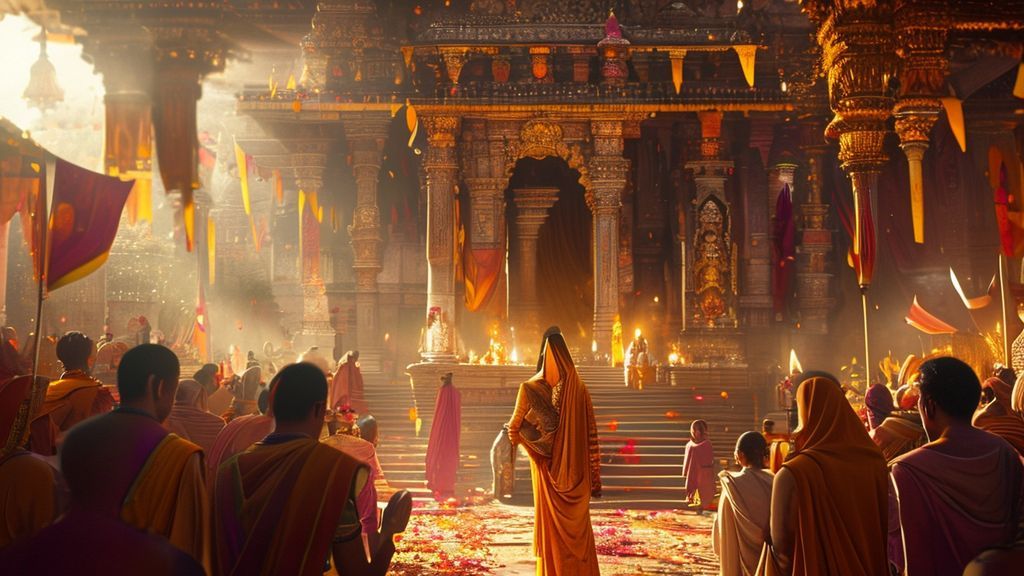
Bidaai, often misunderstood as merely an emotional farewell, is a profound Hindu post-wedding ritual signifying the bride’s formal departure from her paternal home to embark on her new journey as a wife. Rooted in ancient Vedic principles of Dharma and familial transition, it symbolizes the sacred transfer of responsibility, blessings, and the emotional culmination of *Kanyadaan*, preparing her for *Grihastha Dharma*.
| Attribute | Details |
|---|---|
| Ceremony Name | Bidaai (Vidai), Farewell Ceremony |
| Significance | Formal departure of the bride from her parental home; culmination of *Kanyadaan*. |
| Key Emotion | Bittersweet joy, profound love, blessings, and emotional release. |
| Scripture/Tradition Context | Implicit in *Vedic Vivaha Paddhati* (marriage rituals) and *Grihastha Dharma* principles, though the term “Bidaai” is cultural. The essence is found in rituals of *Kanyadaan* and blessings for a new home. |
| Symbolic Act | Throwing rice over the head, touching feet of elders, receiving blessings. |
The Spiritual Essence of Bidaai: A Sacred Transition
The Bidaai ceremony, pronounced “bee-da-ee,” stands as one of the most poignant and spiritually significant moments in a Hindu wedding. Far from being a mere tearful goodbye, it is a Dharma-infused ritual that marks the auspicious transition of a daughter from her paternal lineage to her marital lineage, embodying the profound Vedic concept of *Kanyadaan* – the giving away of the daughter. This ceremony is not just about physical departure; it represents a spiritual reorientation, a severance of former ties in preparation for new sacred responsibilities and a life dedicated to *Grihastha Dharma* – the householder’s path. It is a moment laden with blessings, a testament to familial love, and a profound declaration of trust in the unfolding divine plan for the bride and groom.
For sincere seekers and devotees, understanding Bidaai requires looking beyond its emotional facade to grasp its deeper Vedic roots. It is a ritual that reinforces the sanctity of marriage, the continuity of family lines, and the importance of parental blessings. Each tear shed is mingled with prayers for the bride’s prosperity, happiness, and unwavering devotion in her new home, underscoring the spiritual bedrock of Hindu matrimony and the pivotal role of women in preserving Sanatan Dharma.
Puranic History & Legend: Echoes of Sacred Farewells
While the specific term “Bidaai” is a cultural development within the broader framework of Hindu matrimonial traditions, its underlying principles are deeply embedded in our ancient scriptures and epics. The concept of a daughter leaving her parental home after marriage, laden with blessings and good wishes, resonates throughout the Puranas and Itihasas.
The foremost scriptural context for Bidaai lies in the Vedic ritual of *Kanyadaan* (कन्यादान). As described in various *Dharma Shastras* and elaborated in texts like the *Grihya Sutras*, *Kanyadaan* is the sacred act where the father formally “gives away” his daughter to the groom. The Bidaai is the physical manifestation and emotional culmination of this act. The father, having performed his sacred duty, now releases his daughter to fulfill her *dharma* in her husband’s home. The *Rig Veda* (Mandala X, Sukta 85), in its hymns dedicated to marriage, invokes blessings upon the bride as she enters her new household, praying for her prosperity and acceptance as a queen in her husband’s realm. This Vedic injunction sets the spiritual stage for her departure.
We find poignant parallels in our beloved epics. Consider the departure of Devi Sita from Mithila after her marriage to Bhagwan Rama, as beautifully narrated in the Valmiki Ramayana. King Janaka, after giving Sita in marriage, bids her farewell with a heavy heart, bestowing countless blessings for her journey and her new life in Ayodhya. His words of wisdom to her, guiding her on her duties as a wife and daughter-in-law, are a timeless encapsulation of the spirit of Bidaai.
Similarly, the stories of other divine consorts, such as Devi Parvati’s departure from her father Himavan’s abode to Mount Kailash with Bhagwan Shiva, referenced in the Shiva Purana, or Devi Savitri’s unwavering resolve and devotion, narrated in the Markandeya Purana (often found within the *Mahabharata*), implicitly carry the weight of a daughter’s sacred transition. Though not explicitly termed “Bidaai,” these narratives establish the profound emotional and spiritual significance attached to a daughter’s farewell, emphasizing parental blessings, the husband’s protection, and the wife’s pivotal role in the new family. The tears shed by family members are not of sorrow but a mixed expression of love, separation, and profound joy for the daughter’s new beginning, coupled with a deep awareness of her new responsibilities as a *Dharmapatni*.
The Sacred Space: Ritual Design & Symbolic Embellishments
While Bidaai does not involve architectural marvels like temples, the domestic space where it occurs becomes imbued with profound spiritual significance. The threshold of the parental home, particularly the main doorway, transforms into a sacred boundary—a *Dharma Dwar*—marking the passage from one life stage to another. The very design of the ritual emphasizes this transition.
The bride often stands at the threshold, facing away from her paternal home, symbolically turning towards her future. This spatial orientation is deliberate, emphasizing her spiritual journey forward. The use of vibrant floral decorations, auspicious *Rangoli* patterns, and illuminated lamps during the Bidaai enhance the sanctity of this domestic space, invoking positive energies and divine blessings. The family’s vehicle, often adorned with flowers, awaiting the bride, becomes her chariot to a new life, a metaphorical *Vimana* carrying her towards her destiny. Every element, from the positioning of family members to the blessings offered, creates a sanctified environment for this momentous farewell, meticulously designed to honor tradition and facilitate spiritual transition.
Rituals & Puja Vidhi: The Steps of Sacred Departure
The Bidaai ceremony follows a sequence of deeply symbolic actions, each carrying significant spiritual meaning:
- The Farewell Gathering: The bride, accompanied by her husband, bids farewell to her immediate family, relatives, and close friends gathered at her paternal home.
- The Rice Ceremony (*Chawal Phainkna*): As the bride stands at the threshold, facing away from the house, she takes handfuls of raw rice (symbolizing prosperity and fertility) and coins, throwing them over her head backwards into the house. This act signifies that she is repaying her parents’ debt for nurturing her and wishing continued prosperity for her parental home, ensuring she does not leave it barren. It’s a prayer for abundance for her birth family even as she departs.
- Seeking Blessings (*Paon Padhna*): The bride touches the feet of her parents, grandparents, and all elders in the family, seeking their heartfelt blessings (*Ashirwad*) for a happy and prosperous married life. This act of humility and reverence is a fundamental aspect of Hindu culture. Her parents, in turn, bless her with a full heart, praying for her well-being and happiness in her new home.
- The Emotional Embrace: This is often the most tearful part, where the bride embraces her family members. These are tears of both sorrow at separation and joy for her new journey.
- The Departure: The bride is then gently led out of the house by her husband. Often, her brothers, cousins, or maternal uncles escort her to the car or vehicle. In some traditions, a silken cloth or *dupatta* is held over her head as she walks to the vehicle, symbolizing protection and auspiciousness.
- The Vehicle Journey: The bride and groom then depart for the groom’s home (*Griha Pravesh*), marking the official end of the Bidaai and the beginning of her new life as part of her husband’s family.
Mantras & Chants: Blessings for a New Beginning
While there isn’t one specific “Bidaai Mantra,” the ceremony is permeated with the spirit of Vedic blessings and prayers for the bride’s auspicious journey. Elders often chant spontaneous blessings, drawing from ancient wisdom. The underlying sentiments are expressed through phrases and intentions such as:
स्वस्ति वचने (Swasti Vachane): General invocations for well-being and prosperity, recited at the start of any auspicious undertaking. The family performs a small *Swasti Vachan* for the departing bride.
सुमङ्गली भव (Sumangali Bhava): “May you be eternally auspicious,” a blessing bestowed upon a married woman for a long, happy, and prosperous conjugal life. This is the essence of the prayers offered during Bidaai.
दीर्घायुष्मती भव (Dirghayushmati Bhava): “May you have a long life,” wishing the bride longevity.
पुत्रवती भव (Putravati Bhava): “May you be blessed with children,” a wish for fertility and the continuity of the family line.
सुखी भव (Sukhi Bhava): “May you be happy,” a universal prayer for joy and contentment in her new life.
The unspoken mantra is a heartfelt prayer for the bride to uphold *Dharma*, grow in love and understanding with her husband, and become the bedrock of her new family. The atmosphere itself, charged with emotion and blessings, acts as a powerful spiritual invocation for her future happiness and success in *Grihastha Dharma*. For more insights into these profound traditions, visit Hindutva.online.
Dos and Don’ts: Cultural Etiquette for Bidaai
Observing proper etiquette ensures the sanctity and respect of this profound ceremony.
- DO show reverence to elders by touching their feet and seeking blessings.
- DO ensure the bride performs the rice-throwing ritual properly, acknowledging her filial debt and wishing prosperity for her birth family.
- DO offer words of encouragement and blessings to the departing bride, focusing on her bright future.
- DO ensure the groom stands by his bride, offering her support and comfort during this emotional transition.
- DON’T make disparaging remarks or predictions about the bride’s new life.
- DON’T forget to offer comfort and support to the bride’s parents, who are experiencing a significant emotional moment.
- DON’T rush the ceremony; allow for the natural flow of emotions and rituals.
- DON’T engage in excessive merriment or inappropriate jokes, as Bidaai is a solemn yet joyous occasion.
Frequently Asked Questions About Bidaai
Is Bidaai an essential part of a Hindu wedding?
While the rituals may vary regionally, the concept of a formal farewell and transfer of the bride (the spirit of Bidaai) is intrinsic to the completion of *Kanyadaan* and the initiation of *Grihastha Dharma*. It symbolically and emotionally concludes the wedding ceremonies at the bride’s home, marking her official transition.
What is the significance of the bride throwing rice backward?
This powerful symbolic act, known as *Chawal Phainkna*, signifies the bride’s gratitude and farewell to her parental home. By throwing rice and coins over her head, she symbolically repays her debt to her parents for her upbringing and simultaneously prays for the continued prosperity and abundance of her birth family, ensuring she leaves it with blessings, not emptiness.
How is Bidaai different from Kanyadaan?
*Kanyadaan* is the sacred ritual where the father formally “gives away” his daughter to the groom, promising her hand in marriage. Bidaai, on the other hand, is the physical and emotional ceremony of the bride’s actual departure from her parental home after the wedding, marking the culmination of *Kanyadaan* and her transition to her husband’s family. One is a promise, the other is the fulfillment of that promise through departure.
Upholding Dharmic Significance: Why Bidaai Matters for Every Hindu
Bidaai is more than just a ceremony; it is a profound testament to the cyclical nature of life, the sanctity of family bonds, and the enduring principles of Sanatan Dharma. It teaches us about duty (*Dharma*), sacrifice, unconditional love, and the beautiful unfolding of divine providence. For the bride, it is a moment of profound transformation, stepping into her role as a *Dharmapatni* and a cornerstone of a new household. For the parents, it is the ultimate act of *dana* (giving), letting go with blessings and faith. For the community, it reinforces the importance of lineage, tradition, and the spiritual continuity of Hindu society.
By understanding and revering Bidaai, we honour the sacrifices of generations, embrace the wisdom embedded in our rituals, and strengthen the fabric of our spiritual heritage. It reminds us that every individual journey is part of a larger, divine tapestry, where each transition is an opportunity for growth, devotion, and the preservation of our eternal Dharma. May every departing daughter carry the blessings of her ancestors and embark on a life filled with auspiciousness and spiritual fulfillment.